Spent 4 months building the ultimate mosquito killer: an artillery cannon guided by computer vision + deep learning.
Trained a custom model to detect and lock onto mosquitoes using a DSLR + zoom lens setup.
The dataset collection phase was brutal — the mosquitoes definitely fought back 🦟
@Practo why can't you build simple, working chat bots in this AI age.
Wonder what is wrong with every corporate in India that they can't have a workibg chart bot. Anyone can build this in a jiffy now
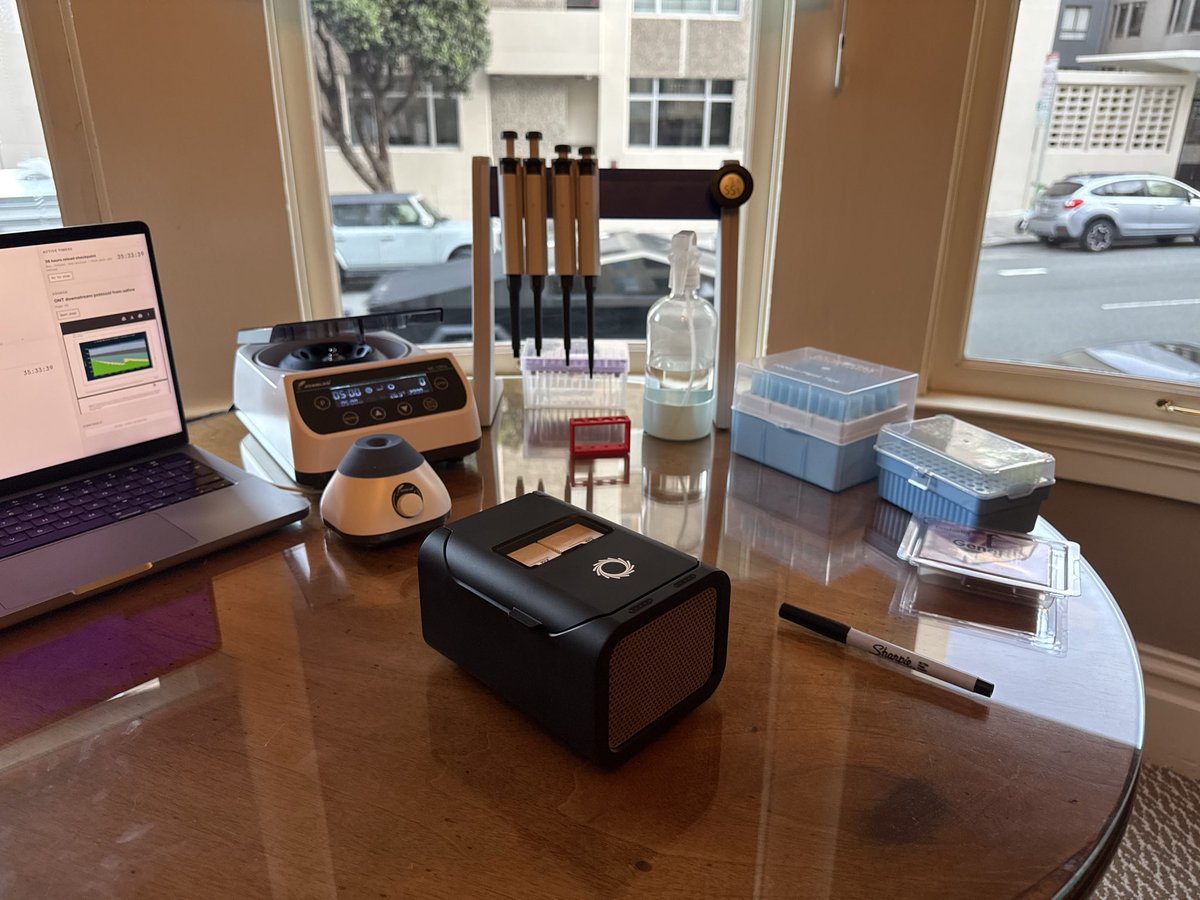
I just sequenced a human genome to 30× coverage entirely at home.
As far as I know, this is the first time this has been done.
I didn’t step foot in a lab once. Every step - from saliva collection, to running the sequencer - took place in a single room with a dining table + kitchenette.
Six weeks ago, I had never done wet lab biology before.
I used an Oxford Nanopore P2 Solo - the only commercially available sequencing device portable enough to do 30x human genome sequencing at home.
Biggest takeaway - I could build something that combined software, hardware, and molecular biology far faster than I thought was possible.
I can name >100 specific instances where AI helped me solve a technical problem that would previously have blocked me because I lacked access to a domain expert.
For example: how do I save my sequencing run when my DNA extraction yield is 4x lower than I need it to be, and I have this limited set of reagents to hand?
To make this work, I had to navigate multiple disciplines:
- writing software to monitor sequencing runs and orchestrate remote GPU infra for basecalling
- learning + executing 5 hour long molecular biology protocols
- building a hardware device to quantify DNA concentration
Apologies for the hyperbole, but I feel super lucky to be living in 2026.
A few weeks ago I decided to sequence a human genome to 30x at home.
Then I actually did it. And I did it really quickly.
A male bee mates for less than 5 seconds in midair. The ejaculation is so explosive you can hear it pop from a few feet away. His body rips in half. He falls dead before hitting the ground. And he is one of the lucky males in the hive.
When a male bee, called a drone, chases down a queen mid-flight at speeds of 22 miles per hour, his entire reproductive organ turns inside out. The pressure required for this comes from nearly all the blood in his body, which rushes downward to force the organ outward like a spring. The semen fires into the queen with so much force it makes the audible pop. The organ then snaps off and stays lodged inside her like a cork. As he flips backward off her body, his abdomen rips open. The next drone waiting his turn has to physically yank out the dead male's cork before he can mate. The same thing then happens to him.
The queen does this 12 to 20 times in a single afternoon. She flies up to a spot in the sky that beekeepers call a drone congregation area. Picture an invisible meeting point about 50 to 130 feet above the ground where up to 11,000 male bees from as many as 240 different hives are hovering, waiting for her. These spots stay in the exact same locations year after year, sometimes for over a decade. No one fully understands how brand new drones, born only weeks earlier, find them.
By the end of her mating run, the queen has collected around 100 million sperm cells. She keeps only 5 to 6 million in a tiny internal storage organ that keeps them alive for years. From that supply, she uses just two sperm cells per egg for the rest of her life, laying up to 2,000 eggs a day for 2 to 7 years. After that one afternoon in the sky, she will never mate again.
A 2019 study from UC Riverside, the University of Copenhagen, and the University of Western Australia found that bee semen contains toxic proteins that temporarily blind the queen by interfering with how vision genes function in her brain. If she can't see well, she can't fly out again to mate with more males. Their semen also carries a separate protein that attacks and kills sperm cells from rival drones still inside her. The males keep competing long after every one of them is dead.
The 99.9% of drones who never get to mate have it worse. As autumn arrives, the female worker bees in the hive stop feeding their brothers, then drag them out of the entrance after biting off their wings. The drones can't fly back in. They starve or freeze in the grass within days. The colony raises a fresh batch of disposable males the next spring, and the whole cycle starts over.
A male bee mates for less than 5 seconds in midair. The ejaculation is so explosive you can hear it pop from a few feet away. His body rips in half. He falls dead before hitting the ground. And he is one of the lucky males in the hive.
When a male bee, called a drone, chases down a queen mid-flight at speeds of 22 miles per hour, his entire reproductive organ turns inside out. The pressure required for this comes from nearly all the blood in his body, which rushes downward to force the organ outward like a spring. The semen fires into the queen with so much force it makes the audible pop. The organ then snaps off and stays lodged inside her like a cork. As he flips backward off her body, his abdomen rips open. The next drone waiting his turn has to physically yank out the dead male's cork before he can mate. The same thing then happens to him.
The queen does this 12 to 20 times in a single afternoon. She flies up to a spot in the sky that beekeepers call a drone congregation area. Picture an invisible meeting point about 50 to 130 feet above the ground where up to 11,000 male bees from as many as 240 different hives are hovering, waiting for her. These spots stay in the exact same locations year after year, sometimes for over a decade. No one fully understands how brand new drones, born only weeks earlier, find them.
By the end of her mating run, the queen has collected around 100 million sperm cells. She keeps only 5 to 6 million in a tiny internal storage organ that keeps them alive for years. From that supply, she uses just two sperm cells per egg for the rest of her life, laying up to 2,000 eggs a day for 2 to 7 years. After that one afternoon in the sky, she will never mate again.
A 2019 study from UC Riverside, the University of Copenhagen, and the University of Western Australia found that bee semen contains toxic proteins that temporarily blind the queen by interfering with how vision genes function in her brain. If she can't see well, she can't fly out again to mate with more males. Their semen also carries a separate protein that attacks and kills sperm cells from rival drones still inside her. The males keep competing long after every one of them is dead.
The 99.9% of drones who never get to mate have it worse. As autumn arrives, the female worker bees in the hive stop feeding their brothers, then drag them out of the entrance after biting off their wings. The drones can't fly back in. They starve or freeze in the grass within days. The colony raises a fresh batch of disposable males the next spring, and the whole cycle starts over.
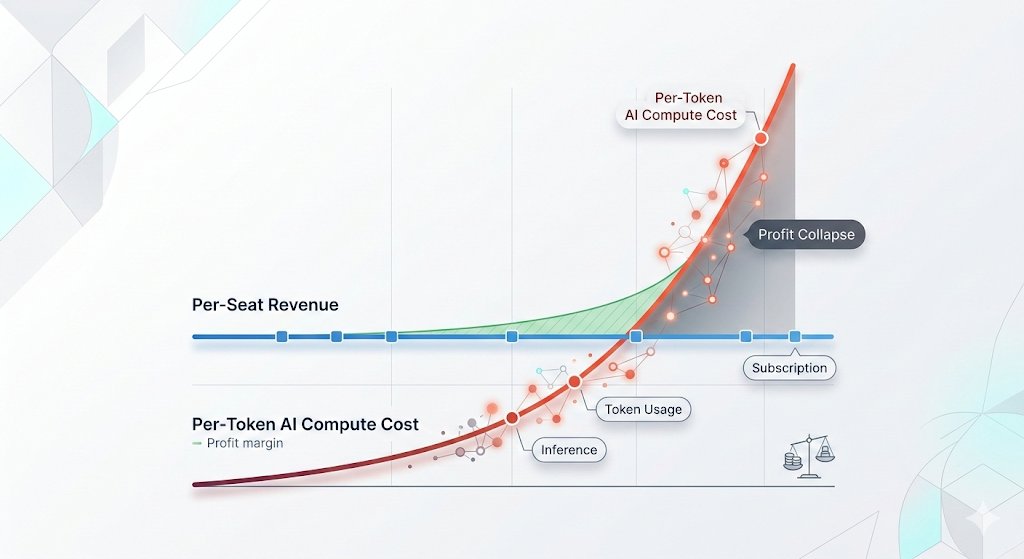
🦔Microsoft canceled its internal Claude Code licenses this week after token-based billing made the cost untenable, even for a company with effectively infinite cloud resources. Uber's CTO sent an internal memo warning the company burned through its entire 2026 AI budget in just four months. American AI software prices have jumped 20% to 37%, and GitHub (owned by Microsoft) is dropping flat-rate plans for usage-based billing across its products.
My Take
The AI subsidy era is ending in real time. The same company that put $13 billion into OpenAI and built the Azure infrastructure powering most of Anthropic's compute just looked at the bill from a competitor's coding tool and decided it was not worth paying. That is not a productivity failure on Anthropic's end. Token-based pricing is forcing every enterprise customer to confront the actual cost of running these models at scale, and the number turns out to be far higher than the flat-rate experiments suggested.
This ties directly to my Gemini Flash post yesterday. Anthropic, OpenAI, and Google all raised effective prices in the last six months. Enterprises that built workflows assuming AI costs would keep falling are now watching annual budgets evaporate in months. Two outcomes look likely from here. Either enterprises scale back AI usage to fit budgets, which slows the revenue ramp the labs need to justify their valuations ahead of IPOs, or the labs cut prices and absorb the losses, which makes the unit economics worse at exactly the wrong moment. Both paths land in the same place, the numbers stop working, and somebody has to take the writedown.
Hedgie🤗
Great post. MUST read to get a perspective on open source strategy.
In AI area, there are many more layers on top of the models that are ripe for some sort of unified open source strategy - currently it is too fragmented.
A new @bgurley blog post!
I have been thinking about how sophisticated executives are using open source in super creative ways. Started writing this three years ago. Excited to finish it up and publish it! And with the new @p3institute brand.
https://t.co/W84vODq1ME
In 2023, Stanford professor Graham Weaver gave his last lecture on how to destroy fear & live a wildly ambitious life.
His frameworks:
- Suffering is inevitable
- Signup for "10 years" test
- "Not me" & "Not now" traps
13 lessons on how to build an asymmetric life:
Karpathy said something you'll regret ignoring:
"Remove yourself as the bottleneck. Maximize your leverage. Put in very few tokens, and a huge amount of stuff happens on your behalf."
The reason most people can't do this today is because their AI has little to no memory of their work.
You sit in meetings, read threads, make decisions, and your brain quietly drops half of it by next week. Then you spend time re-reading, re-asking, re-explaining context to your own AI.
You can't remove yourself from the loop when YOU are the only one who remembers what happened.
That's why the smartest builders are setting up AI second brains that compound everything automatically.
Rowboat is an open-source implementation of exactly this, built on top of the same Markdown-and-Obsidian foundation that Karpathy uses, but extended into a work context.
Emails, meetings, decisions, commitments, and deadlines, everything is linked in a knowledge graph that gets denser every day without you touching it.
And the whole setup runs 100% locally.
6 months from now, you'll either have an AI second brain or wish you did.
Find my full 100% local setup guide in the article quoted below to start today.
Here's the Rowboat Repo: https://t.co/tiNTv2NhUF
(don't forget to star it 🌟)
Cool project for sqllite - will be in my toolchest for sqllite apps. I put Postgres's Listen/Notify into use recently and am impressed with the power and scale.
https://t.co/VwDMVB9vCd
Speed vs stability: the divide between product and engineering
https://t.co/pQyL88OkL5
yeah, it is a real multiverse out there - For successful company, you need to find that wormhole that connects all these universes :-)
Good points on the PMF
https://t.co/2spVcORpB1
I tend to view PMF as not a single milestone, but multiple short feedback loop sequences, each moving the local optima towards global optima.
Failure happens most when these feedback loops are too long (like a quarter long) and few
I used to import batteries from China.
It was a nightmare:
* dangerous cargo
* BIS issues
* cash flow blocked for months
Then my China supplier told me:
There's a guy in India buying BIG from us.
Contact him.
His name was Paaras: 🧵👇🏻
This closes a loop I've been working on for three months.
Every agent harness debate has a hidden assumption: that the harness is a thing on top of the backend. Anthropic, OpenAI, LangChain, CrewAI argue about how thick that wrapper should be. Nobody questions that it's a wrapper.
Mike's argument is harder. The harness isn't on top of the backend. The harness IS the backend, once you have the right primitives.
The math that forces the issue: N agents and M services produce N² × M stochastic paths to debug. One agent + 5 services = 5 paths. Four agents + 5 services = 80. You can't ship that and sleep.
What most teams build today: agent runs in a Python process, decides to act, translates a tool call into an HTTP request, which triggers a queue publish, which writes to a database. Three retry schedules. Three timeout policies. No shared trace. Debugging means timestamp correlation across systems with different log formats. This is stochastic LLMs ran unning inside deterministic backends, and it's why production agent bills look the way they do.
Stop treating the agent's loop, tools, and memory as a separate layer. Make them participants in the same execution model as everything else.
Three primitives:
→ Worker, any process that connects (Python, TS, Rust, browser tab, microVM)
→ Function, a unit of work with a stable ID (orders::validate, llm::summarize)
→ Trigger, what causes a function to run (HTTP, cron, queue, state change, stream)
An agent is a worker.
A queue is a worker.
A sandbox is a worker.
They all register functions and triggers. They all participate in the same discovery, observability, and trace pipeline.
Three properties drop out that legacy architectures can't produce:
Live discovery: a connecting worker gets the full catalog of every function on every other worker. For agents this is cognitive infrastructure. No stale tool descriptions.
Live extensibility: add capabilities to a running system without redeploys. The agent can install a new worker mid-task and use it on the next call.
Live observability: one trace across languages, across queue handoffs, across the agent-backend boundary. Not three systems with timestamp correlation.
The recursion is where it gets interesting. An agent worker can spawn a sandbox worker at runtime. Hardware-isolated. Registers its own functions. Joins the live catalog. Gets torn down when done. Same primitive. The agent extended itself with a capability that didn't exist when it started.
This also collapses the thin vs. thick harness debate. A thin harness is a worker with few functions. A thick harness is a worker with more functions and explicit gates. Same system, different composition.
The pattern is the same one that's worked twice before. Everything-is-a-file made Unix composable. Components-as-functions made React's mental model stick. Worker / Function / Trigger is the same shape applied to backend execution.
Paradigm shifts don't add features. They collapse categories.