The fastest way to get ahead is to get obsessed for 1 year. Pick one valuable skill. Study it every day. Practice it every day. Create content about it and put your proof online. One year of obsession can change your entire life.
never underestimate the speed at which your life can change.
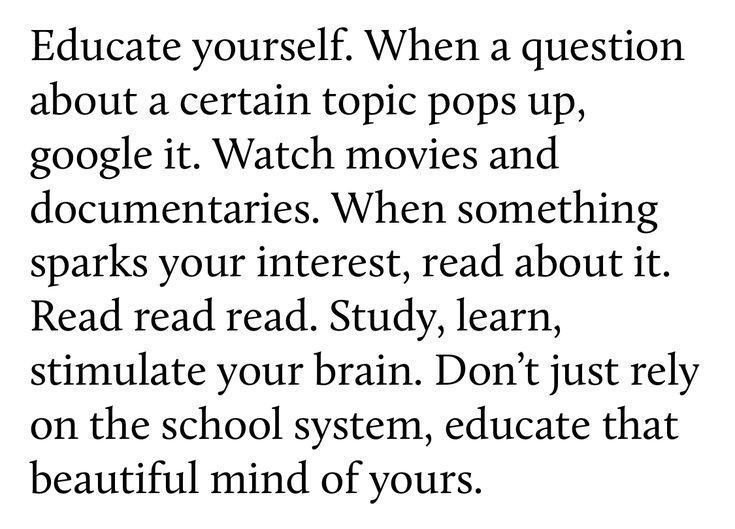
all it takes it 3-6 months of intense focus to forever change the trajectory of your life. set a goal that seems unreasonable and slightly terrifying, get plenty of sleep, soak in the sun, educate yourself as much as possible, give yourself a creative output, chase mastery, and enjoy yourself. find work that feels like play and hobbies that fulfill you.
How to master DSA patterns for Big Tech interviews in 60 days: 🎯
Days 1-15: Linear Structures & Pointers
- Two Pointers and Sliding Window techniques
- Fast & Slow pointers for cycle detection
- Prefix Sums and Hash Map lookups
Days 16-30: Stacks, Queues & Heaps
- Monotonic Stack for next greater element problems
- Priority Queues for Top-K frequent elements and median finding
- Implementing custom min/max heaps
Days 31-45: Trees & Graphs
- Binary Trees: BFS (level-order) and DFS (pre/in/post-order)
- Binary Search Trees: Validation and Lowest Common Ancestor
- Graphs: BFS, DFS, Topological Sort, and Dijkstra's algorithm
Days 46-60: Dynamic Programming & Speed Runs
- 1D DP: Climbing Stairs, House Robber, Coin Change
- 2D DP: Longest Common Subsequence and Edit Distance
- 45-minute timed mock interviews explaining your reasoning out loud
Stop solving random problems. Master these patterns instead.
Which pattern gives you the most difficulty: Graphs or DP?
🎯 The main ingredients of effective learning:
1. Stop consuming and start producing.
2. Don't build on gaps.
3. Close the notes and pull the idea from memory.
4. Space out your reviews.
5. Mix what you practice.
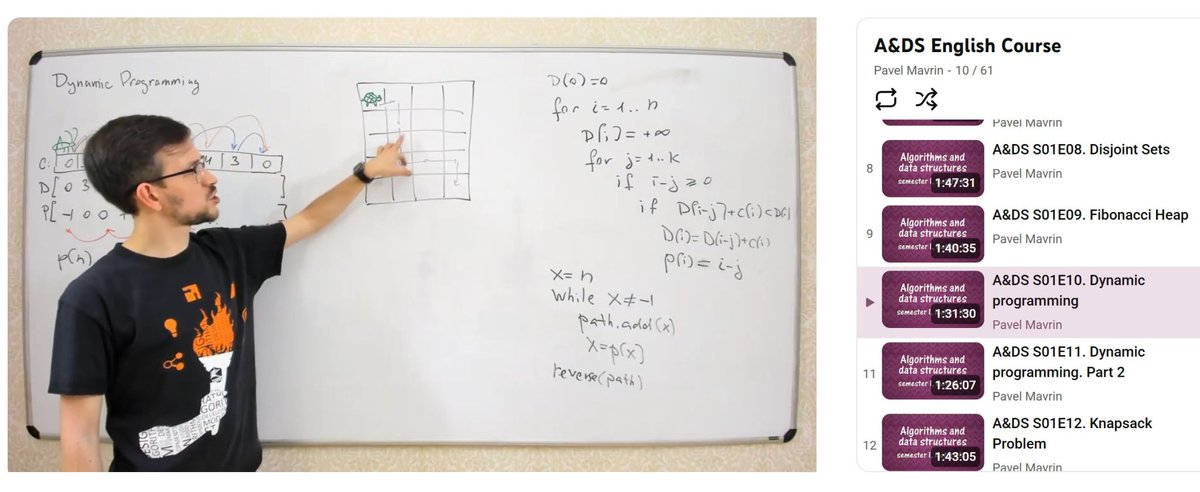
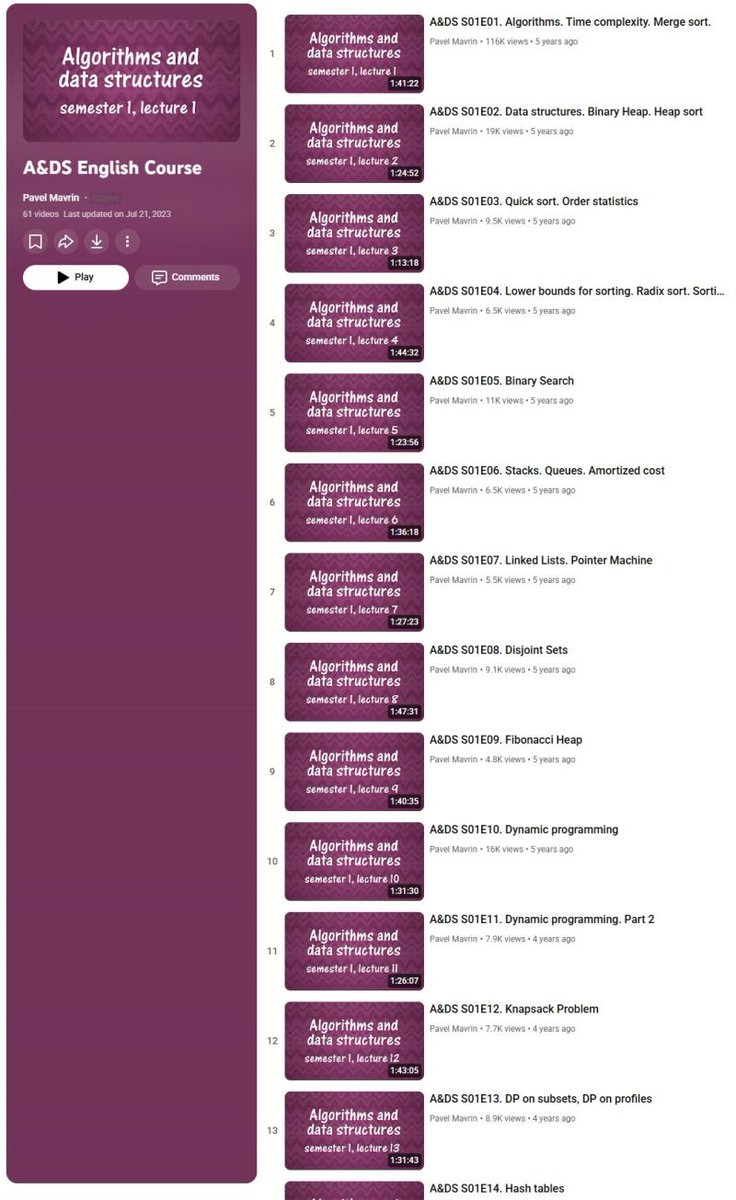
Understanding algorithms changes how you code. This playlist teaches understanding.
Pavel Mavrin. 61 lectures. Free.
Here's the difference:
Before understanding algorithms:
- You use hash tables for everything
- You write code first, optimize later
- You guess at time complexity
After understanding algorithms:
- You choose the right data structure for the problem
- You think about complexity before writing code
- You recognize which pattern fits
What you'll learn =>
→ Time complexity and sorting
→ Dynamic Programming
→ Advanced trees (Segment, Fenwick, Splay, Link-Cut)
→ Graph algorithms (traversal, shortest paths, flows)
→ String algorithms (pattern matching, suffix structures)
→ FFT, Linear Programming, Cryptography
to live an extraordinary life, all you need is to promise yourself that you will not do the things that other people around you do
forget everything you have been taught. ignore the masses and any social norms others told you are the right thing to do. it's a lifestyle trap
- Learn containerization e.g Docker
- learn orchestration with K8s
- learn infra as Code, that's mainly Terraform
- pick AWS because it has the largest job market, but Azure and GCP are still good
This is a good way to start, then things like networking, cost optimization, scaling are important skills too
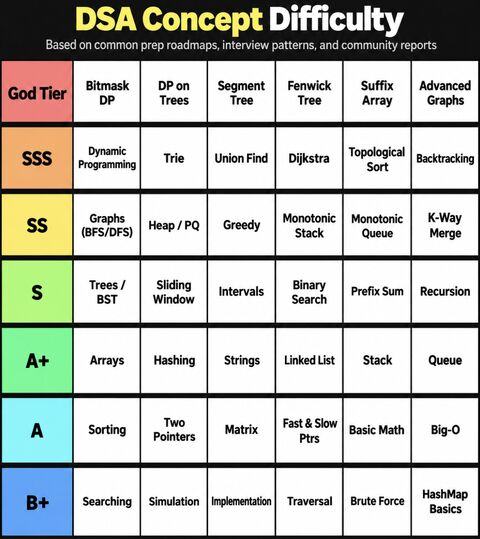
DSA difficulty chart looks scary until you realize you don't have to attack every topic at once.
The right strategy:
1. Start with A+/A topics
Arrays → Hashing → Strings → Linked List → Stack → Queue → Sorting → Two Pointers → Sliding Window
2. Move to S topics
Binary Search → Trees/BST → Intervals → Prefix Sum → Recursion
3. Then go for SS
Graphs → Heap → Greedy → Monotonic Stack → Monotonic Queue → K-Way Merge
4. Keep the hard topics for the end
Trie → Union Find → Dijkstra → Backtracking → DP → Advanced Graphs
Most importantly:
Don't learn DSA topic by topic just to finish a sheet.
Learn the pattern → solve easy → solve medium → identify variations → revise after gaps.
The goal isn't to make DSA easier.
It's to make the difficulty increase gradually.
Push your brain's neuroplasticity to its absolute limit.
Try different restaurants. Explore new cafés, or just sit at a different table. Listen to unfamiliar music. Switch up your workouts. Learn new languages, take up fresh hobbies, and travel to foreign countries.
Consistency is vital, but if you want to unlock fresh thinking and creativity, you must embrace novel experiences, and you must seek them often.