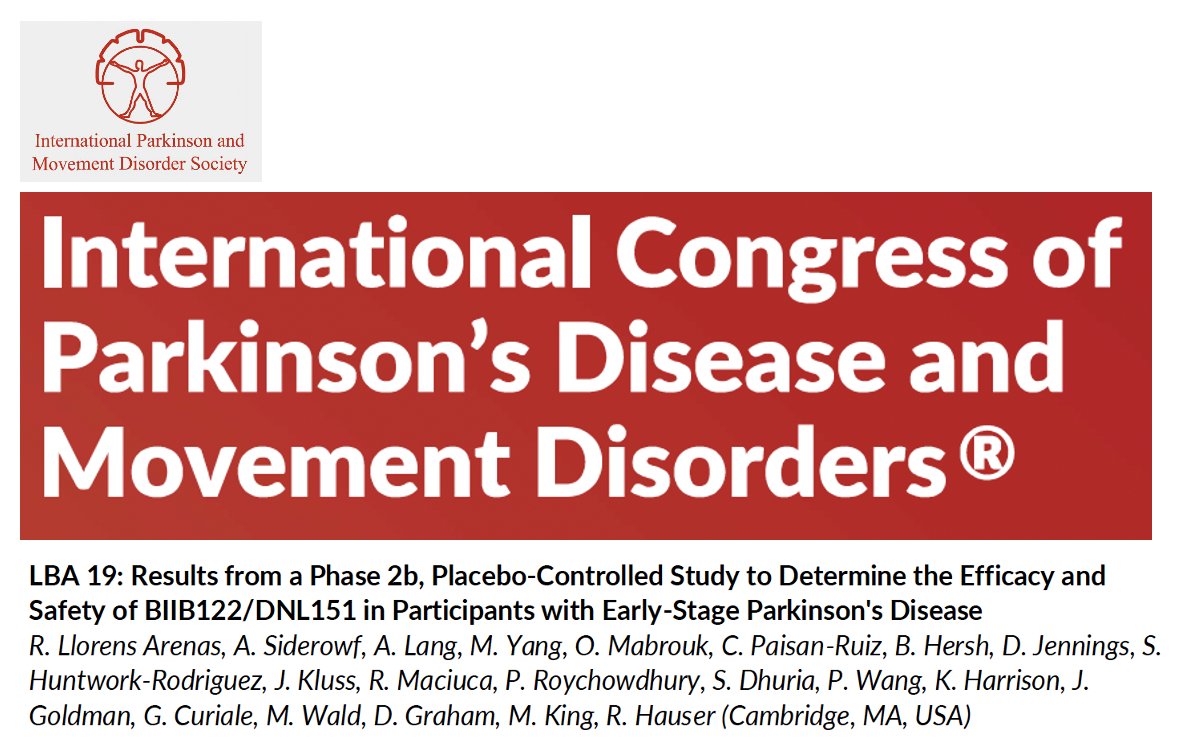
Long anticipated results are out for the Phase 2b LUMA trial that tested BIIB122/DNL151, an oral brain-penetrant inhibitor of LRRK2, as a potential disease-modifying therapy in 648 participants with early-stage Parkinson’s disease. Results just announced in a late breaking abstract at the MDS Congress in Seoul this week. Despite clear evidence that the drug engaged its biological target, including >90% reduction in blood pS935 LRRK2, ~50% reduction in urinary BMP and ~30% peak reduction in CSF pRAB10; this biological activity did not translate into clinical benefit. BIIB122/DNL151 did not significantly delay worsening on the combined MDS-UPDRS Parts II and III primary endpoint and showed no benefit on secondary outcomes. Overall adverse and serious adverse event rates were similar to placebo, although treatment discontinuation due to adverse events was higher with BIIB122/DNL151. This is an important and sobering result: the drug appears to have hit the LRRK2 pathway, but hitting the biological target was not enough to slow clinical Parkinson’s progression in this population over the period the drug was administered.
https://t.co/lKjrkSSUKn @movedisorder
IV thrombolysis beyond 4.5 hours remains debated. In our systematic review and meta-analysis of 18 RCTs involving 5,168 patients with AIS treated 4.5–24 hours after last known well, late-window IVT improved functional outcomes at 90 days. 🧵 #Stroke https://t.co/c0DPmQjAZq
Advances in Acute Ischemic Stroke 2025: Medical Treatments Great update on recent non-endovascular trials and current trends. A must read for vascular neurology fellows https://t.co/dG1tHZWbQD
People are all over the place on whether or not to treat MVO strokes.
Here is a nice study showing benefit with EVR.
Although this single paper may not sway practice immediately, it will help the inevitable progression towards treating MVO strokes with intervention. The main impetus for this will be the continued expansion of thrombectomy capable centers — and further proliferation of Neuro endovascular specialists.
Endovascular Treatment of Medium-Vessel-Occlusion Strokes | New England Journal of Medicine https://t.co/cWrokHmtVy
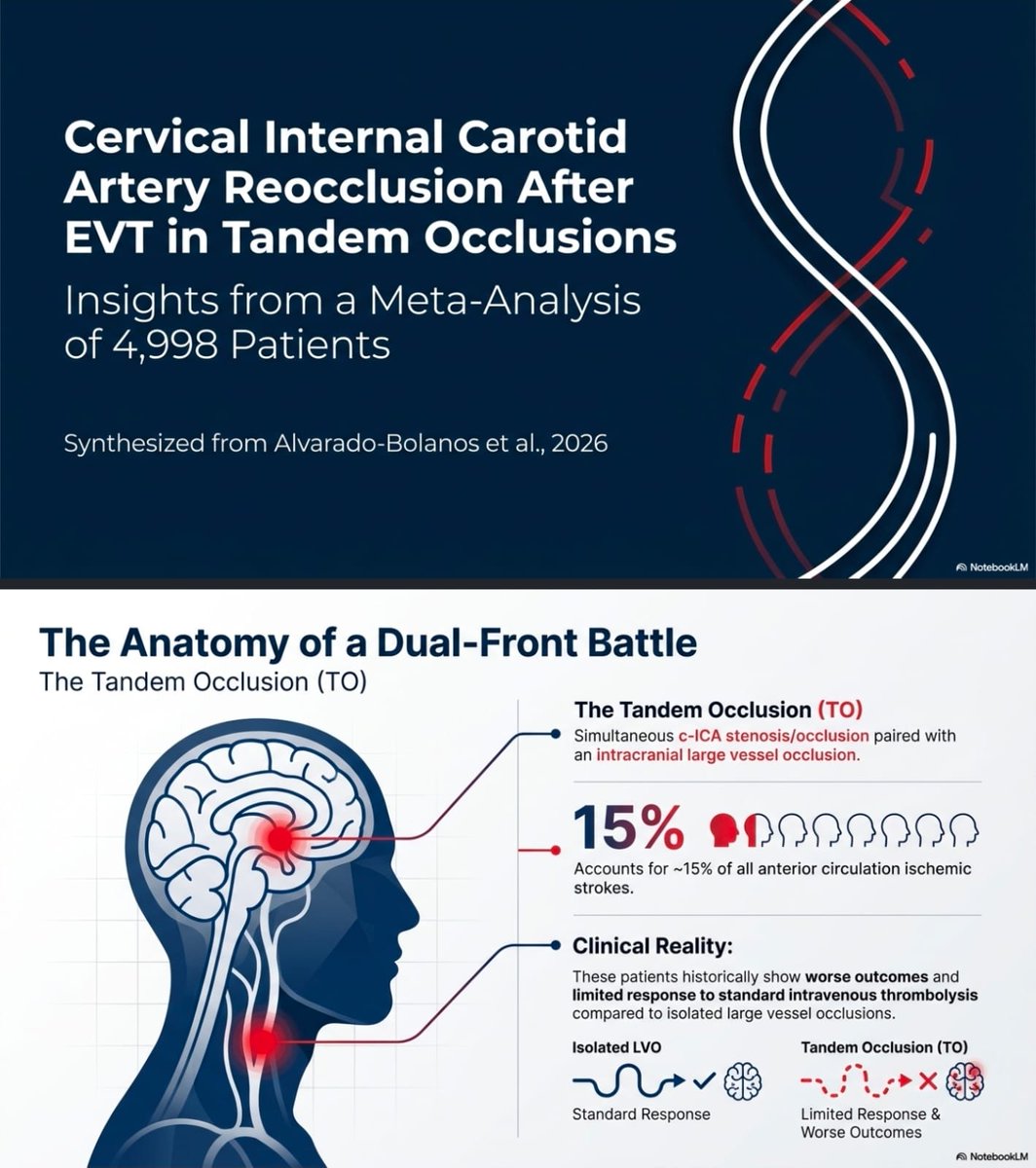
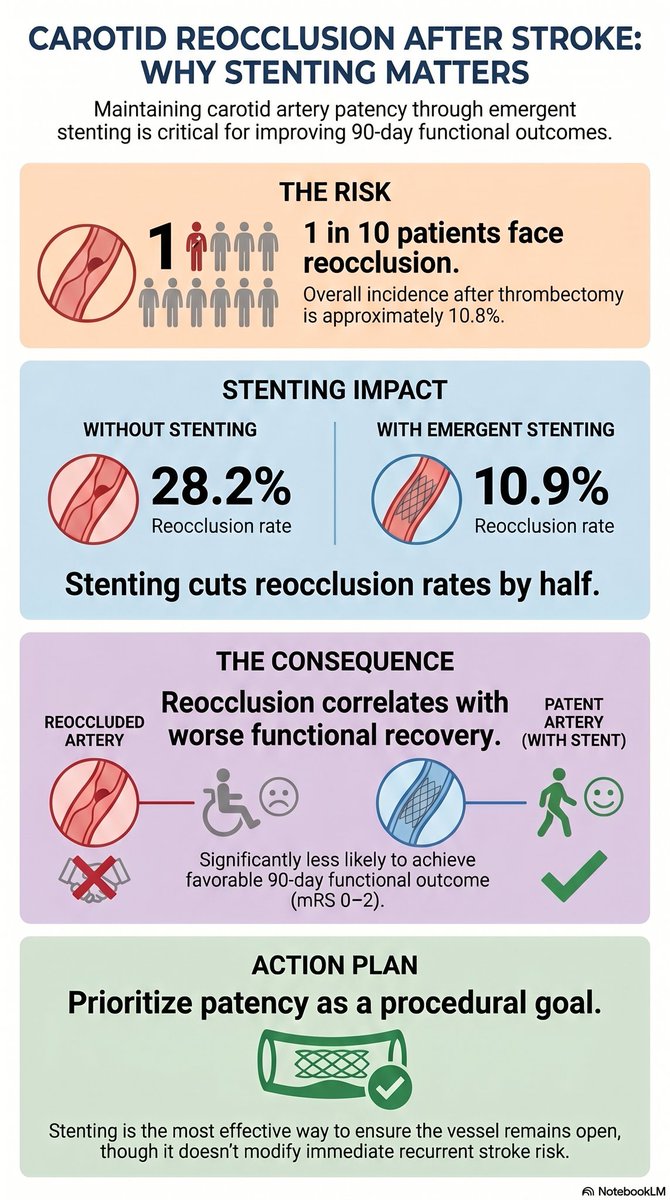
🧠 New 2026 meta-analysis on tandem occlusions!
🔹 Early c-ICA reocclusion post-EVT occurs in 10.8% of patients.
🔹 Emergent stenting (eCAS) drops reocclusion to 10.9%, compared to 28.2% without.
🔹 Reocclusion is tied to worse 90-day functional outcomes.
#Stroke#Neurology #MedTwitter #Thrombectomy
📢The #ESOC2026 Best of Neurointervention and Best of Secondary Prevention are available to download!
🔹Best of ESOC 2026 — Neurointervention: https://t.co/Up4853DsE3
🔹Best of ESOC 2026 — Secondary Prevention: https://t.co/GrrFu7bjzb
#VoiceOfStroke#Stroke
🧠⚡ Dr. Juan Mejia talk challenged the standard of care!
A compelling real-time cases based discussion on CT perfusion + AI decision support in acute stroke care.
📊 Highlighted use of CTP + AI-based mismatch analysis in real-time EVT decision-making, demonstrating how advanced imaging is increasingly guiding intervention beyond traditional time windows.
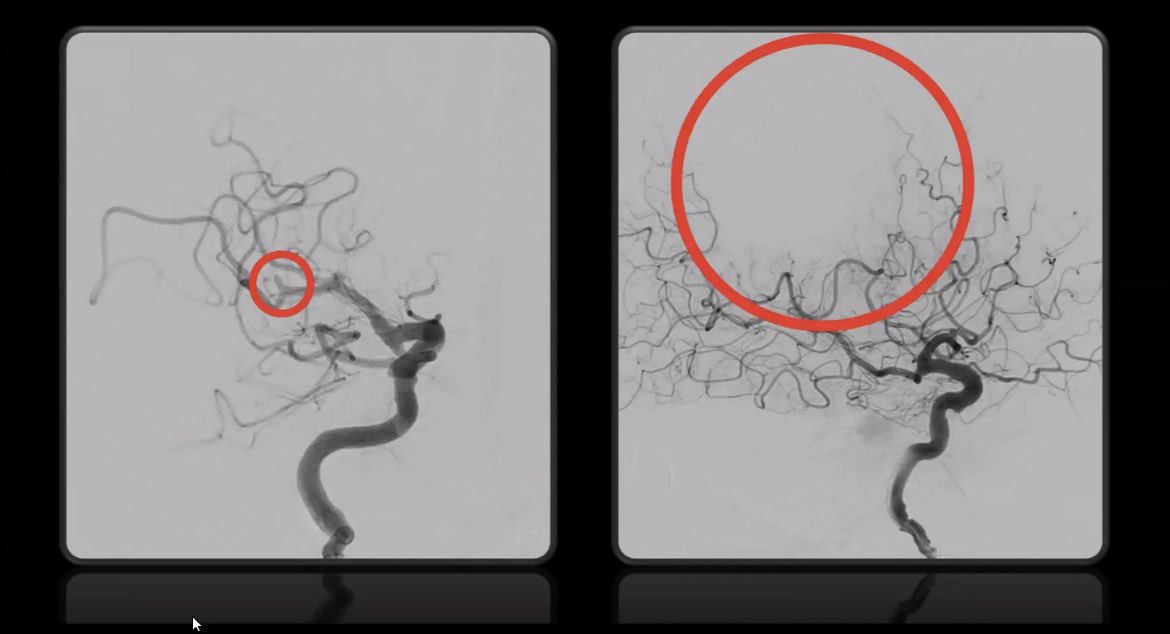
🧠 Case featured: 39-year-old patient with ICA dissection
•Presented at ~36 hours from last known well
•Despite delayed arrival, penumbra was still significant on CT perfusion/AI analysis
•Decision made to proceed with mechanical thrombectomy
•Successful ICA reconstruction and reperfusion achieved
Even in ultra-late presentations, physiology (penumbra viability) can override time, enabling meaningful intervention in selected patients.
#Stroke #Thrombectomy #CTPerfusion #AIinMedicine #Neurology #Endovascular #MissionThrombectomy
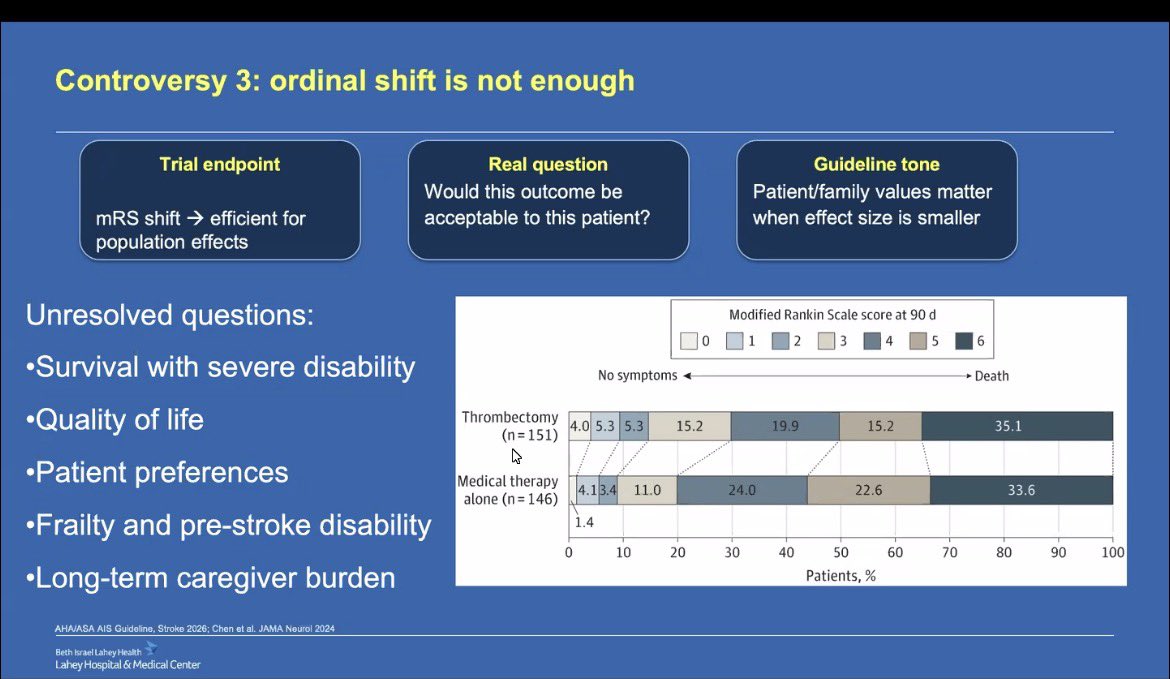
🧠⚖️ Dr. Emanuel Orru focused discussion on key controversies shaping modern mechanical thrombectomy practice.
📊 Included discussion of the ORIENTAL MEVO trial, adding to evolving evidence in medium vessel occlusions (MEVO), where the true magnitude of benefit and ideal patient selection remain uncertain.
🧠 ASPECTS ≤2 / large-core stroke Emerging trial data suggest possible benefit in carefully selected patients, but outcomes remain heterogeneous. This continues to be one of the most debated frontiers in EVT, particularly regarding functional recovery vs procedural risk in very large infarcts.
🛠️ Technical considerations in EVT expansion As thrombectomy extends into more distal territories (MEVOs), key challenges include device selection, procedural safety, and the persistent gap between angiographic success and meaningful clinical outcomes.
#Stroke #Thrombectomy #MEVO #Neurology #Endovascular #MissionThrombectomy
📊Exploratory analyses of TRACE‑III
💉Tenecteplase (4.5–24h) may benefit late-window stroke patients without thrombectomy
👉❗️Effect depends on infarct growth rate
Read more here👇
https://t.co/KcktWObSGM
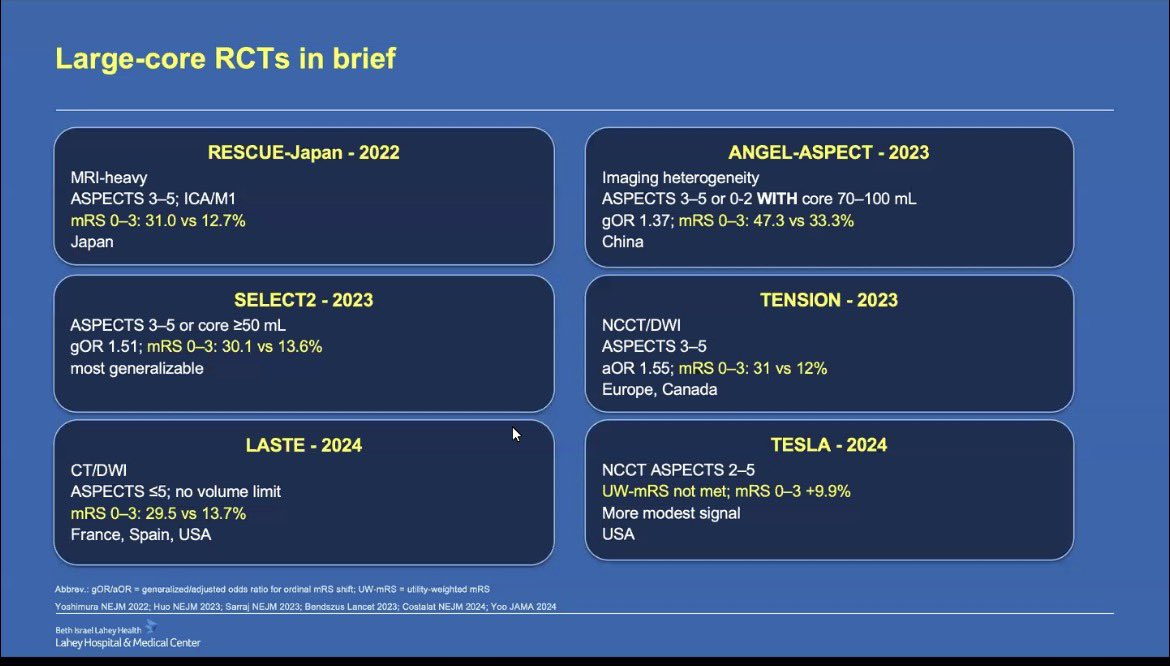
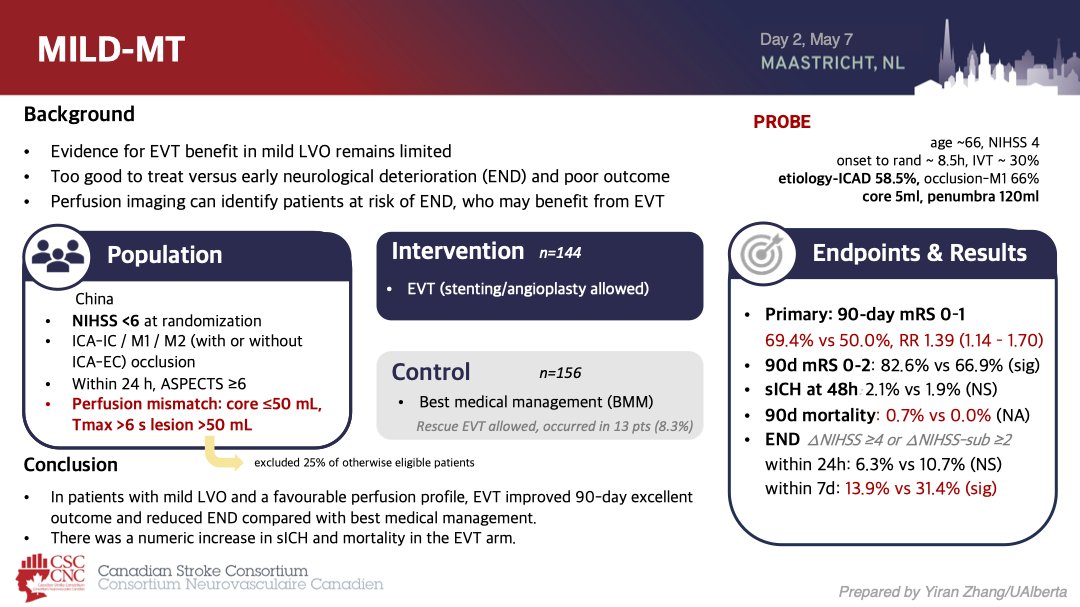
Day 2 Trial Summary of #ESOC26@CSC_Stroke@neuromaheshkate
EVT on large core, mild LVO, late window and tandem lesion, as well as stroke prevention and management of post-stroke depressive symptoms
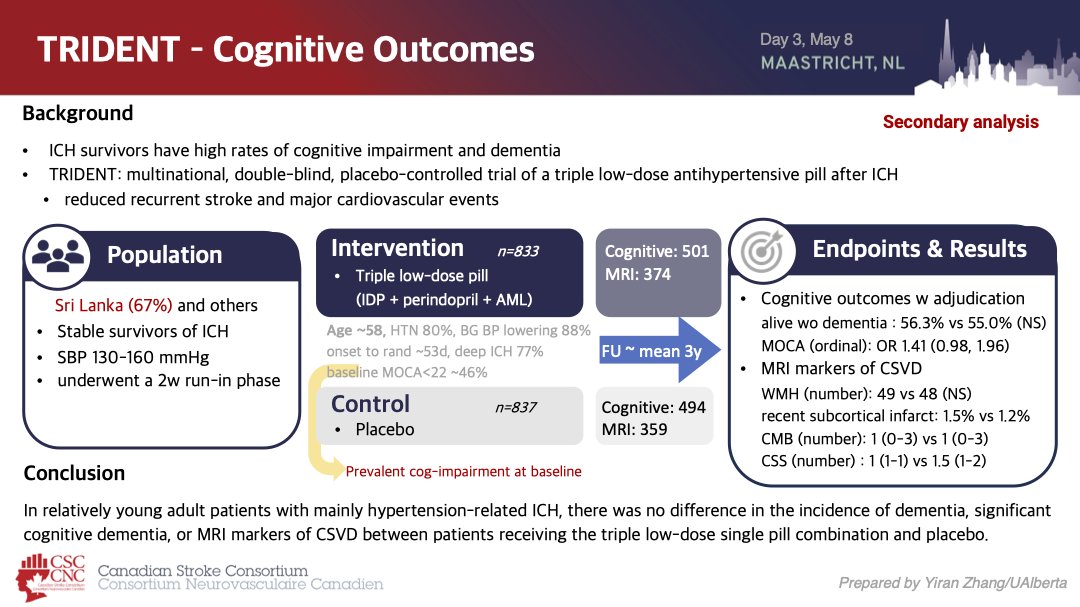
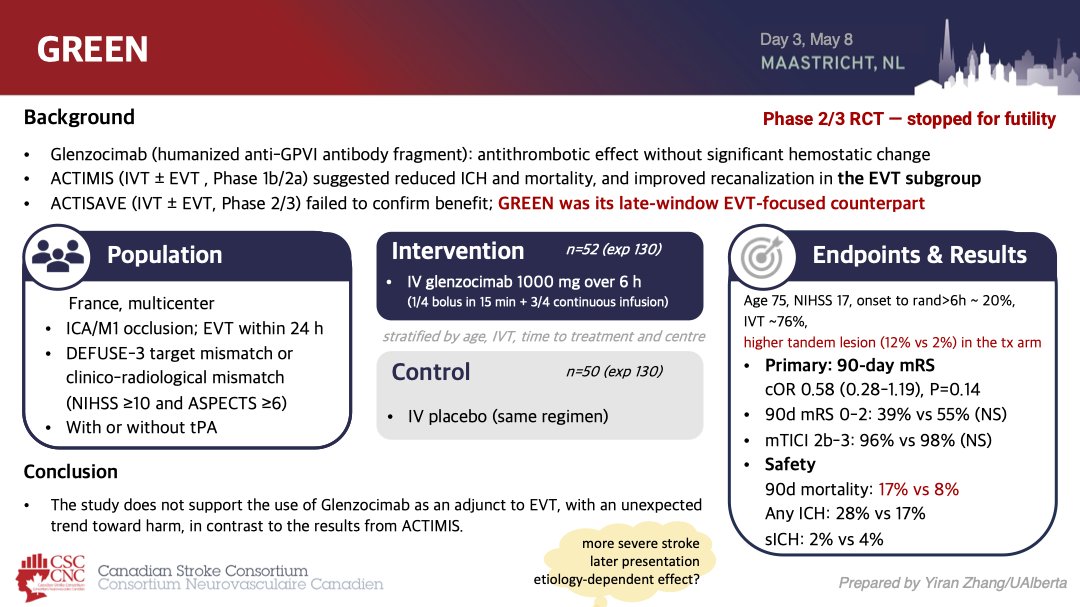
Day 3 Trial Summary of #ESOC26@CSC_Stroke@neuromaheshkate
- adjunctive therapy for reperfusion therapy: semaglutide (GLP-2 RA), glencozimab (GP-VI antibody), tirofiban (GP-IIb IIIa inhibitors)
- early DAPT with ticareglor & ASA
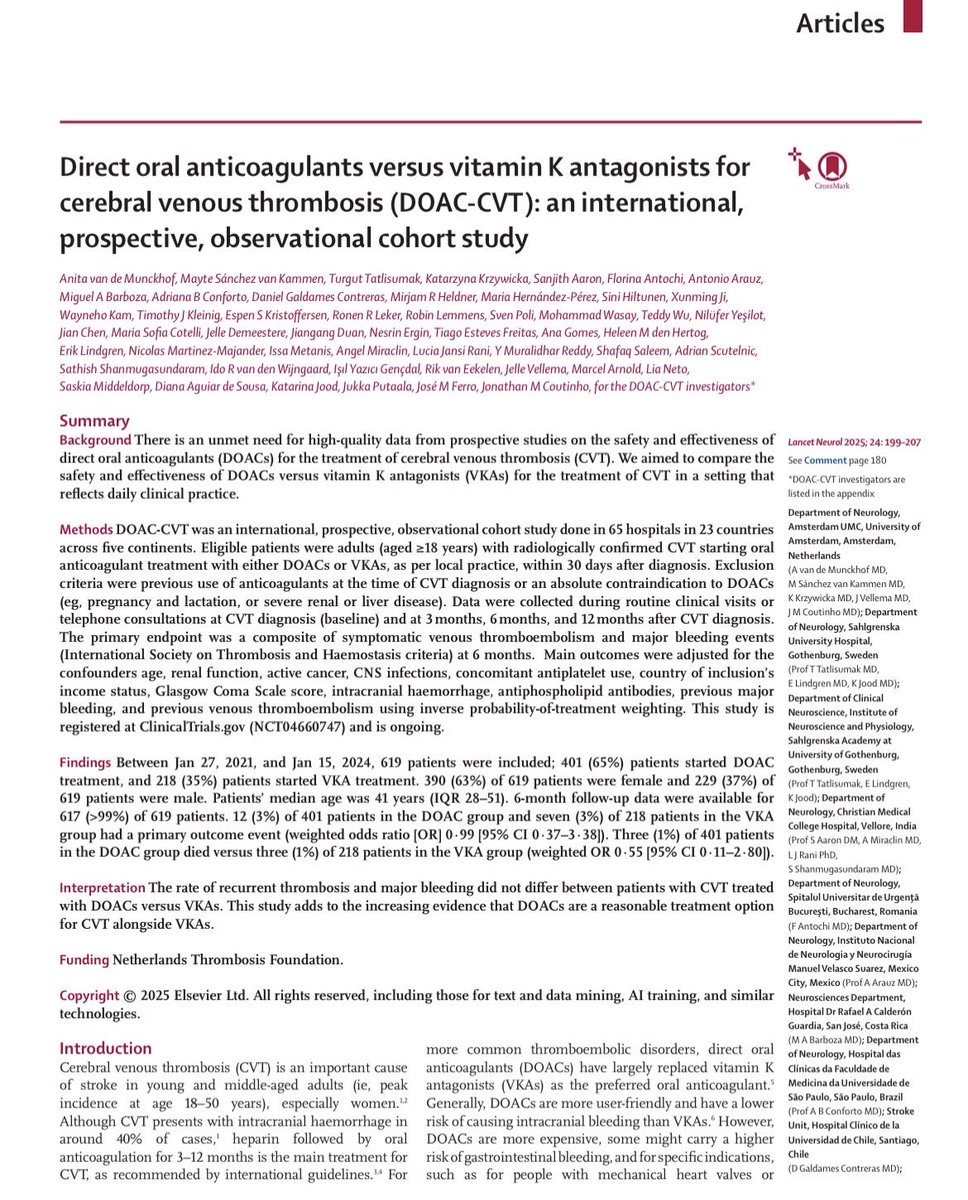
- BP management, prolonged OAC for CVT and FDCT
While carotid artery #stenting during mechanical thrombectomy appears to be safe, whether or not the approach is non-inferior to deferred management remains to be seen, as per late-breaking results from the CASES trial presented at #ESOC2026@ESOstroke
https://t.co/XgaH0IzQ1b
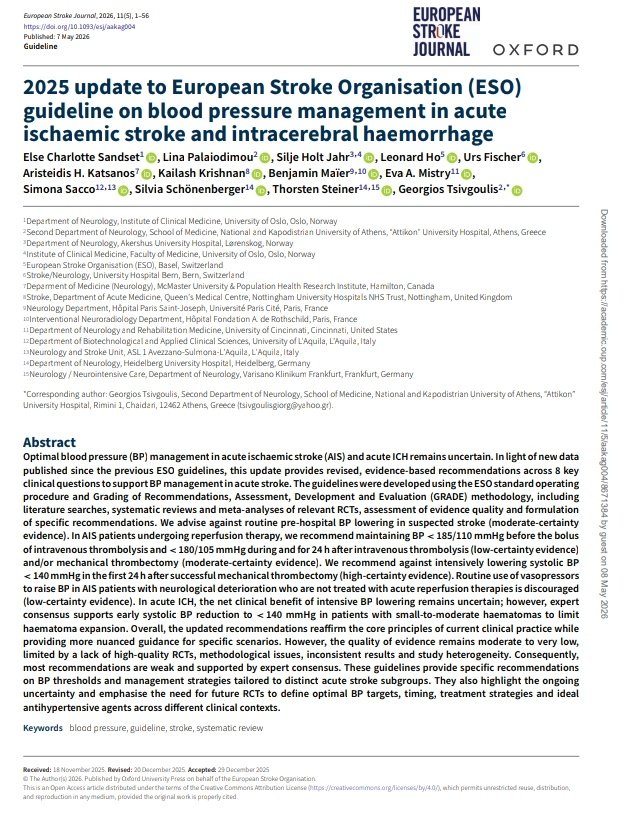
🧠🩸Manejo de la Presión Arterial en Stroke Isquémico Agudo y en Hemorragia Intracerebral
🔰📚European Stroke Journal, 2026
https://t.co/SYXO2xuT8J
Enlace a Artículo Completo👇🏻✅🆓
https://t.co/xumUMHaxVK