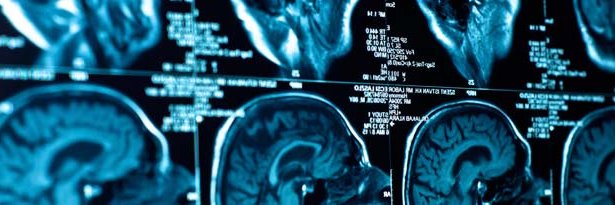
My pinned thread of threads, primarily containing citations and explanations about neurological/ psychological sex differences, sexuality, gender dysphoria, and other academic research interests of mine:
So I think it's funny you bring up the BSTc here. Me and some colleagues are writing up a paper (both a critical re-apprasial and re-analysis) of some of the original BSTc data. I don't wanna go into it too much (you'll have to wait for the publication hahah), but we effectivley discuss how the hormonal controls are not suitable as a direct comparison, and also that the BSTc is not a region-specific sex difference. Instead, its size depends almost entirley on the sex difference in brain weight/size. The trans people in the orginal studies were all on cross-sex hormones, which are known to shrink the brain. As aspected then, the trans people had smaller brains, and thus a smaller BSTc.
I think you’re presenting a neurological mechanism as established fact when it hasn’t actually been demonstrated.
Firstly, sexual differentiation of the brain is considerably more complicated than simply developing along a male–female continuum. Much of our mechanistic understanding comes from rodents, where we distinguish four partially independent processes:
- masculinisation (development of male-typical characteristics)
- defeminisation (suppression of female-typical characteristics)
- feminisation (development of female-typical characteristics)
- demasculinisation (reduction of male-typical characteristics).
These aren’t necessarily reciprocal. Masculinisation doesn’t automatically imply a corresponding defeminisation, for example.
In rodents, testosterone is locally aromatised into estrogen within the brain, affecting the structural organisation of specific neural circuits (mainly the hypothalamus). For example, estrogen is known to increase dendritic spine density in the preoptic area (POA) via prostaglandin E2 signalling. We can also experimentally dissociate masculinisation from defeminisation, as
male rodents can develop male-typical mounting behaviour while retaining the capacity for lordosis (female-typical sexual receptivity). So, masculinising one characteristic doesn’t necessarily eliminate female-typical ones.
Attempting to extrapolate this directly to humans is difficult. Human sexual differentiation appears more dependent on androgen-receptor signalling rather than aromatisation observed in rodents. Natural experiments (such as CAIS, CAH, 5α-reductase deficiency and aromatase deficiency) provide evidence that androgen signalling influences aspects of neurological and psychological development, but none establish a discrete, hardwired male or female “neurological identity”.
There’s also an issue with your developmental timeline. Genital differentiation and brain development aren’t two independent processes occurring months apart. Neural development is already underway during genital differentiation, and androgen-sensitive developmental periods overlap considerably. Both tissues are influenced by circulating hormones, although their responses depend on aspects such as receptor expression and localisation. They can certainly develop differently, but that doesn’t mean the body develops as one sex before the brain independently develops according to another “blueprint”.
More importantly, wheres the evidence that the human brain develops according to some internal male or female “blueprint”, or that it continuously compares this supposed “blueprint” against the body’s anatomy, generating GD when they don’t match?
We know prenatal hormones influence aspects of sex-typical behaviour. But that’s different from demonstrating that GD results from a hardwired mismatch between the brain and body.
You’re taking findings about the hormonal organisation of particular neural circuits, largely from rodents, and extrapolating them into a comprehensive explanation for transgender identity. That’s a hypothesis, not an established neurological mechanism.
I also think it’s a lot harder to correlate the prenatal environment to GD than for sexual orientation, in terms of an actual mechanistic explanation.
And that exact neurological hardwiring is precisely why trans people experience gender dysphoria. When the prenatal nervous system is structurally mapped to a female blueprint in the womb, but the external anatomy formed months earlier is male, the brain is constantly receiving conflicting biological and neurological signals. Dysphoria isn't about trying to guess what a period or a specific puberty feels like, it is the profound psychological and physical distress caused by this fundamental, hardwired mismatch between the brain's internal map and the rest of the body.
I think there's a misunderstanding of my original argument. I'm not suggesting that genital and neural sexual differentiation cannot diverge. My point was that these processes overlap considerably, rather than occurring through two entirely separate hormonal surges.
In fact, McCarthy and Arnold (2011, Nature Neuroscience) specifically challenged the traditional linear model of sexual differentiation, proposing instead a parallel-interactive model involving sex chromosomes, gonadal hormones, tissue-specific cellular mechanisms and environmental influences. In other words, sexual differentiation isn't simply a process whereby the genitals differentiate first, followed by the brain. I mean if you think about it, the genome always comes first :)
We also have evidence of sex differences in the developing human brain considerably earlier than you're suggesting. Reinius and Jazin (2009) identified sex-biased gene expression in the prenatal brain, while Kang et al. (2011, Nature) demonstrated sex differences in gene expression across developing brain regions. More recently, Buonocore et al. (2025) identified sex-chromosome-related transcriptional differences in human fetal cortex from just 7.5–8 weeks postconception (approximately 9.5–10 weeks gestation), alongside androgen receptor expression during early development. That's the first trimester, not the second half of pregnancy.
This is just great!
Even though me and Jaqueline may disagree on a few things (and agree on others), it’s amazing to see that despite these differences, we can have respect like this!
While there’s things I think she gets wrong, there’s no bad blood, nor is there any reason we should be aggressive to one another. I think they’ve done a lot of reading around the subject, and tried very well to formulate a coherent argument. But just because we disagree, we can still show respect.
This is how debates should be handled.
Hats off to you Jaqueline 🤠
Dude, you literally make me work after my actual work with that kind of text wall, but I always look forward to a constructive, fact-based conversation with an expert like you. Even if I made some errors, you will point them out, and it will just keep making my arguments better in the future. That’s the great thing about arguing with an expert like you. You recognize actual scientific data and don't just dismiss everything as nonsense, unlike normal people who don't understand anything and just act out of ideology. 😁 But just so you know, you can take your time answering, because I won't respond anymore today, i have an early shift at the hospital tomorrow. 🤣
@HCarry94693 Thank you very much for your responses, there’s a lot to unpack hahaha
I will try reply to all your points by tomorrow 👍
Untill then, thanks for the reply 💪🏼
I think you’re presenting a neurological mechanism as established fact when it hasn’t actually been demonstrated.
Firstly, sexual differentiation of the brain is considerably more complicated than simply developing along a male–female continuum. Much of our mechanistic understanding comes from rodents, where we distinguish four partially independent processes:
- masculinisation (development of male-typical characteristics)
- defeminisation (suppression of female-typical characteristics)
- feminisation (development of female-typical characteristics)
- demasculinisation (reduction of male-typical characteristics).
These aren’t necessarily reciprocal. Masculinisation doesn’t automatically imply a corresponding defeminisation, for example.
In rodents, testosterone is locally aromatised into estrogen within the brain, affecting the structural organisation of specific neural circuits (mainly the hypothalamus). For example, estrogen is known to increase dendritic spine density in the preoptic area (POA) via prostaglandin E2 signalling. We can also experimentally dissociate masculinisation from defeminisation, as
male rodents can develop male-typical mounting behaviour while retaining the capacity for lordosis (female-typical sexual receptivity). So, masculinising one characteristic doesn’t necessarily eliminate female-typical ones.
Attempting to extrapolate this directly to humans is difficult. Human sexual differentiation appears more dependent on androgen-receptor signalling rather than aromatisation observed in rodents. Natural experiments (such as CAIS, CAH, 5α-reductase deficiency and aromatase deficiency) provide evidence that androgen signalling influences aspects of neurological and psychological development, but none establish a discrete, hardwired male or female “neurological identity”.
There’s also an issue with your developmental timeline. Genital differentiation and brain development aren’t two independent processes occurring months apart. Neural development is already underway during genital differentiation, and androgen-sensitive developmental periods overlap considerably. Both tissues are influenced by circulating hormones, although their responses depend on aspects such as receptor expression and localisation. They can certainly develop differently, but that doesn’t mean the body develops as one sex before the brain independently develops according to another “blueprint”.
More importantly, wheres the evidence that the human brain develops according to some internal male or female “blueprint”, or that it continuously compares this supposed “blueprint” against the body’s anatomy, generating GD when they don’t match?
We know prenatal hormones influence aspects of sex-typical behaviour. But that’s different from demonstrating that GD results from a hardwired mismatch between the brain and body.
You’re taking findings about the hormonal organisation of particular neural circuits, largely from rodents, and extrapolating them into a comprehensive explanation for transgender identity. That’s a hypothesis, not an established neurological mechanism.
I also think it’s a lot harder to correlate the prenatal environment to GD than for sexual orientation, in terms of an actual mechanistic explanation.
Peer review is not quite what people think it is.
Most laymen assume it involves a panel of experts who collectively scrutinise a paper and agree with its findings. But who are these “experts”?
During my PhD (long before I’d even completed my thesis), I was asked to peer-review a paper. At the time, I wouldn’t have considered myself an expert in the field. But I feel I did a good job regardless.
Now, many of those who disagree with me on this platform insist that I have NO expertise in the neuroscience of sex differences. The funny thing is, I’ve actually been researching that subject for considerably longer than the subject of my PhD.
Yet the paper I reviewed, as a relatively inexperienced PhD student, will still be considered to have undergone “expert peer review”.
So apparently, I was enough of an expert to review someone else’s research, but not enough of an expert to have an opinion on research I’ve spent years studying (albeit not for my PhD).
Ironic, no?
@wundertussi@HCarry94693@3fNapes@grok@RedMedia_us From my recollection, if the ENIGMA study is the one I’m thinking of, then it’s more about changes in body perception circuitry, rather than the “brain-sex hypothesis”. But it’s been a while since I spent a lot of time on that paper.
I’d like clarification of the paper first
@ManLikeTaZK1@jaseprb@MalFPS_ Also there is numerous studies that prove you can be born in the wrong body and the brain associated you with being the aligned gender rather then gender at birth so if you want to go down the science route we can. And also what about intersex ppl?
Hm?
@mortisme1@Krispychips83@atlas6123@Gitmo99 Sexual orientation and gender identity are different parts of the brain. Y’all should just stop now, I’m embarrassed for you. These are things you could Google before making yourself look like an idiot.
It’s never that simple. Normative sex difference are probabilistic, better described via multivariate analyses, and largely mediated via sex differences in overall brain volume.
When it comes to data on transgender individuals, we see several recurring issues. Many studies don’t have the appropriate male/female controls, others don’t control for sexual orientation or cross-sex hormones, and the majority have small samples. In addition, some incorrectly handle the brain-size correction issue, some have inappropriate statistics, and others simply rely on univariate methods.
But perhaps most importantly, there’s a complete lack of replication.
Based on this, it’s VERY difficult to make broad statements like this:
@Ivana331Mendez@m1ss4ndr1st@averyydotwav It’s been studied that the brains of trans women are similar to the brains of cis women while the brains of trans men are similar to the brains of cis men
Exactly 6-weeks since we published our critique of the famous Kurth et al (2022) study - “Brain Sex in Transgender Women Is Shifted towards Gender Identity” - and the authors have still not replied, nor has any of anonymised individual-level data been released for re-analysis (after multiple attempts over several months)…. I wonder why? 🤔 @SwipeWright@AdamRochussen
https://t.co/Dyeh7oNyxJ
The BSTc isn’t a region-specific sex difference. It’s related to brain volume. So once you control for this, sex explains no variance in BSTc volume.
The clinical case controls in that paper arn’t appropriate, and none of them recapitulate the duration and combined pharmacological effects the trans people were on, so comparisons can’t be made, nor can they be delineated with such a small sample