Sam Altman “Si seguimos enseñando como en un mundo pre-AGI, vamos a atrofiar el pensamiento crítico.”
Es urgente rediseñar el sistema: usar IA como aliada para potenciar el aprendizaje, no como muleta. Potenciar procesos de metacognición y juicio humano + IA
Mots tan simples i usuals com aquests no tenen traducció directa o precisa al castellà. Però si no els fem servir es perdran:
—AMOROSIR
—ANDRÒMINA
—BUFERA
—CALIU
—DESFICI
—DESLLORIGADOR
—ENTAFORAR
—ESBARRIAR
—FAL·LERA
—PITRAM
—OI?
—PLEGAR
—RAUXA
—SENY
—TERRABASTALL
—VESPRE
3/3
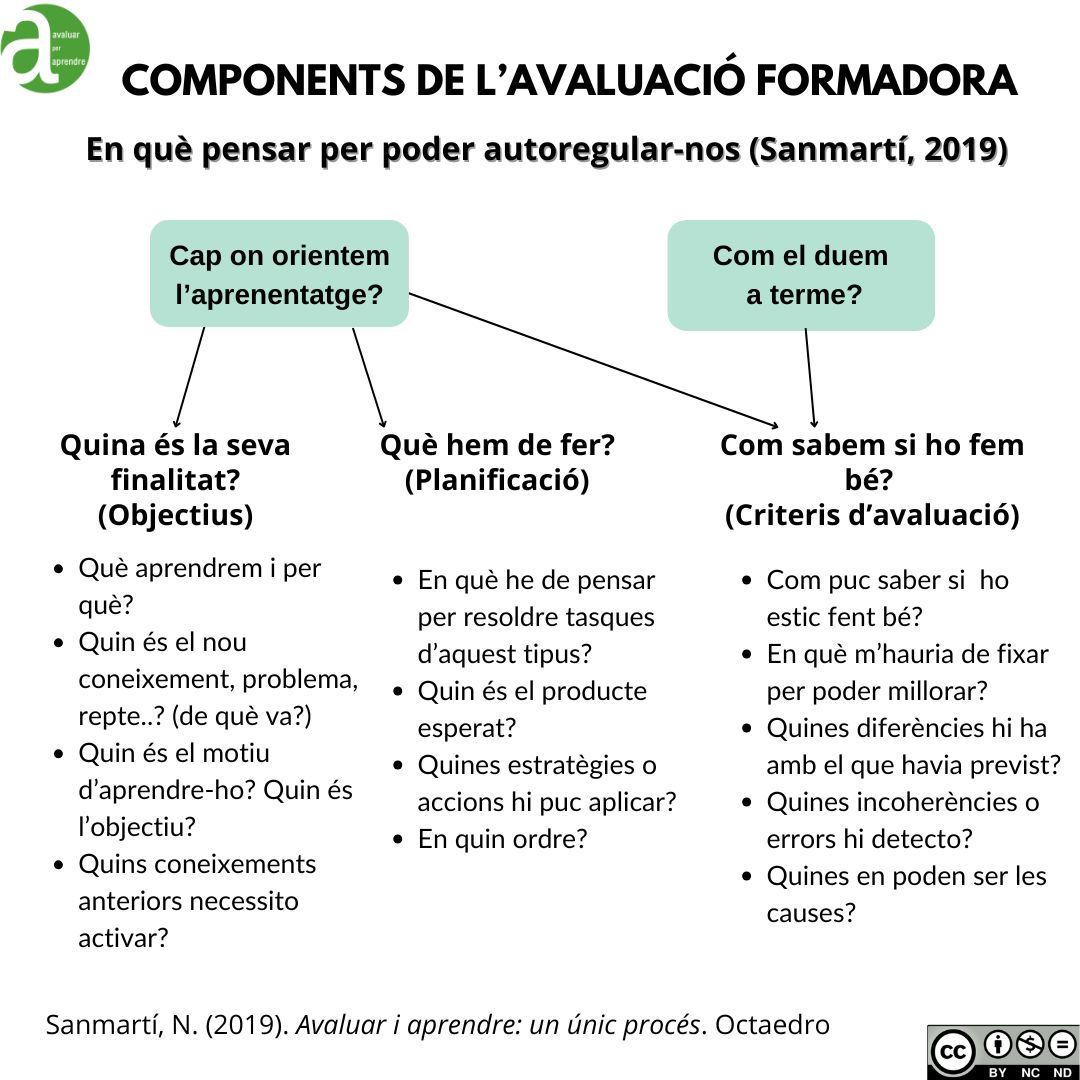
3- Compartir amb l'alumnat els criteris d'avaluació no és donar la rúbrica o la llista feta sinó que cal presentar exemples per analitzar-los conjuntament i fer bones preguntes perquè observin el que està molt bé.
I com ho apliquem a l'aula perquè sigui relament efectiva i faci que realment l'alumnat aprengui? (fil 1/3)
1- L'alumnat ha de fer seu l'objectiu, ha de saber perquè fa aquella activitat, què aprendrà. El docent fa bones preguntes perquè ho verbalitzin amb les seves paraules.
2/3
2- Cal ensenyar l'alumnat anticipar les seves accions, a planificar com ho ha de fer, els passos que ha de seguir. S'ha de dedicar temps a aquesta tasca. La poden fer en grup, per parelles o individualment i deixar que ho expressi amb les seves paraules.
Molt important. Com diu @RonBergerEL el feedback ha de ser amable, útil i concret. Dir "molt bé" és amable, però no és ni útil ni concret. Hauríem de "molt bé, perquè ...". I si diem "malament" no és ni amable, ni útil ni concret. Cal donar a l'alumnat opcions per avançar.
El feedback només és formatiu si l'alumne el pot fer servir per millorar. Si arriba tard, si és massa general o si es limita a justificar-ne una nota, té poc efecte.
@JuanEldelblog
Una bona planificació de curs no comença preguntant quines activitats farem, sinó quin aprenentatge volem que romangui quan l'activitat hagi acabat.
@JuanEldelblog
https://t.co/Xc0PPAHCxN
Els 4 eixos dels principis de Rosenshine:
1. Seqüenciar conceptes, entregar models i emprar bastides.
2. Preguntar (fer preguntes i comprovar la comprensió)
3. Revisar el material (evocar)
4. Etapes de la pràctica (guiatge i autonomia)
@EfectoMcguffin
https://t.co/WikvsDSbXF..
A German psychologist proved in 1885 that cramming erases what you learned within 48 hours. He published the fix in the same book. Almost no school on Earth has adopted it in 140 years.
His name was Hermann Ebbinghaus.
He had no lab. No funding. No colleagues.
He worked alone in a room in Berlin and ran every experiment on himself. He spent years memorizing thousands of nonsense syllables — made-up combinations like DAX and BUP, strings with no meaning — so that prior knowledge could not contaminate the results.
Then he tested his own recall at intervals. Twenty minutes. One hour. Nine hours. One day. Six days. Thirty-one days.
What he found became one of the most replicated findings in the history of psychology.
Two-thirds of everything you learn is gone within 24 hours if you do not return to it. Within a week, the curve flattens near zero. The brain does not store what it does not revisit. It treats unused information the way it treats everything else it does not need. It discards it.
He drew this curve in 1885 and called it the forgetting curve.
Then he found something else in the same data.
Students who spread their study sessions over multiple days retained far more than students who spent the same total hours studying in one block. Not slightly more. Dramatically more. The brain needed time between exposures to consolidate the material into something durable.
He called this the spacing effect.
Same information. Same total hours. Completely different outcome depending on when you spread the hours out.
The finding has been replicated over 250 times. A 2006 meta-analysis in Psychological Bulletin covered 254 studies across every age group and every subject. The effect held every time.
A German journalist named Sebastian Leitner built a physical flashcard system around it in 1972. An open source app called Anki turned that system into software in 2006. Medical students who use Anki to pass board exams are not working harder than everyone else. They are working in the only pattern the brain actually responds to.
The most uncomfortable part of all of this is what happened after Ebbinghaus published.
Educators read the research. They understood what it showed. They kept the cramming.
The school calendar was already built around it. Semester exams. Finals week. One concentrated block of review before the test and then nothing. The entire architecture of how most schools schedule learning is optimized for the forgetting curve, not against it.
The lesson is not that you need more time to study.
It is that the same time, distributed differently, produces a completely different brain.
Ebbinghaus proved this in 1885 with no budget and no institution. He ran the experiment on himself because no one would run it for him.
The fix has been available for 140 years.
Almost nobody who designs schools has used it.
La pressa és enemiga de la qualitat. L’aprenentatge profund requereix temps per comprendre, connectar, reflexionar i transferir. Necessita ser significatiu, vinculat al que l’alumne ja sap, i ha d’anar més enllà de la repetició mecànica.
@perevilasecac
https://t.co/m0vVpLj4BH
2- Anàlisi de models. Veure exemples diversos i analitzar-los amb detall, el seu contingut, estructura, organització...
3- Compartir els criteris d'avaluació. Això que he de fer, estarà molt bé si ..... Els criteris d'avaluació s'han de reflexionar en positiu: com fer-ho molt bé
Sovint els i les docents demanem a l'alumnat que faci tasques sense haver proporcionat prou fonaments perquè les facin bé:
1- Què he de fer exactament? (Comprensió de la demanda i de l'objectiu d'aprenentatge de la tasca).
2-
Avui, a @MonDiari miro d’anar més enllà de la plantada dels docents respecte a les sortides i colònies i entendre en profunditat què és el que està passant. Espòiler: quelcom s’ha trencat entre societat i escola
La fi del contracte educatiu https://t.co/e8nWAt5HXd
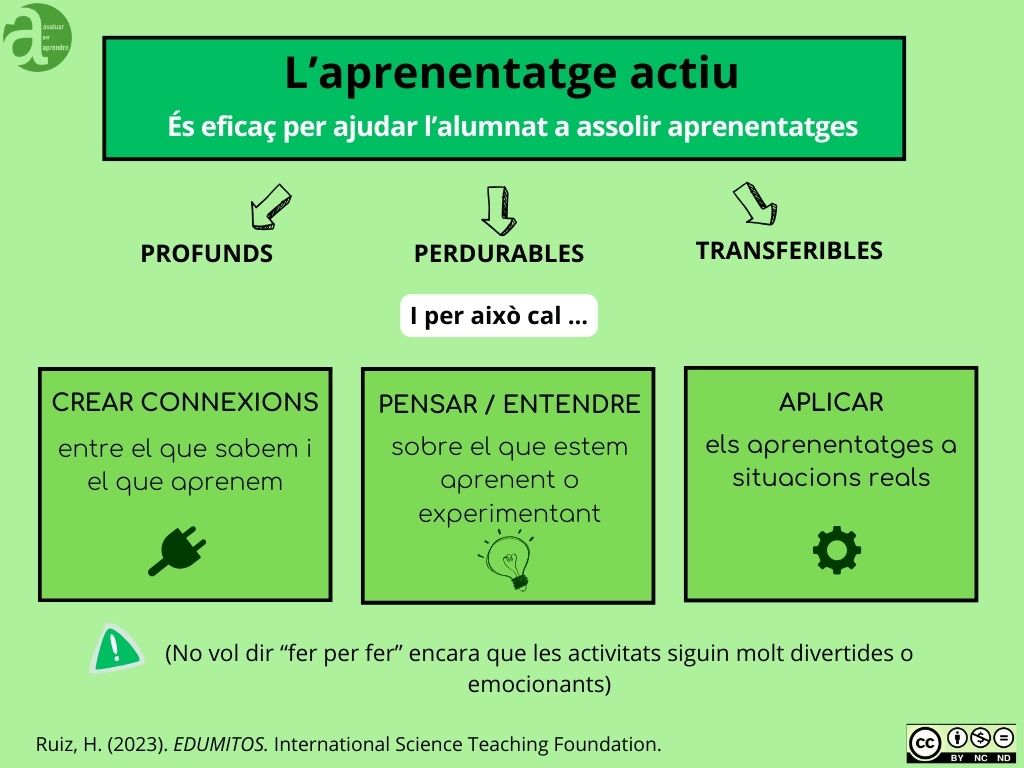
L'aprenentatge actiu és eficaç per ajudar l'alumnat a assolir aprenentatges profunds, perdurables i transferibles. Per això cal:
▪️Crear connexions entre el que sabem i el que aprenem.
▪️Pensar i entendre sobre el que estem aprenent.
▪️Aplicar l'aprenentatge a situacions reals.
He creat una eina que m’hauria encantat tenir fa anys: un portal web gratuït amb 24 eines específiques per a alumnat amb NEE. 🏫✨
Des d'avaluació amb IA fins a comunicació amb pictogrames i regulació sensorial. Us explico què hi podeu trobar en aquest fil! 👇