California is one of the most dynamic places on the planet.
But it is a case study in how a rich society can spend more and more while producing less and less of what its ordinary citizens need.
My take:
@CAgovernor Just to be clear CA gas prices being the highest in the country, most of the CA welfare schemes working for others …. and many other things are unsustainable not awarding American innovation !
YOUR MACBOOK BATTERY IS DYING TWICE AS FAST AS IT SHOULD.
Not because of how you use it.
Because of a setting Apple built to protect it and chose not to turn on by default.
Millions of MacBook owners are killing their batteries every single day without knowing it. 🧵
Welcome home Reid, Victor, Christina, and Jeremy! 🫶
The Artemis II astronauts have splashed down at 8:07pm ET (0007 UTC April 11), bringing their historic 10-day mission around the Moon to an end.
Food for thought.
Trump, Hormuz and the End of the Free Ride
For half a century, Western strategists have known that the Strait of Hormuz is the acute point where energy, sea power and political will intersect. That knowledge is not in dispute. What is new in this war with Iran is that the United States, under Donald Trump, has chosen not to rush to “solve” the problem. In Hegelian terms, he is refusing an easy synthesis in order to force the underlying contradiction to the surface.
The old thesis was simple: the US guarantees open sea lanes in the Gulf, and everyone else structures their economies and politics around that free insurance. Europe and the UK embraced ambitious green policies, ran down hard‑power capabilities and lectured Washington on multilateral virtue, secure in the assumption that American carriers would always appear off Hormuz. The political class behaved as if the American security guarantee were a law of nature, not a contingent choice. Their conduct today is closer to Chamberlain than Churchill: temporising, issuing statements, hoping the storm will pass without a fundamental reordering of their responsibilities.
Trump’s antithesis is to withhold the automatic guarantee at the moment of maximum stress. Militarily, the US can break Iran’s residual ability to contest the Strait; that is not the binding constraint. The point is to delay that act. By allowing a closure or semi‑closure to bite, Trump ensures that the immediate pain is concentrated in exactly the jurisdictions that have most conspicuously free‑ridden on US power: the EU and the UK. Their industries, consumers and energy‑transition assumptions are exposed.
In that context, his reported blunt message to European and British leaders, you need the oil out of the Strait more than we do; why don’t you go and take it? Is not a throwaway line. It is the verbalisation of the antithesis. It openly reverses the traditional presumption that America will carry the burden while its allies emote from the sidelines.
In this dialectic, the prize is not simply the reopening of a chokepoint. The prize is a reordered system in which the United States effectively arbitrages and controls the global flow of oil. A world in which US‑aligned production in the Americas plus a discretionary capability to secure,or not secure, Hormuz places Washington at the centre of the hydrocarbon chessboard. For that strategic end, a rapid restoration of the old status quo would be counterproductive.
A quick, surgical “fix” of Hormuz would short‑circuit the dialectic. If Trump rapidly crushed Iran’s remaining coastal capabilities, swept the mines and escorted tankers back through the Strait, Europe and the UK would heave a sigh of relief and return to business as usual: underfunded militaries, maximalist green posturing and performative disdain for US power, all underwritten by that same power. The contradiction between their dependence and their posture would remain latent.
By declining to supply the synthesis on demand, and by explicitly telling London and Brussels to “go and take it” themselves, Trump forces a reckoning. European and British leaders must confront the fact that their energy systems, their industrial bases and their geopolitical sermons all rest on an American hard‑power foundation they neither finance nor politically respect. The longer the contradiction is allowed to unfold, the stronger the eventual synthesis can be: a new order in which access to secure flows, Hormuz, Venezuela and beyond, is explicitly conditional on real contributions, not assumed as a right.
In that sense, the delay in “taking” the Strait, and the challenge issued to US allies to do it themselves, is not indecision. It is the negative moment Hegel insisted was necessary for history to move. Only by withholding the old guarantee, and by saying so out loud to those who depended on it, can Trump hope to end the free ride.
For the foreigners in the gulf states these “risk-adjusted-returns” have always been precarious for a variety of reasons. This event is probably one of the most significant reminders of it in recent years!
The United Arab Emirates is the most leveraged country on earth and almost nobody understands why.
Eighty eight percent of its population are foreign nationals. Ten point four million people who hold passports that say India, Pakistan, Bangladesh, Philippines, Egypt, Britain, somewhere else. They are not citizens. They are residents. They chose to be there because the risk-adjusted return on their lives was positive. Better jobs. No income tax. Safety. The entire economic model of the UAE is a value proposition, and that value proposition has a denominator called security that just went to zero.
Emirates, the world’s largest international airline, has suspended all flights indefinitely. Etihad suspended until Monday. Singapore Airlines cancelled its Dubai service through March 7. United Airlines through March 4. More than eighteen hundred flights were cancelled on Saturday alone, another fourteen hundred on Sunday. Dubai International Airport, which handled over a hundred and twenty seven million passengers last year, is dark. A CNN verified video from inside the terminal shows a passenger in a blood-spattered shirt being told to go home. The UAE Ministry of Education has moved all schools to distance learning through Wednesday. Sharjah Airport is shut. Abu Dhabi Airport took a direct hit that killed a Pakistani national and wounded seven.
The UAE confirmed its air defenses intercepted one hundred and thirty seven ballistic missiles and two hundred and nine drones. Fourteen drones were not intercepted. Their debris fell on residential neighborhoods, hotel facades, port facilities, and according to multiple reports, a shopping center in Sharjah.
Here is what matters. When France gets bombed, the French stay because it is France. When Ukraine gets bombed, Ukrainians stay because it is Ukraine. When the UAE gets bombed, the ten million people who make up eighty eight percent of its population have a decision to make. And that decision has a very short fuse.
A country where nearly nine in ten residents can leave is not a nation in the traditional sense. It is a special economic zone with a flag. The moment the value proposition inverts, the population does not resist. It withdraws. This is not a war of attrition. It is a bank run on a country.
The deposits are human. There is no deposit insurance. And the withdrawal window just opened.
Schools are closed. Airports are closed. Flights are cancelled through next week. The residents of the world’s most ambitious urban experiment are sitting in underground parking garages because Dubai has no bomb shelters.
Nobody models a bank run until it starts.
https://t.co/BrzGRrU3VW
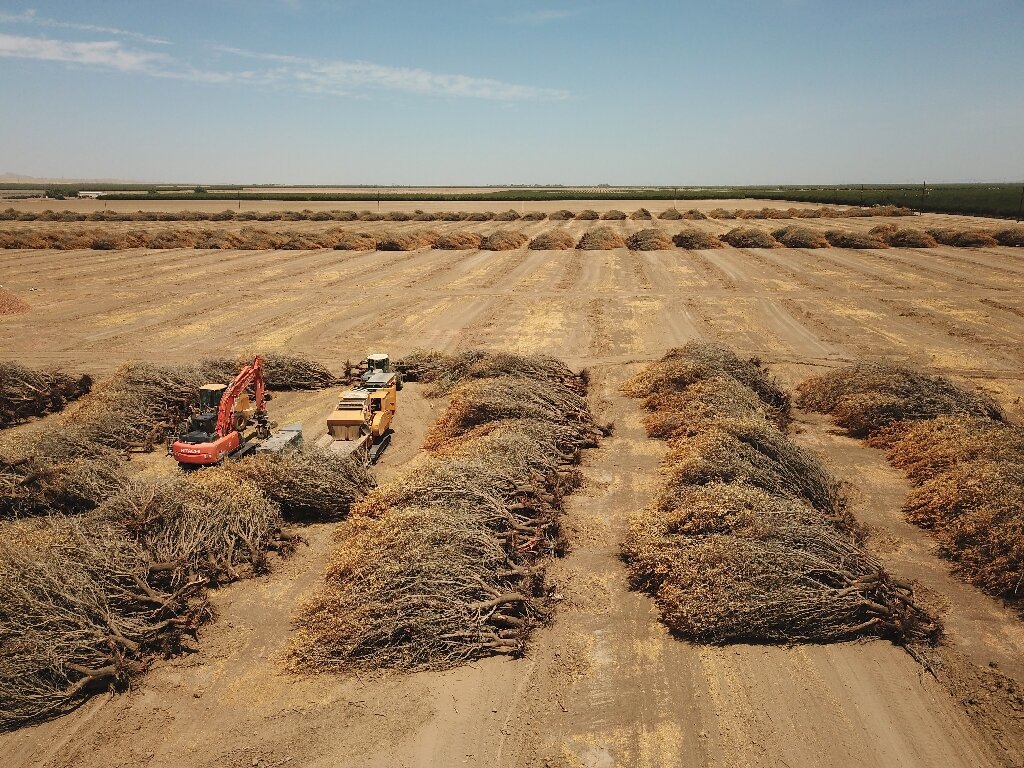
California's Central Valley produces 80% of the world's almonds. Each almond requires 3.2 gallons of actual irrigation water to grow. Not rainfall. Actual tap water pumped from aquifers.
One gallon of almond milk requires 162 gallons of irrigation water. Compare that to dairy milk at 8 gallons of tap water per gallon, with the rest being rainfall that falls on pasture anyway.
But here's where it gets properly grim. Almonds bloom for exactly three weeks in February. During those three weeks, California needs every pollinating bee in North America transported to the Central Valley or the crop fails entirely.
Commercial beekeepers truck in 31 billion honeybees. That's two-thirds of America's entire managed bee population, all concentrated in one valley for three weeks. The bees are packed into trucks, driven across the country, dumped into almond groves drenched in pesticides, worked to exhaustion, then packed up and shipped to the next crop.
The mortality rate is catastrophic. Beekeepers report losing 30 to 50% of their hives annually. That's billions of bees dead. Not from natural causes. From being used as disposable pollination machines for your almond milk.
The pesticides don't help. Almond groves are sprayed with neonicotinoids which scramble bee navigation systems, fungicides which weaken their immune systems, and herbicides which eliminate the wildflowers they'd normally forage on between almond blooms.
Meanwhile the aquifer depletion is permanent. The Central Valley has sunk 28 feet in some areas from groundwater extraction. That water took 10,000 years to accumulate. It's being drained in decades for almond milk.
Your vegan latte killed more bees and used more water than a year's worth of dairy milk. But it's got "plant-based" on the label so you're definitely saving the planet.