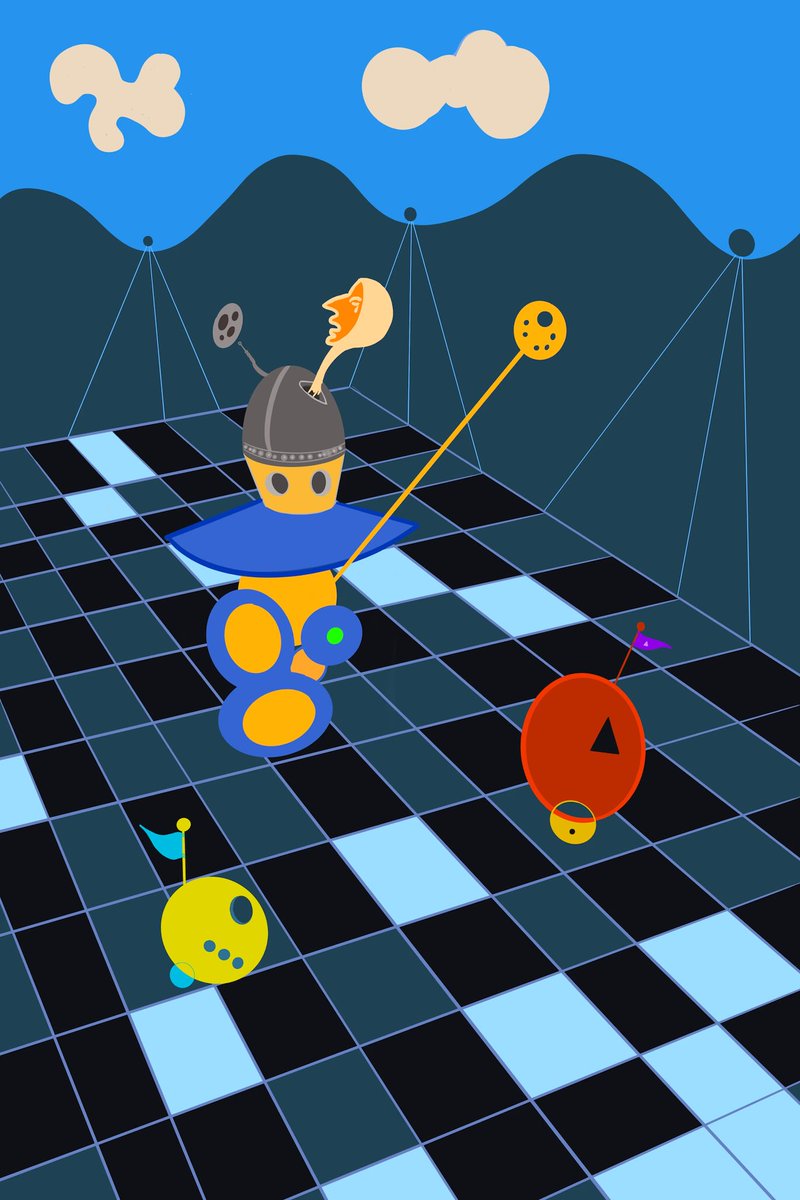
On Kitsch, Its Seductions, and the Con of Manufactured Depth.
There is a balloon dog the size of a small car, forged in mirror-polished stainless steel, reflecting the crowd that gathered to admire it. It costs somewhere north of $50 million. The crowd, educated, sophisticated, aware loves it without embarrassment, which is precisely what its maker intended. Jeff Koons has never hidden what he is doing. The problem is that much of the art world has pretended, for decades now, that what he is doing is something else entirely.
This is the central deception of contemporary kitsch: not that it is pleasurable, but that pleasure has been dressed in the borrowed clothes of criticality and passed off as intellectual seriousness. To understand why this matters, we first need to understand what kitsch actually is…
#artmagazine #artists #contemporaryartmagazine #contemporaryart #kitsch
Go to article -> https://t.co/92dlY2c8dw
How Instagram killed the ratio.
A century of photographic tradition — from Oskar Barnack’s Leica to the Hasselblad on the moon — dismantled by a Silicon Valley app and a generation raised on smartphone screens.
#artmagazine#art#photography#artmagazines#visualhistory
Beyond the Hype: Digital Art and the NFT Reckoning.
For a brief moment, it seemed like the art world had been completely rewritten. In 2021, Beeple sold Everydays: The First 5000 Days for $69 million at Christie’s a sale that didn’t just make headlines, it detonated a new market. Suddenly, digital files long considered infinitely reproducible and commercially slippery had scarcity, ownership, and staggering price tags. At the center of it all was a piece of infrastructure most people had never heard of: the Non-Fungible Token, or NFT. But several years on, the frenzy has cooled. What remains is a more complicated, more interesting question: what did NFTs actually change about digital art and what, if anything, will last?
#art #artmagazine #nft #artworld #artmarket #contemporaryart #contemporaryartmagazine
#artists