Palantir has been granted “unlimited access” to NHS patient data.
This is the same company that is involved in mass surveillance and genocide.
We did not consent to this. Get Palantir out of our NHS, now.
King Charles inherited £650m tax free, gets £125m a year tax free from the tax payer and has an estate worth £22bn that’s never taxed.
But he still needed a 45% pay rise.
Like if he needs a pay cut.
RT if you want the Monarchy gone.
#NotmyKing#AbolishTheMonarchy
Westminster may finally be about to have the argument it has spent 40 years avoiding.
If Andy Burnham returns to Parliament, the political class will know how to cover it. A leadership drama. Who is up, who is down, whether Keir Starmer can survive, whether Labour is once again turning inward. The familiar machinery of Westminster psychodrama will whirr into life.
That framing misses the larger point. Burnham’s possible return matters not because of what it says about Labour’s leadership, but because of what it reveals about the British state: what it can still do, what it has forgotten how to do, and what kind of country it must become if it is serious about resilience.
Britain is finally having a more serious conversation about national security. The Strategic Defence Review, the pivot back towards Europe, the recognition that hybrid warfare turns citizens, infrastructure and civic institutions into part of the front line: all of it marks a real shift in how the state thinks about its own survival.
But at the centre of that conversation lies a question that the defence establishment, and most of Westminster, still does not want to answer. What kind of society do you need to be before resilience is possible?
Finland is now the model everyone cites. Comprehensive security. Whole-of-society defence. Civilian preparedness woven into military planning. British strategists admire the Finnish system and ask how it might be copied. But the admiration stops short of the uncomfortable question: why does it work there?
The answer is not geography or history or some mysterious quality of Finnish national character. It is structural. Nearly 80% of Finns say they would defend their country if attacked. In Britain, the figure is closer to 33%. That gap is not an accident. It exists because Finland has spent decades building a society in which people have a genuine stake in what they are being asked to defend. Energy is affordable. Housing is available. Public services function. Institutions command trust. The Nordic welfare state is not a sentimental add-on to Finnish security policy. It is the foundation of it. You cannot ask people to defend a country that does not work for them.
Britain has spent 40 years building the opposite. The privatisation of essentials – energy, water, transport, housing – transferred wealth upwards from households to shareholders while making the basics of everyday life more expensive. The state, stripped of the tools to control costs at source, has been reduced to compensating after the fact.
Out of every pound the Government spends on housing, 88p goes to subsidising private rents. Just 12p goes to building homes. When energy prices spiked in 2022, the Government spent £40bn in a single winter cushioning the blow, not because it had a resilient energy system but because it lacked one. Debt interest now consumes more than £100bn a year. Britain has the highest debt servicing costs in the G7: the compounding price of financing failure rather than eliminating it at source.
This is what bond market dependency actually looks like. It is not an abstract fiscal condition. It is the consequence of a state that has been stripped of the supply-side tools that would let it cure the problems it now pays, indefinitely, to manage. And here is the paradox the Treasury refuses to confront. The countries that borrow most cheaply are often those that have retained the public investment model Britain abandoned. The spread between UK and Dutch borrowing costs has widened sharply not because markets fear public investment, but because they have lost confidence in a model that borrows to subsidise private failure while never addressing its causes.
This is the connection Britain’s defence debate is missing. The familiar framing, that social spending is what must be sacrificed to meet the NATO target, is not merely politically toxic. It is strategically illiterate. Cutting the foundations of social cohesion to fund the hardware of national defence is self-defeating. You end up with planes and no pilots, submarines and no crew, an army that cannot recruit because the society it is meant to protect has stopped believing in itself.
I think Burnham understands this. That is why his programme is more interesting than the leadership gossip suggests. What he has been building in Greater Manchester – public control of transport, expanded social housing, investment in the productive foundations of the city economy – is not a nostalgic rerun of postwar nationalisation. It is a proof of concept for a different kind of state.
The Bee Network is the most visible example, but the argument behind it travels. A state that can shape markets is not condemned to subsidise their failures. A state that produces affordable energy through public generation does not need to spend tens of billions cushioning every price shock. A state with a serious public housebuilding programme does not need housing benefit to rise endlessly in line with private rents. A state that builds institutions people can see, use and trust begins to restore the civic confidence on which resilience depends.
The real constraint on Britain is not money. It is capacity: the workers, institutions, supply chains and public purpose needed to turn national will into national renewal. Britain’s tragedy is not that it has run out of money. It is that after 40 years of hollowing out the state, it has made itself less able to act.
Burnham’s critics will reach for the familiar warning. Borrow more, spend more, spook the gilt markets, repeat the Truss disaster. But this misunderstands both the problem and the opportunity.
Bond markets do not have ideological preferences. They have functional ones. They prefer clarity, credible revenue streams, productive investment, and a state with a plan. What they punish is not public ambition but incoherence. A properly designed productive state programme would not be a leap into fiscal fantasy. It would be an attempt to end the much costlier fantasy that Britain can keep borrowing to compensate for broken markets while refusing to repair them.
The defence conversation and the economic conversation need to become the same conversation. Finland did not build national resilience by choosing between welfare and security. It built resilience by understanding that they are inseparable: that a country in which the basics work, where people trust one another and the institutions around them, is one that can face danger with something more than anxiety.
That is the deeper argument Burnham represents. Westminster will be tempted to treat him as a leadership story. It should resist the temptation. The question is not whether Burnham can return to parliament. It is whether Britain can return to the idea that the state should make life work. Because a country that cannot command the confidence of its people cannot truly defend itself.
This has been Israel's ambition since October 2023: use the Hamas attack as a pretext to make the conditions of Gaza so unliveable that ethnic cleansing of the Palestinians comes dressed up as a humanitarian effort.
At 92, I’ve been re-victimised by the Post Office scandal
Betty Brown lost everything in the Horizon fallout. A year after the ITV drama stunned millions, she says she is trapped in legal limbo over compensation
@katie_gatens #PostOfficeScandal https://t.co/W78CgAPYwt
Thanks for reading till the end!
My mission on X is to spread beauty as far as possible. If you enjoyed this thread, please share the first post (linked below) and follow me for more content: @JamesLucasIT
This might be the most incredible thing you have ever seen. It is not a set in a movie. It is a teacher and children in Gaza starting the school year in a field of rubble and unexploded ordinance surrounded by Israeli drones.
IG @hassan_eslaih
There is literally no need at all for Labour to deliver a painful budget in October. There is a massive capacity to increase taxes on wealth. If Labour wanted to borrow they could. And there are people who want good work.
3. This painting depicts the process of human aging as you walk by it.
Sergi Cadenas' work is defined by meticulous detail. He uses kinetic optics, applying vertical strips of paint paste to the canvas, then painting a different image on each side after it dries.
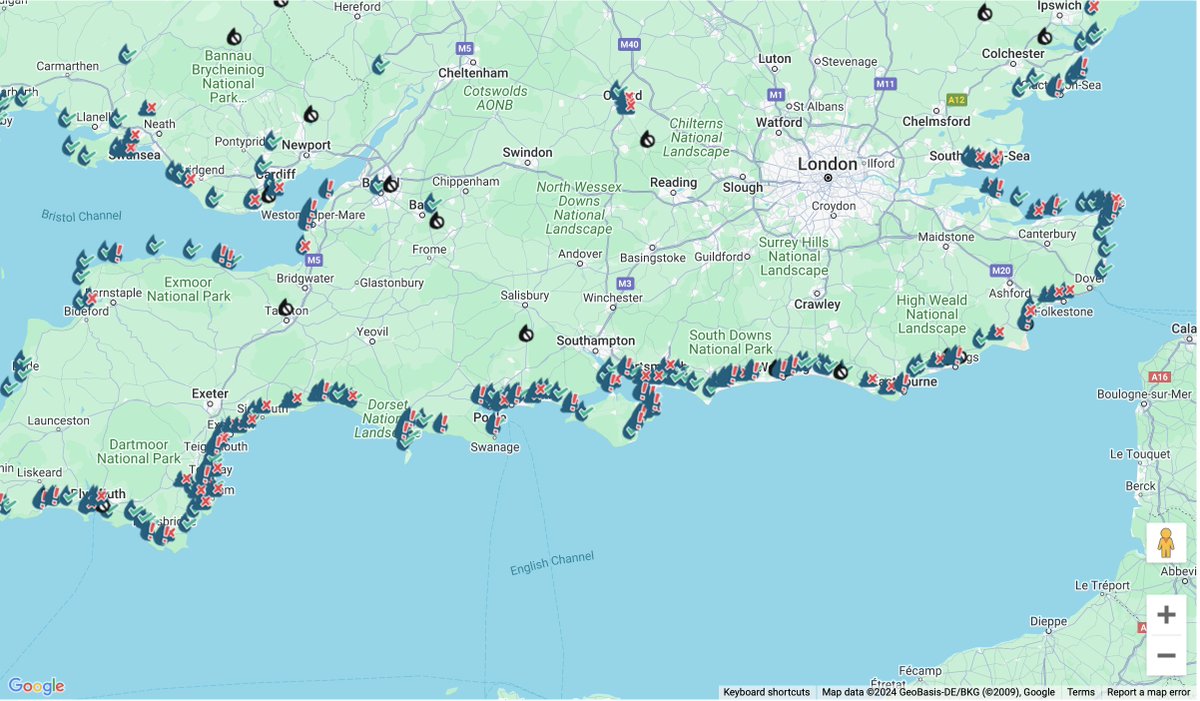
From St Austell in Cornwall to the Thames Estuary by my reckoning there are currently 87 different locations where sewage is being dumped on beaches and into the sea.
So how's you're bank holiday weekend going?
Rachel Reeves’ spreadsheets still balance tonight. At least 330,000 living in extreme poverty are paying the price for that, and the virility test she and Starmer have created around this issue. How do they sleep at night?
According to #Copernicus, Sunday 21st July 2024 was the hottest day ever recorded globally in 100,000 years—and yet I still have trolls telling me that because they are having a cloudy summer in the #UK, global warming doesn't exist. It does - and it's accelerating. #climate
Ian Hislop, "He's just pure Trump isn't he.. Farage's one policy is that we're having net zero immigration.. The first time he's asked about it in an interview and they ask him should we have the following skilled workers in. He says, yes we'll have them.. We'll have them.. We'll have them.. 600,000.. So that's not zero, is it"
Alex Horne, "Well Carol will be able to tell you that"
Carol Vorderman, "It's low than if it were higher" #HIGNFY