I heard Iowa farmers are wanting to take their lead contaminated soil and dump it on Trump’s golf courses. That sounds great but can I also suggest doing what German farmers did a few years back?
🔴 Gmail, Facebook, Amazon… près de 2 milliards de données de connexion exposées sur Internet !
Un chercheur en cybersécurité a découvert une gigantesque base contenant des adresses e-mail, des mots de passe et des informations provenant notamment d’ordinateurs infectés par des logiciels malveillants. https://t.co/E3TpKUahOd
Rumors are swirling that AI labs have secretly solved P = NP.
Meanwhile, a movie from 34 years ago walks us through the implications.
Never a dull moment in the simulation.
Sneakers (1992)
@MassachusettsYP 1 in 5 residents of the PA is foreign born.
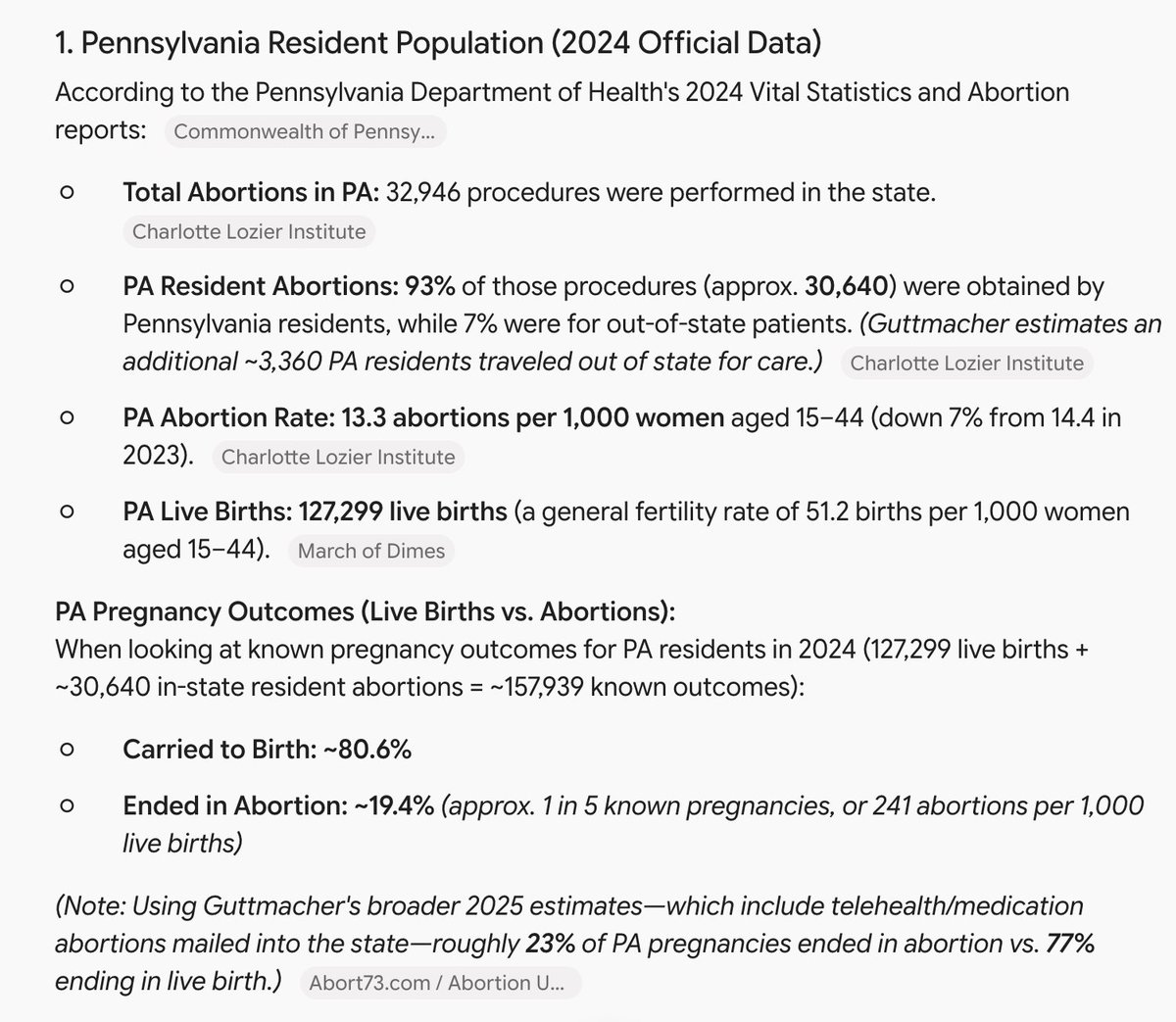
In pa 1 in 5 native pregnancies are terminated. Our arrogance is exterminating our genetic heritage while enabling the rationalization of a 1 to 1 worker replacement program to enforce mob rule.
1,340,000 foreign born living in Massachusetts.
That’s 1 in 5 residents of the Commonwealth.
Many of them totally unassimilated, spiteful ethnic narcissists, who undercut Americans at every opportunity and treat our homeland as an economic looting zone.
They all have to go.
- google banning accounts for just using neon
- claude reporting people to authorities
- gpt can't stop glazing
you know what this leads to? open source models & open-weights supremacy
🚨 BREAKING: FEARS GROW THAT OPENAI OR ANTHROPIC MAY HAVE BROKEN BITCOIN’S CRYPTOGRAPHY.
Computer scientist Scott Aaronson says he has heard multiple rumors that OpenAI or Anthropic may have made a breakthrough capable of undermining modern cryptography.
Ledger’s CTO has also heard similar rumors involving three major cryptographic systems:
• RSA: Could compromise the security of global banking, government communications and digital infrastructure.
• ECC: Could expose Bitcoin private keys and put billions of dollars in crypto assets at risk.
• Ring-LWE: Could undermine a fundamental component of next-generation, quantum-resistant encryption.
The most alarming part?
A practical breakthrough against RSA or ECC could allow these attacks to be carried out using ordinary computers, without the need for quantum computers.
Ledger’s CTO remains skeptical but acknowledges that publicly disclosing such a discovery without triggering mass exploitation would be extremely difficult.
All three rumors remain unverified.
If confirmed, this wouldn't just be a threat to crypto. It would be a threat to the security of the modern digital world.
"This your last chance. After this there is no turning back. You scroll past, the story ends; you wake up in your bed and believe your country still is the good ole US of A. Or you open the USAID files, you stay in Wonderland, and I show you how deep the rabbit hole goes."
Cybersecurity is only going to be growing from here and all businesses will care more about it than ever before
It's a great time to be learning how to prevent different kinds of attacks, the market will appreciate such skills well🫡
Un dataset de 95 GB acaba de juntar casi todo el material práctico de ciberseguridad en un solo lugar.
Vyber07/cyber-security tiene 507 archivos y más de 30 áreas. Incluye 600 mil+ reportes reales de HackerOne, los 31 módulos de PortSwigger Academy, más de 1.500 labs de HackTheBox, 200+ técnicas de MITRE ATT&CK, OWASP completo, SOC, forense, cloud, IoT, AI security y reverse engineering.
Apache 2.0. Lo aceptas en la página y lo bajas.
Si entrenas modelos, lo puedes meter a Qwen o Llama local. Si no quieres fine-tunear, seleccionas los archivos que te interesan y los conectas a Claude Code o a tu base de conocimiento para revisar tus propios proyectos.
Solo para aprender, auditar lo tuyo o practicar en lab autorizado. No para atacar nada que no sea tuyo.
¿Lo usarías para fine-tunear un modelo o solo para consultarlo cuando revises código?
NVIDIA Makes Qwen3.8-27B Approximately 2.8× Lighter With NVFP4 QAD
NVIDIA has compressed Qwen3.8-27B into a representation that requires approximately 2.8× less memory for model weights, while keeping its benchmark scores remarkably close to the original BF16 version.
The release is called Qwen3.8-27B-NVFP4-QAD.
What makes this interesting is the combination of two techniques: NVIDIA’s four-bit floating-point format, NVFP4, and Quantisation-Aware Distillation (QAD).
Rather than simply reducing the precision of billions of model weights and accepting the resulting accuracy loss, NVIDIA uses distillation to help the compressed model retain the behaviour of its higher-precision counterpart.
The early results are encouraging. Across three published evaluations, the compressed model stays within 0.56 points of the BF16 model.
There is one significant limitation, though: this implementation targets NVIDIA Blackwell GPUs running Linux with vLLM. It isn’t automatically compatible with every GPU that supports conventional four-bit models.
Let’s look at what NVIDIA has achieved and what still needs to be tested.
1. NVFP4 and QAD: How the compression works
The release combines two techniques that address different parts of the compression problem.
NVFP4 reduces the memory occupied by model weights
Most full-precision model checkpoints use formats such as BF16, where each weight is represented using 16 bits.
NVFP4 uses a four-bit floating-point representation, allowing model weights to occupy considerably less storage.
For a model with 27 billion parameters, reducing the number of bits used to represent each weight can make a substantial difference.
Smaller weight representations can also reduce the amount of data that needs to move between GPU memory and processing units during inference.
But lower precision introduces a challenge.
Converting weights from BF16 to a four-bit format means representing numerical values with less precision. This approximation can affect the calculations performed throughout the network, potentially reducing the quality of its predictions.
A smaller checkpoint doesn’t automatically retain the original model’s capabilities.
QAD helps recover performance
This is where Quantisation-Aware Distillation comes in.
QAD combines low-precision quantisation with distillation to help the compressed model preserve the behaviour of a higher-precision reference.
Instead of treating quantisation as the final step, the process aims to reduce the performance loss associated with representing model weights using fewer bits.
For Qwen3.8-27B, the goal is to retain as much of the original BF16 model’s reasoning and coding ability as possible while benefiting from NVFP4’s smaller weight representation.
The roles are different:
NVFP4: Reduces the precision and memory requirements of the weights.
QAD: Helps the compressed model retain performance relative to the original.
Combining both techniques makes aggressive compression more practical without relying on quantisation alone.
2. The benchmark results are remarkably close
NVIDIA published comparisons between the original BF16 model and its NVFP4 QAD version across three benchmarks.
GPQA Diamond
BF16: 88.19
NVFP4 QAD: 87.94
Difference: -0.25 points
Terminal-Bench 2.1
BF16: 77.25
NVFP4 QAD: 76.69
Difference: -0.56 points
SciCode
BF16: 48.34
NVFP4 QAD: 48.82
Difference: +0.48 points
The compressed model comes remarkably close to the original across all three evaluations.
GPQA Diamond shows a decline of just 0.25 points, while Terminal-Bench 2.1 drops by 0.56 points.
SciCode is particularly interesting because NVFP4 QAD scores 0.48 points higher than BF16.
That small increase doesn’t necessarily mean compression improved the model’s coding ability. Evaluation variation and testing conditions can produce differences of this size.
So you’re telling me there’s a way to directly transfer $20 billion in wealth from the rich to American children without any politicians getting a cut?
Incredible technology.