Our paper is now live in BMC Psychiatry!
We suggest using mental navigation as a novel framework for understanding the process of psychotherapy and the transformative changes it brings about.
What a pleasure working with @jaaanaru@TulverK!
A thread 1\
https://t.co/km1hmZ8eBl
@wholesum@venturetwins@roanoke_gal It is not even double-blind, and it is far from being gold-standard. there are many methodological flaws, only the minority of which are mentioned in the discussion.
1/2 In our new Lancet Psychiatry paper on the brain disease model for addiction, we discuss
-its weak empirical support
-its downplaying of psychosocial causes & maintenance factors
-issues with the definition of 'brain disease'
-numerous ways forward
https://t.co/htKLnRQjIf
It's out! You can now access The Cambridge Handbook of the Law, Ethics and Policy of #AI: https://t.co/P0jSgiBsue
20 #openaccess chapters covering topics on AI, ethics, philosophy, legal domains & sectoral applications.
Huge thanks to all the authors who made this possible!
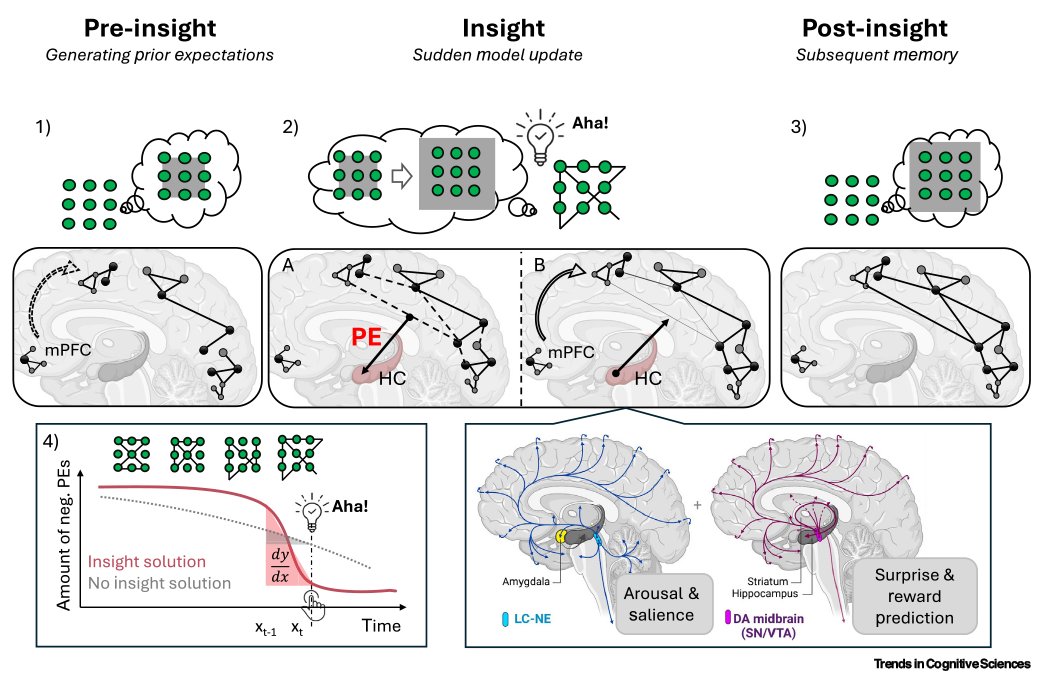
The neural basis of the insight memory advantage
Opinion by Maxi Becker (@MaxiB45064349) & Roberto Cabeza (@RobertoECabeza)
Free access before March 28: https://t.co/NN0pj95m5E
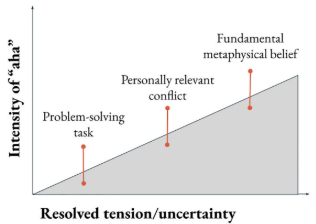
The bigger the conflict, the deeper the insight💡 🌩️
We propose a new theory of mental breakthroughs bridging insights from problem-solving, psychotherapy, psychedelics, and meditation.
out now in @CognitionJourn
led by @TulverK
https://t.co/jtXlmcKP69
More evidence of LLM homogeneity on creativity tasks. Even across different LLM models/families, their outputs are more similar to each other than human responses are, lacking semantic diversity. @yoed_kenett
https://t.co/RlP8m0ybiF
This study models stuck spontaneous thought as navigating a multidimensional semantic space with strong attractors. Analyzing word-association data yields clusters that reveal 4 thinking patterns across 3 samples.
@MigoMarta@phkragel@jesscooperphd
https://t.co/eF77O0Me3T
Five years in the making: our meta-analysis of 10 fMRI datasets across Asia, Europe & N America (N=2,433). We find creative ability emerges from dynamic switching between default and executive brain networks, with optimal creativity at a "sweet spot." https://t.co/0rmDcFhT9Y
What's the difference between artificial and human creativity?
In this new paper, I also discuss how AI may negatively affect the internal processes of human creativity, such as the development of skills, creative authenticity, and the diversity of ideas
https://t.co/IkqmdQCpSc
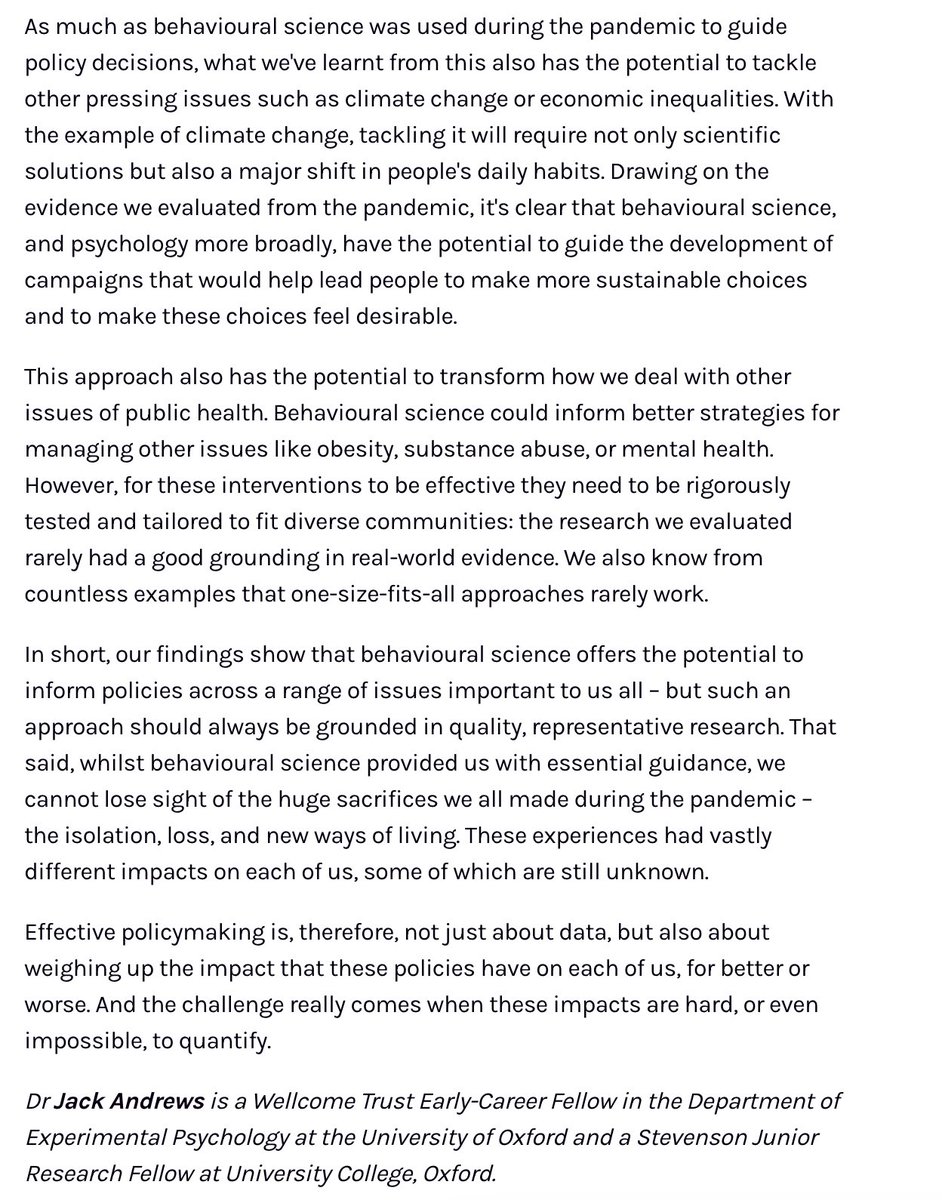
Changing our behaviour isn't easy–and changing the behaviour of others is even harder.
Here is a great analysis of 19 behavioural principles we proposed that are rooted in decades of research.
What works and what doesn't when it comes to changing behavior: https://t.co/QSoA1o9OOI
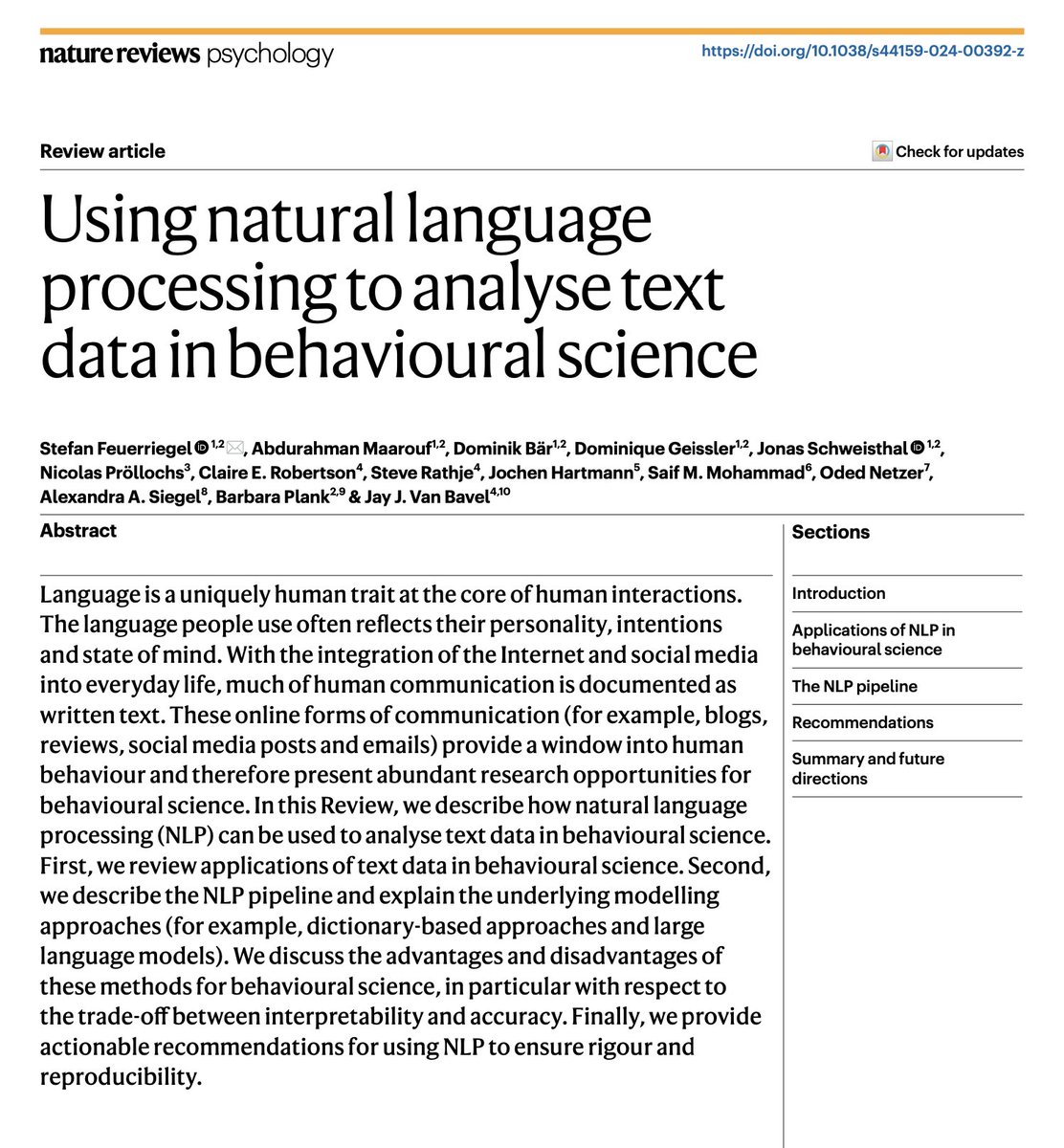
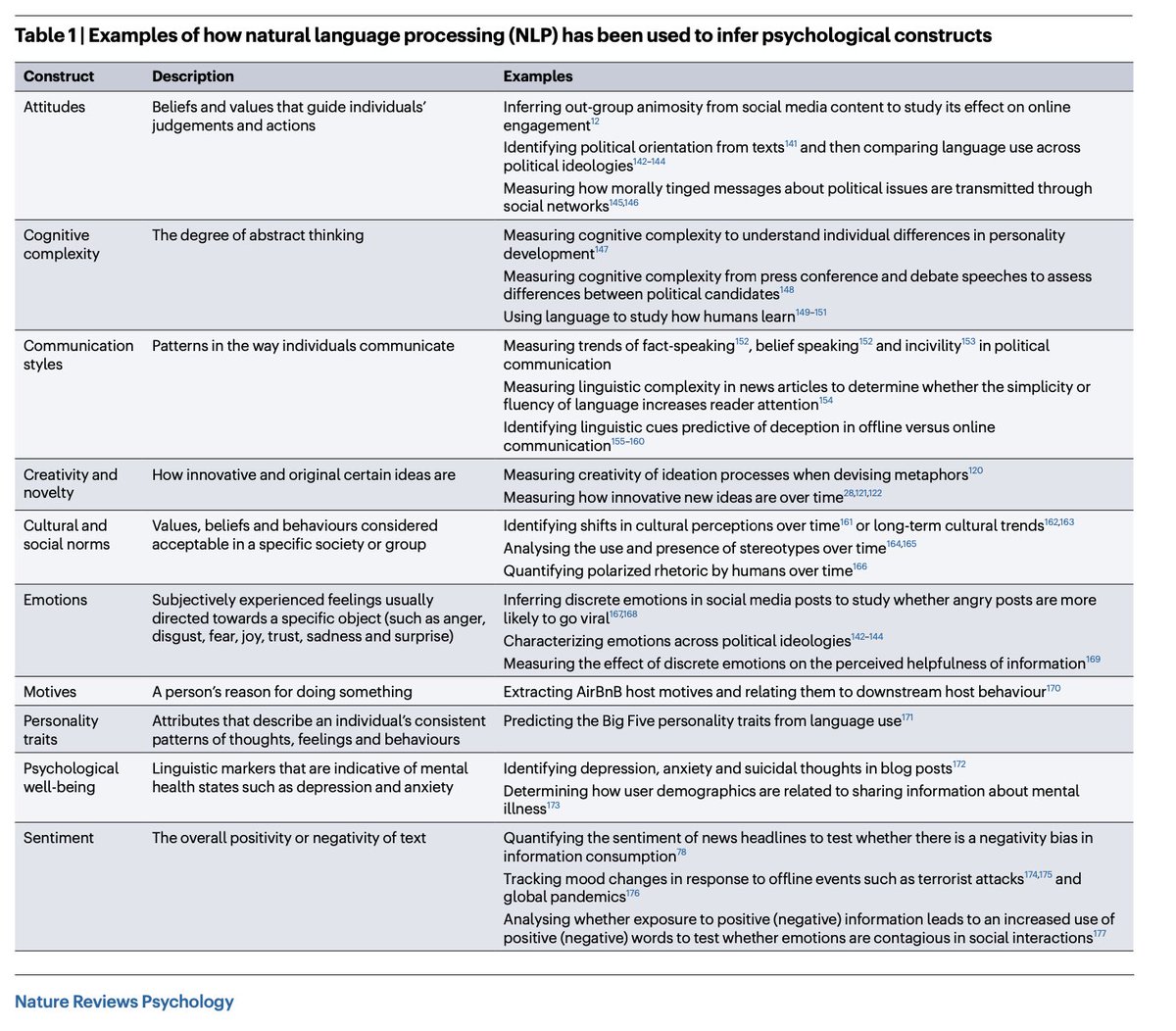
We have a new paper explaining all the ways you can use natural language processing to analyze text data in @NatRevPsych
We provide user friendly recommendations for using NLP to ensure rigour and reproducibility
Free link: https://t.co/S10dqqrwKy
Led by @stfeuerriegel
Meta-analysis (n=52 studies, 195 effect sizes) confirms the incubation effect: taking breaks away from a problem leads to more creative solutions (d=0.39)
https://t.co/yARP1HjHjI
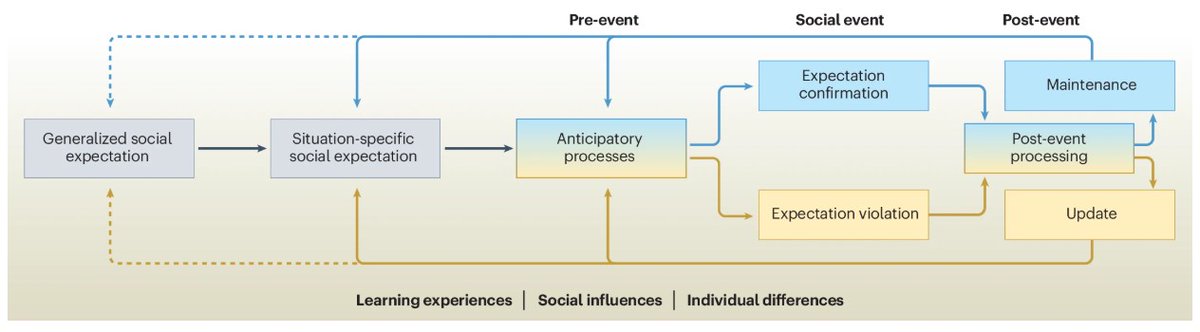
Social expectations in depression
Review by Lukas Kirchner, Tobias Kube, Max Berg, Anna-Lena Eckert, Benjamin Straube, Dominik Endres & Winfried Rief
Web: https://t.co/zllLLXpuYc
PDF: https://t.co/n90RHS2ngG
Using a round-robin design, this study replicated the “self-recapitulation effect” (where neural representations of the self are similar to those in close others’ brains) and revealed how self-esteem modulates this effect.
https://t.co/fkhXqnlpYM
Me and @DrKlintwall have been working on an app that will allow participants to interactively build networks of perceived causal relations.
I’ve put together a demo website, that I’m soft-launching while we continue to pilot the app
https://t.co/8UHgmSRgIC
🧵👇
New preprint by @xuyangwen1 et al.
Among other things, we provide evidence that mental time traveling relies on complementary allocentric and egocentric representations of time, in the hippocampus and parietal cortex, respectively. Check it out! https://t.co/DNeh1Yena9