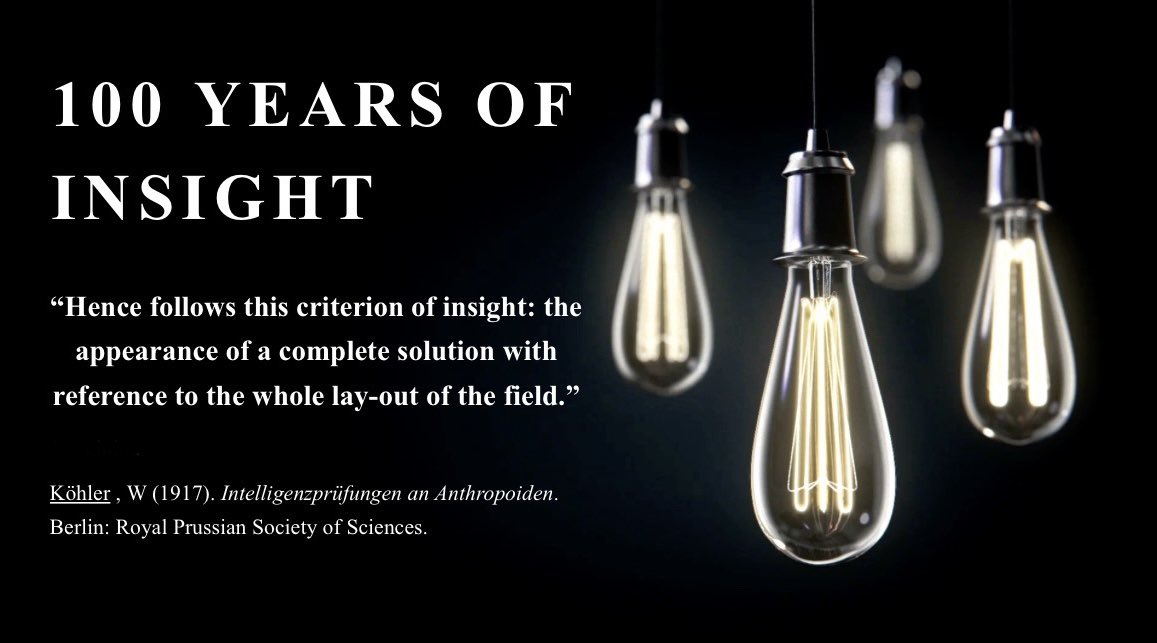
Insight isn’t a single spark but a dynamic cycle🔁 tension builds, salience shifts, and constraints loosen, allowing new remote connections to emerge. This iterative process reveals alternative paths to breakthroughs, from small "ahas" to changes in core beliefs. @CognitionJourn
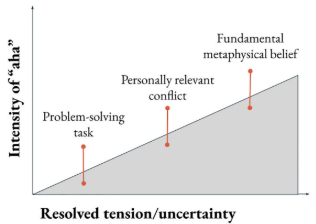
The bigger the conflict, the deeper the insight💡 🌩️
We propose a new theory of mental breakthroughs bridging insights from problem-solving, psychotherapy, psychedelics, and meditation.
out now in @CognitionJourn
led by @TulverK
https://t.co/jtXlmcKP69
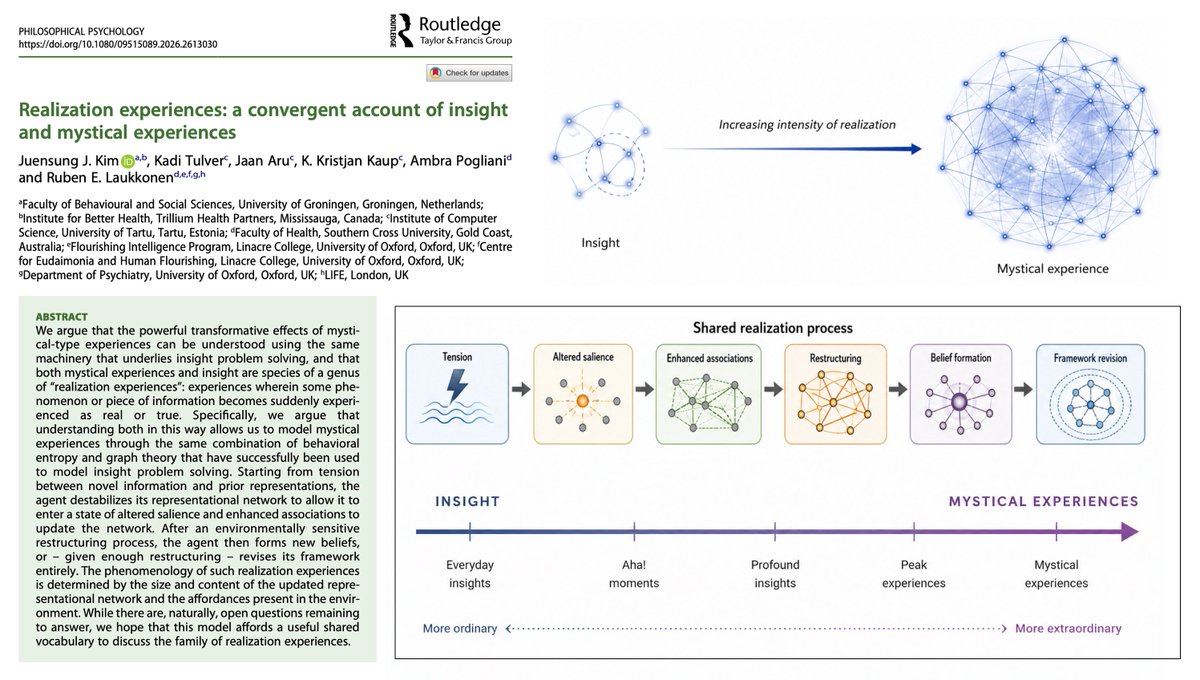
Insight as a toy model for mystical experiences.
Our new paper shows how Aha!, insight, Eureka, and mystical experiences can be modelled as realizations varying in intensity and size of the network affected. A small Aha! might restructure a local problem representation, whereas a mystical experience destabilizes a much larger self/world model.
Insight isn’t a single spark but a dynamic cycle🔁 tension builds, salience shifts, and constraints loosen, allowing new remote connections to emerge. This iterative process reveals alternative paths to breakthroughs, from small "ahas" to changes in core beliefs. @CognitionJourn
The bigger the conflict, the deeper the insight💡 🌩️
We propose a new theory of mental breakthroughs bridging insights from problem-solving, psychotherapy, psychedelics, and meditation.
out now in @CognitionJourn
led by @TulverK
https://t.co/jtXlmcKP69
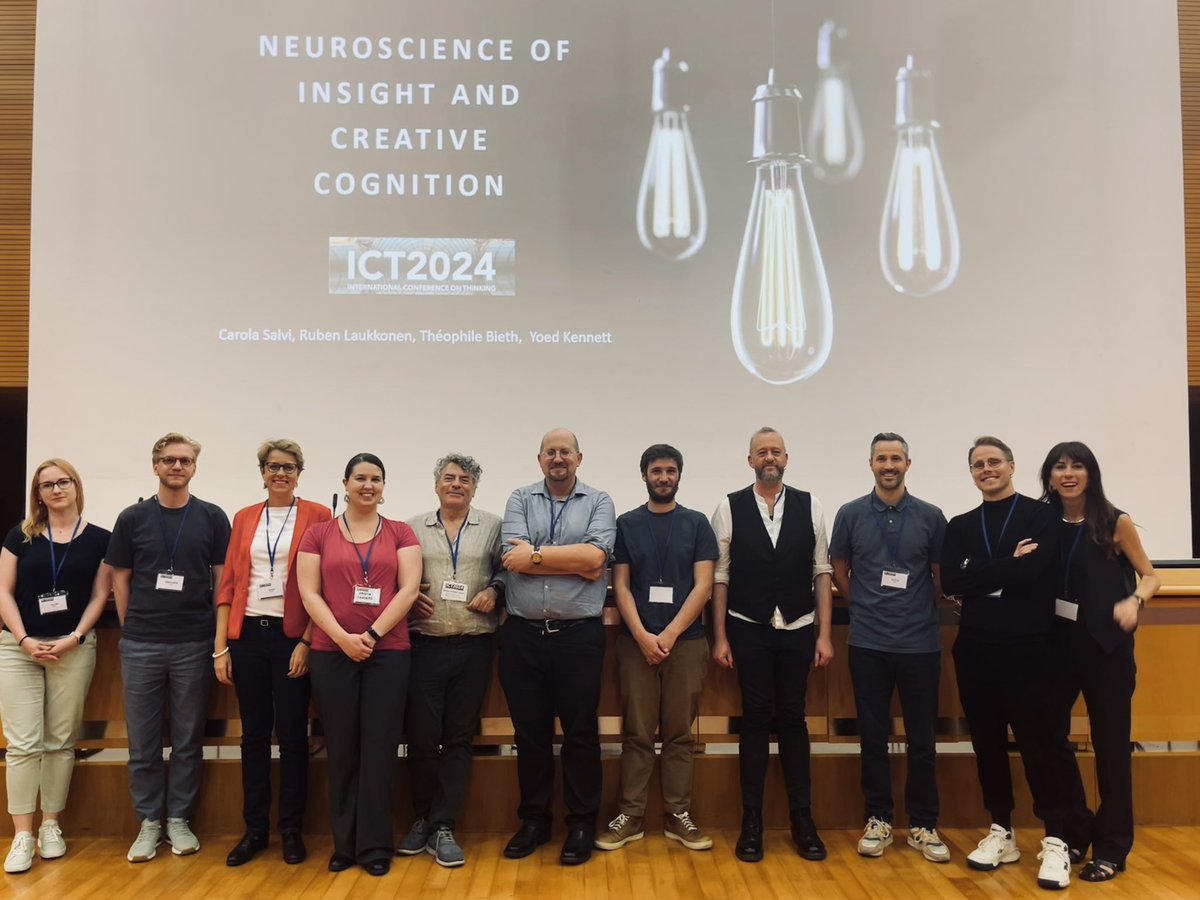
“ Insight et al.,” I have never seen so many insight researchers together! #ICT2024 hosted 4 symposia on problem-solving, insight and Creativity!!! What a momentum!!
Part II of restructuring insight - a new framework for understanding mechanisms of change in various belief structures: https://t.co/Sm8Zbmsuui with @KristjanKaup and @jaaanaru
All ideas and comments are extra welcome while we still await peers to review! 🤓
Our paper is now live in BMC Psychiatry!
We suggest using mental navigation as a novel framework for understanding the process of psychotherapy and the transformative changes it brings about.
What a pleasure working with @jaaanaru@TulverK!
A thread 1\
https://t.co/km1hmZ8eBl
How does psychotherapy work?
We suggest that psychotherapy could be understood as mental navigation.
We analyzed transcripts and found that concepts related to navigation are more prevalent in psychotherapy than in other contexts.
w @m_kabrel @TulverK
https://t.co/gvjzSSWIKt
Finally out! Hopefully, this will prove to be a useful resource for everyone looking to develop a more integrative understanding of insight experiences💡
Aha!💡The phenomenon of insight may be more common than you think.
In our review, ♨️hot off the press♨️, we try to bridge the gap between insights in problem-solving, meditation, psychotherapy, delusions and psychedelics.
with @TulverK@RubenLaukkonen
https://t.co/qHV1OrJbFe
📢In our new paper, we ask whether replicating the visual aspects of psychedelic experience in VR could have therapeutic effects.
While this is an open-label feasibility study with many caveats, we found promising effects of psychedelic VR on depression.
https://t.co/iAfKjA8sIc
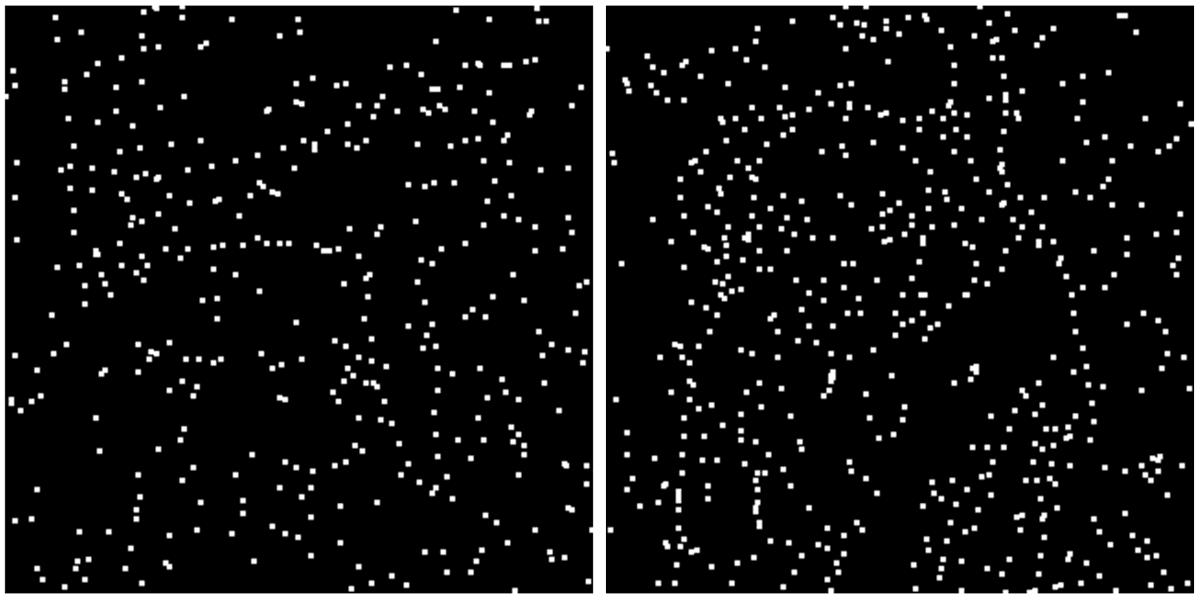
Can you guess what's hidden in these images? How did you arrive at the solution? Can we build AI algorithms that solve it in a similar way?
We developed a new dataset to investigate the iterative generation and refinement of perceptual hypotheses.🧵
https://t.co/txm416mWfQ
Merry or worried?
A short note from Talis Bachmann on figures which seem to change emotion depending on how you group the facial features:
https://t.co/q2g0QxJad1
Have you ever had a moment of understanding: "aha!", "Eureka!"?💡
We review the phenomenon of insight in problem-solving, meditation, psychotherapy, primary delusions, and psychedelics.
Spearheaded by @TulverK, with Kristjan Kaup and @RubenLaukkonen
https://t.co/e35F4ZIFGl
Wrote a brief review and commentary on what we've learnt about the factorial structure of visual perception in recent years - tldr; there is no g factor in vision https://t.co/1CGQwI8UFD
Our experiments illustrate that “hallucinating” some aspects of the visual scene is much more common than we might have previously thought. https://t.co/KhEQst5Zvc
Our work about the individual differences of the effects of priors is now out in Cognition. Take home message: different tasks and stimuli bring along different priors, so it is unfounded to make *general* claims about priors (e.g. in some patient groups). https://t.co/wlZjSjQ9Yq
Which priors do you mean? We found that there is no general factor of "relying on priors" in different visual tasks: priors depend on the task. Hence, making general claims about a particular (patient) population having strong/weak priors seems unwarranted https://t.co/iP0JZmGWfg