He/Him. @fct_pt post-doc @ULisboa_ | past: @UniofOxford | phil mind & cog sci | belief, evidence-resistance, delusional cognition | Dog dad to Alki 🐕🦺
Why are delusions adopted rather than something more plausible, or rather than nothing at all? Where do they come from?
I address these questions in a new paper with @PhilCorlett1, just out in @AustralJPhilos. You can check it out below (open access):
https://t.co/xpiupmoPHx
Very excited to share that my paper 'Epistemic Standards and Minimally Responsive Beliefs' has found a great home at Philosophy and Phenomenological Research.
If you'd like to read a preprint of it, it's available here:
https://t.co/I7ZTWxTAqA
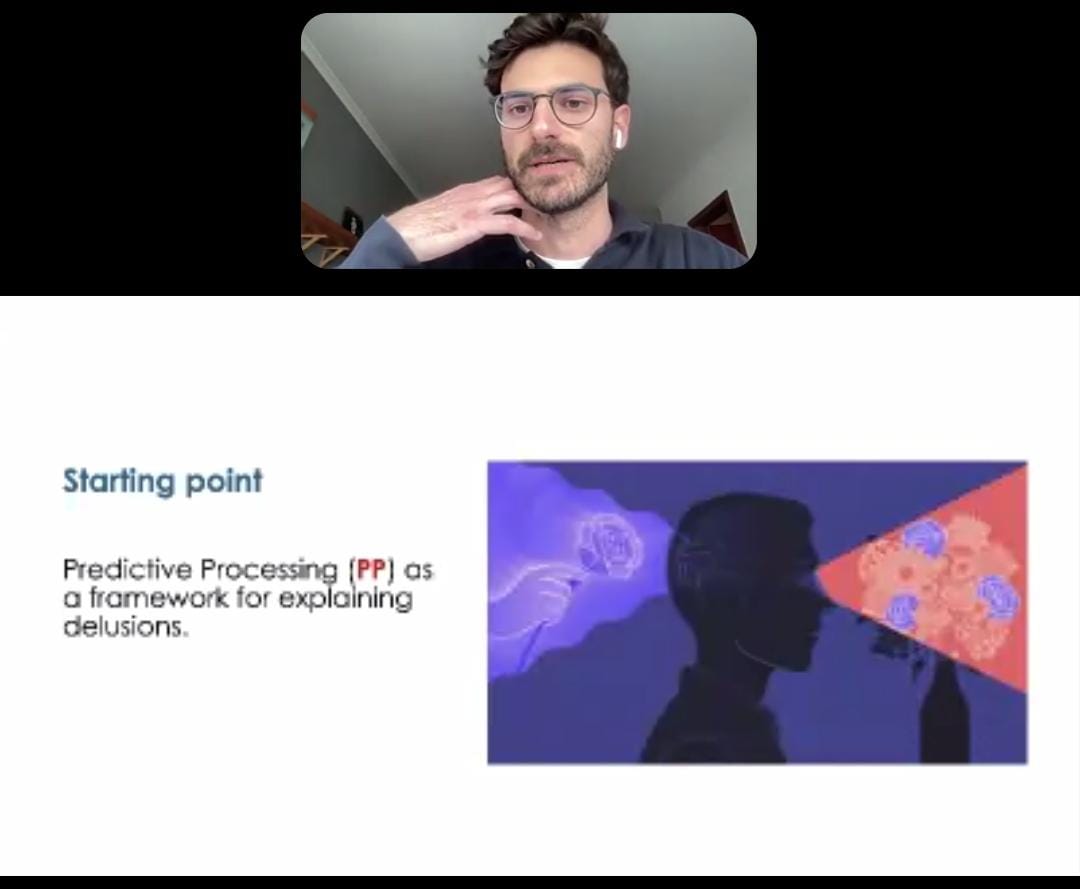
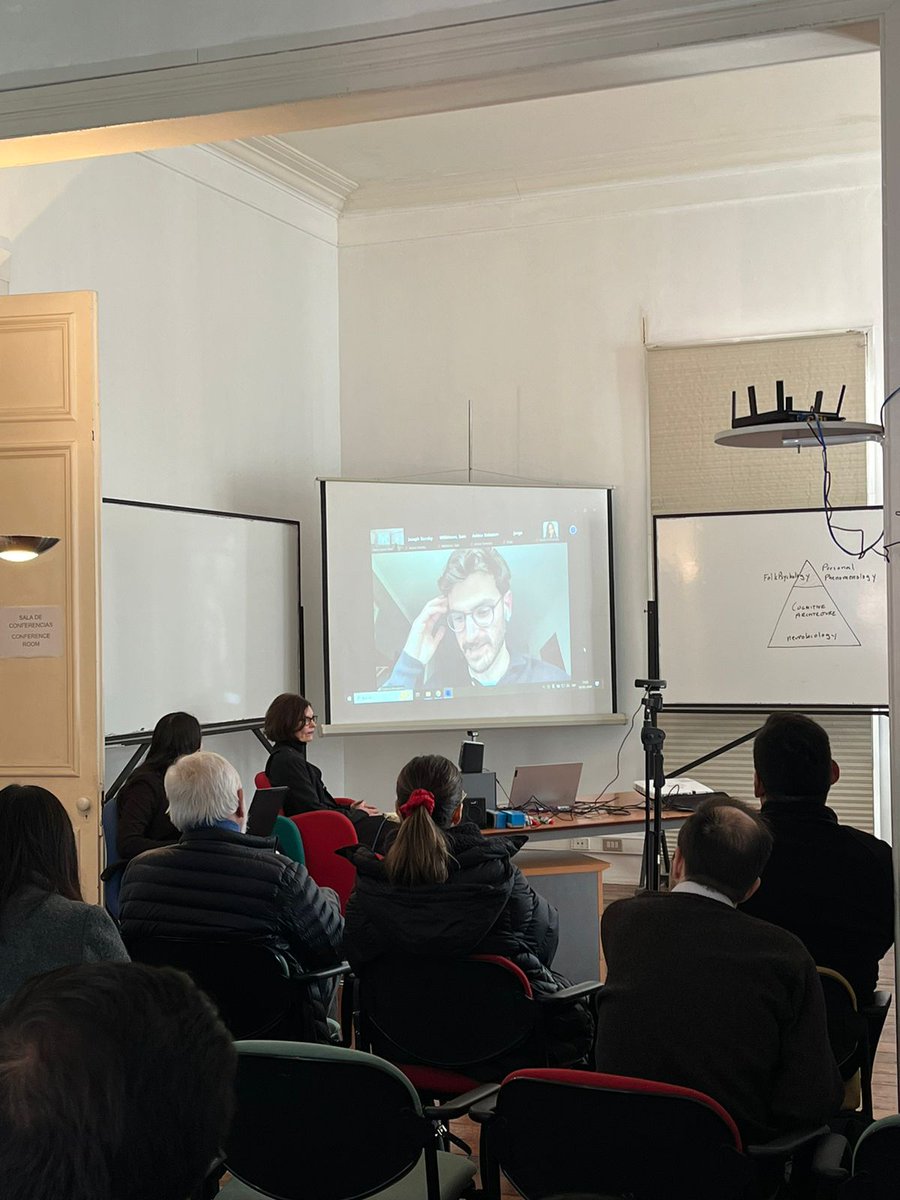
Had a great time yesterday presenting at @arq_deldelirio's symposium on Predictive Processing and Psychosis. Great discussion and Q&A session — thanks for having me!
On the blog today, @evan_westra distinguishes between two types of beliefs; epistemic beliefs and symbolic beliefs. Each describe different mental states and have different functions.
https://t.co/xagsrqfI9C
It's finally out! Our large-scaled replication attempt of the induced compliance paradigm in the study of cognitive dissonance: https://t.co/p6lTXxDcYW
@jessharding1302@a_tschantz@anil I note also a recent paper by @philcorlett and @fedebng. They explore how far the standard model can go in meeting challenges to the PC account – no time to compare and contrast here but worth reading (10/10)
https://t.co/dOjEns69Jv
Not sure if anyone is out there on twitter now, but, in case: New paper with @noham_wolpe, @jessharding1302, Christoph Teufel, @double_0_stefan and Victor Navarro
https://t.co/ye87PrQndu
A fascinating essay by a professional philosopher about his experience of schizophrenia.
“There have been near-collapses, but I have managed to keep a job for 30 years. I have not, until recently, been open about my diagnosis…”
https://t.co/G2USoBZ441
Ever wonder what principled distinction can be drawn between religious delusion and religious belief? We manage it well in practice, but it can be hard to achieve reflective clarity on it. ... Here's my, & Simon Clarke's, own new suggestion - Open Access: https://t.co/HHhPk3fluA
I think people are mostly into astrology because they find it fun to think and talk about, and because the category of “belief” involved is not aimed at truth or regulated much by evidence.