I will explain to you what is the "Homeric Law", why they hate Homer and why they want you weak and spiritually dead. In the Battle of Marathon, all the Greek heroes who became role models for us, took part. Miltiades, Themistocles, Aristides, Aeschylus with his brother Cynegirus. But besides them, a dog also helped in the fight. According to Claudius Aelian (On the Characteristics of Animals, VII, 38), a Greek brought his dog to the camp, and the dog attacked the Persians alongside its master. This scene is also depicted in the wall painting of the Stoa Poikile (Painted Stoa) from the 5th century BC.
The bronze helmet of Miltiades, which the Athenian general wore during the battle, was dedicated by him himself to the sanctuary of Zeus in Olympia as a thank-offering to the god for the victory. The helmet was discovered and is today on display at the Archaeological Museum of Olympia.
Themistocles, that great Greek, after the Battle of Marathon could not sleep and wandered sleepless through Athens. He used to say: "Οὐκ ἐᾷ με καθεύδειν τὸ τοῦ Μιλτιάδου τρόπαιον", which means, "The trophy of Miltiades does not let me sleep." He wanted to surpass Miltiades so much that he couldn't sleep. Can you imagine that? When the Persian king Artaxerxes asked for his help to attack the Greeks, Themistocles drank poison and committed suicide so as not to betray his country, Greece.
When Aeschylus died, he asked his relatives and close friends to inscribe an epitaph that reflected what he stood for in life and the values he held dear. Our first thought would be that Aeschylus would have wanted them to write that he was a great tragic poet with many awards and an outstanding body of work. Yet the epitaph makes no mention at all of his tragedies or his theatrical achievements, the very things for which all humanity remembers him today. Aeschylus wanted something written that showed what truly mattered to him. The epitaph therefore reads:
"This tomb in wheat-bearing Gela hides Aeschylus dead, son of Euphorion, the Athenian; of his worthy courage the grove of Marathon can tell, and the long-haired Mede who knows it well."
- (Source: Ἀθήναιος 14, 6)
The only thing that mattered to Aeschylus was Greece.
During the communal meals (syssitia) in Sparta, three choruses were formed according to the three age groups.
1. The chorus of the old men would begin singing:
"We once were strong young men."
(Ἄμμες πόκ' ἦμες ἄλκιμοι νεανίαι)
2. The chorus of the men in their prime would reply:
"We are the ones now; if you want, behold us"
(Ἄμμες δέ γ' εἰμέν· αἰ δὲ λῇς, αὐγάσδεο)
3. And the third chorus, that of the young boys, would say: "We shall become much better."
(Ἄμμες δέ γ' ἐσσόμεσθα πολλῷ κάρρονες)
These Greeks were great because they lived according to the most fundamental "Homeric Law", one that some people today want you not to know.
"Always strive for excellence and to surpass the others, and do not bring shame upon the race of your ancestors." (Homer, Iliad Z 208–209)
With these words, Hippolochus advised his son Glaucus when he sent him to fight in Troy. Earlier in the same book we read:
"Why do you ask of my lineage, fearless son of Tydeus? The generations of mortals are like the leaves of the trees: some the wind scatters upon the ground, and others the forest brings forth again when spring renews the trees. Thus one generation of men springs up, and another passes away." (Homer, Iliad Z 145–149)
We Greeks, we still use that Homeric phrase.
We say "Aien aristeuein," which means "Always to excel."
These words from Homer shaped generations of heroes and glorious men. This phrase lived in our collective memory, at least until today, and we fought to become better than our ancestors and worthy of our heroes. We had role models; we admired our grandfathers. The archetype of the heroic ancestor was born, and the lifelong purpose was always to surpass him through great deeds in one’s own life.
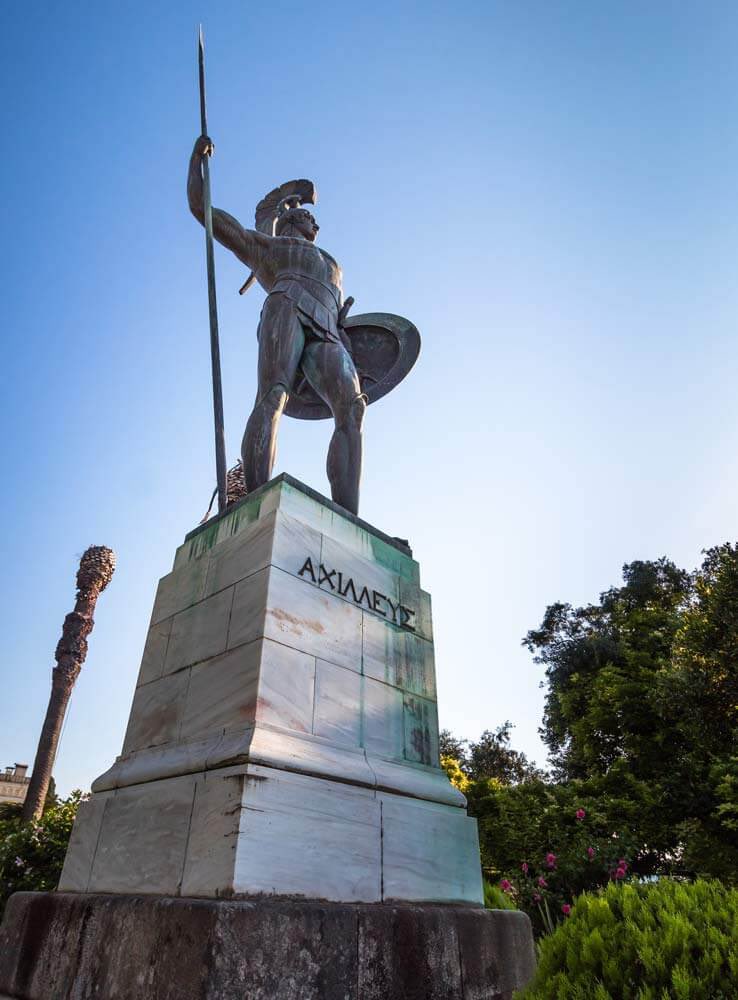
Until the dark days of today arrived, days baptized as "progress," in which every day we slide from bad to worse. You read my posts, you see what they are trying to do with the Classics. They hate Homer, they hate Plato and Aristotle, Alexander, Leonidas, they hate Achilles, they hate the Greek tragedies. They won't admit it, but you can see it when they are "manipulating the translations" to fit their agendas. Some want to create a degenerate world, sunk in atheism, anarchy, and spiritual collapse, far removed from values, virtues, and morality. They call this "progress," yet it is nothing but total subjugation, heads bowed, without any desire to resist.
To live without the imperative "aien aristeuein" (Always to excel), is to accept the slow death of the human spirit. When excellence is no longer the measure, when the only sacred thing left is the right to mediocrity and the comfort of never being judged by the shadow of greater men, then man ceases to be a bridge toward something higher and becomes merely a consumer of fleeting pleasures in a rootless present.
A civilization that teaches its young to surpass their ancestors in virtue, courage, wisdom, and beauty ascends.
One that teaches them to despise or ignore their ancestors has already begun its long descent into oblivion.
"Aien aristeuein"
And yes, my name is Homer, I'm Greek.
Homer Pavlos.
The Achilles vs Hector duel in Troy (2004) is where the movie fully locks in. Brad Pitt fights with this terrifying speed while Eric Bana makes Hector feel exhausted and honorable all at once. Still one of the cleanest sword fights put on screen
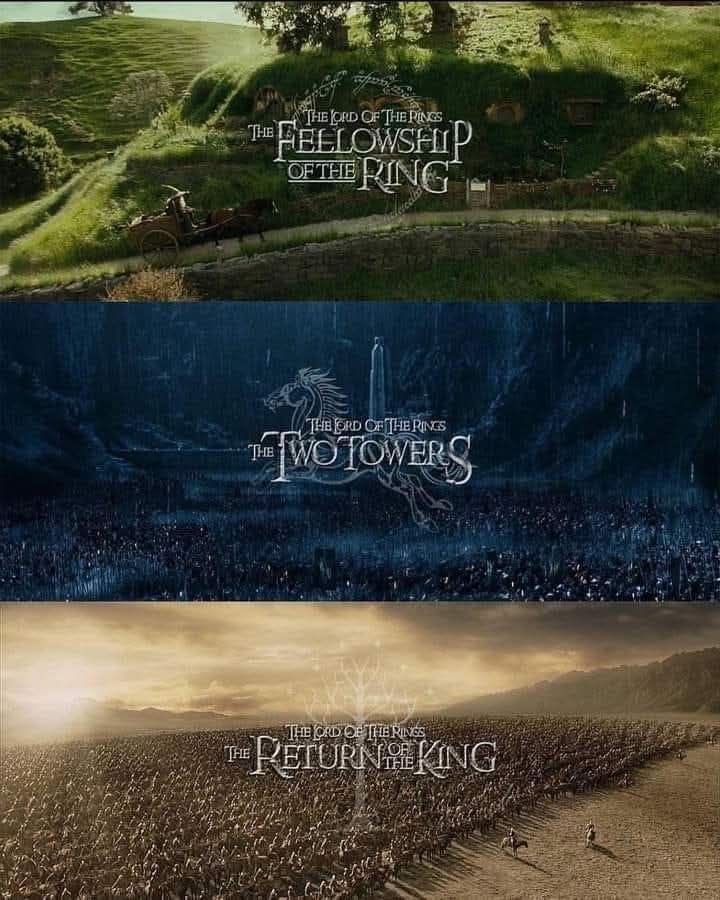
3 PELÍCULAS
0 ESCENAS DE S*XO
0 PALABRAS OBSCENAS
0 IDEOLOGÍAS
1 CAST IRREPETIBLE
1 BANDA SONORA ÉPICA
17 OSCARS
LA TRILOGÍA MÁS GRANDE DE TODOS LOS TIEMPOS 🔥💍🔥
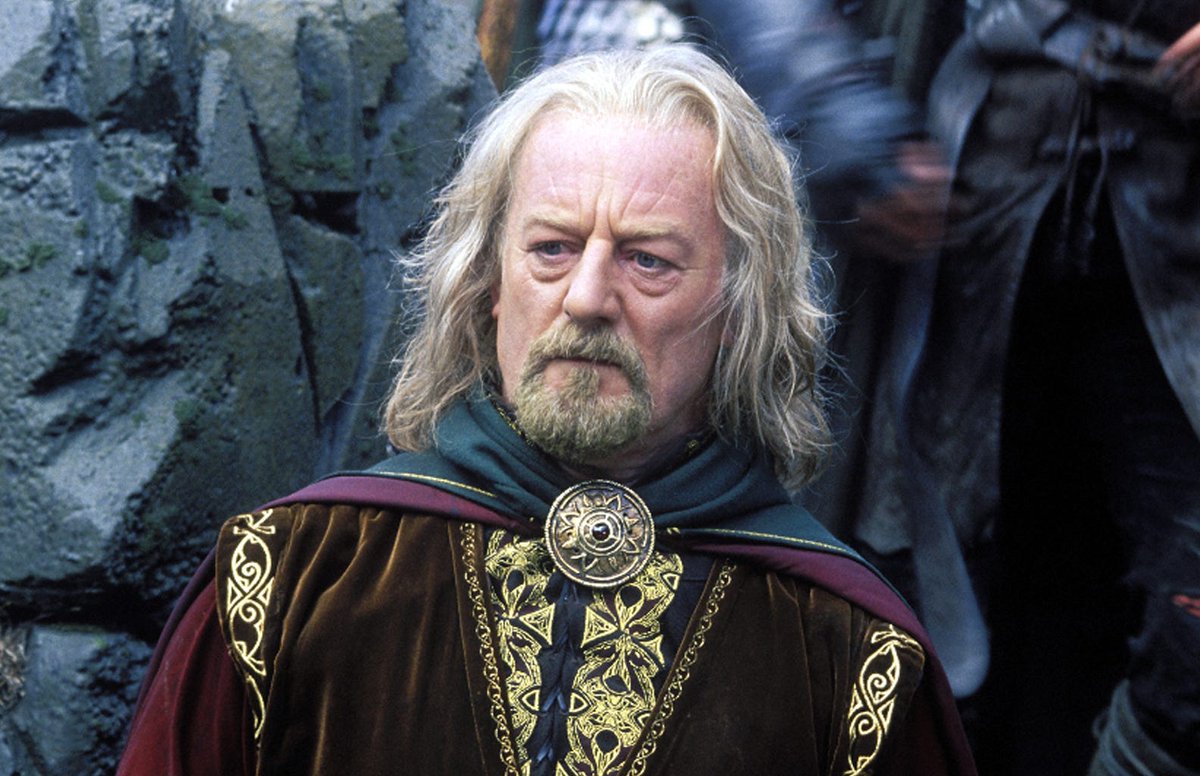
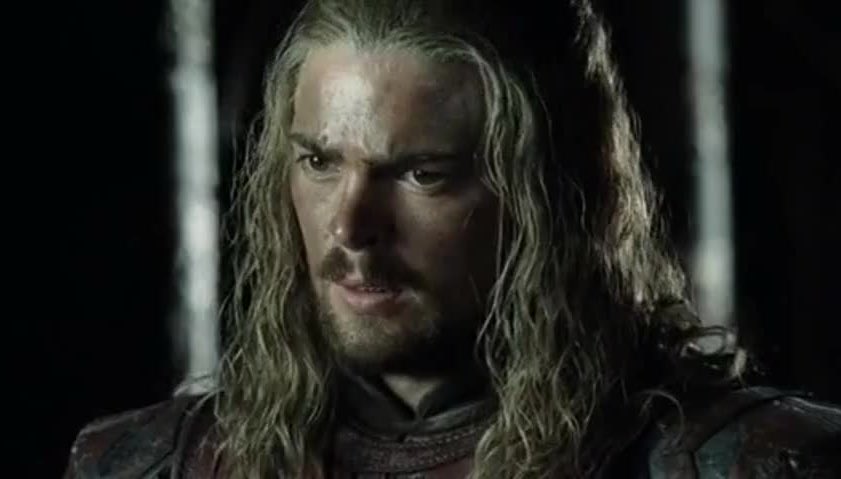
Dude who wanted to take the Ring for himself to save his kingdom but decided the mission to destroy it was more important because it would save the world, and died for that cause.
King who initially refused to aid another kingdom because they didn't help when they needed it, but ultimately decided fighting evil and saving their civilization was more important than his petty grudge, and died for that cause.
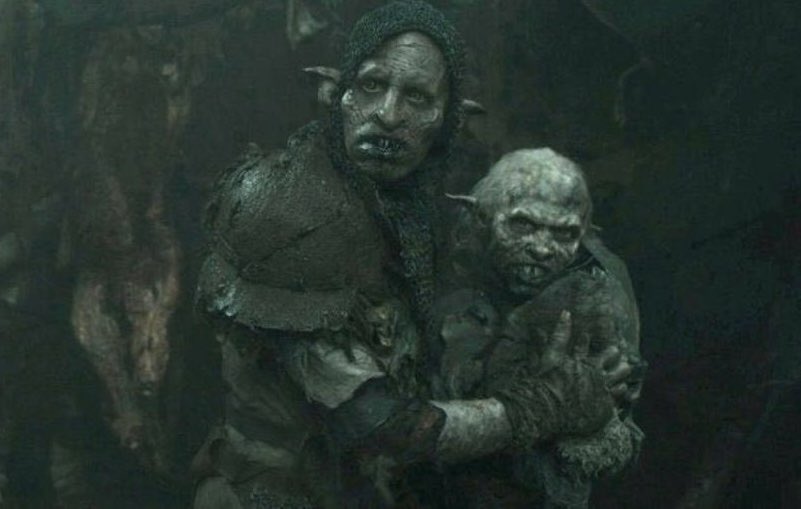
Guy who lived a life of cruelty and greed who got corrupted by a quasi-demonic force that turned him into a monster and made him suffer in loneliness for hundreds of years until given the chance to redeem himself and genuinely tried but ultimately failed by giving into temptation and betraying the only person who could bring him salvation.
"No moral complexity."
an insane blackpill is watching old movies
you don’t even have to go back in time that long. watch any movie of the early 2000
a completely different universe. places and cities you’d want to live in, not the shitholes they’ve become
Saying you like GOT over LOTR is basically a self report that you would rather mock heroic virtue, self sacrifice, loyalty and bravery than dare to aspire to them, because you know you could never reach them. It's nothing but envy, bitterness and bleak nihilism cloaked in smug postmodern intellectualism, desperately trying to position yourself above the very things you can never hope to achieve.
“Leftists are murdering freely across our lands. Unchecked, unchallenged, killing at will. Leftists bearing the gay memes of reddit.”
“Why do you escalate this rhetoric in an already escalated environment? Can you not see? The people are wearied by your divisiveness, malcontent”
Call me biased, but Halo will forever have the hardest Ship names in fiction.🙏🏻
Some examples:
1:) Pillar of Autumn
2:) Shadow of Intent
3:) Forward Unto Dawn
4:) Truth and Reconciliation