Mocht de URL niet werken (je moet daarvoor ingelogd zijn op Insta in de browser), dan kun je het ook via de apps doen.
Instagram: Instellingen > Info > Privacybeleid en dan bezwaar maken.
Facebook: Instellingen > Privacybeleid en dan bezwaar maken.
🫡
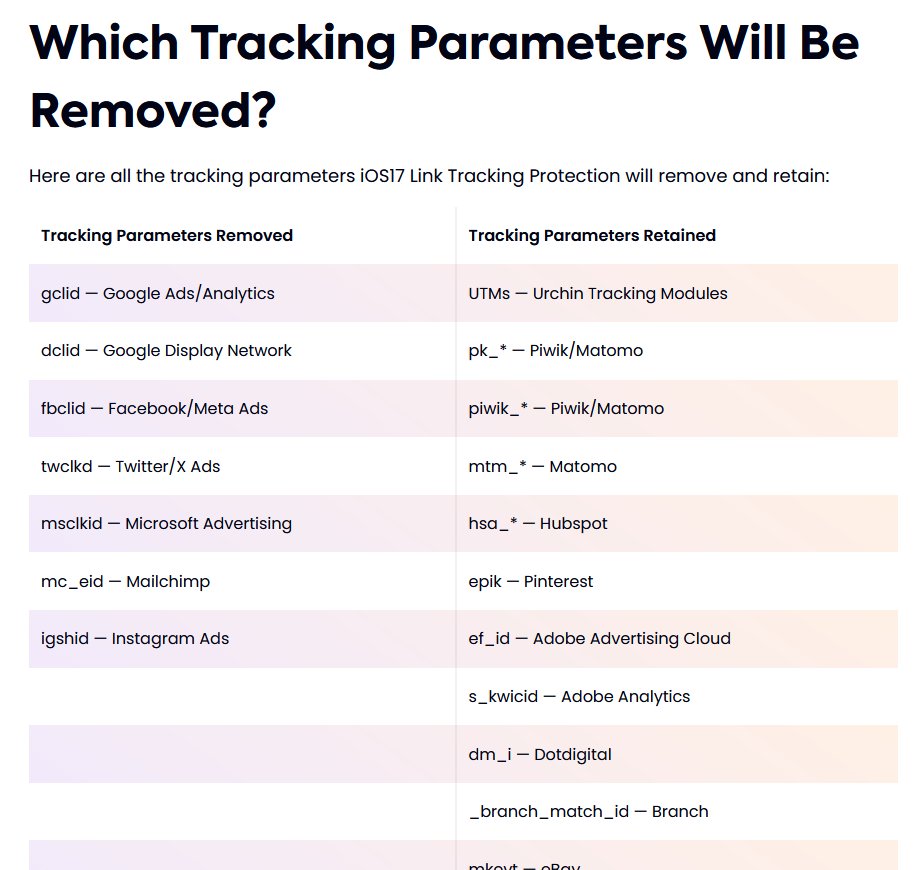
Interested in the impact of Apple's Link Tracking Protection? This post is for you -> iOS17 Link Tracking: The End of URL Parameters
But... "UTM tagging hasn’t (yet) been removed by Apple. So you can still use it to track campaign results using a last-click attribution model." https://t.co/50kZOu6qpv
The September 2023 helpful content update is rolling out with an improved classifier. It will take about two weeks to complete. We'll update our ranking release history page when the rollout is complete: https://t.co/hgjEkfpbA2
Today we heard from Google re: the total removal of HowTo rich results from search. Doing schema solely for rich results may not be ideal in the long run.
Glad to hear from @daveojeda on the value of schema markup in the context of entities & Google's evolved ranking algorithms!
If you are a modern professional, focus on mastering the art of skimmable writing.
Skimmable doesn’t mean short.
It means well-organized, logical, and visually not an eye sore.
It means reducing cognitive load for your reader.
This skill is an investment you’ll use daily.
Google published a set of rules (checklist) for #GA4 UTM tracking, but most people continue to ignore this checklist and tag URLs however they please. Then, they complain about the unassigned traffic appearing in their reports.
.
.
Unassigned traffic in GA4 refers to the website traffic that is not attributed to any one of the following default channel groups:
Affiliates
Audio
Cross-network
Direct
Display
Email
Mobile Push Notifications
Organic Search
Organic Shopping
Organic Social
Organic Video
Paid Other
Paid Search
Paid Shopping
Paid Social
Paid Video
Referral
SMS
.
.
Google uses certain rules (called ‘channel rules‘) to group similar website traffic sources (usually that all belong to the same traffic medium).
For example,
Consider the following traffic sources:
google (as in google / organic)
yahoo (as in yahoo / organic)
bing (as in bing / organic)
aol (as in aol / organic), etc.
Since they all have the same traffic medium, ‘organic’, they will be grouped together under the channel group ‘organic search’.
Google does not have any pre-defined channel rules to group traffic sources that have either user-defined sources and mediums or they are (not set).
So what it will do is group these traffic sources under the ‘unassigned’ channel group.
.
.
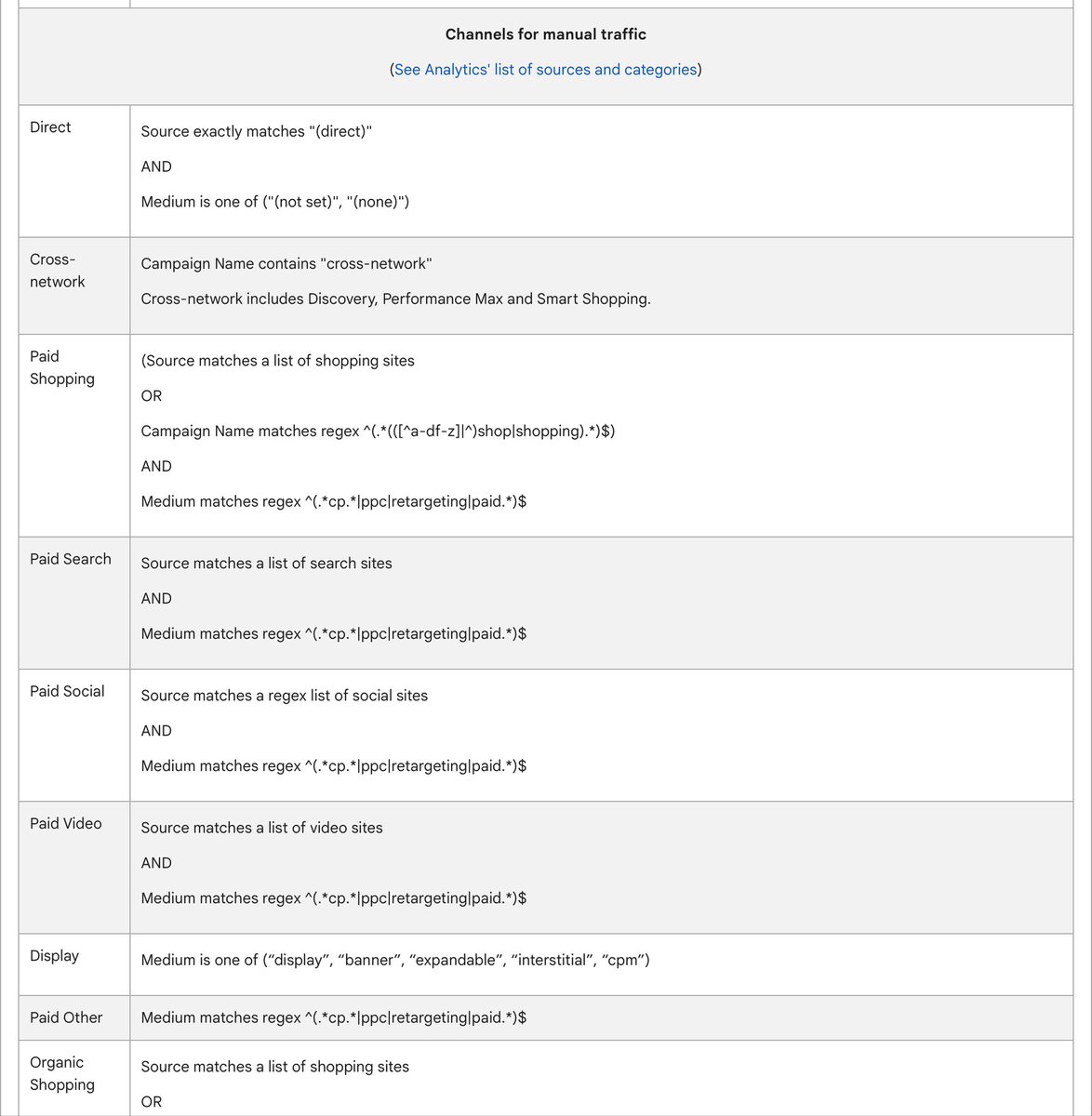
Your UTM parameters should strictly follow the channel rules for manual traffic (check the screenshot below) wherever you can so that your website traffic is attributed to one of Google‘s default channel groups.
For example, consider the following URL of a Facebook ad:
https :// www. abc .com/book-maths-and-stats/?utm_source=facebook&utm_medium=paid-fb-ad&utm_campaign=pdf-book-campaign&utm_content=ad1
Here, ‘paid-fb-ad’ is not a system-defined traffic medium.
So Google will label all the website traffic from this URL under the ‘unassigned’ channel group.
But this is not what you want. You want this traffic to be grouped under the ‘paidsocial‘ channel.
To do that, rewrite the UTM parameters like the one below:
https :// www .abc .com/book-maths-and-stats/?utm_source=facebook&utm_medium=paid&utm_campaign=pdf-book-campaign&utm_content=ad1
Here, paid is a system-defined traffic medium.
.
.
Use system-defined traffic sources and system-defined traffic mediums wherever possible.
A system-defined source is one that is already defined/recognized by GA4 as a traffic source.
Similarly, a system-defined medium is one that is already defined/recognized by GA4 as a traffic medium.
The more user-defined traffic sources and/or medium you will use, the higher will be the unassigned website traffic in GA4.
Memorize channel rules and definitions for accurate tagging.
It is very important to know how Google groups similar traffic sources and how it defines a particular marketing channel.
This knowledge will help you tremendously in tagging URLs that follow GA4 default channel rules.
Share this information with all those who tag URLs in your organization. Everybody needs to be on the same page.
6 steps to writing a great value proposition statement:
•Revisit your company’s mission
•Research your target audience
•Analyze your competitors
•Define your brand’s Tone of Voice
•Compile your research
•Brainstorm with a value proposition template
https://t.co/M6uZxnjt9E.
Want to easily spot if your sites have been likely affected by Google's Core Updates for free? 📈 Use GSC Guardian! The free Chrome extension from @DasfNYC highlighting Google Updates over your Search Console Performance report 👀 Check it out 👇 https://t.co/FeKe3PDn3v