Starlink’s reliable connectivity is enabling continuous fleet control for @carbon_robotics across 15 countries, accelerating the company’s AI development, and supporting up to a 50% increase in crop yields for farmers→https://t.co/u8IshoqK3V
America can innovate, I was reminded of again today.
Met some amazing farmers from Florida today learning about farm automation. California style.
What this really represents is much better food.
Robots either reduce or remove entirely the need for spraying crops with pesticide and other crap you don’t want in your food.
We need to invest more in AgTech. Great jobs and lifestyle.
Silicon Valley used to be a farm.
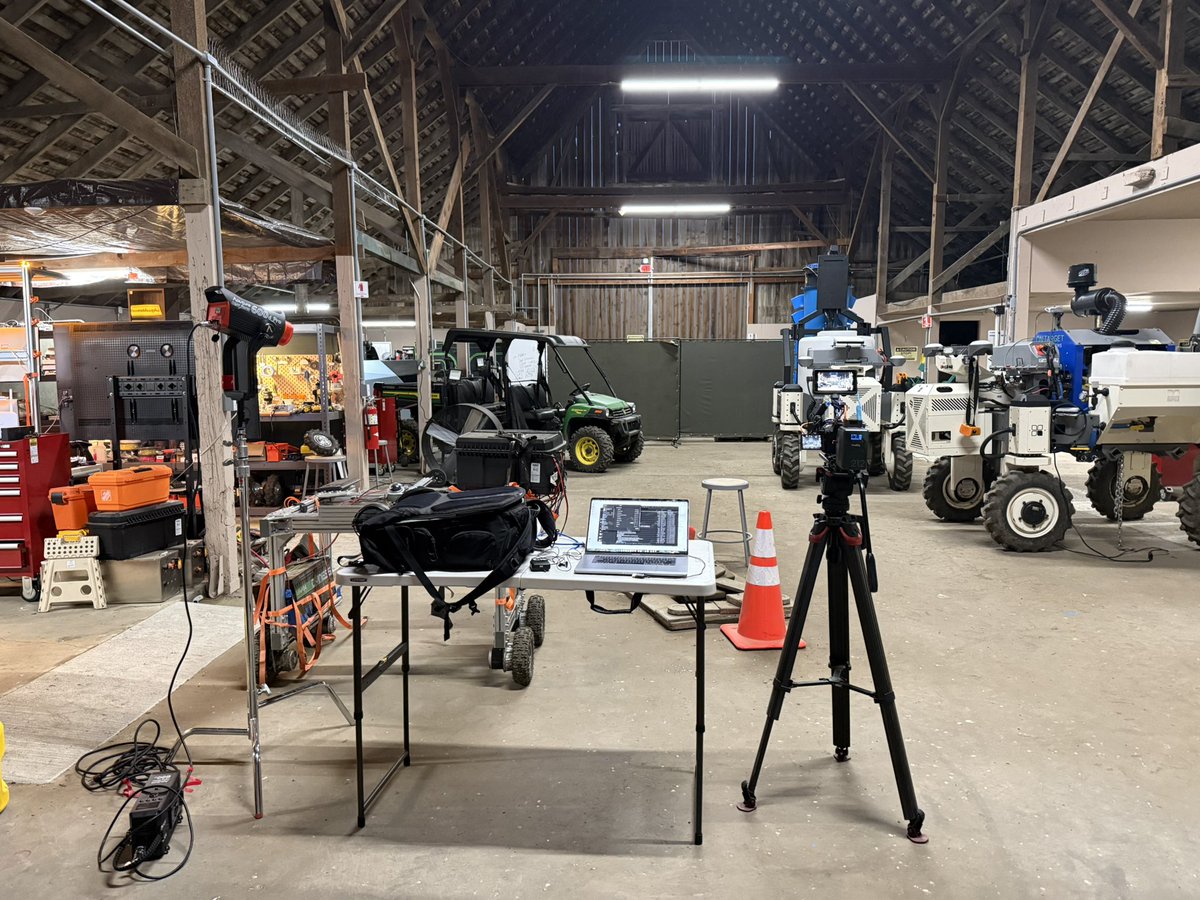
This startup incubator is inside a famous and old barn in Salinas.
I get the attraction many have to farming.
As one put it to me “every day I feed people, what is wrong with that?”
Autonomous farming at @reservoirfarms in Salinas.
When I got here joined a bunch of farmers from Florida who were visiting.
But during the talks @bonsairobotics caught my attention.
One of the first to use world models to drive autonomous farm equipment.
Here's their CEO, Tyler Niday, talking to me about what's going on in farming around the world. And of course we talk about world models. My favorite topic lately.
They have robots farming in Australia and here in America in a variety of places.
He ran autonomous tractors for @JohnDeere for years.
Reservoir Farms is an incubator—think of it like Y Combinator or Founders Inc., but for people who are making autonomous, AI-driven tractors and other farm equipment. It's a remarkable place. Worth telling anyone in farming about.
@bernsteind, who runs it, used to work at Google in high tech and got the bug to help startups hit the farming market. He has a fairly big plot of land to do all sorts of testing, demos, and development work here in Salinas, with about 40 acres of a variety of different crops. That is something you can't do in Silicon Valley anymore. It takes me back to my childhood when Silicon Valley used to be all farms.
It was a lot of fun hanging out with the farmers. They'll be doing some events and hackathons down here. If you're from Silicon Valley, it's only an hour south, and I highly recommend coming down to see what's going on.
The AI part of farming is very similar to building an autonomous car or truck, so the kinds of jobs are very similar. The market is just very different, and the kinds of things a robot needs to figure out are different. You might be picking apples or spraying crops. You don't have pedestrian traffic, maybe, but you have other kinds of things you need to train and model on to work around.
Anyways, I had a beautiful day hanging out here.
Autonomous tractor for precision spray application! 🍇
@bonsai_robotics acquired Farm-ng in July 2025, merging autonomy software with modular electric farm robots into one company.
But just couple months before the acquisition I had a chance to see Amiga in action in Watsonville, California (pictures in comments).
Amiga Max is an autonomy-first, diesel-hybrid electric platform working in vineyards.
It runs a full spray shift on a fraction of the fuel and labor compared to traditional tractors.
Electric rate controller applies product only where it's needed. Turns and skips? It shuts off automatically. You're not spraying empty space or rows you already covered.
Less chemical wasted. Better for the environment and the bottom line.
Every acre is logged automatically. Full traceability and reporting without manual paperwork. Farmers know exactly what got sprayed where and when.
One operator uses the Bonsai app to plan, watch, and adjust multiple robots.
Autonomous operation means the tractor works consistently without driver fatigue degrading efficiency.
~~
♻️ Join the weekly robotics newsletter, and never miss any news → https://t.co/GoA3ZuwoPB
The last mile is one of the toughest problems in autonomy. So what will it actually take to solve it?
Rajesh Radhakrishnan, our VP of Autonomy, will tackle that question at @autonomousevent, unpacking what’s making robotic delivery work in the real world.
See you there 👋
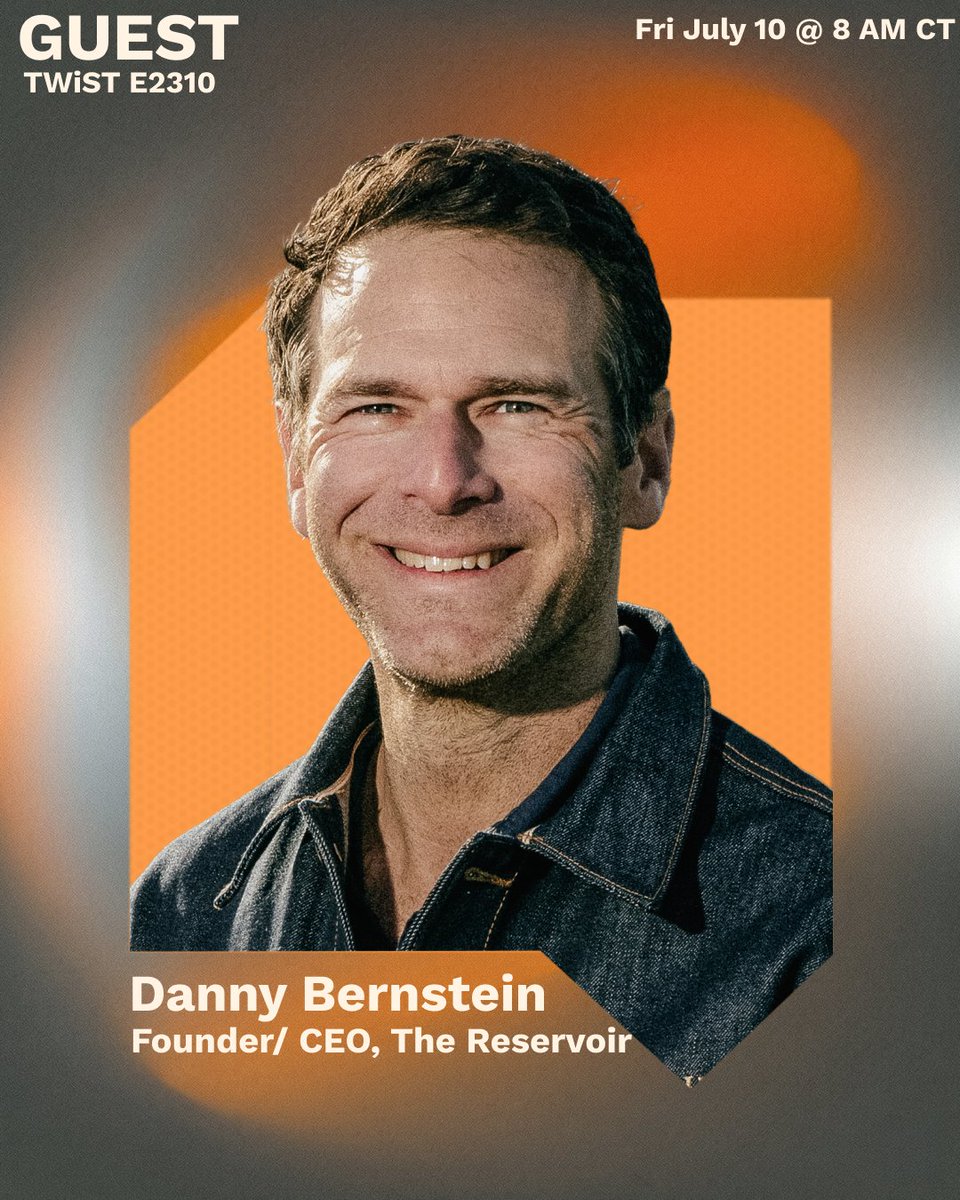
We're LIVE with @bernsteind, founder & CEO of @ReservoirFarms in 20 minutes!
Labor is 50–70% of the cost of growing high-value crops, yet less than 2% of farm tasks are actually automated...
The Reservoir puts robotics startups on real working farmland, validates them with Western Growers, and backs them with its own fund.
Every other rural institution was built a century ago. Danny's building the next one. See you at 8 AM Central!
these orchards are not real, they were generated by the bonsai world model. why are we betting on a world model?
robotaxi companies can create a detailed HD map and digital twin of a city like San Francisco and use it to train their models on all kinds of diverse scenarios. this is expensive, but you can split the cost across many customers all served by that map. in agriculture, where every customer has their own farm, and therefore their own map, this approach breaks completely. it doesn’t scale at all. and,
unlike robotaxis, there is no easy access to a realistic test environment like public roads, so testing becomes a huge bottleneck. I believe this has held back robotics in agriculture for many years, killing many promising agtech startups.
all of this changes with the bonsai world model. by training on years of high-quality real world data, we are starting to be able to generate diverse, realistic and geometrically consistent 3D farm environments without a painstaking 3D reconstruction process that doesn’t scale.
more to come soon! we are just getting started 😉
a @bonsairobotics robot applying snail bait in citrus orchards in renmark, australia.
by itself
stacks work between young and mature blocks and handles the commute between them autonomously