@mihuq not ready to share details yet! but I would say, with enough high quality data and the right training recipe, these models can be trained *without* frontier lab level resources
these orchards are not real, they were generated by the bonsai world model. why are we betting on a world model?
robotaxi companies can create a detailed HD map and digital twin of a city like San Francisco and use it to train their models on all kinds of diverse scenarios. this is expensive, but you can split the cost across many customers all served by that map. in agriculture, where every customer has their own farm, and therefore their own map, this approach breaks completely. it doesn’t scale at all. and,
unlike robotaxis, there is no easy access to a realistic test environment like public roads, so testing becomes a huge bottleneck. I believe this has held back robotics in agriculture for many years, killing many promising agtech startups.
all of this changes with the bonsai world model. by training on years of high-quality real world data, we are starting to be able to generate diverse, realistic and geometrically consistent 3D farm environments without a painstaking 3D reconstruction process that doesn’t scale.
more to come soon! we are just getting started 😉
a @bonsairobotics robot applying snail bait in citrus orchards in renmark, australia.
by itself
stacks work between young and mature blocks and handles the commute between them autonomously
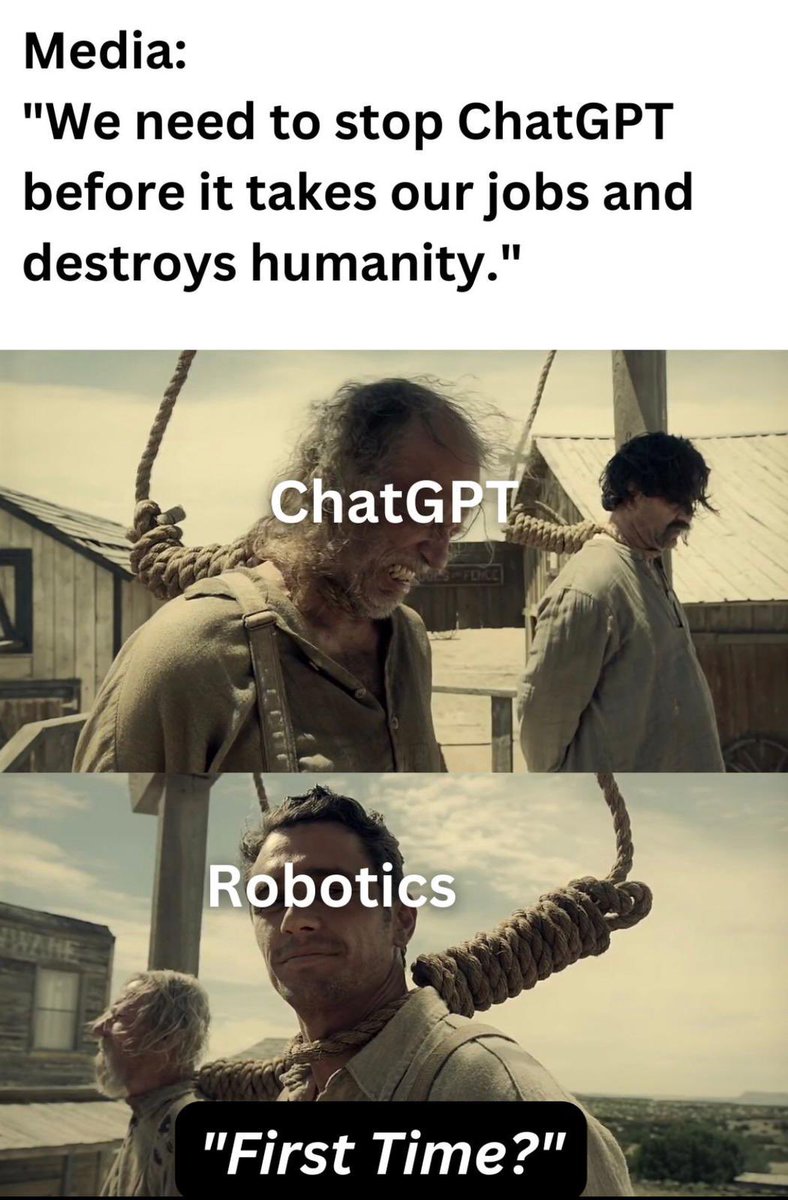
Lots of people ask when the “ChatGPT moment for robotics” will come. I would argue that it will never come, because robot adoption is happening slowly, all the time. You just don’t know it. It’s very possible you’ve already eaten almonds harvested by Bonsai Intelligence!
I love how practical the amiga max is. unlike manually driven tractors, it doesn't have sleek aerodynamic curves. that's because its a piece of autonomous equipment, not a vehicle you're meant to look at every day from inside the cab. it has bulletproof autonomy, and a sleek app
Even after 4yrs of locomotion research, we keep getting surprised by how far we can push the limits of legged robots! We report a major update 🚀🤖
Extreme Parkour: extremely long & high jumps, ramp, handstand, etc. all with a single neural net!
https://t.co/VQSrOOoDHU
🧵(1/n)
its wild to see how quickly the conventional wisdom on doing robot autonomy fully with deep learning has gone from “nah that will never work” to “of course it works”
when I was in 1st grade I actually used to solder paperclips to blank PCBs because I read in a book if you wanted to make robots you had to be good at soldering and it suggested this method to practice . crazy how different things are now
@robfreeborn my personal conclusion has always been that masculinity (and femininity) are a waste of everyone’s time and you should just do what makes you happy and doesn’t hurt other people
@stbearman@d_bau13@Cruise I will add that I ride in the Cruise driverless cars all the time, and encounter them a bunch while walking around the city too. I feel far safer around the Cruise driver than normal drivers. I have nearly been hit by normal drivers so many times, Cruise would never.
@stbearman@d_bau13@Cruise Please consider that if a normal person had been driving during this minor fender bender, nobody would care. Especially by taxi/rideshare driver standards, the Cruise driver is an outright saint. Hyping up every small misstep the Cruise driver makes does not make anyone safer.
@random_walker counterpoint: an LLM OS can understand what it’s being asked to do, and refuse to do certain unethical things. Current OSes have no such ability, with results like this:
https://t.co/Xq02pvoif2