Why even go to whatsapp or iMessage? Shouldn't the assistant be where I am? Whichever screen that is??
That'll change a lot about the prompt I send to the assistant.
@DavidPawlan Gigi - assistant that works where you are. Why even go to WhatsApp or iMessages? Gigi gets things done from any screen.
https://t.co/YTUKkPKrbP
Technical moats are mostly over at this point. If you’re building something that is meant to be durable, the only moats now are:
• Proprietary data
• Network effects
• A physical component
Protesting without proper knowledge is merely shouting without cause.
https://t.co/WACyUFiuJw gave a reality check that I'm not as aware as I thought.
#cjp#protest#संसद_मार्च#india
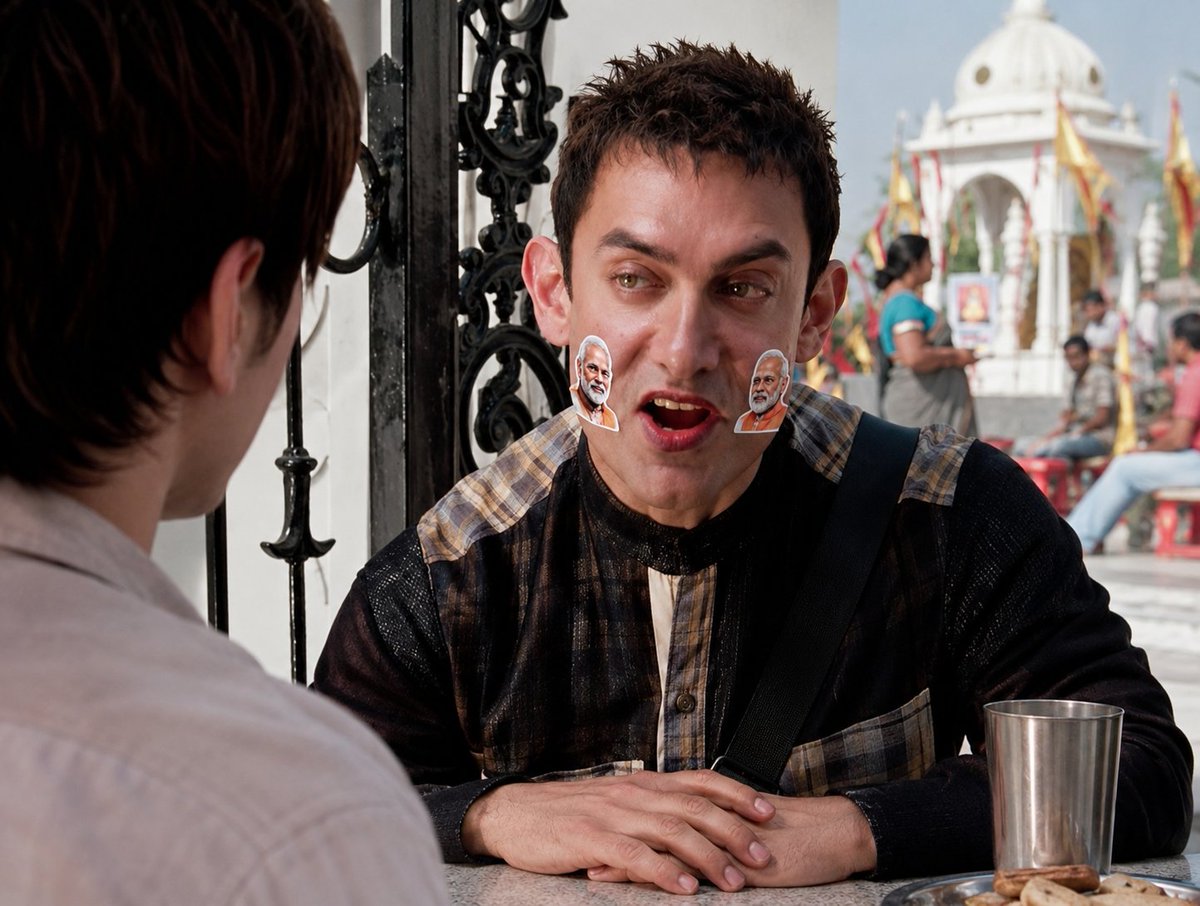
Rahul Gandhi lives rent-free in Modi’s mind. Even at the start of the Monsoon Session, he is thinking about him.
Modi knows that the real threat to him is Rahul Gandhi and no one else.
A London lab gave 32 people a vision test and quietly tuned the difficulty for each person so everyone scored the same: 71 percent. Same skill, same score. But some of them knew exactly when they had gotten an answer right, and some had no idea. That gap showed up as physical brain tissue.
The people who could tell when they were right had more gray matter, the brain's actual cell bodies, in a patch right behind the forehead called the anterior prefrontal cortex. It is one of the last parts of the brain to evolve, and humans have a much bigger version of it than other animals. The wiring feeding into it was stronger too. Their eyesight was no better than anyone else's, but their sense of their own eyesight was sharper.
You can switch this off. Fire magnetic pulses at that spot and people get worse at rating their own answers while the answers themselves stay just as accurate. Damage there from a stroke produces the same split. The part of your brain that solves a problem and the part that knows whether you got it right are two separate systems in two separate places.
This self-judging skill barely tracks IQ. Studies going back to the 1980s keep finding that people with high test scores are not reliably better at knowing when they are wrong. A 1989 paper put it this way: IQ shapes this skill but does not explain it. So the thing being called the highest form of intelligence is a separate thing from the kind of intelligence a normal IQ test measures.
Break this system completely and you get a condition called anosognosia. After a stroke on the right side of the brain, some patients are paralyzed down one half of the body and flatly deny it. They try to lift the paralyzed arm, then invent a reason it would not move. The reasoning runs fine. The layer that checks the reasoning against reality is gone.
It is not only a human thing. Rhesus monkeys will turn down a hard memory test for a smaller guaranteed reward when their memory has faded, and they do better on the tests they choose to take. Rats and dolphins do the same. The psychologist John Flavell named all of this in 1979 and called it, plainly, thinking about thinking.
The high-self-knowledge people in that scan matched everyone else's score exactly. Their advantage was quieter. They knew the exact moment to stop trusting themselves and look again.
2023 Nidhesh would ask what LLMs are
2024 Nidhesh would be amazed seeing scripts running on his device
2025 Nidhesh would wonder why not ChatGPT
2026 Nidhesh always stressed Claude Max not fully utilized