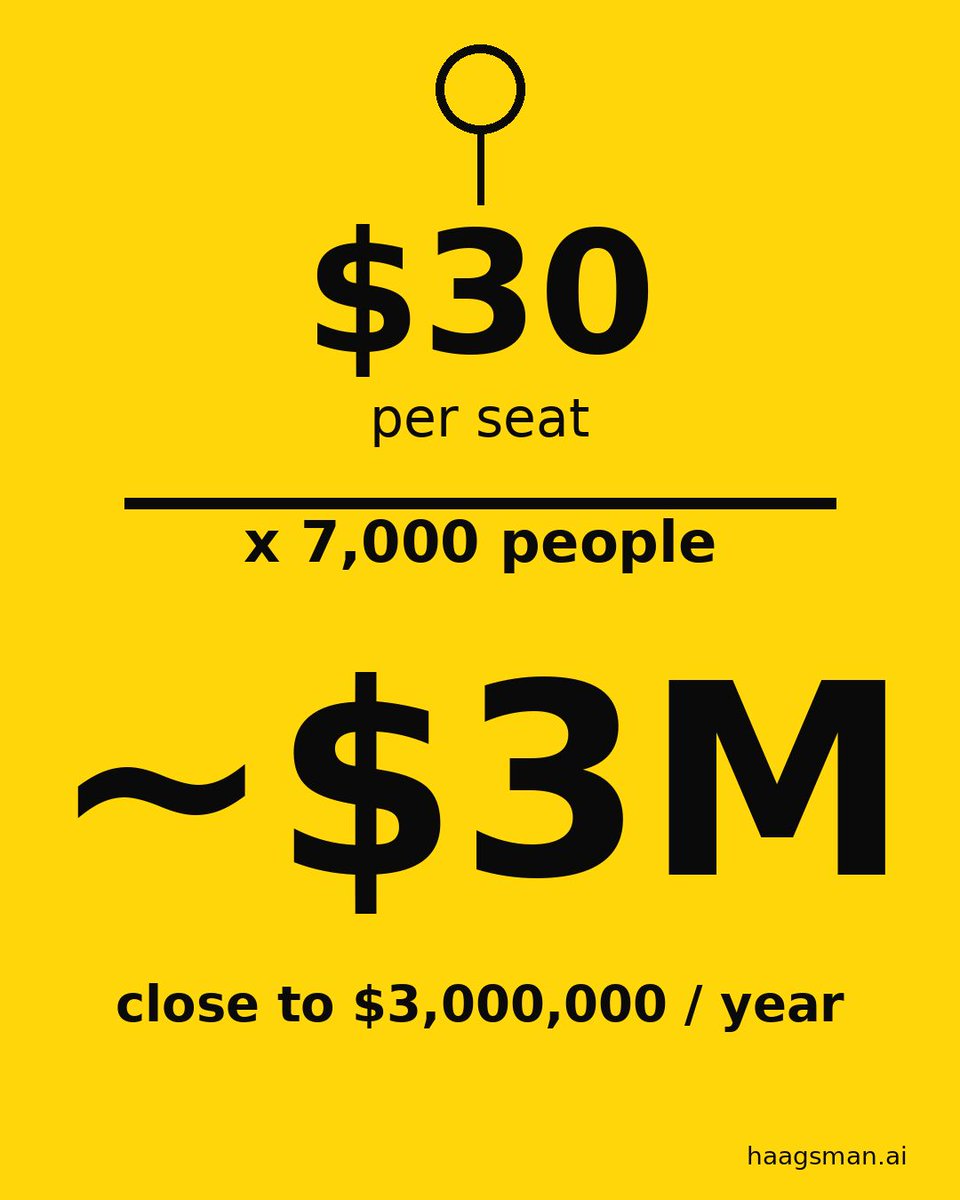
Per-seat pricing still works when each seat is worth what it costs. Vendors open to a mix, seats for people who use the app all day and a price per task for agents, will have better renewals.
Buyers: what do you check first before an AI tool renewal?
Renewal is where per-seat pricing gets tested.
If an AI agent does part of the work through a vendor's API, fewer people log in to the app. At renewal, the buyer will ask what each seat still buys.
Only 18% of Chief AI Officers say they have full control over AI investment decisions (IBM survey of 1,600+ AI leaders, this week).
The people who see where AI creates value mostly don't decide where the money goes.
75% say governance, risk or compliance delays action on AI. The leaders with the best results cut AI projects that fail, even with senior backing (96% vs 46%).
So measure changed workflows, not logins. Manage AI like a portfolio.
Who signs off on AI spend where you work?
Your AI usage numbers are lying to you.
At a Silicon Valley chip company with about 7,000 employees, average daily AI users went from 12% to 80%, across six platforms.
I am proud of that number. It is also the wrong one to stop at. 🧵
5 moves from usage to adoption:
1. Change the incentives, not just the tools
2. Measure changed workflows, not logins
3. Govern AI like a portfolio
4. Know your agents
5. Bring HR and Finance in early
Most AI wearables track you. @AinaInterface helps you act.
I paid for the ring and have been testing it for a couple of weeks. The form factor and feature set are what convinced me.
I truly believe this is the best AI-native wearable on the market right now. Pre-orders from $399, shipping early 2027.
Shoutout to @lazyapprove and the Aina team for building this.
https://t.co/hSX7Wcpwwm
https://t.co/NvTfvW5AcE
What if your devices, apps and agents knew what you wanted?
You finish breakfast, and your Uber is booked.
Running late, your agent sends a “Running late” text.
You reach home, and your lights turn on.
AI is proactive now. But it still needs your yes. It waits, for you to unlock your phone, open an app and tap approve. Every time, hundreds of times a day.
AI needs its own interface.
Aina is a ring with a screen that predicts and shows you the three things you’ll need next. One flick of your thumb, and it’s done. For everything.
✦ Cues: proactive suggestions, ready before you need them
✦ Voice: talk to your agents, take notes, dictate
✦ Remote: control your music, Mac and TV
✦ Calls: right from your hand
Pre-orders open now
https://t.co/LWk3MQfI6g
@nino_malbasic@naumu_ai 7/ What gets these deals signed:
1. Start with one small use case and own the adoption.
2. Show which existing licenses it takes out, then put numbers on the productivity gains.
3. Earn the next team once the first one gets value.