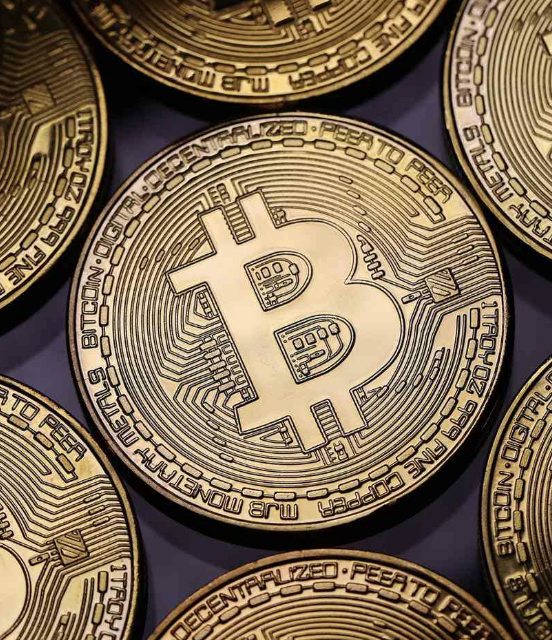
Schwab Crypto™ is on the way. Schwab Crypto accounts (offered by Charles Schwab Premier Bank, SSB) will provide direct access to Bitcoin and Ethereum trading, in-depth digital assets education, and more. Read the full press release: https://t.co/OboCPUGAAa
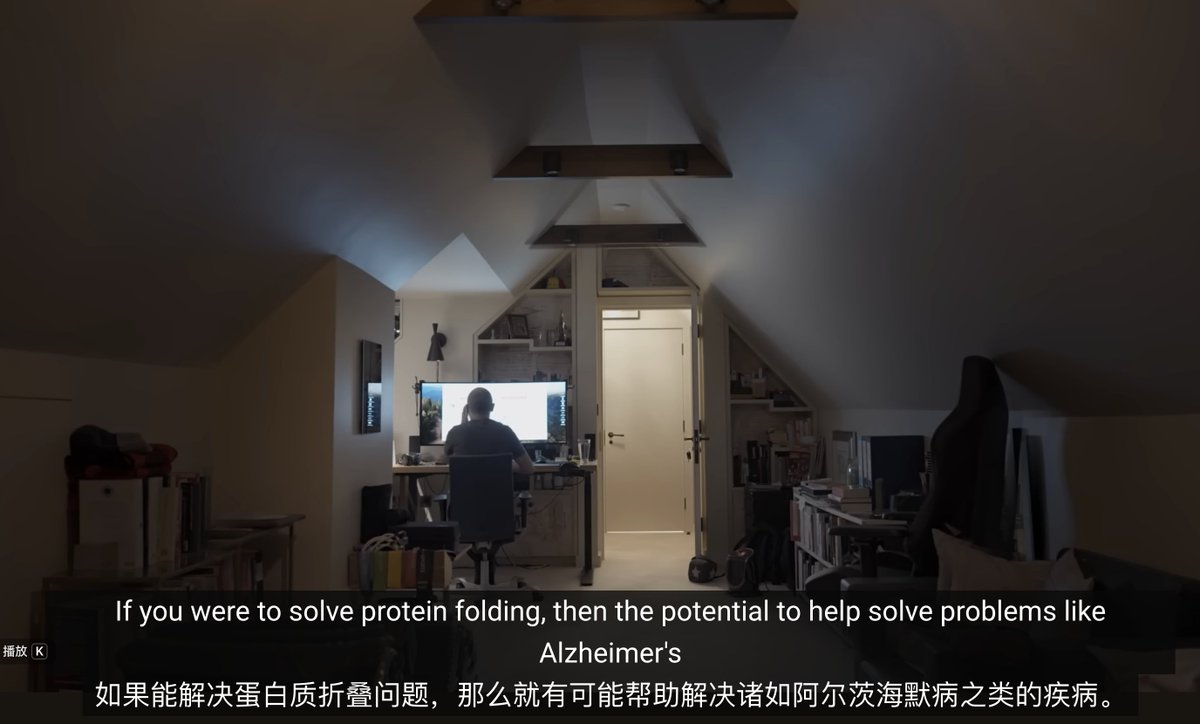
Introducing Claude Design by Anthropic Labs: make prototypes, slides, and one-pagers by talking to Claude.
Powered by Claude Opus 4.7, our most capable vision model. Available in research preview on the Pro, Max, Team, and Enterprise plans, rolling out throughout the day.
⚡️JUST IN: GOLDMAN SACHS FILES FOR BITCOIN PREMIUM INCOME ETF
Goldman Sachs has filed to launch a Bitcoin Premium Income ETF, signaling continued expansion of institutional $BTC yield-style investment products.
We just released Gemma 4 — our most intelligent open models to date.
Built from the same world-class research as Gemini 3, Gemma 4 brings breakthrough intelligence directly to your own hardware for advanced reasoning and agentic workflows.
Released under a commercially permissive Apache 2.0 license so anyone can build powerful AI tools. 🧵↓
Today is a monumentous day for quantum computing and cryptography. Two breakthrough papers just landed (links in next tweet). Both papers improve Shor's algorithm, infamous for cracking RSA and elliptic curve cryptography. The two results compound, optimising separate layers of the quantum stack. The results are shocking. I expect a narrative shift and a further R&D boost toward post-quantum cryptography.
The first paper is by Google Quantum AI. They tackle the (logical) Shor algorithm, tailoring it to crack Bitcoin and Ethereum signatures. The algorithm runs on ~1K logical qubits for the 256-bit elliptic curve secp256k1. Due to the low circuit depth, a fast superconducting computer would recover private keys in minutes. I'm grateful to have joined as a late paper co-author, in large part for the chance to interact with experts and the alpha gleaned from internal discussions.
The second paper is by a stealthy startup called Oratomic, with ex-Google and prominent Caltech faculty. Their starting point is Google's improvements to the logical quantum circuit. They then apply improvements at the physical layer, with tricks specific to neutral atom quantum computers. The result estimates that 26,000 atomic qubits are sufficient to break 256-bit elliptic curve signatures. This would be roughly a 40x improvement in physical qubit count over previous state-of-the-art. On the flip side, a single Shor run would take ~10 days due to the relatively slow speed of neutral atoms.
Below are my key takeaways. As a disclaimer, I am not a quantum expert. Time is needed for the results to be properly vetted. Based on my interactions with the team, I have faith the Google Quantum AI results are conservative. The Oratomic paper is much harder for me to assess, especially because of the use of more exotic qLDPC codes. I will take it with a grain of salt until the dust settles.
→ q-day: My confidence in q-day by 2032 has shot up significantly. IMO there's at least a 10% chance that by 2032 a quantum computer recovers a secp256k1 ECDSA private key from an exposed public key. While a cryptographically-relevant quantum computer (CRQC) before 2030 still feels unlikely, now is undoubtedly the time to start preparing.
→ censorship: The Google paper uses a zero-knowledge (ZK) proof to demonstrate the algorithm's existence without leaking actual optimisations. From now on, assume state-of-the-art algorithms will be censored. There may be self-censorship for moral or commercial reasons, or because of government pressure. A blackout in academic publications would be a tell-tale sign.
→ cracking time: A superconducting quantum computer, the type Google is building, could crack keys in minutes. This is because the optimised quantum circuit is just 100M Toffoli gates, which is surprisingly shallow. (Toffoli gates are hard because they require production of so-called "magic states".) Toffoli gates would consume ~10 microseconds on a superconducting platform, totalling ~1,000 sec of Shor runtime.
→ latency optimisations: Two latency optimisations bring key cracking time to single-digit minutes. The first parallelises computation across quantum devices. The second involves feeding the pubkey to the quantum computer mid-flight, after a generic setup phase.
→ fast- and slow-clock: At first approximation there are two families of quantum computers. The fast-clock flavour, which includes superconducting and photonic architectures, runs at roughly 100 kHz. The slow-clock flavour, which includes trapped ion and neutral atom architectures, runs roughly 1,000x slower (~100 Hz, or ~1 week to crack a single key).
→ qubit count: The size-optimised variant of the algorithm runs on 1,200 logical qubits. On a superconducting computer with surface code error correction that's roughly 500K physical qubits, a 400:1 physical-to-logical ratio. The surface code is conservative, assuming only four-way nearest-neighbour grid connectivity. It was demonstrated last year by Google on a real quantum computer.
→ future gains: Low-hanging fruit is still being picked, with at least one of the Google optimisations resulting from a surprisingly simple observation. Interestingly, AI was not (yet!) tasked to find optimisations. This was also the first time authors such as Craig Gidney attacked elliptic curves (as opposed to RSA). Shor logical qubit count could plausibly go under 1K soonish.
→ error correction: The physical-to-logical ratio for superconducting computers could go under 100:1. For superconducting computers that would be mean ~100K physical qubits for a CRQC, two orders of magnitude away from state of the art. Neutral atoms quantum computers are amenable to error correcting codes other than the surface code. While much slower to run, they can bring down the physical to logical qubit ratio closer to 10:1.
→ Bitcoin PoW: Commercially-viable Bitcoin PoW via Grover's algorithm is not happening any time soon. We're talking decades, possibly centuries away. This observation should help focus the discussion on ECDSA and Schnorr. (Side note: as unofficial Bitcoin security researcher, I still believe Bitcoin PoW is cooked due to the dwindling security budget.)
→ team quality: The folks at Google Quantum AI are the real deal. Craig Gidney (@CraigGidney) is arguably the world's top quantum circuit optimisooor. Just last year he squeezed 10x out of Shor for RSA, bringing the physical qubit count down from 10M to 1M. Special thanks to the Google team for patiently answering all my newb questions with detailed, fact-based answers. I was expecting some hype, but found none.
Today, several teams at the EF are launching https://t.co/MtJ95Ah4z6, a dedicated resource for Ethereum's post-quantum security effort.
What started with early STARK-based signature aggregation research in 2018 has grown into a coordinated, multi-team effort, all open source.
The Post-Quantum team and Cryptography teams, with help from the Protocol Architecture and Protocol Coordination teams, have been working on this body of work for 8+ years.
At https://t.co/MtJ95Ah4z6 you'll find:
- How PQ impacts each protocol layer
- The full PQ roadmap (https://t.co/gPl9StdPSp)
- Open resources: repos, specs, papers, EIPs
- FAQ: 14 questions across 5 categories, written by the PQ team
- A 6-part lean Ethereum interview series (@zeroknowledgefm)
- Interest form for the 2nd Annual PQ Research Retreat (Cambridge, UK, Oct 2026)
- 10+ client teams are already building and shipping devnets weekly through PQ Interop.
All the work is public and all of it is open.
https://t.co/MtJ95Ah4z6
@BorisJohnson Bitcoin is not a Ponzi scheme. A Ponzi requires a central operator promising returns and paying early investors with funds from later ones. Bitcoin has no issuer, no promoter, and no guaranteed return—just an open, decentralized monetary network driven by code and market demand.
“All of the prerequisites for the original web3 vision are here, in full force, and are continuing to get stronger over the next few years. Hence, it's time to buidl, and buidl decentralized.” https://t.co/2ow58EGuoh
I've never felt this much behind as a programmer. The profession is being dramatically refactored as the bits contributed by the programmer are increasingly sparse and between. I have a sense that I could be 10X more powerful if I just properly string together what has become available over the last ~year and a failure to claim the boost feels decidedly like skill issue. There's a new programmable layer of abstraction to master (in addition to the usual layers below) involving agents, subagents, their prompts, contexts, memory, modes, permissions, tools, plugins, skills, hooks, MCP, LSP, slash commands, workflows, IDE integrations, and a need to build an all-encompassing mental model for strengths and pitfalls of fundamentally stochastic, fallible, unintelligible and changing entities suddenly intermingled with what used to be good old fashioned engineering. Clearly some powerful alien tool was handed around except it comes with no manual and everyone has to figure out how to hold it and operate it, while the resulting magnitude 9 earthquake is rocking the profession. Roll up your sleeves to not fall behind.
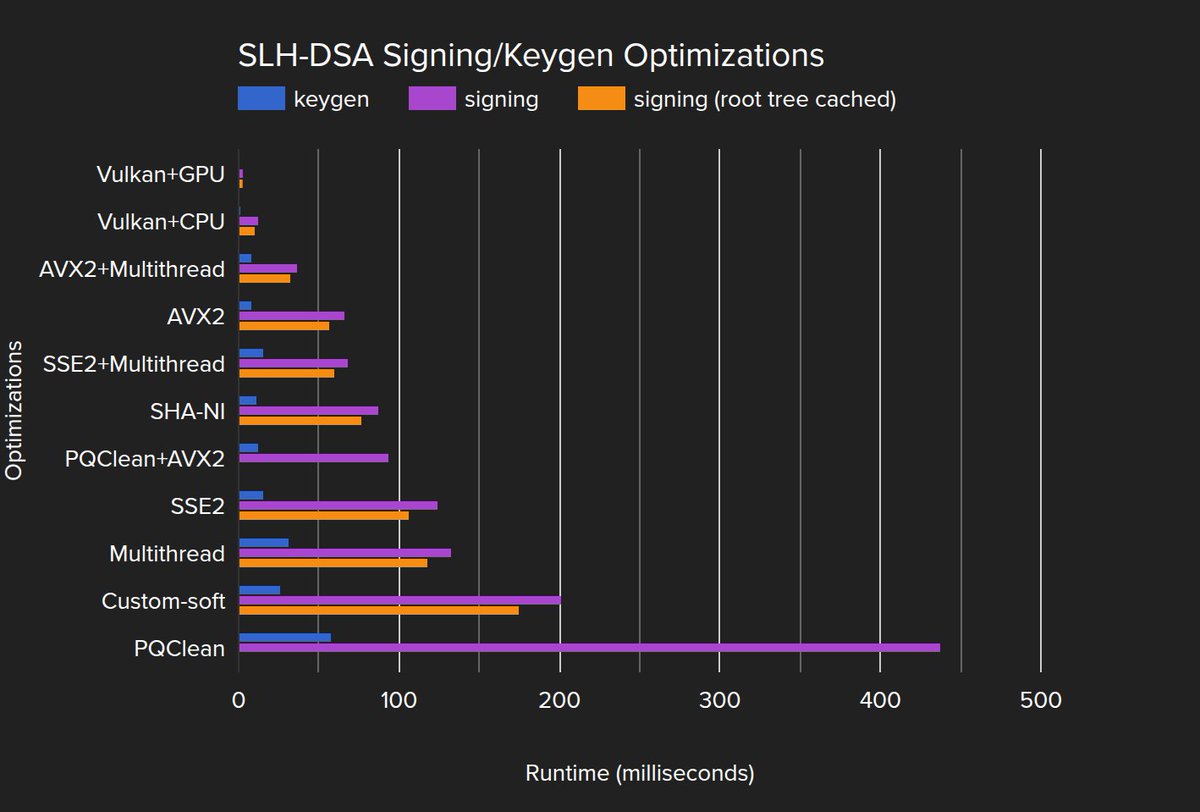
🧵Thread: A major update on post-quantum signatures for Bitcoin — direct from the Bitcoin Dev mailing list.
SLH-DSA (formerly SPHINCS+) is being optimized by @conduition_io as a candidate for the BIP360 quantum-resistant soft fork.
Here’s what changed, why it matters, and what Core devs said.👇
New on our Frontier Red Team blog: We tested whether AIs can exploit blockchain smart contracts.
In simulated testing, AI agents found $4.6M in exploits.
The research (with @MATSprogram and the Anthropic Fellows program) also developed a new benchmark: https://t.co/QpGPMqlDRG
@ailove168@StarryNift What work you have done? What makes you so irrational, twisting a CoinEx delisting into slanderous attacks? Entrepreneurship is a nine-deaths-and-one-life gamble. If this project is a scam, team should go to jail, but if you talk shit and even calumniate, you go to hell
@ailove168 Do you grasp the immense costs of sustaining a company for 5 years? Haven't you noticed team's tokens burned for deflationary mechanics and performance incentives? Accusing "absconding with funds"—do you have any conscience, common sense, or brain cells?