Avid learner of markets...
Tweets are personal for learning only, Not an advice for trading.
Consult your financial adviser before taking any trades :)
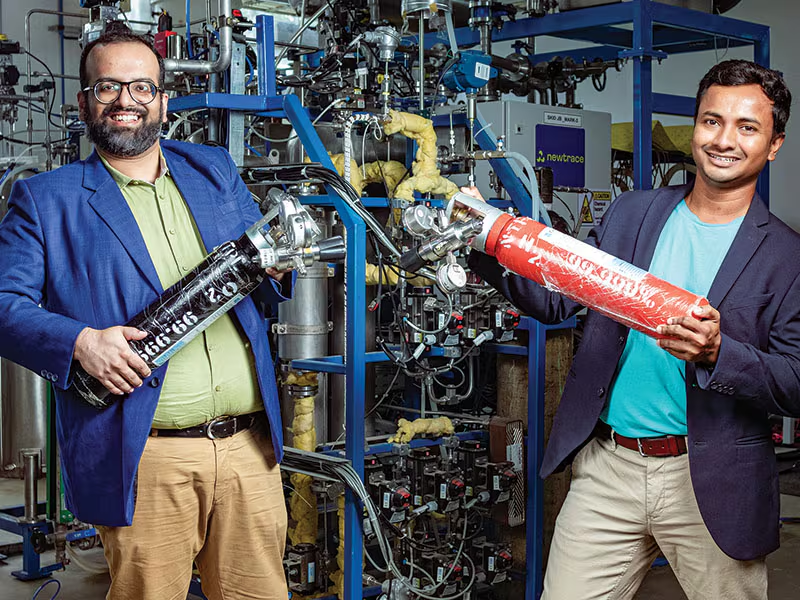
Two scientists, a fluid mechanics PhD and a nanomaterials fellow, building membrane chemistry that only 3 other companies on Earth can do, sitting quietly in a 20MW pilot plant in Bengaluru while the world argues about whether green hydrogen will ever be commercially real.
A few might be thinking what is Green Hydrogen?
Green hydrogen is nothing but hydrogen made by splitting water using renewable electricity instead of fossil gas. It is one of the few credible paths to decarbonizing steel, fertilizer, shipping, and heavy industry.
But the electrolysers that do this splitting have a dirty secret: the membranes inside them need to be highly selective for ions while staying chemically stable, which makes them expensive to manufacture and most designs lean on rare earth metals and complex materials that keep costs stubbornly high.
This is the actual reason green hydrogen has stayed a subsidy dependent science project instead of a real industry.
To solve this exact problem Newtrace was born 5 years ago.
2 people, real scientific depth, not repackaged engineers, Prasanta Sarkar holds a PhD in fluid mechanics from Université Grenoble Alpes, and Rochan Sinha is a J.N. Tata fellow with a background in nanomaterials and electrochemistry, both having cut their teeth in renewable energy systems in Europe before coming back to build this in India.
They rebuilt the electrode and membrane chemistry from scratch. The manufacturing costs cut by ~30%, with the rare earth metals eliminated entirely from the process.
Newtrace has a near-commercial prototype running and operates a 20MW pilot facility, and is building toward 1MW electrolyser systems today, scaling to 10MW by 2027.
They have raised $1M pre seed in 2022 led by Speciale Invest and Micelio Fund, then $5.6M seed in 2023 and most recently $6.3M raised specifically to commercialize their electrolyser electrode technology and push down green hydrogen production costs further.
Peak XV Partners and Aavishkaar Capital are in the cap table, serious climate tech literate money, not just government grant chasers.
Why this matters for Bharat......
- Steel, fertilizer, and shipping are exactly the industries where Bharat cannot simply "go electric", they need actual clean hydrogen as an input, not just clean power.
- Every electrolyser India imports today is a strategic dependency, the same story as solar cells and semiconductors before this.
If Newtrace's cost down chemistry scales, Bharat will build exportable IP in the one segment (electrode/membrane tech) that is genuinely defensible and globally scarce, at a moment when the government's own National Green Hydrogen Mission and rare earth corridor push are explicitly trying to create exactly this kind of domestic deeptech champion. 🙏🙏
This was bound to happen. Traders have been warning about it from day one.
India’s derivatives market has nearly 400 times the volume of the cash market. When cash-market liquidity is so low, especially on the BSE, participants with large capital can influence cash prices and take much larger positions in derivatives to benefit from those movements.
In my opinion, what SEBI has identified may only be the tip of the iceberg. Larger institutions could also be taking easy advantage of the same mechanism.
But can we blame market participants for using a system that the regulator itself created? The real problem is the policy. If the rules create an opportunity for manipulation, people with enough money will inevitably exploit it.
When the BSE CAS trades are of less than 100 crores, how can anyone expect a closing auction to produce fair price discovery?
Policymakers need a much better understanding of what happens at the ground level. If people with real trading experience or market participation had been involved in designing this policy, these risks should have been obvious before it was implemented.
In 1985, global software exports from India were an exercise in absurdity. If an engineer in Bangalore wrote code for an American client, they could not just hit Deploy.
They printed code onto magnetic computer tapes, boxed them up, drove to the airport, flew them 9,000 miles across the Atlantic, and waited weeks to find out if the build compiled.
Texas Instruments (TI) wanted to change everything. They wanted to build a direct pipeline between a newly rented facility at Sona Towers on Bangalore’s Miller's Road and their global headquarters in Dallas, Texas.
To do it, they needed a dedicated 64 kbps (YES, 64 kbps) satellite link.....
In 1985, 64 kbps was space-age. But the Indian govt did not even have a mechanism to allow a private, foreign company to own and operate international telecommunications equipment. International comms were strictly state-controlled.
Bureaucrats panicked. Ministries demanded security clearances, suspecting a massive dish pointing into the sky could be an espionage tool......
For months, Texas Instruments fought a war of attrition through Indian customs. When the giant dish finally cleared the port of Madras and reached Bangalore, the team faced another absurd reality: 1980s Bangalore’s road infrastructure could not handle the heavy, delicate components.
The dish that would spark India's digital leap did not arrive in a high-tech transport convoy. It was strapped onto a wooden bullock cart, pulled slowly through the streets by a pair of white oxen.
Once the dish was mounted on the roof at Miller's Road, engineers flipped the switch.....
An engineer in Bangalore typed a line of code into a terminal, hit enter, and watched as data beamed directly from the rooftop dish, bounced off a satellite in geostationary orbit, and landed in Dallas.
The code was compiled and executed on a mainframe in Texas, and the terminal output flashed back onto the screen in Bangalore in realtime.
It was the first time in Indian history that physical distance was obliterated by tech. The myth that critical engineering had to be performed locally in the West collapsed overnight.
The TI experiment proved the impossible was possible. But it exposed a brutal economic wall.....
Operating a private 64 kbps satellite link was mind numbingly expensive. In the late 1980s, a single half circuit cost ₹45 lakh per year in licensing and bandwidth fees alone, not including the millions needed for the physical earth station.
Only multi billion dollar Western giants could afford to build private pipes. Early Indian startups, the precursors to Infosys, TCS, and Wipro were completely locked out.
The dream of Indian IT was about to become an exclusive playground for foreign conglomerates.....
And then enters N. Vittal into the scene, the legendary Secretary of the Department of Electronics....
Vittal looked at the absurd cost of TI’s dish and realized something fundamental: Why force every small software shop to buy its own dish when the govt can build shared digital highways?
In 1991, amidst a crippling balance of payments crisis where India had to airlift its gold reserves to avoid default, Vittal walked into a high stakes meeting with Finance Secretary Bimal Jalan.
India’s total software exports that year were a modest $100M.
Jalan asked Vittal: "If I approve your wild demands: zero import duties on hardware, single-window clearances, and shared satellite gateways...what export numbers will you guarantee for next year?"
Vittal bluffed: "$400M".......
When Vittal announced the $400M target at a NASSCOM event later that week, the room filled with Indian IT founders dropped into a dead, terrified silence. Narayana Murthy and other industry leaders thought Vittal had signed their death warrants.
Vittal simply smiled and launched Software Technology Parks of India (STPI)......
STPI shattered every operational bottleneck holding back Indian talent:
- Instead of forcing companies to spend ₹45 lakh on private links, STPI built massive shared satellite antennas. Small startups could plug straight into the high-speed data pipe for a fraction of the cost.
- Vittal designated STPI zones as dutyfree import areas, shielding young coders from dozens of harassing tax inspectors and customs agents.
- Companies did not need to build in remote govt zones; they could set up anywhere talent existed.
Within years, the horse flew. The $400M target was crushed.....
What started on the back of a wooden bullock cart carrying a single satellite dish down Miller's Road became a multi billion dollar juggernaut that rewrote global tech history. 🙏🙏
For centuries, Leprosy (Hansen's Disease) was treated as an incurable curse. Even after antibiotics were introduced, treatment required yrs of heavy drug regimens & nerve damage often persisted.
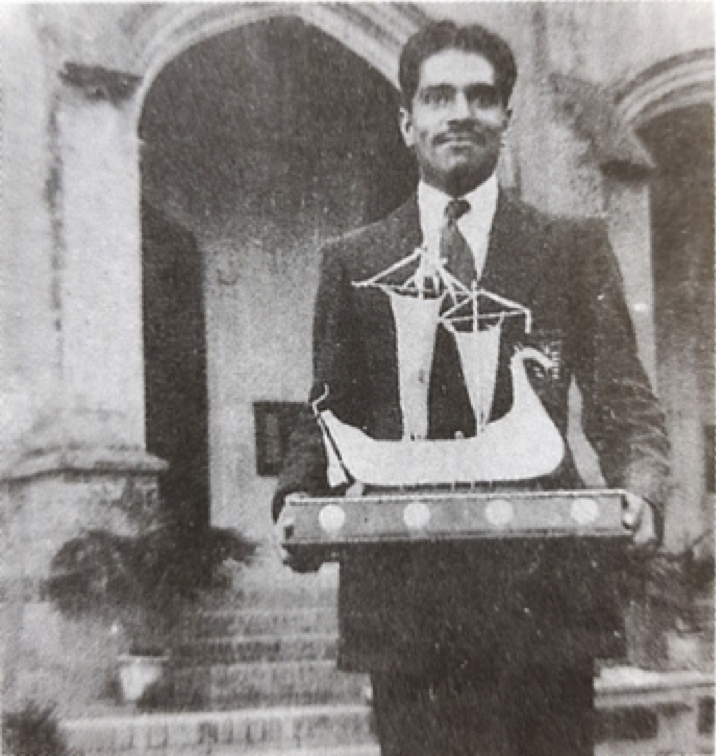
In the late 1970s, an Indian biochemist developed the world's very 1st immunotherapeutic vaccine for leprosy, using a harmless, non-pathogenic soil bacterium to awaken the human immune system.
While global pharma labs focused exclusively on developing chemical antibiotics to kill Mycobacterium leprae, . Dr. Gursaran Pran (G.P.) Talwar at the National Institute of Immunology (which he founded) in New Delhi realized that the real problem was immune paralysis. In severe lepromatous leprosy, the patient's T-cells completely fail to recognize the pathogen.
Talwar screened dozens of soil mycobacteria & identified a specific, non-pathogenic strain named Mycobacterium w (Mw, now classified as Mycobacterium indicus pranii).
He discovered that when killed Mw bacteria were injected into leprosy patients alongside standard multi-drug therapy (MDT):
- It re-energized the patient's dormant cell-mediated immunity.
- It accelerated bacterial clearance from the skin & nerves by up to 50%.
- It significantly reduced the incidence of debilitating painful immune flare-ups (erythema nodosum leprosum).
The Mw vaccine became the world's 1st scientifically proven immunotherapeutic agent for leprosy, later found to also boost host immunity against drug-resistant tuberculosis & certain types of tumors.
Global health agencies spent decades searching for complex synthetic molecules, an Indian biochemist looked into the dirt under our feet and found a harmless soil microbe that taught the human immune system how to conquer 1 of the oldest afflictions in human history.
This Drama of protest will continue till March 2027 with breaks & intervals. Calling it Drama as the genuine protest was later hijacked by goons and anti nationals. Main Target is Uttar Pradesh Election and FCRA bill. Yogi 3.0 is definitely loading. Once transit Rahu will be closer to Yogiji's natal Rahu, with his Venus bhukti starting November 2026 onwards, Yogiji @myogiadityanath will start showing better leadership and performance. Predicted in many of my interviews that high chances of Yogi Adityanath ji coming to centre in the end of 2027 or starting of 2028. Once Yogiji will come to centre, left wingers, anti nationals will disappear from TV channels, news headlines. They will keep crying for next few decades saying Modi was avatar of Bhagwan😁. SAVE IT
One of the Zoho group companiee, Vipus Advanced Materials, is focused on carbon fiber composites. A retired ISRO scientist is one of the key people behind it.
Vipus has supplied advanced composite components to Skyroot Aerospace. So Skyroot's successful launch feels even more special!
Vipus is among the fastest companies to qualify as a HAL Class I supplier, with orders for LCA Tejas aircraft structures, and is working with L&T Precision Engineering Systems.
Proud of you Vipus, make Bharat manufacturing great! 🙏
Kumar Vishwas on Dhurandhar 2: hits the nail on the head... fantastic reply.
Wow! Perhaps one of the best tributes to Aditya Dhar for making Dhurandhar. In just a few words, Kumar Vishwas hits the bullseye
The interviewer looks visibly uncomfortable and must be cursing his luck for asking the right question to the wrong person. Enjoyed this conversation 😘😍👊🏼
𝗥𝗨𝗕𝗜𝗢 𝗙𝗟𝗘𝗪 𝗜𝗡 𝗧𝗢 𝗖𝗥𝗔𝗖𝗞 𝗢𝗣𝗘𝗡 𝗘𝗔𝗦𝗧𝗘𝗥𝗡 𝗜𝗡𝗗𝗜𝗔 — 𝗠𝗢𝗗𝗜 𝗦𝗟𝗔𝗠𝗠𝗘𝗗 𝗧𝗛𝗘 𝗗𝗢𝗢𝗥 𝗦𝗛𝗨𝗧 𝗜𝗡 𝗛𝗜𝗦 𝗙𝗔𝗖𝗘
Read the chronology first.
→ Friday: Republic reports two Missionaries of Charity sisters met Mamata Banerjee in Kolkata.
→ Saturday: Marco Rubio lands in India and his FIRST stop is that same Mission. Not Delhi. Not Modi. The missionaries.
Read the map, not the schedule.
For 60 years the US has hunted for a foothold in the Bay of Bengal. They asked Yahya Khan. They asked Mujib. They asked Hasina. Each one who said no — you know what happened next.
Now look at the wall Modi's India built:
→ Bengal flipped saffron. The eastern footprint they wanted — locked.
→ The Siliguri corridor land Mamata stalled for a decade — handed to BSF by locals in 7 hours.
→ Bangladesh border sealing. Northeast cleaning up. Naxal networks surrendering.
So Rubio doesn't come to dominate. He comes to 𝗿𝗲𝘀𝗲𝘁 — to beg for a trade-deal photo before the midterms.
The strongmen they tried to erase — Yogi, Himanta, Suvendu — didn't vanish. They multiplied.
𝗧𝗲𝗹𝗹 𝗺𝗲 𝘀𝘁𝗿𝗮𝗶𝗴𝗵𝘁 — 𝗶𝘀 𝘁𝗵𝗮𝘁 𝘁𝗶𝗺𝗶𝗻𝗴 𝗮 𝗰𝗼𝗶𝗻𝗰𝗶𝗱𝗲𝗻𝗰𝗲, 𝗼𝗿 𝘁𝗵𝗲 𝗺𝗼𝗺𝗲𝗻𝘁 𝘁𝗵𝗲 𝗴𝗮𝗺𝗲 𝗳𝗶𝗻𝗮𝗹𝗹𝘆 𝘁𝘂𝗿𝗻𝗲𝗱?
Open letter to Indians in America.
--
Dear brothers and sisters from Bharat:
Like I did 37 years ago, you arrived in America with no money but with a good education and cultural heritage from Bharat. You achieved outstanding success. America was good to us. For that we must remain grateful - gratitude is our Bharatiya way.
Yet today, a significant number of Americans, may be not the majority but not too far from it either, believe that Indians "take away" American jobs and our success in America was unfairly earned.
You may think the next election will fix this, but your choice would be between people who hate our Bharatiya civilisation and people who hate civilisation itself. That is the "hard right" vs "woke left" battle. You are mere bystanders to that conflict.
Meanwhile there is one thing that is true now and will be true in the future: the respect Indians command world-wide will substantially depend on the fortunes of India herself. If India remains poor, the woke left will give us moral lectures with pity and the hard right, different moral lectures with scorn ("hellhole") and we must not confuse either with respect.
Respect in today's world, along with prosperity and security, comes from one source: a nation's technological prowess. India produces sufficient brain power to achieve that prowess but alas we exported so much of that talent, particularly to America. As we develop that prowess in India, our civilisational strength will assert itself.
As difficult as it is for many of you to contemplate this, please come back home. Bharat Mata needs your talent. Our vast youthful population needs the technology leadership you gained over the years to guide them towards prosperity. Let's do it with a missionary zeal.
Respectfully
Sridhar Vembu
594 kilometres. ₹36,500 crore. Meerut to Prayagraj in under 7 hours. PM Modi and CM Yogi to inaugurate Ganga Expressway on April 29.
Who would have though a decade back that a state that was once a byword for broken roads now holds 60% of India's expressway network. Let that sink in.
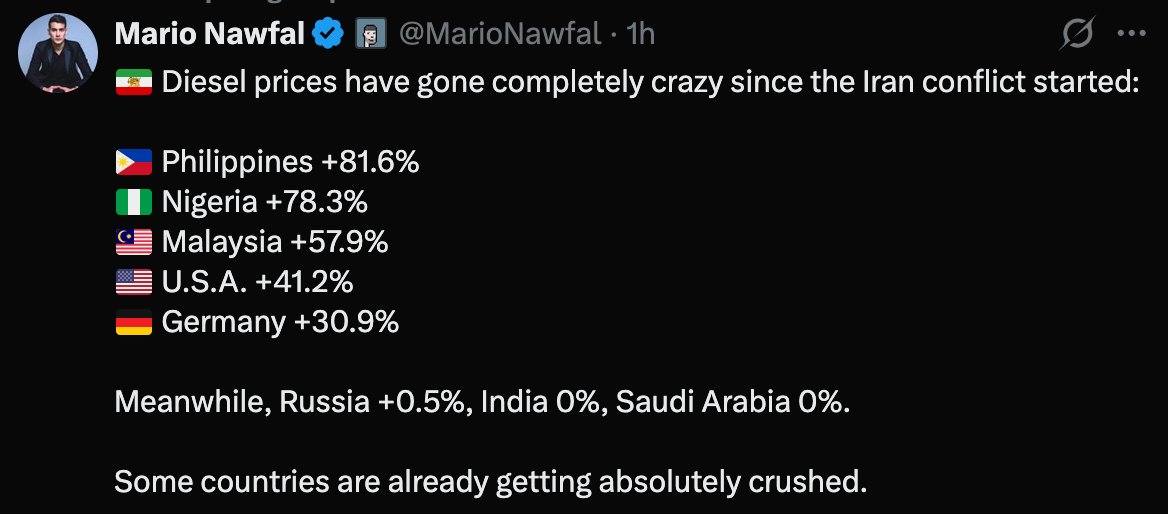
Of the 0% increase club, only India is a mega importer of oil. Russia & Saudi are major oil producers awash with oil. It is commendable that 3rd largest consumer of oil in the world is still able to keep prices low and sane for its citizens by extraordinary management.
🇨🇳🇺🇸 CHINA WARNS THE UNITED STATES
“If you want war, you will get war; if you want to destroy China, you will be destroyed. China will not fire the first shot, but China will not allow you to fire the second shot”
— Victor Gao, President of China Energy Security Institute
Macron has met Putin many times since the war started. Trump has welcomed Putin in the US with flying F-35s and shows. Xi has hosted Putin royally in Beijing's palace.
But how dare India and Modi host Putin? We will cry and abuse you in frustration because we are sore losers who suck up to the US, and are suckers for Chinese wealth and women.
Recalling an interesting, lesser-known story related to Ayodhya Ram Mandir.
India Today interviews lensman Mahendra Tripathi who captured the April 1991 visit of Murli Manohar Joshi to Ayodhya.
The photographer asked Joshi who is the man accompanying him throughout as no one knew him then. After praying at the makeshift temple, Joshi left while that man kept standing. The photographer jokingly asked that man if he was talking to Ram Lalla as his friend had left. The man replies "I'll speak later" & keeps seeing the murti.
Later in the day, the photographer again encounters that man. The man introduced by Joshi ji as 'a leader from Gujarat' tells him that he'll now only enter Ayodhya when the Ram Mandir is constructed & Ram Lalla is seated inside the grand temple at his rightful place.
A vow kept for 33 long years got fulfilled last year with dharma dhwajarohan/flag hoisting ceremony marking the completion of Ram Mandir's construction taking place today.
#Ayodhya #JaiShreeRam
Source: https://t.co/K6dQt7RMI6
VidurNeeti
Thank you Sir, this is a huge morale boost for our engineers who have worked hard for over two decades to build our product suite.
We will make you proud and make our nation proud. Jai Hind 🙏
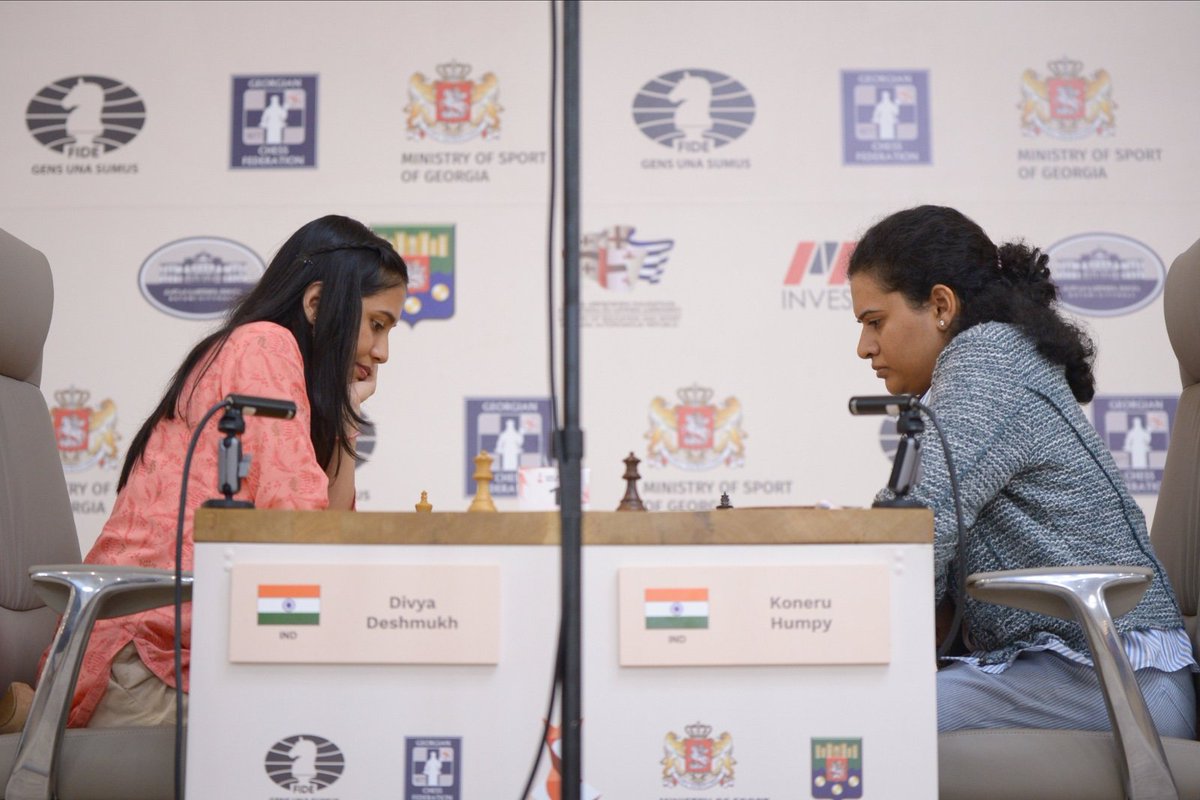
A historic final featuring two outstanding Indian chess players!
Proud of the young Divya Deshmukh on becoming FIDE Women's World Chess Champion 2025. Congratulations to her for this remarkable feat, which will inspire several youngsters.
Koneru Humpy has also displayed immense prowess throughout the championship.
Best wishes to both players for their future endeavours.
@DivyaDeshmukh05@humpy_koneru
India’s Nari Shakti conquers the chessboard! ♟️🇮🇳
Heartiest congratulations to Divya Deshmukh on becoming the first Indian woman to win the FIDE Women’s World Cup, and that too at just 19. Kudos to Koneru Humpy for her stellar performance.
A truly inspirational moment for our youth and the future of Indian chess. Proud. @DivyaDeshmukh05
#FideWorldCup