@dmthomas90 I've not read the book but I did blog about this exact thing at the time https://t.co/JN8koKnRoG and then went on to write a guide explaining how Government could get evidenced-based cover to run public contracts in this way habitually https://t.co/UUQzDGU0YZ
@perk_i@CommonCapitaI@lbilli91@jrf_uk I don't think I can quite get there on "I don't understand it, but it's good". I'm stuck on "I don't understand it". It's certainly brave, but not all brave things are smart things to do
Great to catch up with @wiguk partners at Oxford University @golaboxford@BlavatnikSchool on our work for cross-sector collaborative leadership to improve public policy outcomes. Looking forward to launching our new report in September - watch this space! #collaborationatwork
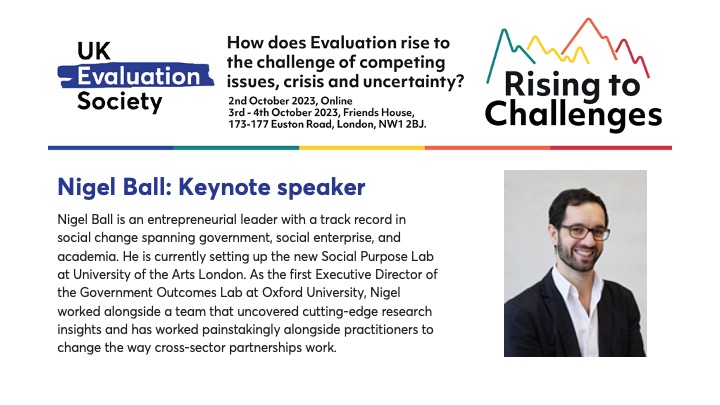
We're very excited to have @nigel_ball, the Director of the Social Purpose Lab at @UAL, joining us as one of our #keynotespeakers at #ukesconf23. The line-up just keeps getting better!
Click here to find out more and register to attend:
https://t.co/NbLBvY7C00
@gquaggiotto If you believe this you are not taking a broad enough view of evaluation methodologies. Toby's alternative, "learning together", is "demonstrating impact" by another name.
The biggest myth of utilities privatisation was that it transfered risk away from the state. If a service is essential then the risks always stays with the state.
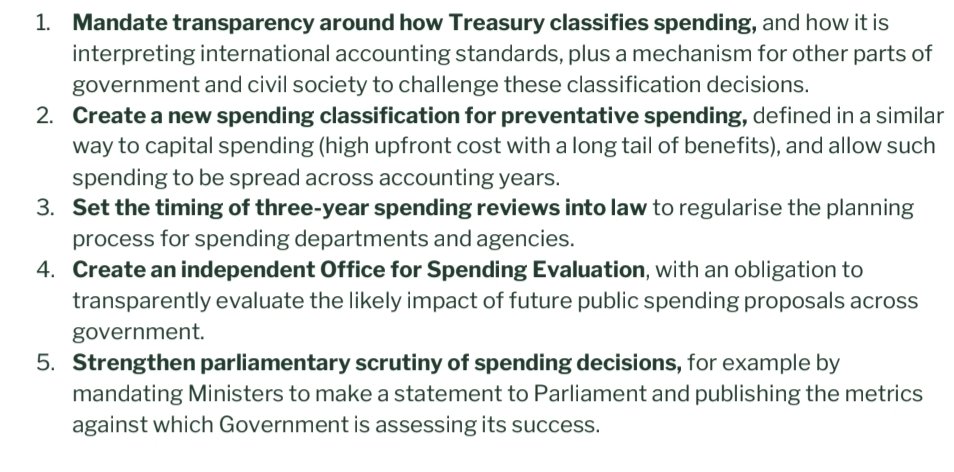
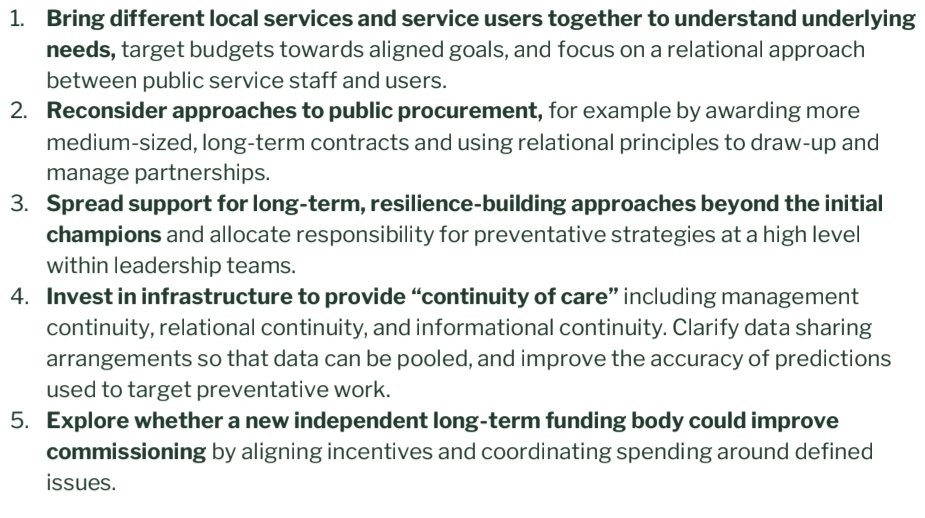
Looking back over @nigel_ball & my report on rewiring the state for resilience in prep for saying a few words @Demos event on prevention with @bengglover, @pollycurtis et al later.
Optimistic that our 5 ideas in 4 areas could be a starting point for reform https://t.co/8KxRyC7aH8
Can anyone with sound economics explain why we don't fight inflation with tax increases? Would have the same effect of dampening demand while improving public finances. Is it because this wouldn't affect bond markets and therefore the value of the £?
@_criminologist @stianwestlake Sometimes we can't quantify, and then we need to qualify, not just go "oh well, let's just do the stuff we can quantify".
Often I think the lack of action is because issues are systemic & repeating a "proven" intervention can't fix that
@stianwestlake But we've been doing this heavily for at least 10 years and it often isn't leading to better policy because so many contemporary problems do not submit to "interventions" (which we know because results don't replicate). Is there funding for experimenting with new eval methods?
Why impact investors need to stop marking their own homework - a debate piece from me and @My_impact_is in @PioneersPost - with thanks to @jessdaggers for inspiring the thoughts! https://t.co/ngryEFEHnQ
This is very good. Our urge to reduce life's complexity to solvable problems has run out of road. Not everything has a technocratic solution - logic is not omnipotent. There are other ways of finding meaning - philosophy, wisdom, spirituality - and they have been crowded out.
Politics has shrunk. What would it take to make it big again? Some reflections on the 1960s counterculture and what it can tell us about politics today.
https://t.co/aBfcib2qSR
Not necessarily a third category of spending, but a subset of capital spending (big upfront cost; long tail of benefits) - as @LoicMnzs and I describe in our report on "Efficiency and Resilience" https://t.co/kH1oDp8J37
🚨NEW EVENT🚨
@Demos recently called for a new, third category of Treasury spending - focused on prevention.
Do you agree?
Join me @pollycurtis@KieronJBoyle@carolineslocock to discuss!
https://t.co/EEyIbebybB
1/2