It was an honour to present my talk:
"Optimising the RTP process after ACLR: A practical approach" at the @footballmed conference in Madrid. To support enhancing science into practice, see below the published commentaries this approach is based on. Most papers are open access
I use MRI in lower back pain 🤭
I also get asked frequently how I manage the scan follow up consults & handle patient Qs
So here is a mini-thread which gives a little comms synopsis - some may nod sagely, others may roll their eyes - that’s cool - no right or wrong.
End-stage F&A you can do at home with a Post It + music 🎶
The intrinsics activate best under high load at shorter contact times where medial & lateral stability is needed - cutting, sprinting & hopping! 🦘🏃🏽♀️
Do in trainers if not used to it 👟
🔹4 STAGES - it gets hard 🤣👀🦶🏼
🆕🗞️New publication
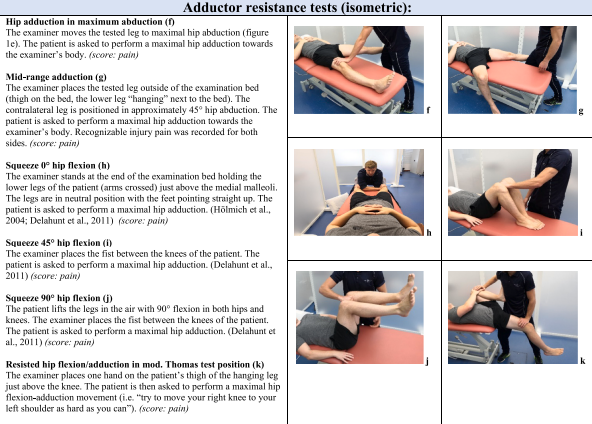
Clinical examination tests for adductor- and pubic-related groin pain in athletes with longstanding groin pain: Inter-examiner reliability and prevalence of positive tests
🔓Open access: https://t.co/Fsfn06SGXS
🧵Main findings below🔽
Let's chat about frozen shoulders... A 🧵
There are a few ortho conditions that can make a mess of things due to its natural history, initial presentation, and progression.
Frozen shoulders are one of those diagnoses.
Thread alert 🚨🚨🚨
Ankle inversion injuries don't just result in lateral ligament sprains....
...there are plenty of other injuries to bear in mind when you assess, both acutely & further down the line
⚽📊The Development of a Return to Performance Pathway Involving A Professional Soccer Player Returning From A Multi-Structural Knee Injury
https://t.co/sEb12rby9r
#IOCATPC#ATPC2023
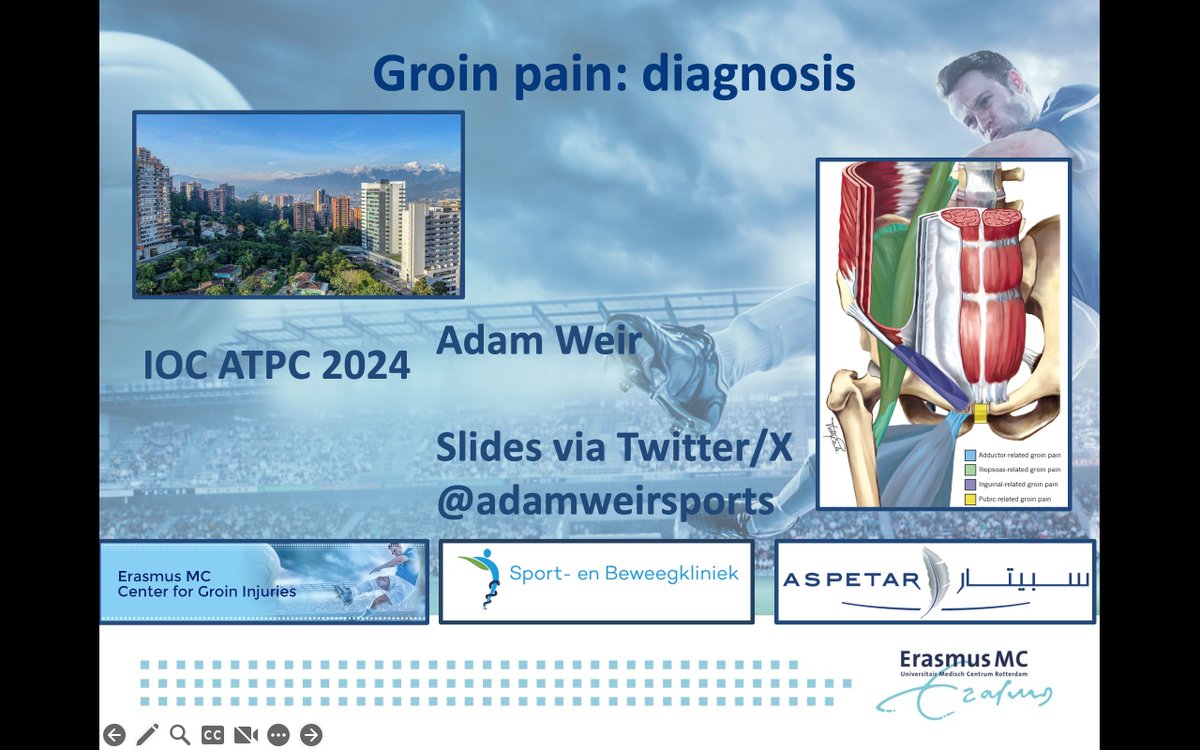
And slide from my second talk on the treatment of groin pain in athletes
Hard to fit it all into just 15 minutes - but hopefully lots of useful references and resources
See link below:
https://t.co/HN626oGxFg
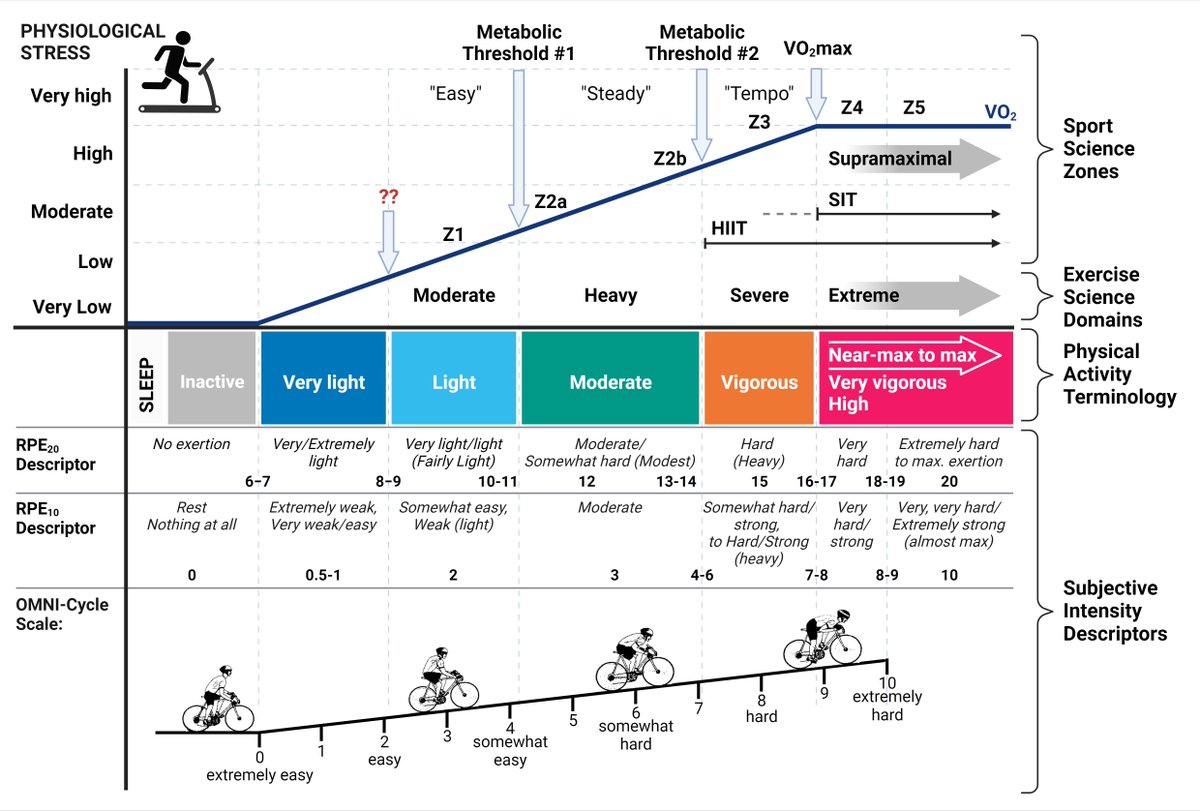
Energy system development is not
🚫 drills
🚫 consequence orientated
🚫 small sided games
🚫 tempos
(All these condition for a sporting task or set of demands)
It is:
✅ specific in terms of stimulus and adaptation
✅ governed by specific intensity and volume
✅ focused on benefitting direct (effort) and indirect (recovery) areas
See below on where conditioning and ESD get confused for me! 👇
@timkettenring
Extensive plyos for the win 👇
Underlying ability to modulate stiffness and increase basic reactive strength levels is low hanging fruit for many recreational athletes.
Daily bilateral hopping
6 wk protocol
5-15 sets
75-225 reps (my estimate)
Increase in running economy
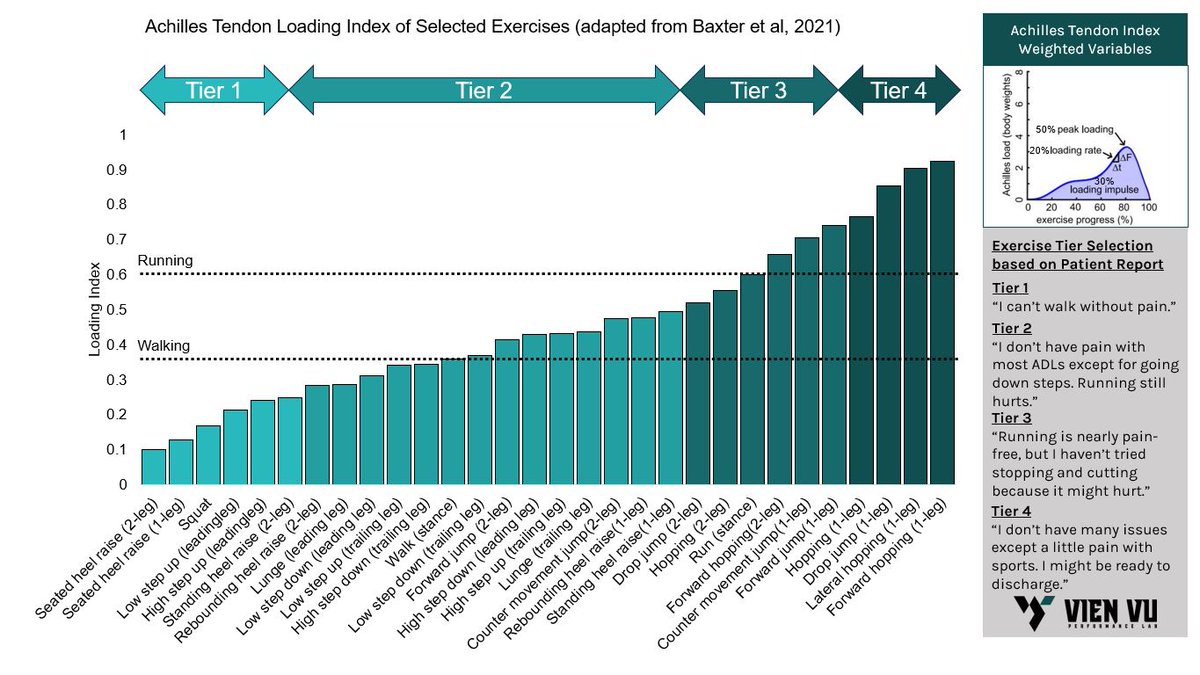
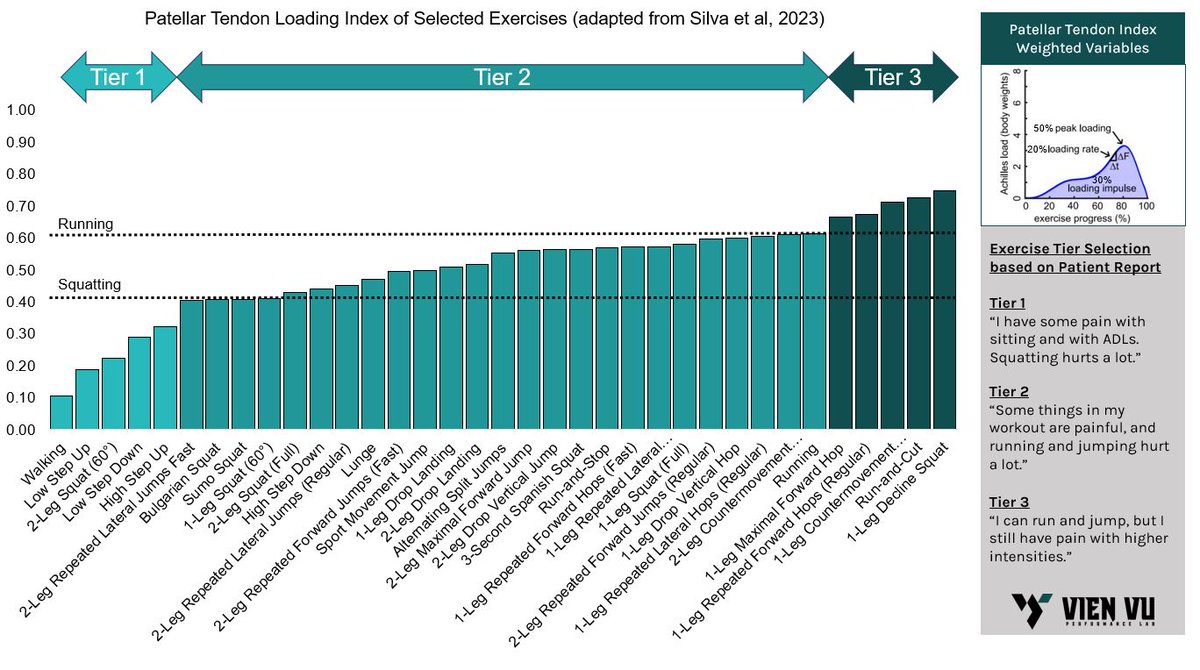
Great articles on Achilles and patellar tendon loading from @BaxterLabHQ (Thanks for your work). Here's how I apply their research to clinical practice and exercise selection. Hope it helps.
Achilles: https://t.co/jJMtnYV7NR
Patellar: https://t.co/WDR413p4sY
Game Speed🏉🍒⚪️
Following my @sportsmithHQ article last yr. Here’s a snippet of how we attacked it this time around!
🦵🏻Efficiency: Develop Technical KPIs
🧩Exploration: Allow Time & Reps Piece Things Together
🎯Execution: Challenge Through Levels of Decision Making
(1/3)
Plyometrics: What can we learn from masters of the craft?
Here's what I've learned from the themes and commonalities between the world's experts on high powered plyometric training.
Plyometric experts all have strong clarity and give deep thought to the following:
🔸Their plyometric philosophy
🔸Quantifying plyometric intensity
🔸The individual athlete
🔸The specificity/intensity tradeoff
🔸The balance w/ sport specific training
The Plyometric Purpose
Each expert has a clear definition of plyometric training.
What it is.
And what it isn't.
When to use it.
And when not to.
They all have a clear "why". They don't all agree... but they each have a specific & clear purpose for using plyometrics.
Quality > Quantity
All clearly consider plyos to be a high powered, quality-dependent training stimulus.
All are thoughtful & methodical in quantifying intensity of exercises used. None solely count "foot contacts". Most use a product of: [foot contacts] * [intensity factor]
💥 Intensity factors are established in a number of ways across the expert group but most are a combination of one or more of the following:
🔸Published research
🔸Contraction types & contact times
🔸Experiential knowledge
Quantification ↔️ Classification
Once intensity is quantified exercises can be classified.
The experts all have clear categories of exercises from which they build clear training menus and progression plans. Example:
All consider the individual athlete
The training process is strongly guided by:
🔸Training purpose
🔸Time of year
🔸Sport specific training
🔸The athlete "type"
🔸The athlete training history
🔸The athlete injury history
Greyhound vs Bulldog
Athlete type is widely considered a determinant of plyo training response.
Greyhound: Light & elastic. Responds potently to plyos.
Bulldog: Muscular/strong athlete. Responds well to strength work but careful, moderate plyo doses can help ↗️ elasticity.
What about the sport?
All want clarity of the plyometric demands of the sport training.
All want to avoid overload of similar stimulus to the sport training.
All ask "what relevant stimulus can we give the athlete that the sport training is not providing?"
Intensity ↔️ Specificity
There is a tradeoff between plyometric specificity & intensity.
When we ⬆️ specificity we can infringe on sport technique & inadvertently ⬇️ the magnitude of physical quality overload.
"General" plyometrics overload physical qualities. Established sport specific drills are likely best way to balance both.
Thanks for reading.
All of this info has come from
@SportsmithHQ podcasts from:
@sprintcoachSWE
(episode 272)
@SheppardCoach
(ep28 & 103)
@MMJPerformance
(ep38)
@BooSchex
(ep212)
@dkhammy
(42)
And other resources from:
@wildy_jj@benthebounce@DerekMHansen
Just received an online free view only link from @SportsMedicineJ for all those unable to access the article including the 21 supplementary videos as part of the paper
https://t.co/nOJlwU9dqB
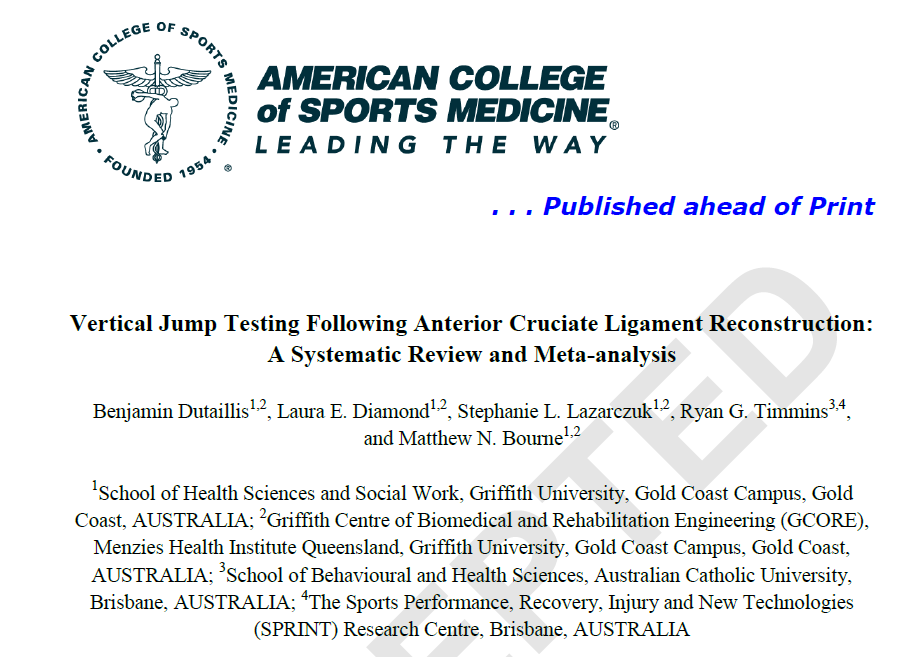
Do you use vertical jump tests following ACL reco?
New from @benji_dutaillis in @MSSEonline with deets around uni vs bilat, time course
"Vertical Jump Testing Following Anterior Cruciate Ligament Reconstruction: A Systematic Review and Meta-analysis"
https://t.co/qTVyAkuQtc
Looking for a free trusted sports medicine resource? Consider downloading the Aspetar Collection: https://t.co/tPVLab8dqm
(And there's a Volume 3 on Football Medicine as well)
@Aspetar@AspetarJournal@PdHooghe@Popovicnebojsa4













![EamonnFlanagan's tweet photo. Plyometrics: What can we learn from masters of the craft?
Here's what I've learned from the themes and commonalities between the world's experts on high powered plyometric training.
Plyometric experts all have strong clarity and give deep thought to the following:
🔸Their plyometric philosophy
🔸Quantifying plyometric intensity
🔸The individual athlete
🔸The specificity/intensity tradeoff
🔸The balance w/ sport specific training
The Plyometric Purpose
Each expert has a clear definition of plyometric training.
What it is.
And what it isn't.
When to use it.
And when not to.
They all have a clear "why". They don't all agree... but they each have a specific & clear purpose for using plyometrics.
Quality > Quantity
All clearly consider plyos to be a high powered, quality-dependent training stimulus.
All are thoughtful & methodical in quantifying intensity of exercises used. None solely count "foot contacts". Most use a product of: [foot contacts] * [intensity factor]
💥 Intensity factors are established in a number of ways across the expert group but most are a combination of one or more of the following:
🔸Published research
🔸Contraction types & contact times
🔸Experiential knowledge
Quantification ↔️ Classification
Once intensity is quantified exercises can be classified.
The experts all have clear categories of exercises from which they build clear training menus and progression plans. Example:
All consider the individual athlete
The training process is strongly guided by:
🔸Training purpose
🔸Time of year
🔸Sport specific training
🔸The athlete "type"
🔸The athlete training history
🔸The athlete injury history
Greyhound vs Bulldog
Athlete type is widely considered a determinant of plyo training response.
Greyhound: Light & elastic. Responds potently to plyos.
Bulldog: Muscular/strong athlete. Responds well to strength work but careful, moderate plyo doses can help ↗️ elasticity.
What about the sport?
All want clarity of the plyometric demands of the sport training.
All want to avoid overload of similar stimulus to the sport training.
All ask "what relevant stimulus can we give the athlete that the sport training is not providing?"
Intensity ↔️ Specificity
There is a tradeoff between plyometric specificity & intensity.
When we ⬆️ specificity we can infringe on sport technique & inadvertently ⬇️ the magnitude of physical quality overload.
"General" plyometrics overload physical qualities. Established sport specific drills are likely best way to balance both.
Thanks for reading.
All of this info has come from
@SportsmithHQ podcasts from:
@sprintcoachSWE
(episode 272)
@SheppardCoach
(ep28 & 103)
@MMJPerformance
(ep38)
@BooSchex
(ep212)
@dkhammy
(42)
And other resources from:
@wildy_jj
@benthebounce
@DerekMHansen](https://pbs.twimg.com/media/F9Iq4IZWoAAUeCt.png)