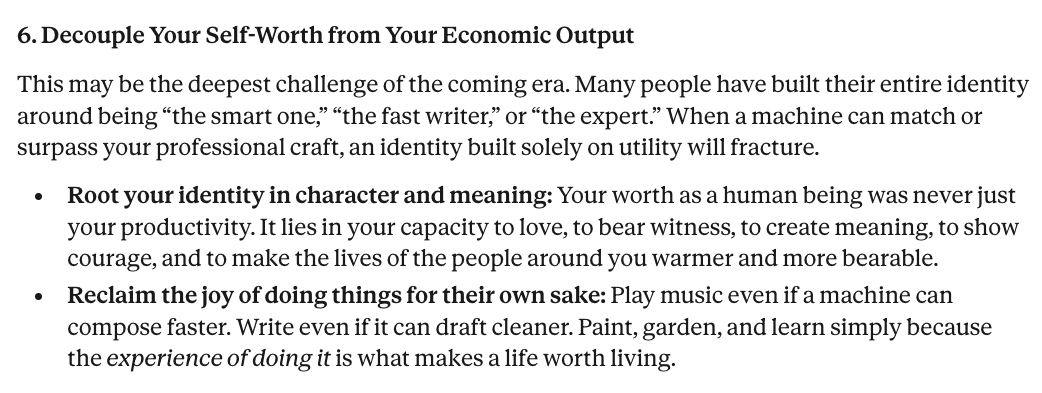
all things said and done, I suspect we will look back on claude code as one of the greatest products shipped in this period
both enabling and representing the new way of building
The Tangaliya artifacts have begun finding their way to their rightful owners, and the response has been nothing short of overwhelming.
A big thank you to everyone for making this possible.
Applied Compute has signed a definitive agreement to be acquired by Palo Alto Networks for $4.5B!
Rhythm, Linden, and I founded Applied Compute with a belief that was unusual at the time: that every company should own its intelligence. We think training, serving, and improving proprietary models will become a normal part of running a company.
To do useful work, a model needs to access sensitive data and systems, comply with policies, and remain explainable, verifiable, and auditable. This is the reason we've always prioritized security, and why joining Palo Alto Networks will help us go further faster. Customers will still own and control their models, and I'm excited for all the ways our combined capabilities can serve them even better.
Above all, I'm incredibly grateful for the AC team. A few dozen people in just over 18 months grew this company from zero revenue to over $100M in annualized revenue run-rate, working with many of the world's most innovative companies. More to come soon.
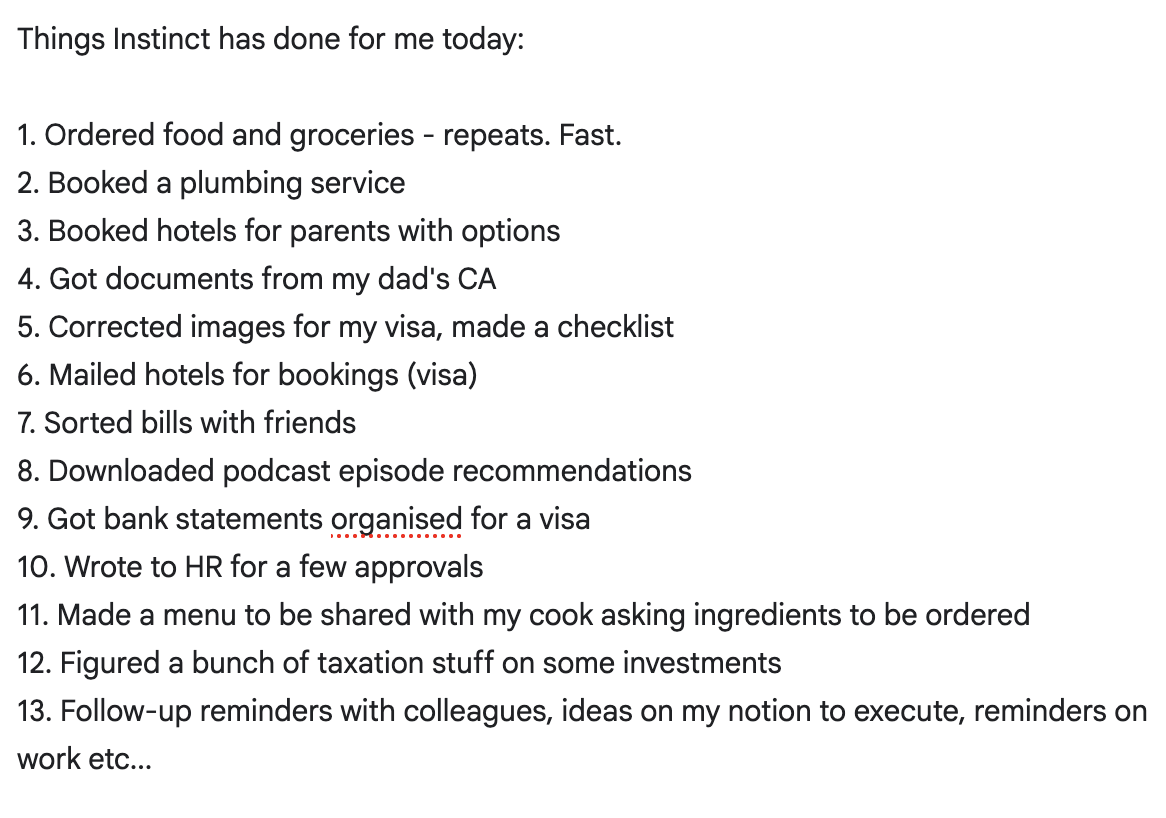
You can now connect Instinct to your accounts using @Plaid. Instinct will make sure you never pay for what you don’t use, make sure no refund you’re owed gets forgotten, tell you when a charge doesn’t look right, and identify opportunities for growth.
A huge percentage of my life is spent avoiding crowds. Avoiding fashionable ideas, investing in underpriced assets, finding cool places that aren't deluged with tourists — they're all variants of the same thing. Whenever I find myself in a crowd, I feel something is wrong.
a strange feature of the current AI cycle -- there are a handful of AI companies today that have what are historically considered to be core ingredients of a high quality business (high grr, good nrr, high gross margins, multi-year contracts with large enterprises, large acv's, deep usage, real roi, controlled burn)
BUT they are often out of favour with investors as growth profile is "good" (meaningfully better than previous saas cycle benchmarks) but not "great"
the cognitive dissonance for founders in the trenches is dizzying - you think you're doing so much right and yet its just not enough.
if / when the cycle turns, there will be a flight to quality and these companies will see much more love.
Today, we are launching Sarvam Token Factory for everyone.
We host our own models, and the full range of best-in-class open-weight models, in India. We match leading inference providers on performance and reliability.
For enterprises, this means more models to choose from, and an AI stack they can own without lock-ins.
India AI is the most mysterious things right now - what exactly is India AI?
SOTA Researchers?
Published Papers?
SOTA Models?
Harnesses?
New Chips?
Renewable Energy?
Energy Efficient Data Centers?
Cheapest Inference?
Applications?
AI Coders?
FDEs?
Users?
...?
I have asked this question to many friends - investors and founders - and haven't really founder an answer to what exactly is India AI?
And if we don't define it, how will we measure it? How will we know we are doing better or worse?
One of the most fun things about working for @OpenAI is that it’s a little glimpse into the future of how jobs will change.
Holding a team offsite? Sending around a static agenda was so yesterday….
…Why not spin up a little personalized interactive website for the whole team on priorities, get to know your team cards and prep exercises then have your agent book your travel and your prep docs conversationally?
Maybe I'm late to this one, but rather than the automatic meeting summary notes (kinda a bear to read, never quite lands the narrative, too much detail about silly things + not enough detail about important things), ask for an "organized, detailed FAQ format". Oddly effective!
Tbh, this is an easy fix. WhatsApp Payments should just be a chat window interface like any other chat I have on WhatsApp. Everything in one place, who i paid, what I paid, what amount I received with a simple to use agent which can help me search/setup recurring payments etc.
It's super weirdly complicated right now when all the other apps PhonePe/Gpay look like messaging apps when you click on an individual.
WhatsApp wants to be more than a messaging app.
It has the distribution heft.
Its Business messaging feature has started picking up as well.
It has the capability to offer payments and lending services as well.
But there is a catch. WA is designed as a payments app. The interface is very different from the other fintech super apps in India.
Can it squeeze all such features within the app without making it look spammy?
Thats the critical challenge for WA's new CEO Kunal Shah.
🚨 One of India's OG fintech firms is on the block.
Amazon-backed BankBazaar explores majority stake sale, per sources.
The fintech firm has held discussions with multiple potential buyers, including SoftBank-backed payments infrastructure platform Juspay, but no deal has materialised so far, at least five people familiar with the developments told Moneycontrol.
BankBazaar's investors include Peak XV Partners, Amazon, Eight Roads Ventures, The Walden International Group and Muthoot Fincorp, among others.
The Chennai-based company has raised over $130 million (Rs 1,200 crore) since its inception in 2008.
BankBazaar is casting a wide net for potential buyers, with discussions spanning three broad categories: consumer fintech companies with an NBFC (non-banking financial company) licence, private equity firms focused on buyouts, and companies outside the consumer lending ecosystem.
With @Goenka_Tushar1
https://t.co/QunqdjuvHD
I absolutely love Instinct. Threw my Hermes setup out. Inspite of trying so many different things, never managed to replicate the product taste of Instinct onto my Hermes harness.