$7 billion in annualized stablecoin settlement, up 50% in a single quarter.
That’s the run rate Visa announced on April 29, 2026, as it added five blockchains to its settlement pilot, bringing the total to nine.
Three weeks earlier, Mastercard agreed to acquire BVNK for up to $1.8 billion, a 140% premium over BVNK’s $750M Series B from a year prior.
In the same window, Mastercard’s Multi-Token Network (MTN) added SoFiUSD, went live with USDC and EURC merchant settlement across EEMEA, and now supports five regulated stablecoins:
- USDC
- EURC
- USDG (Paxos)
- FIUSD (Fiserv)
- PYUSD (PayPal)
Card networks needed stablecoin pipes in the first place because domestic instant payment systems already won the local layer.
▸ PIX in Brazil handles 40% of e-commerce and settles in under 10 seconds.
▸ UPI in India processes over 80% of retail digital payments.
▸ QRIS in Indonesia just launched cross-border with China on April 30, 2026, and is already live in Singapore, Malaysia, Thailand, Japan, and South Korea.
These networks demolished card economics for domestic payments.
Cards were never going to win on cost or speed against rails the local central bank built and subsidized.
But these rails don’t natively interoperate.
PIX can’t send to UPI. UPI can’t send to QRIS. Bilateral linkages exist (the UPI–PayNow corridor between India and Singapore is the most cited example), but each one takes years of central bank coordination to negotiate.
In the coming months and years, I believe payments increasingly stack like this:
→ local leg clears through the domestic instant rail (PIX, UPI, QRIS, FedNow, SEPA Instant)
→ cross-border leg runs over stablecoin rails on a public or permissioned chain
→ orchestration layer belongs to whoever owns the API surface and the licensing footprint to operate in both jurisdictions
The card networks didn’t pivot to stablecoins because crypto won. They pivoted because local rails won, and the bridge between local rails became the only payment territory still up for grabs.
Visa and Mastercard got there first. Whether they can hold it depends on whether sovereign alternatives in India, Indonesia, and China decide to share
TRUMP “PUT” FADING AS MARKET UNCERTAINTY RISES
Barclays says markets are losing confidence in Trump’s support as constant policy reversals create “headline fatigue.”
While shifting deadlines around Iran briefly shook oil, bonds, and equities, investors still expect gains—possibly underpricing the risk of prolonged conflict.
The bank warns sustained tensions and higher oil prices could fuel stagflation, with slower growth and rising inflation into 2026.
dVOL Finance: Seeking Bitcoin Yield #BTC
1/ In our previous article, we discussed how the @Uniswap Automated Market Maker (#AMM) LP model revolutionized decentralized finance (#DeFi) by enabling everyday users to participate and earn returns through a linear market-making strategy.
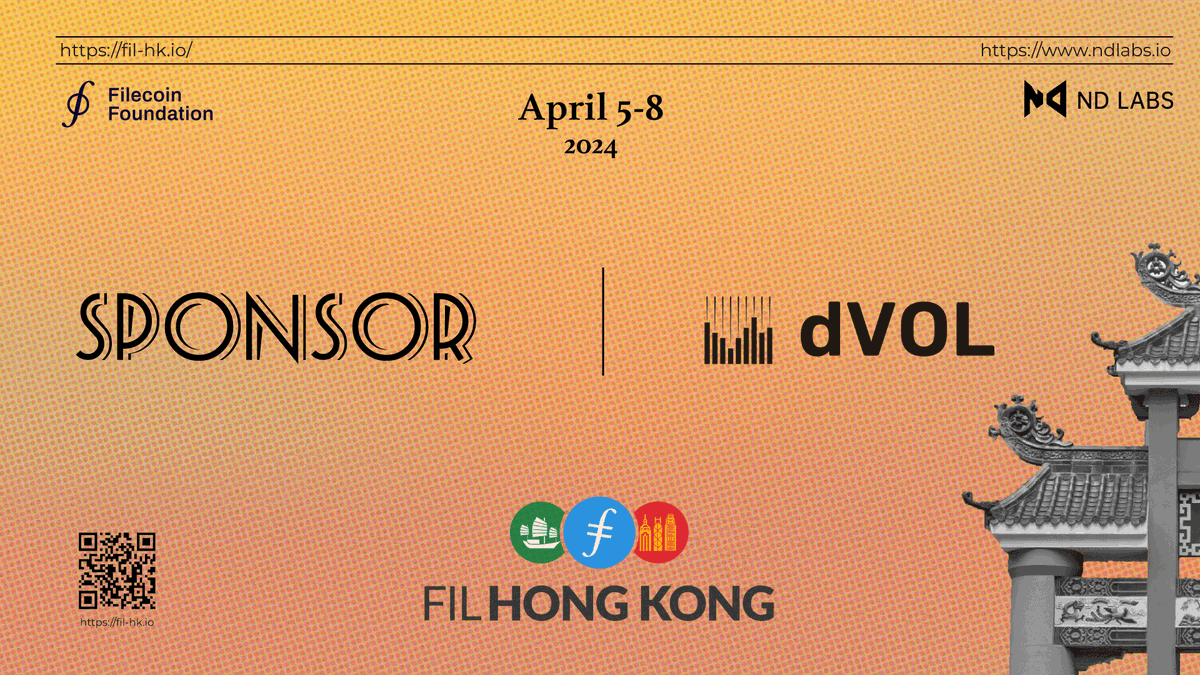
🔥We're thrilled to share that @dvolfinance as our sponsor at #FILHK
dVOL is a decentralized derivative protocol designed to generate sustainable and transparent yield for on-chain assets. Inspired by Uniswap and Curve AMM, dVOL introduces Options Liquidity Pools (OLP) for assets such as #Filecoin , #BTC and #ETH.
Users can access additional yield from the OLP compare to the traditional AMM pools from the dimension of time. dVOL is backed by top venture capital firms such as Protocol Lab, LonghashX, and Baboon VC, and is strategic partner of ND Labs and MetaEra. The team gathers the best derivatives and technology experts from Morgan Stanley, Optiver and Amber. Experience the frontier of #DeFi Liquidity Pool with dVOL.
Learn more:https://t.co/owVx3BHlm8
Get Tickets: https://t.co/uIn3uOiSSV
#Web3 2023 Outlook Reports 2/3
https://t.co/p9Jpj61eL7 https://t.co/qrJrk2dwqS
Huobi Research https://t.co/EjU1X1otD4
Delphi Digital https://t.co/LtrNPwHsEk
DeFi Lama https://t.co/ouOoYlCYux
Cointelegraph https://t.co/Oe4QcWoSDu
Binance https://t.co/jfZymb54xe