Introducing Strong Stochastic Flow Maps
TLDR: Stochastic Flow Maps where we learn the stochastic solution path.
Work led by Sam McCallum, @zwblasingame, with Timothy Herschelll, @AlexanderTong7, and @JamesFosterBath
Arxiv: https://t.co/Hy8WWZOnjE
Code: https://t.co/PMe6RoqyZA
💠Introducing Clari, a generative model to predict organic crystal structure in seconds.
Clari’s speed makes it feasible to do virtual screening of organic molecules on the basis of solid-state properties.
co-first with Alston Lo @alston1o and Luka Mucko @srboljubbosanac
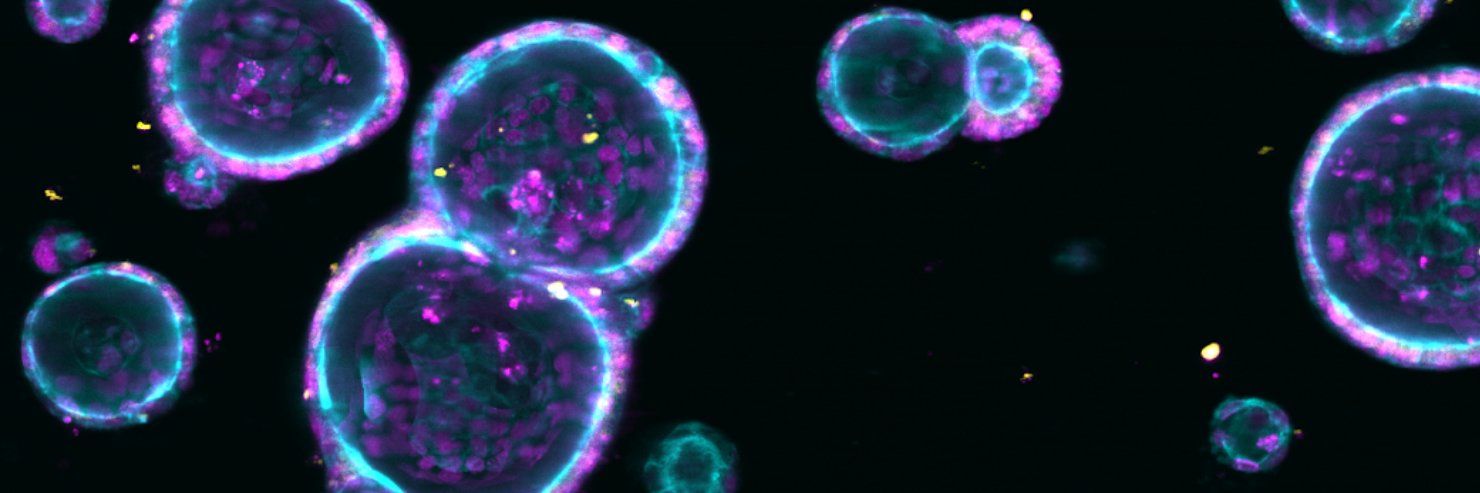
My superstar first PhD student @schoeneberglab Johannes who became an experimentalist just published this awesome whole cell simulation accompanied by super resolution microscopy in Cell. So proud!
https://t.co/EZa39Gt2LH
@dvruette@jdeschena@himanshustwts seems like they simplified the approach a bit since, leaving the original decoder's causal attention as is in the encoder. I wonder wether they chose to work with a smaller sized decoder to increase speed - could not find any details on decoder vs. encoder param count.
@FrancoisRozet@zwblasingame@AlexanderTong7@JamesFosterBath Ty! We are fairly sure you can get rid of the g-network entirely and write down the diffusion, at least approximately, in closed form. There are a couple other aspects we're looking to improve in the ergonomics of training SSFMs in the coming weeks. cc @zwblasingame@sgmccallum
Introducing Strong Stochastic Flow Maps
TLDR: Stochastic Flow Maps where we learn the stochastic solution path.
Work led by Sam McCallum, @zwblasingame, with Timothy Herschelll, @AlexanderTong7, and @JamesFosterBath
Arxiv: https://t.co/Hy8WWZOnjE
Code: https://t.co/PMe6RoqyZA
ty! Effectively we condition on polynomial approximation of the brownian path instead of a single brownian increment. Introduced in https://t.co/fRwlvzJ5sI. This does increase the size of the inputs: The higher the fidelity of the approximation, the higher the dimensionality of the conditioning signal.
This approach raises a couple new, exciting, questions: For example, can we apply this approach to learn Stochastic Flow Maps of Underdampened Langevin Dynamics - to speed up the current workhorse of molecular simulations? Can we use this approach to run protein binder design more effectively? Can we extend this approach to other consistency objectives, such as Lagrangian and Eulerian?