In medieval times, within the arms race of ever more demonic torture devices, some sadistic genius came up with the idea of the Little Ease.
This was a prison cell built so small in every dimension that a grown man could not stand upright in it nor lie down at full length nor properly sit.
The pain is relentless and without relief and inflicted by one's own body. Prisoners were known to go insane within a few days. A stay at the Little Ease was considered even more cruel than the rack, the thumbscrew, and the other ghoulish machinery of the Tower of London.
A breeding pig will spend her whole life in a version of that box.
These are social, roaming creatures (more intelligent than dogs) who will never leave this corset of steel.
They have been selectively bred to be bigger than their frames can support. Yet we put them in cells so confined that they cannot comfortably sit, and their attempts to do so (for example, by sneaking their limbs into adjacent stalls) reliably lead to fractures and sprains.
They cannot sweat, yet have nothing to roll around in to cool themselves off. Except their own manure, which (contrary to the common misconception) they are so averse to (thanks to their strong sense of smell) that new sows will often suffer from constipation to avoid soiling the space from which they eat and sleep.
Here is how the writer Matthew Scully described what saw at one of Smithfield’s “gestation barn”:
> “Sores, tumors, ulcers, pus pockets, lesions, cysts, bruises, torn ears, swollen legs everywhere. Roaring, groaning, tail biting, fighting, and other “Vices,” as they’re called in the industry. Frenzied chewing on bars and chains, stereotypical “vacuum” chewing on nothing at all, stereotypical rooting and nest building with imaginary straw. And “social defeat,” lots of it, in every third or fourth stall some completely broken being you know is alive only because she blinks and stares up at you … creatures beyond the power of pity to help or indifference to make more miserable, dead to the world except as heaps of flesh into which the [insemination] rod may be stuck once more and more flesh reproduced.”
—
The Save Our Bacon Act is trying to unroll the few state protections we have against this barbaric cruelty - for example California’s Prop 12 - which banned the sale of pork from pigs kept in gestation crates.
It’s incredibly important we don’t end up with this sort of federal preemption.
SOB will not only kill the most important animal welfare related laws in the US of the past decade, but more importantly, it will also restrict ALL future legislative progress (aka how the animal welfare movement has gotten its biggest wins).
The Senate is currently deciding whether to add the SOB Act to the Farm Bill.
With relatively little money now, we can discourage the most pivotal senators in the Ag committee from backing this amendment.
Defeating this bill is even more important given the amount of philanthropic funding I expect to come online in the next year or two.
It will plausibly be over 10x more expensive to repeal SOB than to prevent it from passing in the first place.
All that money that could be spent transforming our society's relationship to mass animal suffering will instead have to be spent just getting us back to where we are right now.
That's why money spent now fighting this bill (and I mean right NOW) is so effective.
If you’re in a position to donate six figures, please DM me.
For the fifth year in a row, the University of Utah Climbing Team won the @USAClimbing Collegiate National Championships!
Utah Climbing beat runner-up University of Colorado Boulder by ~2,200 points and secured five podium finishes🧗♀️ #GoUtes!
📰 https://t.co/wi43gqN94R
I'm going to present some research regarding epistemology and personal fitness at a conference on Friday. One thing I'd just like to say publicly, perhaps cryptically is:
Randomized control trials play a negative role in science. Meanwhile fitness is a creative activity.
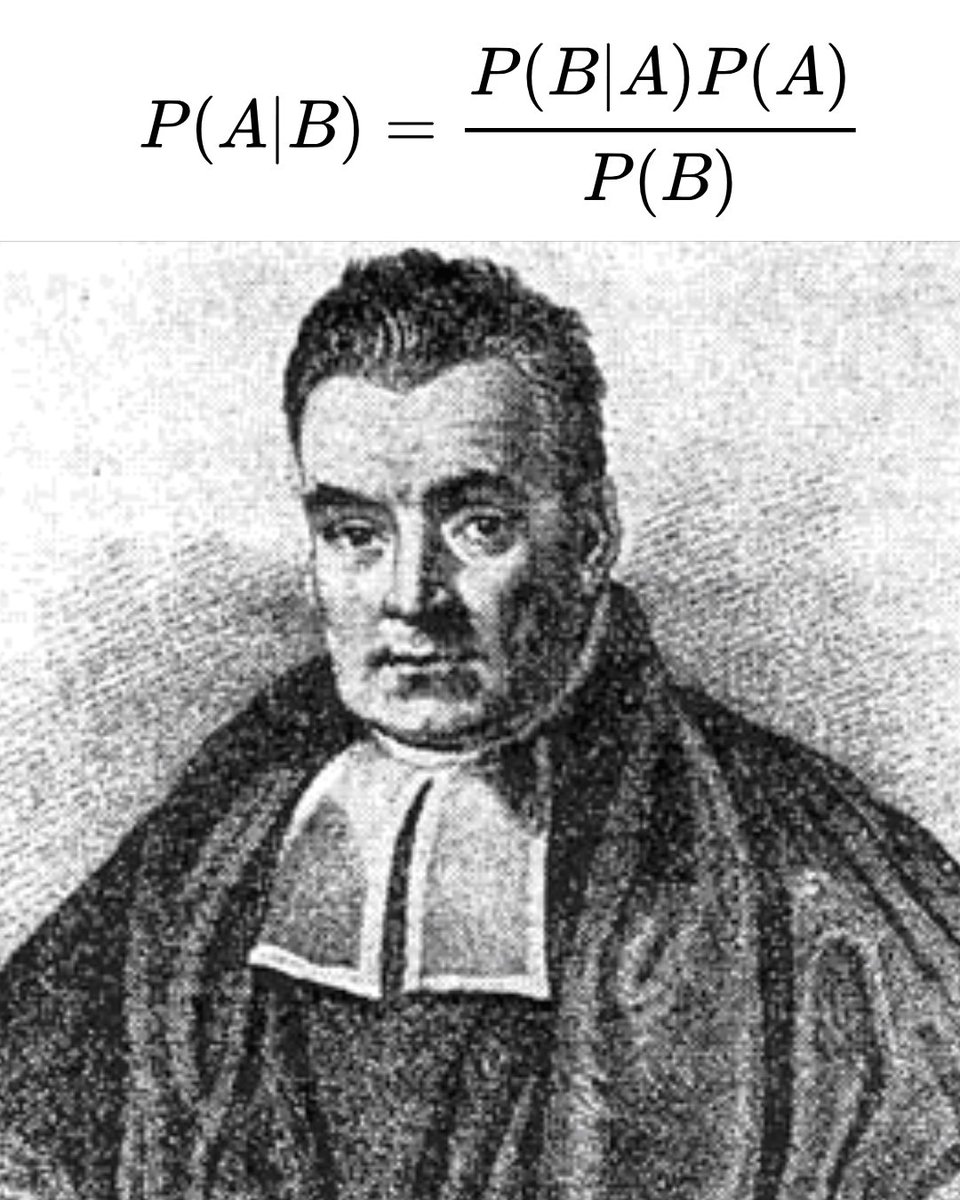
Bayes' theorem, in a single scientific paradigm or mathematics or engineering, is wonderful.
But reality is a creative and dynamic… thing, and so are so are you.
Most of life can't be caught, like antelopes surrounded by wild dogs, by circling in. It's too boundless.
Bayes’ theorem is probably the single most important thing any rational person can learn.
So many of our debates and disagreements that we shout about are because we don’t understand Bayes’ theorem or how human rationality often works.
Bayes’ theorem is named after the 18th-century Thomas Bayes, and essentially it’s a formula that asks: when you are presented with all of the evidence for something, how much should you believe it?
Bayes’ theorem teaches us that our beliefs are not fixed; they are probabilities. Our beliefs change as we weigh new evidence against our assumptions, or our priors. In other words, we all carry certain ideas about how the world works, and new evidence can challenge them.
For example, somebody might believe that smoking is safe, that stress causes mouth ulcers, or that human activity is unrelated to climate change. These are their priors, their starting points. They can be formed by our culture, our biases, or even incomplete information.
Now imagine a new study comes along that challenges one of your priors. A single study might not carry enough weight to overturn your existing beliefs. But as studies accumulate, eventually the scales may tip. At some point, your prior will become less and less plausible.
Bayes’ theorem argues that being rational is not about black and white. It’s not even about true or false. It’s about what is most reasonable based on the best available evidence. But for this to work, we need to be presented with as much high-quality data as possible. Without evidence—without belief-forming data—we are left only with our priors and biases. And those aren’t all that rational.