A yard of separation goes a long way. Try to tag your partner before half court. If you can’t, hit the brakes and make it back to the baseline before they tag you. Hip Flippy. Accel. Brake Plant Separate. Re Accel. Fun. Compete. Until next time, doggies.
As injury rates continue to rise in women’s soccer, strength training remains the most powerful form of protection. Skill development improves performance, but only strength changes tissue capacity, joint stability, and tolerance to high-speed loading.
How to get really STRONG
• Pull from the Floor
• Loaded Carries
• Push Sleds
• Squat Deep, Heavy & Often
• Overhead Press
• Train Chin Ups
• Use Thick Handle Implements
• Train Extreme Ranges of Motion
• Pause in Disadvantageous Positions
• Eat Like a Grown Man
Broad jumps are one of the biggest KPI’s in our program. So naturally, I wanted to see how athletes self organize repeated horizontal force when there’s real pressure of being chased. Some patterns held up. Some fell apart. That’s the point. Until next time, doggies.
Six colors. One dodgeball. Zero hesitation. Coach calls a color and that athlete attacks the ball. Everyone else? Turn and get the frick outta there. Our version of the classic spin the bottle game. We ran out of eggs to throw though. Until next time, doggies.
There are layers of complexity that are necessary for elite high-performance athletes.
But for 90% of the middle school through college kids you train….
They are unnecessary. At least for a large portion of that specific athletes/teams development.
Build systems of high efficiency and mastering timeless movements, with sprints/jumps/free play and multiply that by years and you’re going to have a pretty robust and athletic product at the end.
Heavy Loads create larger Muscle Fibers.
Light Loads at High Speeds teach the Fibers how to fire.
Training should use both to drive adaptations. This is how you shift an athletes Force/Velocity Curve🙌🏻
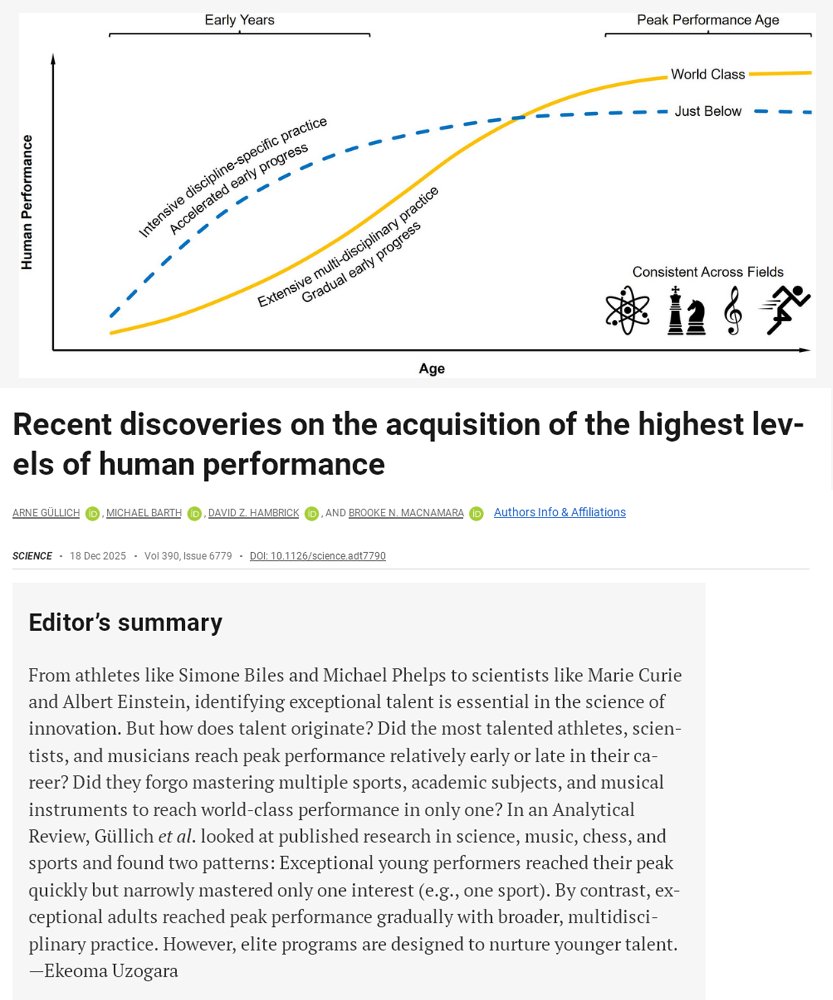
Early specialization is overrated. Generalists excel over time.
Data on >34k stars in sports, music, science, and chess: Focusing on a single field predicts a faster rise, but cross-training foreshadows a higher peak.
The most successful adults start off as well-rounded kids.
It’s unfortunate that so many high school athletes have injuries. Parents & athlete’s typically think the answer is more lessons & skill work. But in reality they need to get stronger in the correct way. S&C is put on the back burner. When in reality it should be the reverse.
High-intensity training may be one of the best ways to improve cognition. Training at 80–100% of your max capacity triggers a surge in brain-derived neurotrophic factor (BDNF), a key protein for memory, learning, and neuroplasticity.
Research shows that HIIT increases BDNF levels significantly more than moderate-intensity training, especially in the short term. Lactate is crucial in elevating BDNF levels, which is one reason why vigorous exercise provides a notable BDNF boost when compared to lower-intensity and longer-duration training.
Even a 10-minute workout—if performed at a high enough intensity—increases circulating BDNF by 4- to 5-fold. These changes in BDNF are associated with long-lasting improvements in memory, larger brain volumes, and increased neurogenesis.
My favorite brain-boosting workout is Tabata training—it's something I deliberately schedule prior to podcasts or before creative work.
In the latest episode of the FoundMyFitness podcast, @brady_h and I distill advice from world-renowned experts on how to train for brain health, metabolic health, aerobic fitness, and many other health goals.
If you want to meaningfully impact aging in America, start with obesity—few things erode longevity and quality of life as profoundly, accelerating the biological aging process and fueling nearly every major chronic disease.
Obesity alone is linked to 13 types of cancer and cuts life expectancy by 3–10 years, depending on severity. It promotes DNA damage and accelerates our fundamental aging process—often measured by epigenetic age. It’s one of the principal differences between the U.S. and many of the world’s longest-lived nations.
We’re overfed but undernourished. 60% of all calories Americans consume come from ultra-processed foods that:
• Fail to induce proper satiety, pushing us to overeat.
• Remain cheaper than whole foods, economically incentivizing the least healthy choices.
• Hijack our dopamine reward pathways, reinforcing addictive eating behaviors.
This trifecta—no satiety, low cost, and built-in addictiveness—keeps us in a cycle of poor health outcomes and runaway healthcare costs.
But caloric excess is only part of the problem—we are also nutrient-deficient.
Low omega-3 levels—affecting 80 to 90% of Americans—carry the same mortality risk as smoking. Vitamin D deficiency—easily corrected—compromises immune function, cognition, and longevity. Nearly half of Americans don't get enough magnesium—impairing DNA repair and increasing the risk of cancer.
We are not solving these problems—we are medicating them. The average American over 65 takes five or more prescription drugs daily—stacking interactions that compound in unpredictable ways.
We must start treating physical inactivity as a disease. It carries the same mortality risk as smoking, heart disease, and diabetes. Going from a low cardiorespiratory fitness to a low normal adds 2.1 years to life expectancy.
By age 50, many Americans have already lost 10% of their peak muscle mass. By 70, many have lost up to 40%.
This isn’t just about looking strong. It’s about survival.
• Higher muscle mass means improved insulin sensitivity - it means a 30% lower mortality risk.
• Grip strength is a stronger predictor of cardiovascular mortality - the number one cause of death in the United States - than high blood pressure.
• The strongest middle-aged adults have a 42% lower dementia risk.
And yet, we treat resistance training as optional. It is not. It is the most powerful intervention we have against aging including increasing muscle mass, strength and bone density.
Hip fractures alone kill 20–60% of older adults within a year. This is a death sentence we can prevent with resistance training - which has been shown to lower fracture risk by 30-40%.
The current RDA for protein is too low for older adults.
Studies have shown when it's increased by half this reduces frailty by 32%, while doubling it, combined with resistance training, increases muscle mass by 27% and strength by 10% more than training alone. If we want to prevent muscle loss and frailty, we must update our protein recommendations and prioritize strength training.
We must foster a culture of American exceptionalism built on daily, effortful exercise. Not as an afterthought. Not as a luxury. But as a non-negotiable foundation for aging, but also clear thinking, resilience, and even leadership.
The body and brain are not separate. The consequences of poorly regulated blood sugar, sedentary living, and muscle loss are not just physical—they affect cognition, judgment, and resilience.
We cannot medicate our way out of what we have behaved our way into.
Grateful for the chance to share my voice at the Senate Aging Committee (@SenateAging). A special thank you to Senator Rick Scott (@SenRickScott) for making this opportunity possible.
👀 This isn't unique to baseball. Too many coaches think inducing fatigue leads to performance gains. It doesn't. Fatigue is a byproduct, not the goal. Stop convincing yourself you can ignore the science because you're old school or you're way is better than the proven methods
Putting a baseball team through a bunch of military training to try to build mental toughness doesn’t make you a good leader. On the contrary, it actually makes you an underwhelming exercise physiologist, biomechanist, and sports psychologist. So much for specificity of training.