The liver's best friend is the muscle. Your liver listens to your muscles. Every type of movement has a different dose and a different benefit, all backed by trials. Here's the playbook, for you to include in your routine, whichever helps you maintain consistency.
Brisk walking
The most accessible liver medicine there is. 150 min/week cuts liver fat by ≥30% on MRI, and every extra 1,000 daily steps lowers your risk of developing fatty liver by ~12% (UK Biobank Study, 91,000 people).
Moderate-intensity cardio (MICT)
Steady jogging, cycling, or swimming at a "can talk, can't sing" pace. 30–45 min, 3–5 days a week for 12 weeks reduces liver fat by 2–4% (absolute) and drops liver inflammation (enzyme levels) significantly - even without weight loss.
High-intensity interval training (HIIT)
Short hard bursts - e.g., 4 minutes at 85–95% max heart rate, 3 min easy, repeated 4 times. In 12 weeks it cuts liver fat by 16–37%, improves heart function, and matches steady cardio in half the time.
Sprint interval training (SIT)
Even shorter, even harder - sessions under 15 minutes. 6 weeks reduces intrahepatic triglycerides by 12% and visceral fat by 17% in men with fatty liver (MASLD). Biggest liver benefit for the smallest time spent.
Resistance / strength training
Weights or bodyweight - squats, presses, rows, pulldowns. 3 sets, 3 times a week, 40–45 min. Reduces liver fat independent of weight loss, uniquely lowers liver enzyme, and is the single most important exercise for cirrhosis patients to prevent muscle loss (sarcopenia).
Combined aerobic + resistance
The gold standard. Network meta-analyses rank this combination as #1 for improving triglycerides, LDL, and total cholesterol in patients with fatty liver (MASLD) - better than either alone. If you only pick one strategy, pick this one.
Yoga (Hatha / Surya Namaskar) - these are not classical Yoga, but modernized versions.
For example: Surya Namaskar was developed into its current 12-posture sequence in the early 20th century, largely by the Raja of Aundh and later popularized by T. Krishnamacharya. T. Krishnamacharya also modernized classical Hatha Yoga into its globally known "dynamic" form. Classical Yoga is not useful for liver health as it is not aerobic. Plus classical Yoga is pseudoscientific in its principles of practice.
That said, 8-12 weeks of Asanas like Surya Namaskar, Ardha Matsyendrasana, Paschimottanasana, Naukasana - 3 sessions/week improves liver tests, insulin resistance, and fatty liver grade - especially in patients with type 2 diabetes plus fatty liver disease.
Pilates and core work
8 weeks of Pilates reduces body weight, body fat, liver enzymes, and liver fat on ultrasound. A joint-friendly option for people who can't run or lift heavy.
Tai Chi / Qigong
Low-impact mind-body movement, 30–60 min, 3 times a week. Improves glucose control, insulin sensitivity, and balance/ stability, muscle tone. Gentle enough for older patients, those with early decompensated cirrhosis, or people with poor cardiorespiratory fitness.
Exercise in cirrhosis
Even advanced liver disease responds well to exercise treatment! Combined aerobic + resistance training cuts serious events (death, major complications) from 12.3% to 5.6% in randomized trials, and prevents the muscle wasting that drives death events in cirrhosis patients.
So make physical activity your number one preference to maintain liver health and reduce liver disease.
Andrew Huberman once said:
"The brain is like a muscle. If you don't use it, you lose it."
A few years ago, I could barely focus for 2 minutes.
Today, 12-hour workdays feel effortless.
Here are Huberman's 7 principles for superhuman focus that changed my life:
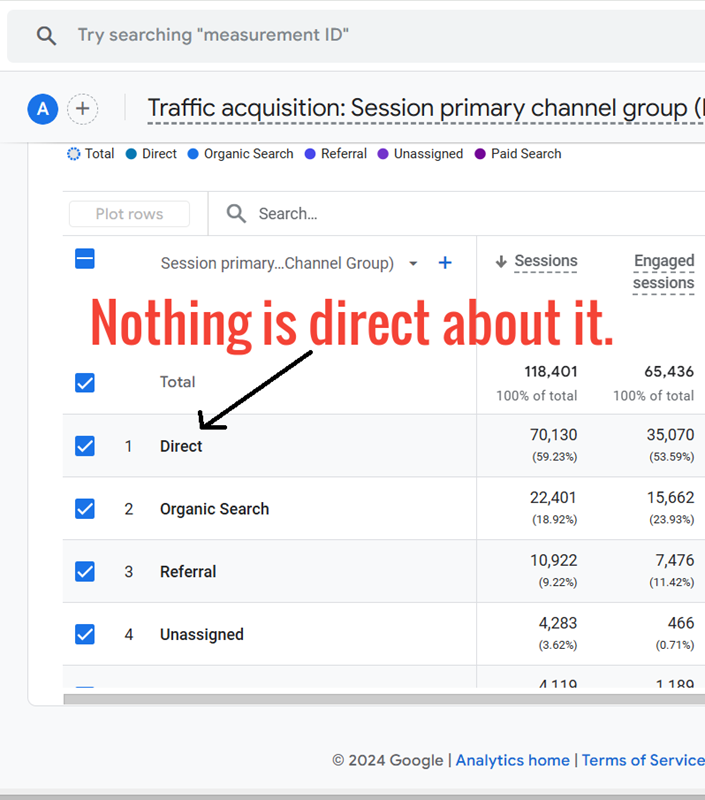
🤯 Direct traffic in #GA4 is not recorded because a user directly visited your website. 💥
Direct traffic is a classification in GA4 based on the absence of referrer data.
This absence can occur for two reasons:
1) Loss of referrer data - This happens due to technical issues or website configurations preventing referrer information from passing to GA4.
2) Lack of referrer data - This can apply to genuine direct visits where the user arrives at your website without clicking a link from another source (e.g., typing URL, bookmark).
Even a genuine direct visit is also because of a lack of referrer data. Otherwise, it wouldn't be reported as direct traffic.
.
.
Whenever a referrer is dropped, GA4 is not able to determine the origin of the traffic source and will report that traffic as direct traffic.
The main takeaway here is that preserving referrer information is the key to reducing direct traffic and improving attribution accuracy in GA4.
If the majority of your website traffic is direct, it is not something to be proud of.
Because it does not automatically signal the presence of a very strong brand.
It most likely indicates considerable GA4/GTM implementation or tagging issues.
.
.
One effective way to ensure that the referrer is not dropped is by tagging the URLs of your marketing campaigns with the campaign tracking parameters.
Also, make sure that you always tag the URLs you share via email or social media.
.
.
Note: Server-side tagging in GTM does not automatically read UTM parameters from URLs.
So, if you use server-side tagging, you are much more likely to record direct traffic in GA4 properties.
The server-side container needs to be specifically configured to capture and process the UTM parameters from the URLs.
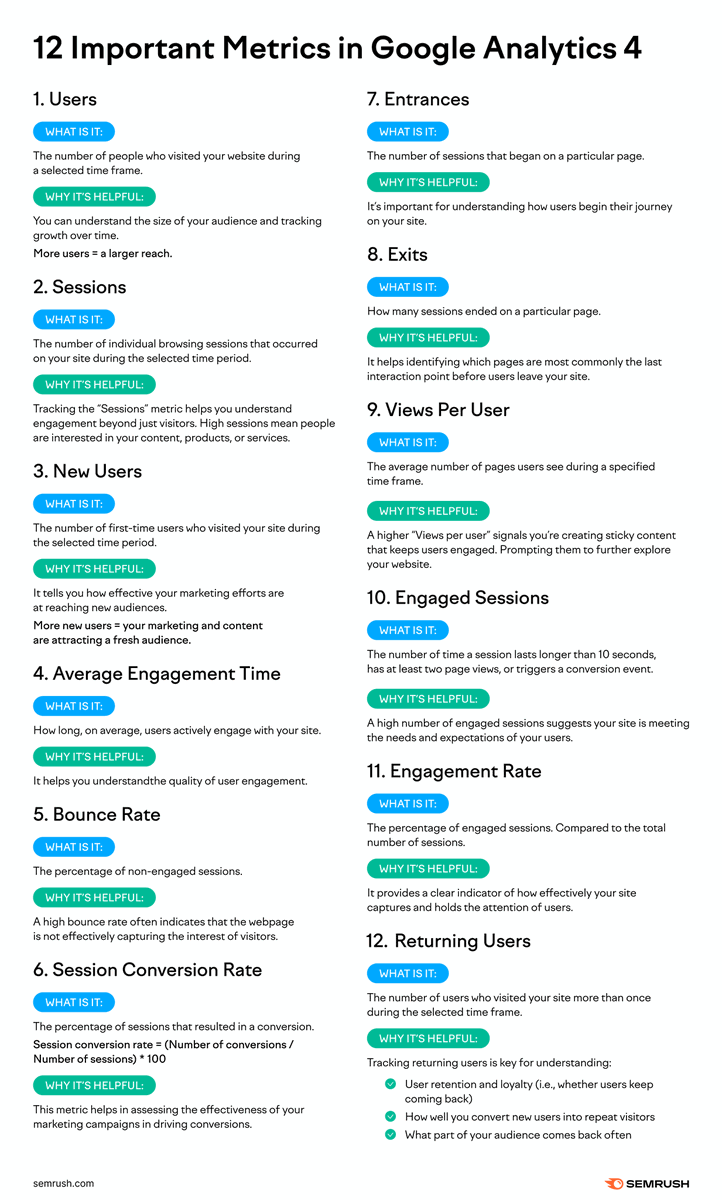
Google Analytics has tons of data, but it can be confusing for beginners. Wondering where to begin and which metrics really matter? Check out our post on the 12 key metrics in Google Analytics:
https://t.co/WA68Y5F8mG.
A lot of new businesses (especially small businesses) are barking up the wrong tree.
Website, branding, social media accounts, Google SEO - all that stuff is cute, but are secondary to the core concept of any business:
The Core Four
Awesome free Google Looker Studio template for SEO analysis I stumbled across.
Allows you to connect your Google Search Console account & visualise your rankings data.
Access the template: https://t.co/nwqJL8pq57
Follow the creator: https://t.co/ocJZheZgSR
The rare video of Hoolock Gibbon (Hoolock hoolock, a primate from the gibbon family, Hylobatidae) - India's only Ape, walking like a human from Kaziranga National Park, Assam. Educational video.