Well… this happened.
Our recent research on brain vascular and white matter changes with aging just got covered by The Hindu!
White matter isn’t just “wiring.” It reflects vascular health, resilience & biological ageing.
https://t.co/OUkfF8BH0U
@iamvivekt@IISER_BERHAMPUR
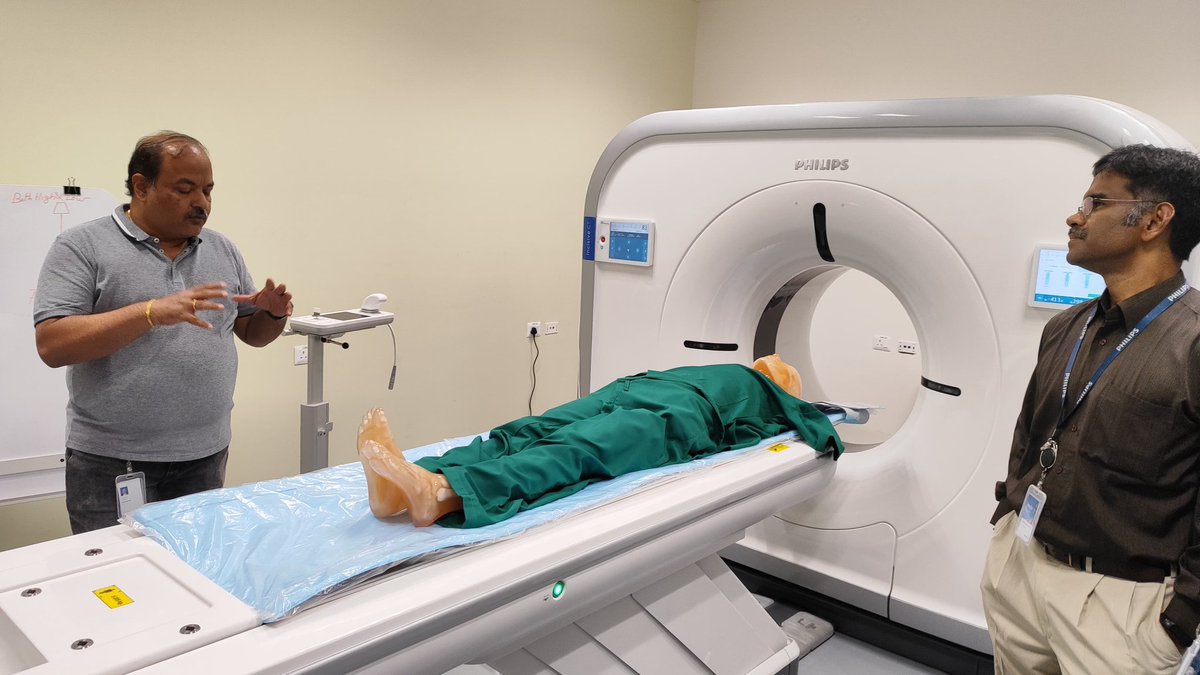
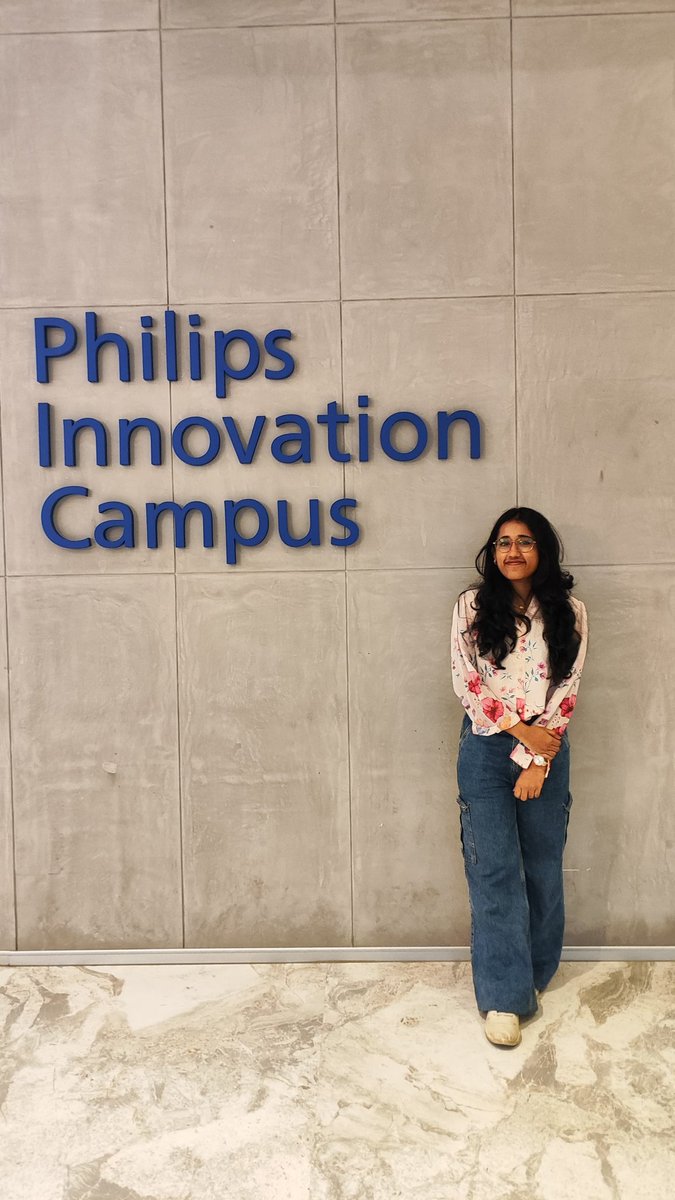
All excited for the Challenging Next 5-Days at Philips knowledge Innovation Centre, Bangalore, for packed 5 days of Ideation and MR Pulse Programming and Designing Workshop and Training.
@NIBBRlab@iamvivekt@IISER_BERHAMPUR
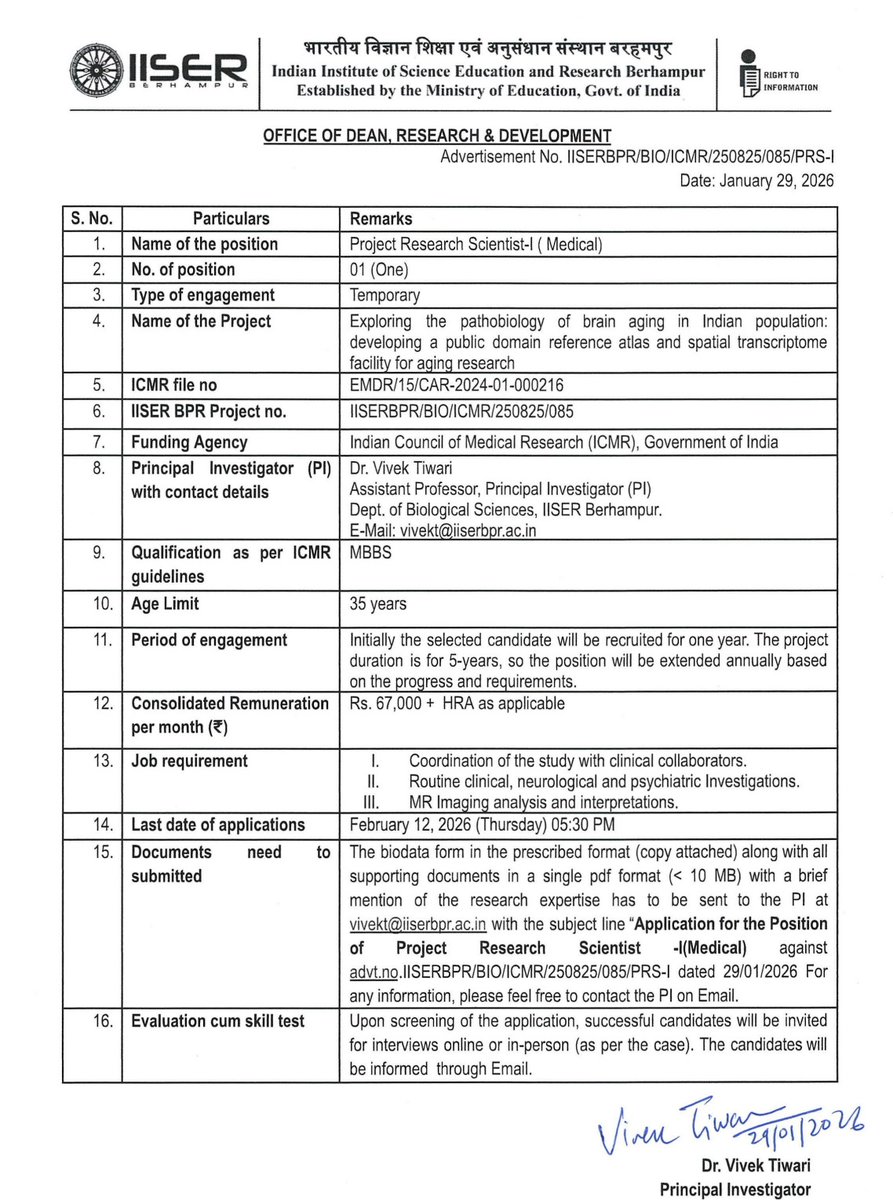
📢 Hiring | Project Research Scientist–I (Medical)
If you enjoy out-of-the-box thinking, pushing beyond comfort zones, and thriving on ambitious, cutting-edge neuroscience research challenges — there’s a place for you in our group.
Apply by 12th Feb
@iamvivekt@IISER_BERHAMPUR
Pleased to share that our recently published study has been featured in Biopatrika's Research Spotlight.
Read it at: https://t.co/iyPAW8w6ab
Research article: https://t.co/PdiVRDUaFy
@NIBBRlab@iamvivekt @iiser_berham
A Happy New Year from the NIBBR Group!🎆🎊
In frame: White Matter Tracts of a Cognitively Normal Subject, from IISER Berhampur Neuroimaging Cohort, acquired at our 3T MRI.
@iamvivekt@NIBBRlab@IISER_BERHAMPUR
Same pinch Niraj; Equally excited. In this study, using multiple aging cohorts- including our @IISER_BERHAMPUR aging cohort- we demonstrate that periventricular white matter hyperintensity (PVWMH) volume increases nearly twice as fast with advancing age, with a clear inflection around 61 years. We identified that a PVWMH burden exceeding 2.3 mL, independent of chronological age, is associated with selective deficits in executive, attentional, and semantic cognitive domains, along with widespread cortical and subcortical atrophy involving the nucleus accumbens, rostral middle frontal, pre/postcentral gyri, lingual gyrus, and cerebral cortex.
We emphasize that we age differently because we accumulate PVWMH differently-and once this burden crosses a critical threshold, it rewires the neuroanatomic and cognitive trajectories of aging. https://t.co/r7L6IOKlQJ Congratulations Niraj and Neha.
PVWMH is visible on routine FLAIR MRI. We propose that quantitative PVWMH assessment, combined with targeted domain-specific cognitive evaluations, provides a clinically feasible framework for incorporating lesion-burden thresholds into standard MRI reporting and follow-up.
(7/n)
Thrilled to announce that our paper entitled "Brain aging and cognitive decline accelerate beyond a threshold of periventricular white matter hyperintensity" is now published. Read it at:
https://t.co/B1ityI1BnR
@iamvivekt@nehayadav1211
NIBBR Lab, @IISER_BERHAMPUR
(1/n)
Deep WMH? Much less dramatic. DWMH had negligible effects compared with PVWMH. So location matters - not all WMH are equal. Think of PVWMH as damage near the central electrical hub.
(6/n)
Why it matters? Once PVWMH exceeds 2.3 mL, the study found compromise in global fibre integrity; significant brain shrinkage in frontal, motor and visual areas; and deficits in attention, exec. func and semantic memory. Global screens (MMSE) barely budged - they miss this.
(5/n)
What we measured: bright spots called white matter hyperintensities (WMH) on routine MRI. They come in 2 neighborhoods: PVWMH (near ventricles) and DWMH (in deep white matter). This multicohort study involved ~1500 subjects from NACC, ADNI and IISER Berhampur Aging Cohort.
(3/n)
Insights:
Even when cognitive tests say you're “normal”, your brain may tell a different story. Tiny small-vessel lesions, once they grow past ~2.3 mL, mark a sudden leap in brain aging-shrinking structure, slowing attention & semantic memory, and fraying axonal integrity.
(2/n)
Even when cognitive tests say you're “normal”, your brain may tell a different story. Tiny small-vessel lesions, once they grow past ~2.3 mL, mark a sudden leap in brain aging - shrinking structure, slowing attention & semantic memory, and fraying axonal integrity.
Truly honored to present my research in the Young Scientist Colloquia (Tulsabai Somani Oral) at Indian Academy of Neuroscience #IAN2025. Great to see diverse and interdisciplinary neuroscience research from across India and beyond! @iamvivekt@NIBBRlab@IISER_BERHAMPUR
Thank you, ma’am. It was an honor to present my research to the neuroscience community, and I’m glad the idea and message came across clearly. @WormlockHolmes@IndAcadNeurosci#ian2025
What load of WMH is bad for brain health? W/ ⬆️age small vessels in our brain undergo infracts observed as white matter hyperintensity (WMH) in MRIs. WMH exponentially ⬆️>60yrs. ⬆️WMH ⬇️ fnl network segregation. Niraj Gupta @IISER_BERHAMPUR@iamvivekt lab #IAN25@IndAcadNeurosci