A discovery in the lab could one day change how we treat the world’s deadliest disease.
Scientists have identified an enzyme that appears capable of breaking down arterial plaque the fatty buildup that clogs blood vessels and fuels heart attacks, strokes, and cardiovascular disease.
For decades, doctors have focused on slowing plaque growth through medications, lifestyle changes, and surgical procedures. But this new research points toward something far more ambitious: actually removing existing plaque from artery walls.
Arterial plaque develops when cholesterol, fats, inflammatory cells, and other substances accumulate inside blood vessels. Over time, these deposits can narrow arteries, restrict blood flow, and dramatically increase the risk of life-threatening cardiovascular events.
The newly identified enzyme appears to target and help clear these harmful buildups, potentially restoring healthier blood flow and reducing damage caused by atherosclerosis the underlying condition responsible for many forms of heart disease.
Researchers believe this breakthrough could open the door to entirely new treatments aimed not just at managing symptoms, but at reversing the disease process itself. While the findings are promising, further studies and clinical testing will be needed before any therapy becomes widely available to patients.
Heart disease remains the leading cause of death globally, claiming millions of lives each year. A treatment capable of safely clearing plaque from arteries would represent one of the most significant advances in cardiovascular medicine in decades.
What was once considered permanent damage may not be permanent after all.
🚨 A WEIGHT LOSS BREAKTHROUGH?
Scientists have developed an experimental drug that works like a Trojan horse, delivering extra energy directly into cells to help them burn fuel more efficiently. Unlike traditional treatments, it targets the body's energy use at the cellular level. Early findings are promising, but researchers are still studying its safety and effectiveness.
Source: Nature. (n.d.). Targeted cellular energy delivery for metabolic health and obesity research. Nature.
🚨 FIRST-EVER BRAIN REPAIR FOR PARKINSON'S?
Japan has approved the world's first stem cell therapy for Parkinson’s disease. Scientists create new dopamine-producing brain cells in the lab and implant them into patients' brains to replace damaged cells. In early trials, patients showed improvements and brain scans confirmed the new cells were working.
For millions living with Parkinson’s, this could be the beginning of a new era of brain repair.
Source: Sawamoto, N., et al. Nature. Kyoto University Center for iPS Cell Research and Application (CiRA); Sumitomo Pharma; Japan Ministry of Health.
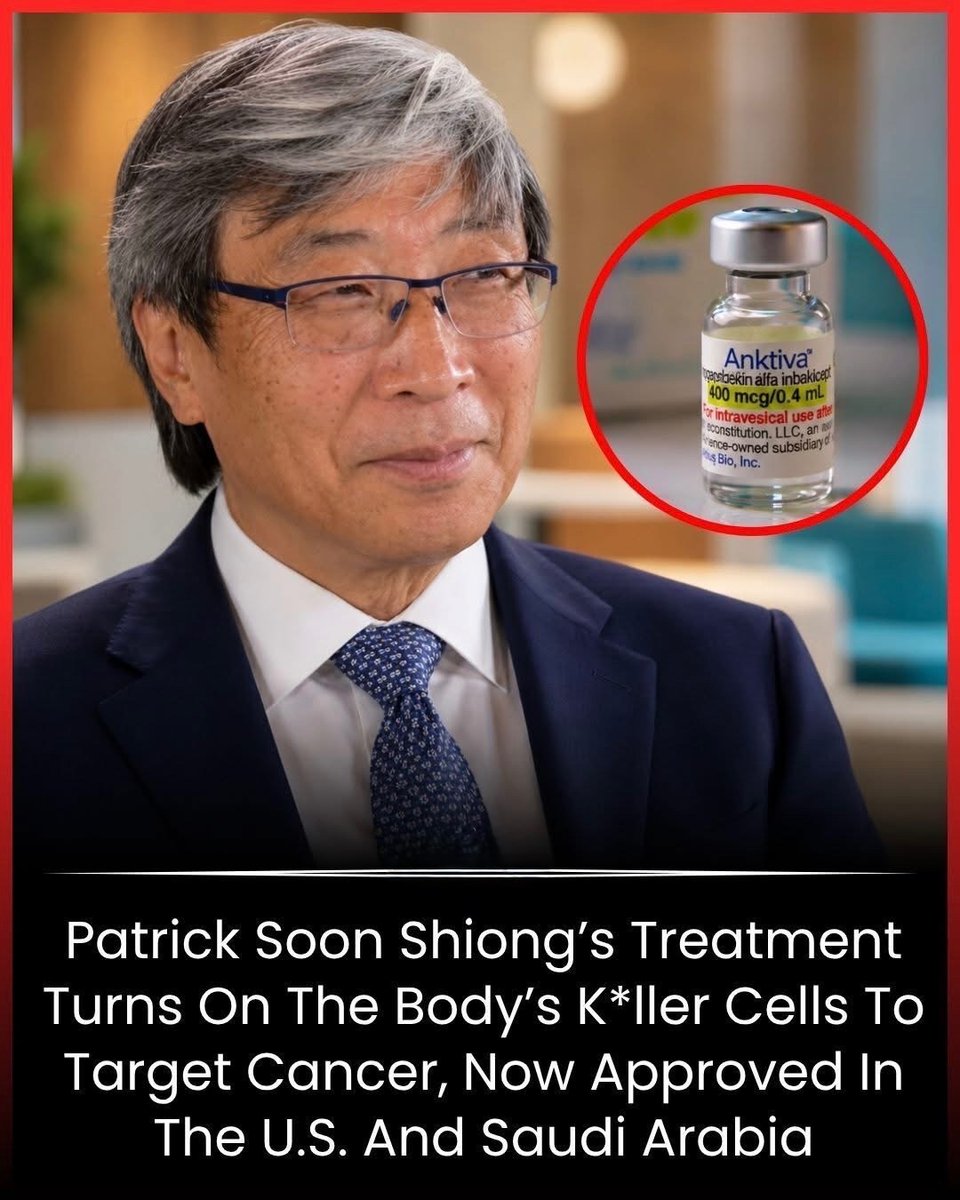
🧬 A Cancer Treatment That Activates Your Body’s “Killer Cells”
Dr. Patrick Soon-Shiong helped develop ANKTIVA, a new immunotherapy that activates the body’s natural killer (NK) cells and T-cells to fight cancer more effectively.
The treatment is now approved in the U.S. for certain bladder cancer patients and has also received approval in Saudi Arabia, giving hope for a new generation of immune-based cancer treatments.
Source
ImmunityBio. ANKTIVA® regulatory approvals and immunotherapy research
🚨 SCIENTISTS ARE BUILDING ELECTRONICS THAT STRETCH LIKE HUMAN SKIN AND LEARN LIKE A BRAIN.
For decades, electronics have been made from rigid silicon. But the human body is soft, flexible, and constantly changing shape. This mismatch has made it difficult to create devices that can safely interact with our bodies over long periods.
Now researchers are developing a new class of soft neuromorphic electronics stretchable circuits that can bend, twist, and even heal while processing information in ways inspired by biological nervous systems.
Unlike traditional chips that only move electrons, these systems use both electrons and ions to transmit signals, much closer to how real neurons communicate.
Why this matters:
• The hardware itself can perform learning-like functions without constant external training
• Some prototypes can stretch more than human skin while remaining functional
• They operate at extremely low power compared to conventional processors
• This could enable long-term, comfortable integration with the human body
• Potential applications include bioelectronic skin, smart prosthetics, and wearable health monitors
The deeper shift:
We’re moving from building rigid machines that sit outside the body to creating electronics that can physically conform to and interact with living tissue.
This changes not just how we design
devices, but what we consider possible for human-machine integration.
The question is no longer just how powerful we can make computers.
It’s becoming: How seamlessly can intelligence live on and inside the human body?
Follow for more frontier technology and research that’s redefining the boundary between biology and electronics.
Israeli researchers have pioneered nanotechnology-based eye drops aimed at correcting refractive errors by reshaping the cornea, potentially eliminating the need for glasses, contacts, or invasive surgery.
Unlike conventional options such as corrective lenses or laser procedures, these "nanodrops" involve a multi-step process: a smartphone app measures eye refraction, a low-energy laser etches a customized optical pattern onto the corneal surface, and the nanoparticle solution then activates this pattern to adjust light refraction.
Developed by a team from Shaare Zedek Medical Center and Bar-Ilan University's Institute of Nanotechnology and Advanced Materials, the drops use synthetic protein nanoparticles. Preclinical tests on pigs demonstrated improvements in myopia and hyperopia, with the non-invasive approach offering a convenient, at-home-compatible alternative.
This breakthrough could especially aid those with common refractive issues, age-related presbyopia, or conditions previously requiring surgery, minimizing risks, costs, and downtime.
While human clinical trials were anticipated following promising animal results around 2018, researchers note the need for additional studies to verify long-term safety and effectiveness. By harnessing nanotechnology for precise corneal modulation, these drops represent a promising step toward simpler, more accessible vision correction in ophthalmology.
reminder
World-first' vaccine designed by artificial intelligence 👀
BIG NEWS:
Researchers have successfully tested one of the first vaccines to reach human trials with an antigen designed using artificial intelligence and computational modeling.
The vaccine, called DIOS-CoVax2, was engineered to target not just COVID-19, but an entire family of related coronaviruses known as sarbecoviruses, including SARS-like viruses that could emerge in the future.
In a Phase 1 clinical trial involving 39 healthy volunteers, the vaccine was found to be safe and generated measurable immune responses.
Rather than copying a protein from a single virus, AI analyzed genetic data from many coronaviruses and helped design a synthetic antigen.
If this approach succeeds in larger trials, it could help scientists develop vaccines that protect against entire virus families before future outbreaks even occur.
In other words, this could mark the beginning of a new era where AI helps design broad-spectrum vaccines for future pandemics before they happen.
Scientists just created a wearable pacemaker that controls the heart with ultrasound.
BIG BREAKTHROUGH:
Researchers at MIT developed a Non-Invasive Ultrasound Pacemaker (NUP) that can regulate heartbeats without implanted wires or electrodes.
The system uses a 2.5 cm × 2.5 cm wearable ultrasound patch placed on the chest.
It is based on sonogenetics, a technique that uses sound waves to remotely control genetically engineered cells inside the body.
The team engineered heart muscle cells to express MscL-G22S, an ultrasound-sensitive mechanosensitive ion channel.
When ultrasound reaches these cells, the channels open, allowing calcium ions to enter and trigger a heartbeat.
Ultrasound → MscL-G22S activation → Calcium influx → Heartbeat
The researchers successfully paced engineered human heart cells and restored normal heart rhythms in rats.
The system achieved less than 1 mm targeting precision and pacing frequencies up to 9 Hz (540 beats per minute).
Even more impressive, it maintained a favorable safety profile during 8 months of animal testing.
The team also demonstrated the approach in porcine (pig) hearts, suggesting potential for future human-scale applications.
This study is one of the strongest demonstrations yet that wearable ultrasound technology can noninvasively control deep organs.
Korean Scientists Developed a Technology to Turn Tumor Cells Back into Normal Cells:
South Korean scientists have unlocked a molecular 'switch' that can turn tumor cells back into normal, healthy tissue.
In a paradigm-shifting advancement in oncology, researchers from the Korea Advanced Institute of Science and Technology (KAIST) have successfully reprogrammed colon cancer cells back into healthy, normal-like cells. Led by Professor Kwang-Hyun Cho, this pioneering 'reversible cancer therapy' avoids the destructive nature of traditional treatments like chemotherapy and radiation. Rather than trying to kill tumor cells outright—which frequently causes severe side effects and encourages the cancer to develop drug resistance and return—this technique safely alters the cells' identity to restore their original, non-malignant functions.
To achieve this breakthrough, the research team developed a sophisticated 'digital twin' computer model of human gene networks to simulate cell differentiation. By analyzing this virtual map, they identified and targeted critical molecular switches that control whether a cell behaves normally or becomes cancerous. Having already proven successful in laboratory and animal trials, this innovative approach could soon be adapted to target multiple other cancer types, offering a future where cancer is treated not with cellular destruction, but with cellular restoration.
source: Cho, K.-H., et al. Reprogramming colon cancer cells to a normal-like state using digital twin gene network simulations. Advanced Science.
Lung cancer remains the leading cause of cancer-related death in the United States. A promising new development could help change that trajectory.
BioNTech has launched human clinical trials for BNT116, the world’s first mRNA-based therapeutic vaccine specifically designed for non-small cell lung cancer (NSCLC), the most common and deadliest form of the disease. Using the same mRNA technology proven effective in COVID-19 vaccines, BNT116 delivers genetic instructions to train the patient’s immune system to recognize and attack tumor cells expressing specific tumor-associated antigens, while largely sparing healthy tissue.
The Phase 1 trial (LuCa-MERIT-1 / NCT05142189) is actively recruiting across multiple sites in seven countries, including the United States and the United Kingdom. It is evaluating BNT116 both as a monotherapy and in combination with immunotherapy (such as cemiplimab) and chemotherapy. The vaccine is administered in weekly doses followed by maintenance injections. Early participants, including 67-year-old Janusz Racz in London, have already begun treatment. Researchers hope the approach will not only shrink existing tumors but also help prevent recurrence.
This personalized immunotherapy represents a major step toward more targeted and less toxic treatments for lung cancer.
[BioNTech. (Ongoing). Clinical Trial Evaluating the Safety, Tolerability and Preliminary Efficacy of BNT116 Alone and in Combinations in Patients With Advanced Non-Small Cell Lung Cancer (BNT116-01; NCT05142189)]
🚨 A HUMAN WINDPIPE WAS 3D PRINTED… AND SUCCESSFULLY IMPLANTED
It sounds impossible, but it’s real.
Scientists created a 3D-printed windpipe using advanced tissue engineering, and the implant showed early signs of success with no immediate rejection. If this technology continues to work, it could change the future of organ transplants forever.
Today it’s a windpipe. Tomorrow it could be much more.
Source:
Leach, N. Woman given a new 3D-printed windpipe in a world-first. BBC Science Focus Magazine
🚨 BREAKING
The first drug where AI designed both the target and the molecule has just published Phase II results in Nature Medicine.
Patients with a fatal lung disease gained lung function in 12 weeks.
Current treatments only slow the decline. This is different.
🧵 Here's what just happened (and why it matters for medicine).
#AIDrugDiscovery #ArtificialIntelligence
🚨 BROKEN BONES COULD BE FIXED IN JUST 3 MINUTES!
Scientists in China have developed a powerful new "bone glue" called Bone-02 that can hold shattered bones together in minutes. Inspired by oysters that stick to wet surfaces underwater, the glue is injected directly into fractures through a tiny incision and hardens quickly.
The most incredible part? It naturally dissolves as the bone heals, meaning no metal plates, no screws, and potentially no second surgery.
If future studies continue to succeed, this breakthrough could completely change how broken bones are treated worldwide.
Source:
Lin, X., et al. Sir Run Run Shaw Hospital, Zhejiang University. Bone-02 bioabsorbable bone adhesive clinical trial findings. Reported by Global Times and Zhejiang University Press Release.
🧠✨ A Mind-to-Mind Message Inside a Dream?
A neurotechnology startup in Silicon Valley called REMspace has made a claim that sounds straight out of a sci-fi movie — and it’s catching the world’s attention. The company says it has achieved the first ever two-way communication between two people while both were dreaming lucidly.
According to their experiment, two volunteers were put to sleep under monitoring systems that tracked brain waves and eye movement. While in a lucid dream — a state where a person knows they’re dreaming and can control it — the first dreamer was given a random word through earbuds. That dreamer reportedly repeated the word inside the dream, using a special dream-language system developed by REMspace called “Remmyo.” The second dreamer, also lucid, then received and confirmed the same word — all while still asleep.
If accurate, this could represent a stunning leap in how we understand consciousness and the hidden capabilities of the human brain. It suggests that structured information might actually travel between minds in the dream state — something previously confined to fantasy.
REMspace’s founder, Michael Raduga, believes this is only the beginning. His team imagines a future where people could connect, collaborate, or even heal psychological trauma directly through dreams. Such technology might someday help scientists explore memory, treat nightmares, or tap into human creativity in ways never before possible.
Of course, these are still early and unverified claims — more data and peer-reviewed research will be needed before we can call it a true breakthrough. But even as a concept, the idea that two people could share a message between dreams opens the door to an entirely new realm of neuroscience and human experience.
Whether it proves real or not, one thing is clear: the line between our dream world and waking reality is becoming thinner than ever.
Source:
The Debrief – “Lucid Dreaming Breakthrough: Startup Claims First-Ever Two-Way Dream Communication”
In the United States, lung cancer is the leading cause of cancer death. Soon, that may change — a lung cancer vaccine has officially entered human trials.
A groundbreaking global trial of the world's first mRNA lung cancer vaccine has officially launched, offering a personalized, targeted weapon against the deadliest form of the disease.
Doctors have officially initiated human trials for BNT116, the world’s first mRNA lung cancer vaccine targeting non-small cell lung cancer (NSCLC), which is the most common and deadliest form of the disease. Developed by BioNTech, the investigational therapy utilizes the same messenger RNA technology that successfully powered COVID-19 vaccines. However, instead of fighting viruses, this jab is engineered to deliver precise genetic instructions that train the patient's immune system to identify and destroy tumor cells while sparing healthy surrounding tissues from the harsh side effects associated with traditional chemotherapy.
The Phase 1 clinical trial is currently underway across 34 research sites in seven countries, including the United States and the United Kingdom, and is enrolling about 130 patients. Delivered via weekly doses followed by long-term maintenance injections, the vaccine is administered alongside immunotherapy to supercharge the body's natural defenses. Early participants, such as 67-year-old London scientist Janusz Racz, have already begun treatment. Researchers hope this proactive approach will not only eliminate existing tumors but also prevent the disease from recurring, potentially transforming the landscape of personalized oncology.
source: University College London Hospitals NHS Foundation Trust. First UK patient receives innovative lung cancer vaccine.
🚨 China Unveils World's First Superfast Quantum RAM
Researchers just experimentally demonstrated bucket-brigade Quantum Random Access Memory (QRAM), a technology that scientists have been trying to build efficiently for nearly 20 years.
The team reduced QRAM circuit depth by more than 30% and successfully demonstrated 2-layer and 3-layer QRAM systems, achieving query fidelities of 0.800 ± 0.026 and 0.604 ± 0.005.
And researchers also demonstrated 4-bit and 8-bit QRAM query tasks, enabling data retrieval in quantum superposition.
QRAM allows quantum computers to access multiple memory locations simultaneously through quantum superposition, a capability considered essential for future applications in AI, drug discovery, optimization and large scale data analysis.
This breakthrough brings practical large scale quantum computing a step closer.
World-first' vaccine designed by artificial intelligence 👀
BIG NEWS:
Researchers have successfully tested one of the first vaccines to reach human trials with an antigen designed using artificial intelligence and computational modeling.
The vaccine, called DIOS-CoVax2, was engineered to target not just COVID-19, but an entire family of related coronaviruses known as sarbecoviruses, including SARS-like viruses that could emerge in the future.
In a Phase 1 clinical trial involving 39 healthy volunteers, the vaccine was found to be safe and generated measurable immune responses.
Rather than copying a protein from a single virus, AI analyzed genetic data from many coronaviruses and helped design a synthetic antigen.
If this approach succeeds in larger trials, it could help scientists develop vaccines that protect against entire virus families before future outbreaks even occur.
In other words, this could mark the beginning of a new era where AI helps design broad-spectrum vaccines for future pandemics before they happen.
A major breakthrough in HIV prevention could be heading to Mexico.
A newly approved long-acting injectable treatment designed to help prevent HIV may soon become available across the country, offering a powerful new option beyond daily pills.
Health experts say the development could make prevention simpler, more accessible, and easier to maintain for many people at risk.
A single medical advance can change millions of lives.










![Rainmaker1973's tweet photo. Lung cancer remains the leading cause of cancer-related death in the United States. A promising new development could help change that trajectory.
BioNTech has launched human clinical trials for BNT116, the world’s first mRNA-based therapeutic vaccine specifically designed for non-small cell lung cancer (NSCLC), the most common and deadliest form of the disease. Using the same mRNA technology proven effective in COVID-19 vaccines, BNT116 delivers genetic instructions to train the patient’s immune system to recognize and attack tumor cells expressing specific tumor-associated antigens, while largely sparing healthy tissue.
The Phase 1 trial (LuCa-MERIT-1 / NCT05142189) is actively recruiting across multiple sites in seven countries, including the United States and the United Kingdom. It is evaluating BNT116 both as a monotherapy and in combination with immunotherapy (such as cemiplimab) and chemotherapy. The vaccine is administered in weekly doses followed by maintenance injections. Early participants, including 67-year-old Janusz Racz in London, have already begun treatment. Researchers hope the approach will not only shrink existing tumors but also help prevent recurrence.
This personalized immunotherapy represents a major step toward more targeted and less toxic treatments for lung cancer.
[BioNTech. (Ongoing). Clinical Trial Evaluating the Safety, Tolerability and Preliminary Efficacy of BNT116 Alone and in Combinations in Patients With Advanced Non-Small Cell Lung Cancer (BNT116-01; NCT05142189)]](https://pbs.twimg.com/media/HKIW3xeXAAAa86a.jpg)


