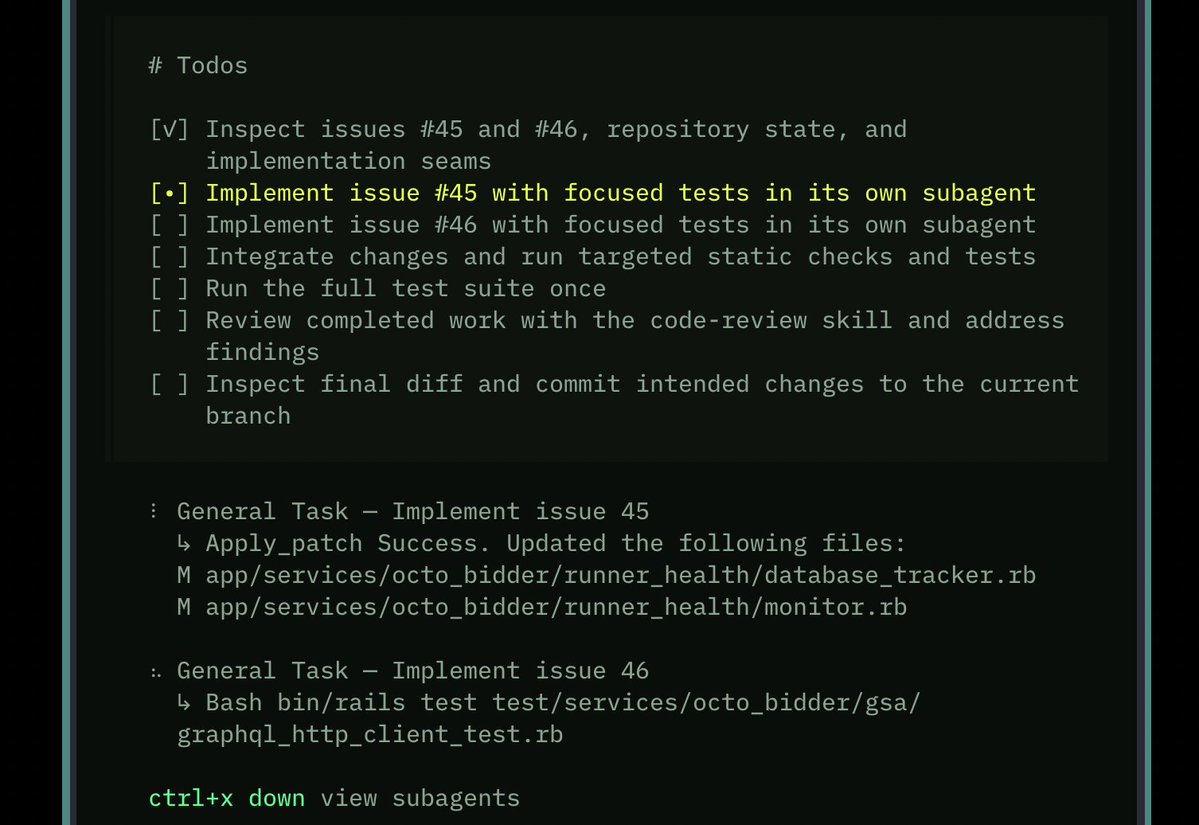
It takes a leap of faith to start trusting "medium" when you have been driving in "xhigh" since day one. Now I'm using less tokens and getting faster responses and I haven't noticed any degradation in code quality yet.
Thinking of how to lessen code reviews. I've become a real bottleneck to a project I'm working on. I've been stubborn on this point, but as my velocity increases, I'm losing context anyway. Thinking of how to go up one level of abstraction and increase domain comprehension.
@thdxr@unsorsodicorda You can test this out in codex. Add a prompt while it's working. You get the option to wait for work to be done then your prompt takes effect. Or you could push the steer button and your prompt gets injected mid convo. Opencode does the latter.
I switched to @ALTIC_DEV's FluidVoice from Handy and super happy with it. It's snappier and much more accurate. Had to turn off AI enhancements though because that messed up long transcriptions (> 10m).
/grill-with-docs felt annoying at first due to the number of questions, but then I realized that I used to deal with those questions anyway post implementation. Mostly in the form of follow up changes and bugs. This pre loads most of that stuff into the planning session which is great.
Experimenting with larger modules with clear interfaces to manage cognitive debt in my codebases. I'm steering my code reviews to focus more on the module APIs and how they fit together and much less on implementation detail. This is making me feel less tired by noon as my agents request reviews.
The annoying thing about taking AI courses is that you know most of what's being taught will be obsolete in a couple of months. What I do is upskill every few months then stick to my new process until the next upskill.