Thrilled to share that I have two papers in the May issue of QE. Different papers, but related through the oil market; one on the shale supply, and one via the financial markets. Thanks to my fantastic co-authors: Knut Are Aastveit, @tsgundersen, Yoosoon Chang and Jamie Cross
On the @greg_ip point:
🥁New Working Paper Alert🥁
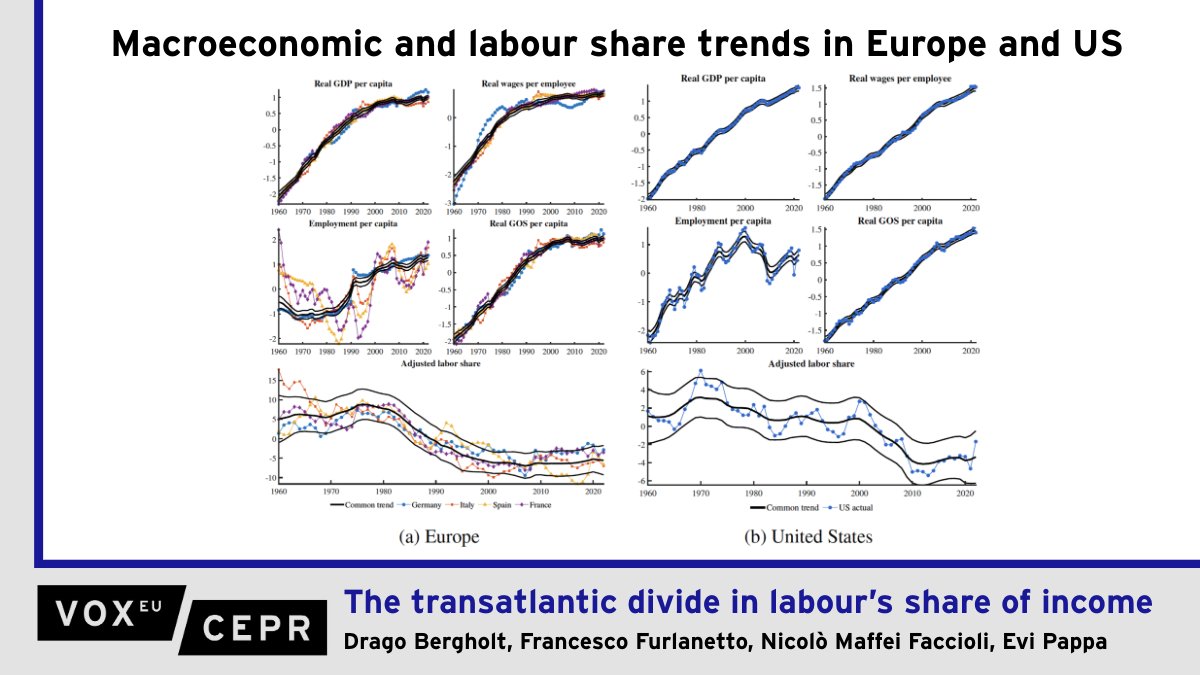
Why has the European labor income share evolved differently than in the US? A new paper with @DBergholt@nmaffeifaccioli and Evi Pappa explores the "Transatlantic Divide" in labor share dynamics from 1960–2023. #EconTwitter 1/N
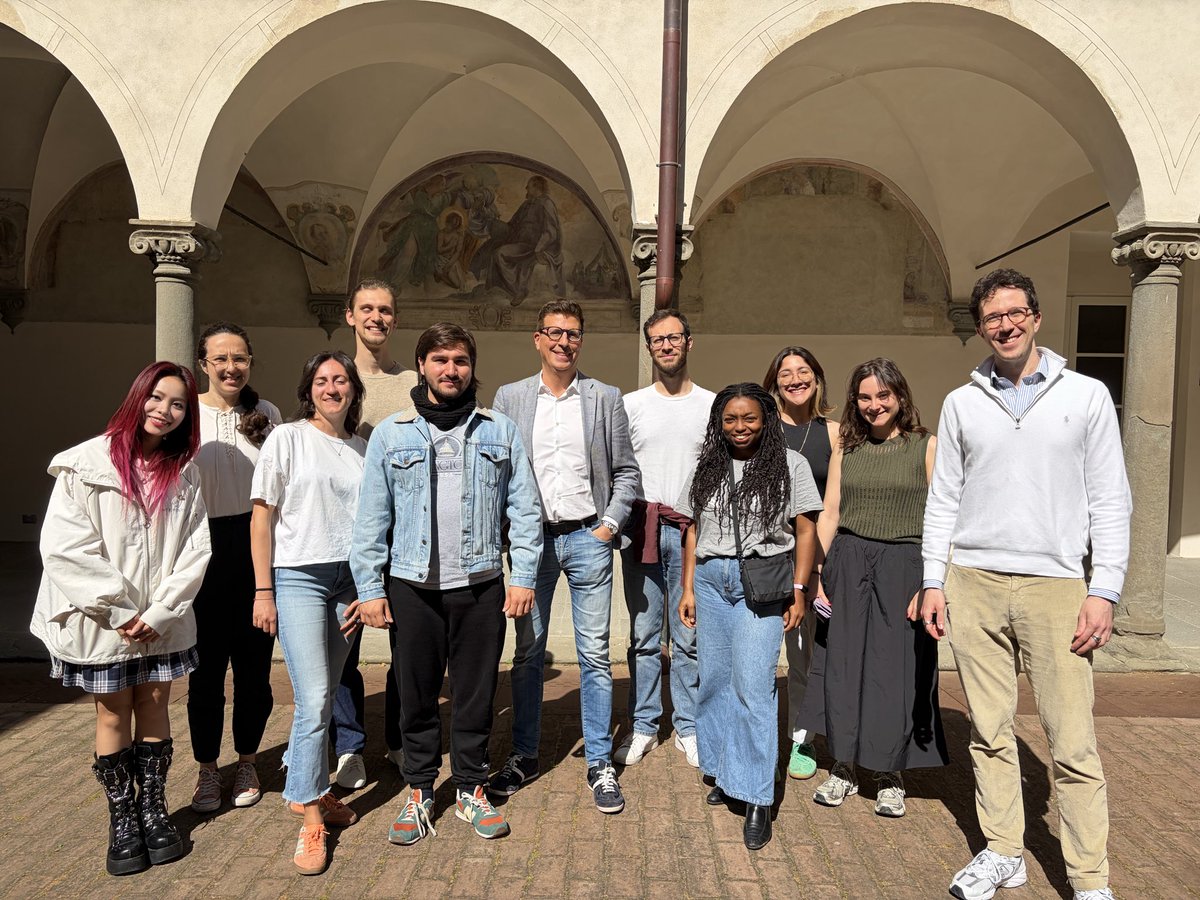
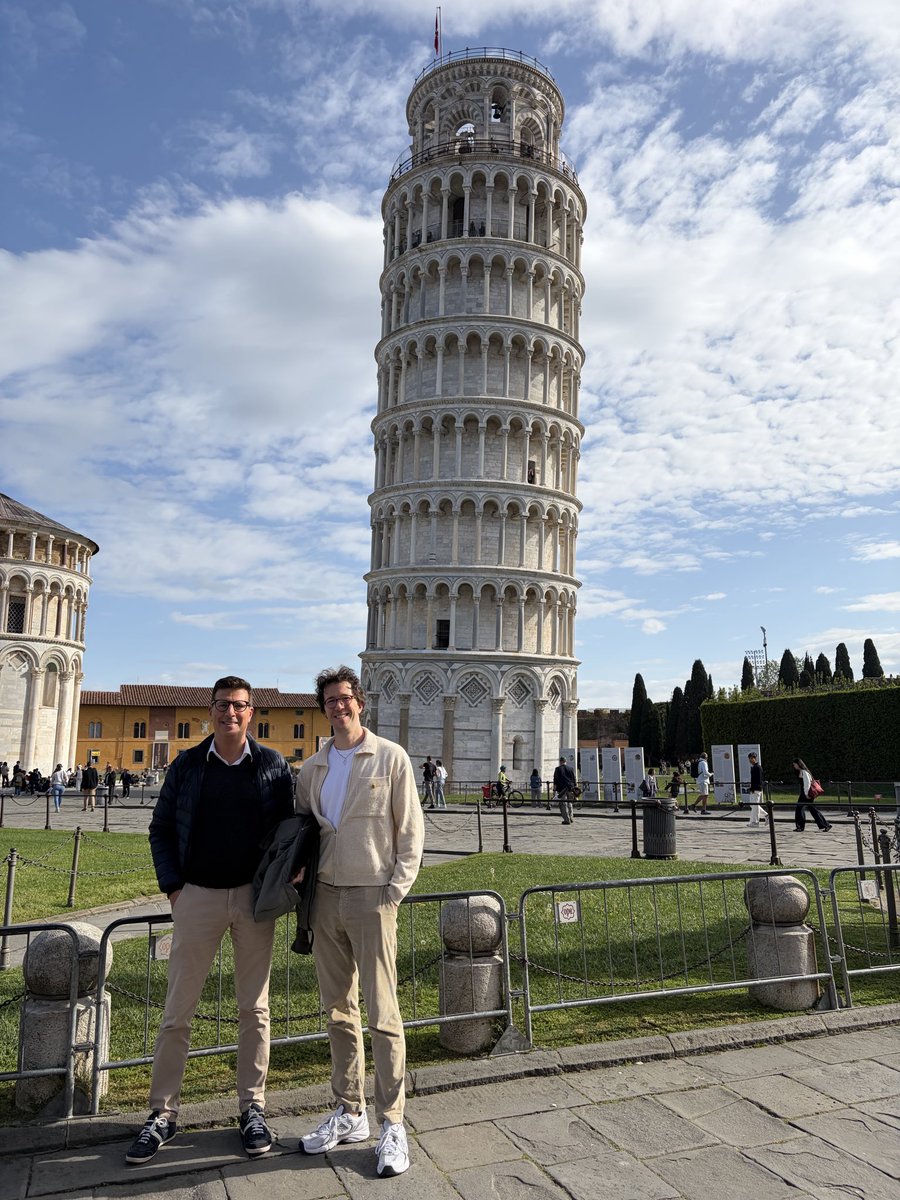
Prof. @nmaffeifaccioli and I are super happy to be @SantAnnaPisa for our annual course on Empirical Macroeconomics. Nicolo’ teaches econometrics of SVAR models while I teach applications (Phillips curve, inflation surge, hysteresis, inequality, labor share, immigration). Pisa 🥰
@FraRavazzolo This project would not have been possible without the guidance of my supervisor, @FraRavazzolo. I also thank the editor and the two anonymous referees. Finally, I am grateful for the assistance I received from @francescofurla8 and @nmaffeifaccioli
We are grateful to seminar and conference participants, and to an anonymous referee for the Norges Bank working paper series for extremely useful feedback.
Comments are very welcome. Please check out the paper and share your thoughts!
🥁 Working paper update 🥁 #econtwitter
"Divergent Perceptions, Divergent Pay: Inflation and the Gender Wage Gap"
with @LovisaReiche
Link: https://t.co/Ilck5mOW7P
We establish a new link between inflation dynamics and the evolution of the gender wage gap.
We formalize this mechanism within a two-agent New Keynesian search-and-matching model with imperfect information in which women’s pessimistic beliefs about underlying shocks generate their differential response to inflation.
Forthcoming in AEJ: Macroeconomics: "What Drives the Recent Surge in Inflation? The Historical Decomposition Roller Coaster" by Drago Bergholt, Fabio Canova, Francesco Furlanetto, Nicolò Maffei-Faccioli, and Pål Ulvedal. https://t.co/2E196Ki99F
To formalize this mechanism, we develop a New Keynesian search-and-matching model where workers do not observe the true nature of the shock and women form ambiguity averse beliefs. The model replicates the observed cyclicality of the gender wage gap.
Working paper alert 🥁 #econtwitter
"Divergent Perceptions, Divergent Pay: Inflation and the Gender Wage Gap" with @LovisaReiche
Link here: https://t.co/xqMzPMXRIb
We establish a new link between inflation dynamics and the gender wage gap.
We document two facts:
Fact 2: Women interpret inflation as a signal of deteriorating conditions in the labor market, while men perceive mild improvement.
These divergent beliefs reduce women’s willingness to negotiate, slowing their nominal wage growth relative to men’s.
The one and only Norges Bank PhD internship is back: Come to Oslo to write a paper with us! Deadline for application: November 2. Several papers have reached R&R and WP status over the last year. https://t.co/6AUCI8lsry
VoxEU column with @DomenicoGiannon
Summary: Real-time GDP releases understated the strength of the post-pandemic recovery in both the EA and the US, masking demand pressures.
https://t.co/QDsa3XSEDg
Key chart with real-time predictions of GDP and inflation, and revised data:
We propose different approaches to shrink the uncertainty around the estimated deterministic component. Once this uncertainty is taken care of, demand shocks are the main drivers of the inflation surge in the United States, the euro area, and in four small open economies.
Forthcoming in AEJ: Macroeconomics: "What Drives the Recent Surge in Inflation? The Historical Decomposition Roller Coaster" by Drago Bergholt, Fabio Canova, Francesco Furlanetto, Nicolò Maffei-Faccioli, and Pål Ulvedal. https://t.co/2E196Ki99F
What this means: models that exhibit very similar IRFs to demand and supply shocks may imply wildly different historical decompositions of, for example, the recent inflation surge.