Post-Beirut explosion, lots of discourse has emerged about how we understand trauma in our communities. People are asking: Where did your trauma begin? What is its scope? Where do we go from here?
“When her father advised parishioners to seek psychiatric help at Harlem Hospital, they often responded, “‘I’m not going there; they’ll strap me down on a gurney and have the police take me to Bellevue. And if I go there, they’ll send me along to Manhattan State Hospital, where/
I’ll never be heard from again.’ … Wertham encouraged staff to assess the social context of patients carefully and to consider even responses that might appear “crazy” to be based in a disordered society and not simply a disordered self.”
“Creating and maintaining places in which people can feel rooted is not only integral to mental health treatment in urban spaces, it is crucial to community belonging, wellbeing, and the preservation of working-class, multi-racial neighborhoods in cities.”
So grateful to @UrbanOmnibus for documenting and archiving the experiences of Arab diaspora and the complex ways they relate to New York City amidst displacement.
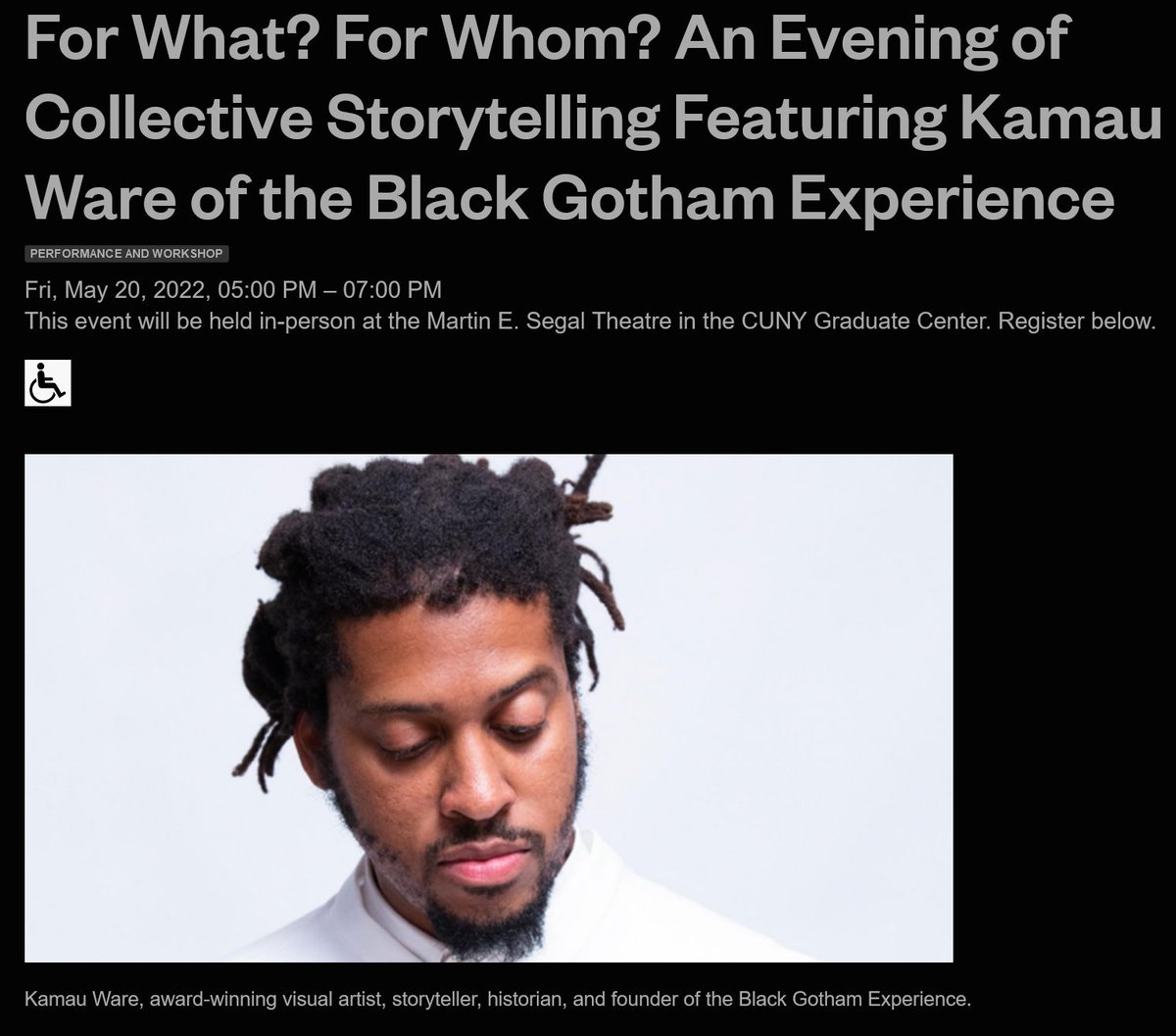
May 20, join us at @GC_CUNY for "For What? For Whom? An Evening of Collective Storytelling Featuring Kamau Ware of the Black Gotham Experience" a keynote by @kamauware followed by collab workshop inviting us to reflect on & reimagine our community stories: https://t.co/ZpWhrS6MFM
ينعاد عليكم يا حبايب
Launching a participatory project exploring psychological community narratives of collective violence in Lebanon and looking to collaborate with mental health workers! Dm me if interested.
How can the mind remember, process, and grieve if there are no structural resources in place to allow even the bare modicum of safety and security? How do we create space to process our lived histories in order to be able to effectively topple existing structures?
In a conversation with my mother today, 9mo after August 4th, she shared with me a conversation she’d had with her neighbors about the horror they felt when the reality that they often ‘forgot’ they had lost a cousin in the explosion dawned on them when they visited their aunt.
The ‘forgetting’ of collective loss and pain is not simply a psychological response to an incomprehensible event but a direct result of state decision making (or lack thereof), narratives built around the explosion (calling it an ‘opportunity’), and continued escalating crisis.
تستمر معركة القاضية #غادة_عون ضدّ شركة مكتّف لشحن الأموال، حيث حاولت اليوم اقتحام مكاتب الشركة في #عوكر، للمرّة الثانية، بمؤازرة مناصرين من #التيار_الوطني_الحر
./1
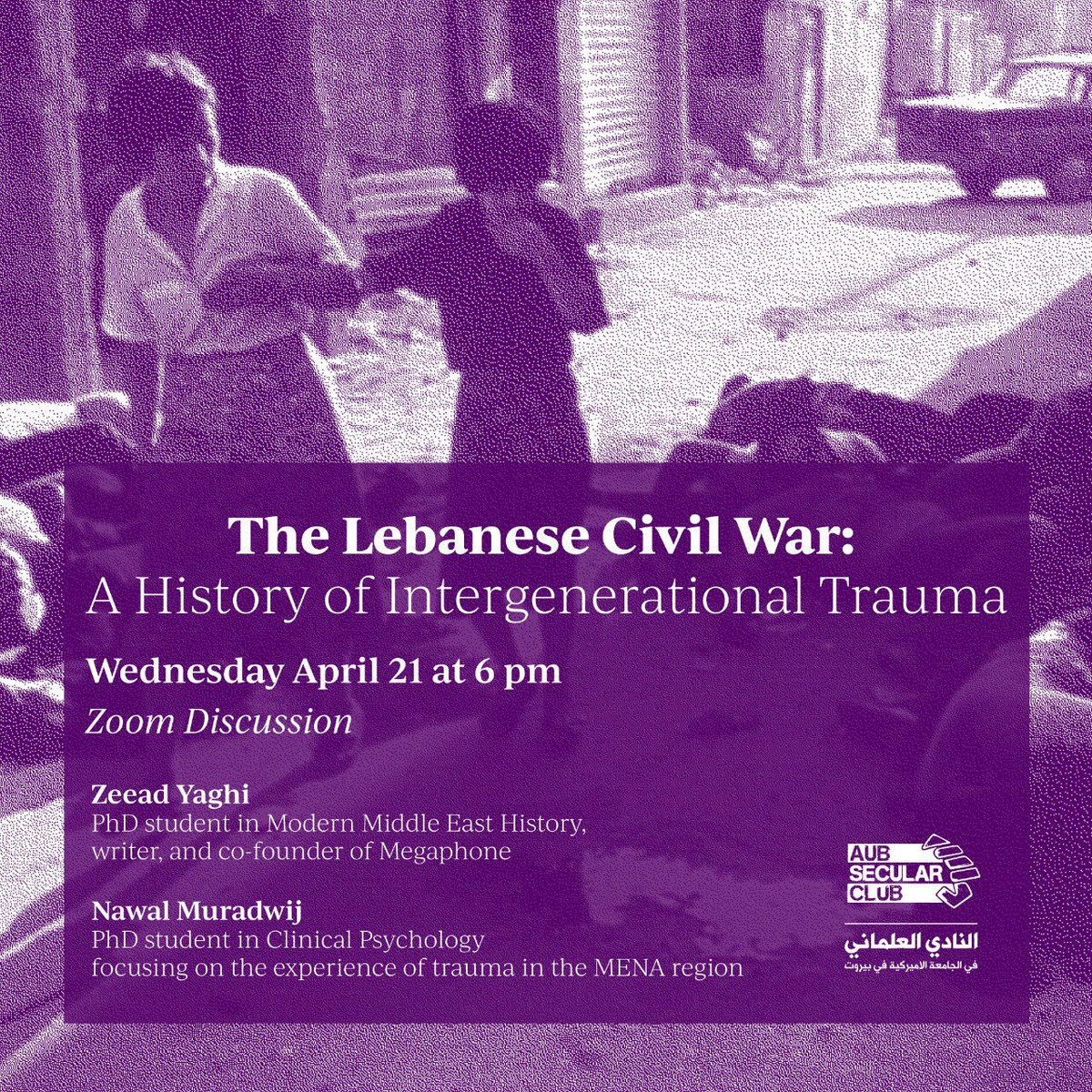
This Wednesday @nmuradwij and I are giving a talk as part of the @aubsecularclub’s Civil War Remembrance week. We will be talking about the historical and psychological legacies of violence in Lebanon since 1975. If you want to attend please register here: https://t.co/U7MkguiEAU
Promoting safety, especially in our world today, is often an act of practice and resistance ❤️ here’s to more growth and love alongside this attentive and compassionate community.
Right now in Lebanon you have to be several persons at once who absolutely can't talk to one another. You have to dissociate, I think they say in psychology, and you switch from one person to the next brutally, and it hurts. 1/n