To the girlies who love reading, may you experience a partner who buys you lots & lots of books, remembers the authors you love, takes you to bookstores, & never complains about you wanting more books!
Some new content from Tuesday’s attacks that I have just seen, and that I wanted to share with you in a thread:
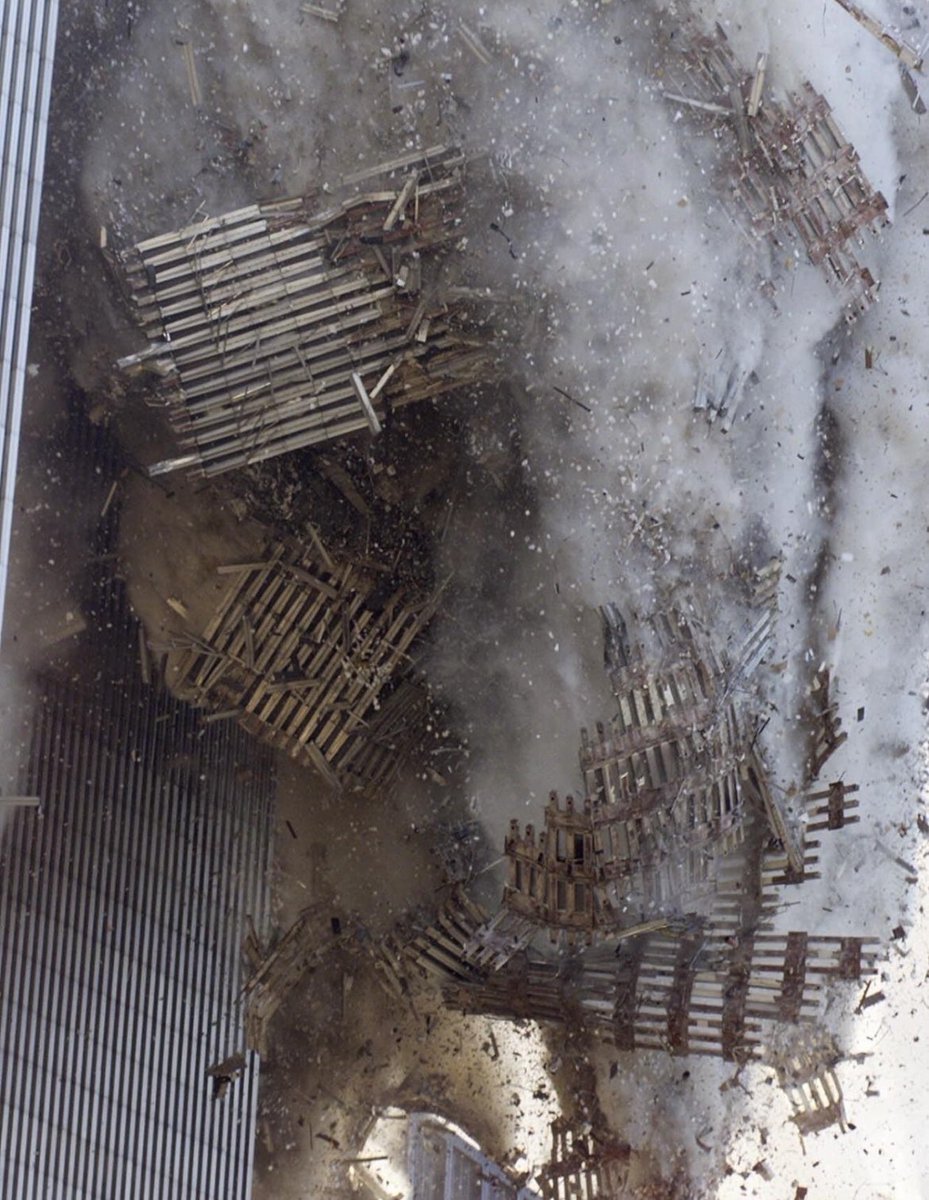
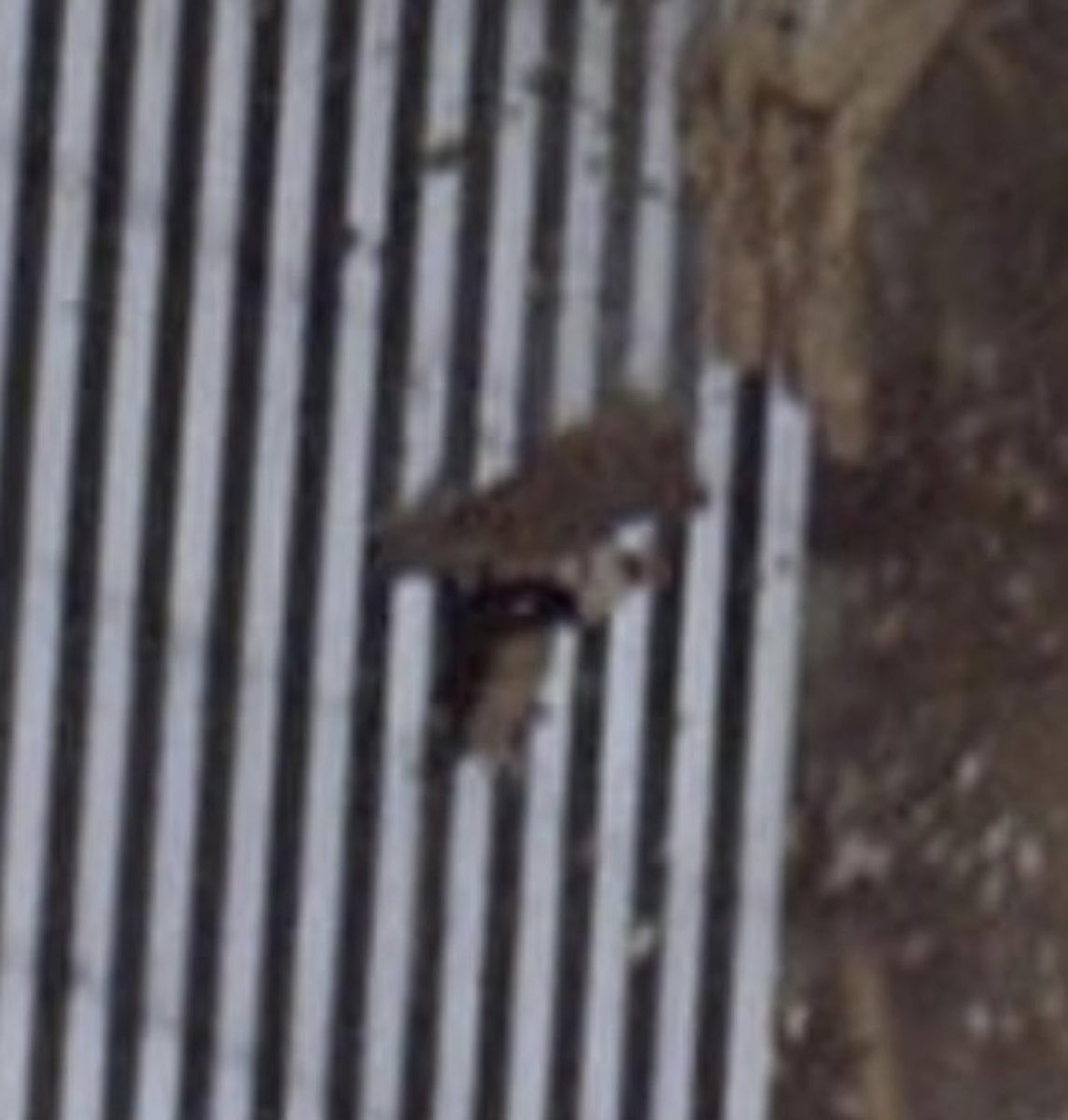
1. Collapse of the South Tower - a man clearly visible clutching debris on the way down.
I heard someone say, satan got Adam and Eve to fix their eyes on one tree when God had already given them an entire garden, think about that. The enemy didn't have to convince them that they had nothing. He just had to make them forget everything that they already had. And he still, till this day, uses the same strategy. He gets us to focus on relationships we don't have, the job that we don't have, the opportunity we don't have, the healing we haven't seen yet. Meanwhile, we are blind to the countless prayers god has already answered. Gratitude isn't pretending you don't want more, it's refusing to let what you don't have make you forget the goodness of God that's already surrounding you.
With today being the 25th anniversary of the 9/11 attacks, I am going to deviate from my normal content of tickets, sports and entertainment. This is obviously going to be the topic that dominates social media today so here goes:
I dislike the phrase “never forget” in reference to the terrorist attacks of September 11, 2001. For those old enough, we will always have vivid memories of that day. But that’s the thing, time is linear, and 25 years is a long time. There are people in their early 30s that have no real memories of 9/11, to say nothing of the tens of millions of young adults in the workforce and in college who weren’t even born yet. One can’t “never forget” something that they didn’t truly experience.
To many of these younger folks, 9/11 is an abstract topic and their experience with it is limited to TikTok brain rot content, sandwiched between Lindsay Clancy is good and Orange Man is bad videos. There’s no context, just irony poisoning. There is also no more monoculture so we’re not going to have a national conversation about the events of 9/11, or at least a conversation that is going to reach the under-30 crowd at scale.
My advice to everyone, if you have young adults or teenagers in your life – family, co-workers, whatever – show them the videos. You can essentially rewatch 9/11 on YouTube. Show them the plane crashes, the jumpers, the collapsing buildings, people running for their lives on the streets of Lower Manhattan, the smoke, the fire, the chaos, The Pentagon, etc. This wasn’t AI slop; this was real-life that played out on national television in front of an audience like that of a Super Bowl.
Despite the gruesome nature of 9/11 content, it’s not all bad. The heroism of the first responders, putting their own lives at risk to save others. There are uplifting stories of ordinary Americans like Welles Crowther, aka The Man In the Red Bandana, saving 18 people in the South Tower, losing his own life in the process, or the passengers aboard Untied 93, who took matters into their own hands after learning what was happening, and prevented a second plane from crashing in Washington DC. It’s also worth noting the media landscape of the moment. Reporters and camera crews were perilously close to Ground Zero when the towers fell. Newspapers issued “extra” sections and broadcast television networks suspended regular programming and went commercial free for four days costing their corporate parents millions and millions of dollars. None of this was done to goose an algorithm with rage-bait or conspiracy theory nonsense for clicks, it was done to inform the public with the best possible information available at the time.
There is also 9/11 follow up content. The anthrax scare, President Bush’s first pitch in the 2001 World Series wearing a bulletproof vest, the site clean-up, The Department of Homeland Security formation, the 9/11 Commission Report, the wars, Muslim extremism, The Patriot Act, World Trade Center lung, etc. How were decisions that were made in the years following 9/11 affecting our lives today?
The 9/11 video I am choosing to post has always been the most poignant one for me. This raw footage is from WNYW, the New York City Fox affiliate. I don’t know if it ever made it to air. Without containing a single spoken word, this one-minute clip depicts the Twin Towers billowing like smokestacks, as debris rains down onto the plaza below, eerily foreshadowing what is about to happen minutes later, all set to an instrumental rendition of “She’s Always a Woman”.
It’s okay to be a little sad today. I am too. What’s not okay is to allow the younger generations or non-Americans to reframe 9/11 as “not a big deal” or something that the US “deserved”. America has been directionally correct throughout its existence. Yes, you can cherry-pick examples of bad policies, terrible leaders, or certain events, but we built the world’s greatest economy, cultivated some of the greatest artists and entertainers, made ungodly advances in technology, engineering, medical care, etc. But it’s a big, bad world out there and it feels like the bad guys have been winning a little too much over the past 25 years. Not with bombs or a military occupation as was maybe feared in the 20thCentury with Imperial Japan or the Soviet Union, but rather with terrorism followed by a steady subversion of our liberal, Western values. You should not be ashamed to say, “I am proud to be an American”. Unfortunately, absolute ideological purity has now affected (some) our intuitions, leading to a retelling, or deliberate misinterpretation, of American history with the goal of creating a suicidal empathy towards certain population groups who will then be able to use our own laws against us.
Never forget? How about we say “never forget who did this” instead?
Police records indicate Mackenzie Shirilla’s car was serviced for a major brake recall, and fifteen days later, she crashed. The mechanic was never asked about the work. Why?
Read more books. Read to escape reality. Read to understand reality. Read to challenge what you believe. Read to think better. Read to write better. Read to argue better. Read to know yourself. Read to build something. A single book can completely rewire your brain.