"I also do lots of yoga in the morning, like body manoeuvres (...) It keeps you flexible, young, smart and open. So I’m open to fresh ideas every day."
- 2021 chemistry laureate Benjamin List in our interview with him.
Discover more: https://t.co/F6XkiyYUpk
#InternationalDayofYoga
"To bring change to the world we have to bring change to ourselves."
One of Iran's first female judges, Shirin Ebadi, was awarded the 2003 #NobelPeacePrize for her efforts to secure democracy and human rights.
Read more: https://t.co/0HFpjFar8A
Jean-Paul Sartre, born #OnThisDay in 1905, was the first person to voluntarily decline the #NobelPrize. In 1964, Sartre was awarded the literature prize, but he did not wish to accept the prize as he had always declined official honours.
Learn more: https://t.co/rgEDGrc4Cp
Do you play an instrument?
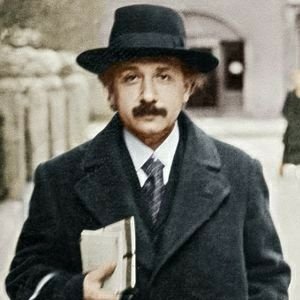
In 1937, Albert Einstein met the Polish violinist Bronislaw Huberman. They talked about music and life at Einstein's home in Princeton, New Jersey. Einstein was very fond of music and started playing the violin from an early age.
#WorldMusicDay
"I found my tribe. The tribe of science."
Ardem Patapoutian was born in Beirut, Lebanon, and relocated to Los Angeles, USA, at the age of 18. He shares the immigrant experience with numerous Nobel Prize laureates and acknowledges that bringing together people from different backgrounds is advantageous to the field of science.
He was awarded the 2021 medicine prize jointly with David Julius for their discoveries of receptors for temperature and touch.
Learn more about Patapoutian's journey: https://t.co/7fgG6P3F25
#WorldRefugeeDay
"It was not an easy childhood."
Omar Yaghi, whose parents were from Palestine, grew up in a refugee family of ten children, in a home with no running water and no electricity.
Last year he was awarded the Nobel Prize in Chemistry for developing cage-like molecules that can capture and release smaller substances, like water.
#WorldRefugeeDay #WithRefugees
On World Refugee Day, we remember 1922 #NobelPeacePrize laureate Fridtjof Nansen (1861-1930) – polar explorer and originator of "Nansen passports" for refugees.
Learn more about Nansen: https://t.co/ASpsxdrIYn
#WorldRefugeeDay#WithRefugees
Lost and Found tells the inspiring story of humanity in the world’s largest refugee camp.
The film follows Kamal Hussein, a Rohingya refugee who has dedicated his life to reuniting children with their parents with the support of the double Nobel Prize-awarded organisation, the United Nations High Commissioner for Refugees (UNHCR).
UNHCR was the first UN organisation to be awarded the Nobel Peace Prize, and they received the prize both in 1954 and 1981.
'Lost and Found' is one of a five-part short documentary series made in partnership with Grain Media.
Watch the film in its entirety: https://t.co/dojrpBt2RQ
#WithRefugees
77 years ago, double Nobel Prize laureate Linus Pauling described the discovery of sickle cell anaemia as the first 'molecular disease'. It opened up new possibilities for research into these types of diseases.
#WorldSickleCellDay
Photo: Sickle and normal red blood cells
Niels Bohr was awarded the 1922 physics prize for his model of the structure of the atom. 53 years later his son Aage Bohr (right) was awarded the 1975 physics prize for work on the structure of the atomic nucleus.
"I want to be the last girl in the world with a story like mine."
On International Day for the Elimination of Sexual Violence in Conflict we share the words of peace laureate Nadia Murad – the witness who tells of the abuses perpetrated against herself and others.
Drew Weissman and Katalin Karikó’s friendship and scientific collaboration began when they met over a Xerox machine. They share the 2023 Nobel Prize in Physiology or Medicine for their discoveries, which paved the way for life-saving mRNA vaccines.
Shortly after receiving the Nobel Prize in Literature for poems including works that convey the stark realities of child exploitation, Gabriela Mistral became a delegate to the UN and helped found UNICEF.
Learn more: https://t.co/g0QDIAI3M4
John Cornforth’s work paved the way for the development of statins – medicines that help lower levels of ‘bad cholesterol ’in the blood. He was the first scientist to synthesise cholesterol and received the 1975 Nobel Prize in Chemistry.
Learn more: https://t.co/21OaEuzg2c
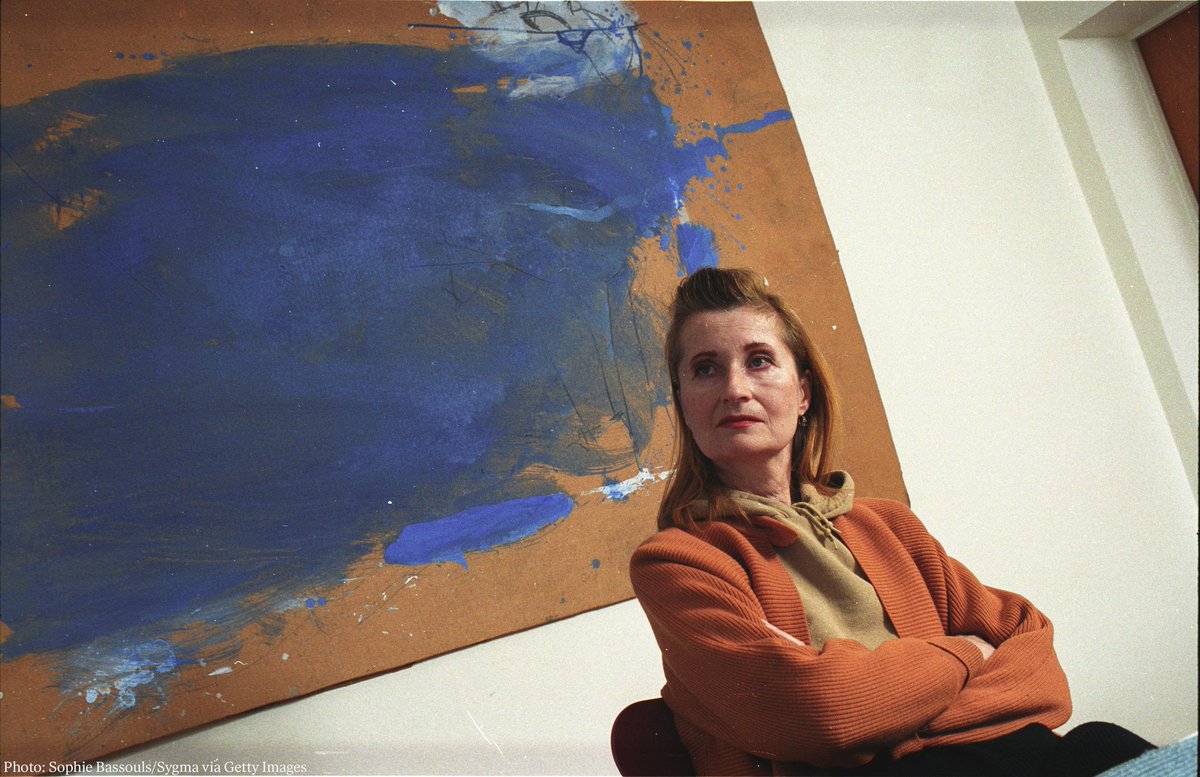
Elfriede Jelinek was awarded the 2004 Nobel Prize in Literature for her musical flow of voices and linguistic zeal. She has expressed that she taps on language to hear its hidden ideologies, much as a doctor might tap on a patient’s chest.
“Being wrong is part of being a scientist. We’re wrong all the time. One of the jokes that I use all the time, but it’s not a joke, it’s really true, is when we got to the point of trying to identify this gene, we had 20 possible genes it could be. I prioritised those genes. The gene that was responsible was the last gene, which means I could not have been more wrong in my prioritisation. It’s absolutely the most wrong thing I could have done. We got it eventually, so it was still there, but it was because there was nothing left. It’s not because I was smart or had any foresight.”
In our official interview with medicine laureate Fred Ramsdell, he told us about the importance of handling failures and being persistent.
Watch the full interview: https://t.co/F0U2k5CXSI
"I think that what this technology should enable, if used correctly, is give us more time back."
Chemistry laureate Demis Hassabis on how we could and maybe should use AI to simplify our lives. He and fellow laureate Paul Nurse joined our event in London, UK to discuss the topic of AI further.
Hassabis shared the 2024 chemistry prize for presenting an AI model called AlphaFold2. With its help, we have been able to predict the structure of virtually all known proteins.
Watch the full event: https://t.co/r4BuxQjDPx
"Imagine a world in which we would shed the same tears when a child dies in Darfur or Vancouver."
Mohamed ElBaradei, @ElBaradei, awarded the peace prize for working to prevent nuclear energy from being used in war.
Read his Nobel Peace Prize lecture: https://t.co/2g2Y1lUdlX
“Understanding how to deal with things that are messy is so fundamental to research.”
Physics laureate Andrea Ghez on how the path to discovery is often tough and messy.
Then and now: 2020 physics laureate Andrea Ghez
As a young girl, Andrea Ghez loved mathematics and all types of puzzles. She would grow up to become an astronomer proving that something massive, most likely a black hole, is lurking at the center of our Milky Way.