Assistant Professor at University of Kansas researching geodesy, earthquakes, and slow slip events. Mom to a girl with autism. Opinions are my own. She/her
For anyone interested in induced seismicity in the Kansas or the Midwest, please check out our new paper in Seismica led by former KU postdoc Shannon Fasola. We show evidence for far-field triggering of earthquakes in Kansas due to wastewater injection.
https://t.co/E2YBinXOhJ
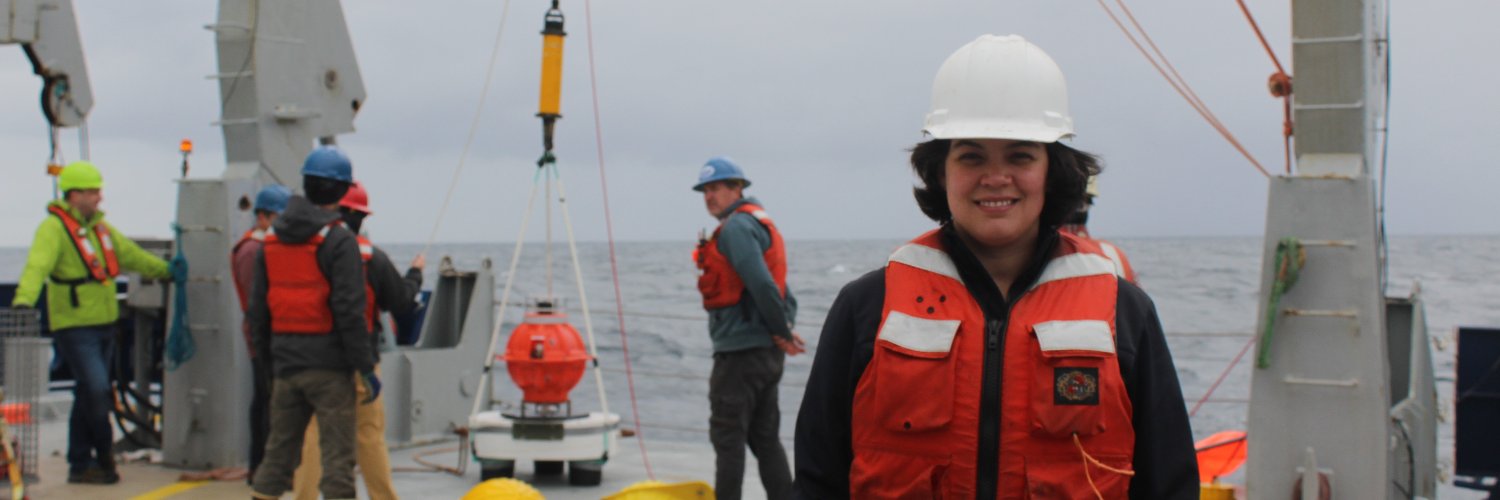
Want to follow along with my adventures at sea? Interested in seafloor geodesy? Wondering what it's like to go on a scientific research cruise? Check out our blog! https://t.co/c0jmXjDZrv
New paper out in GRL with KU postdoc Shannon Fasola and Charles Williams. We find that deep tremor in New Zealand is associated with ETS-like slow slip below the previously recognized long-term slow slip events. I think it's cool, take a look! https://t.co/RRwPZMVUpz
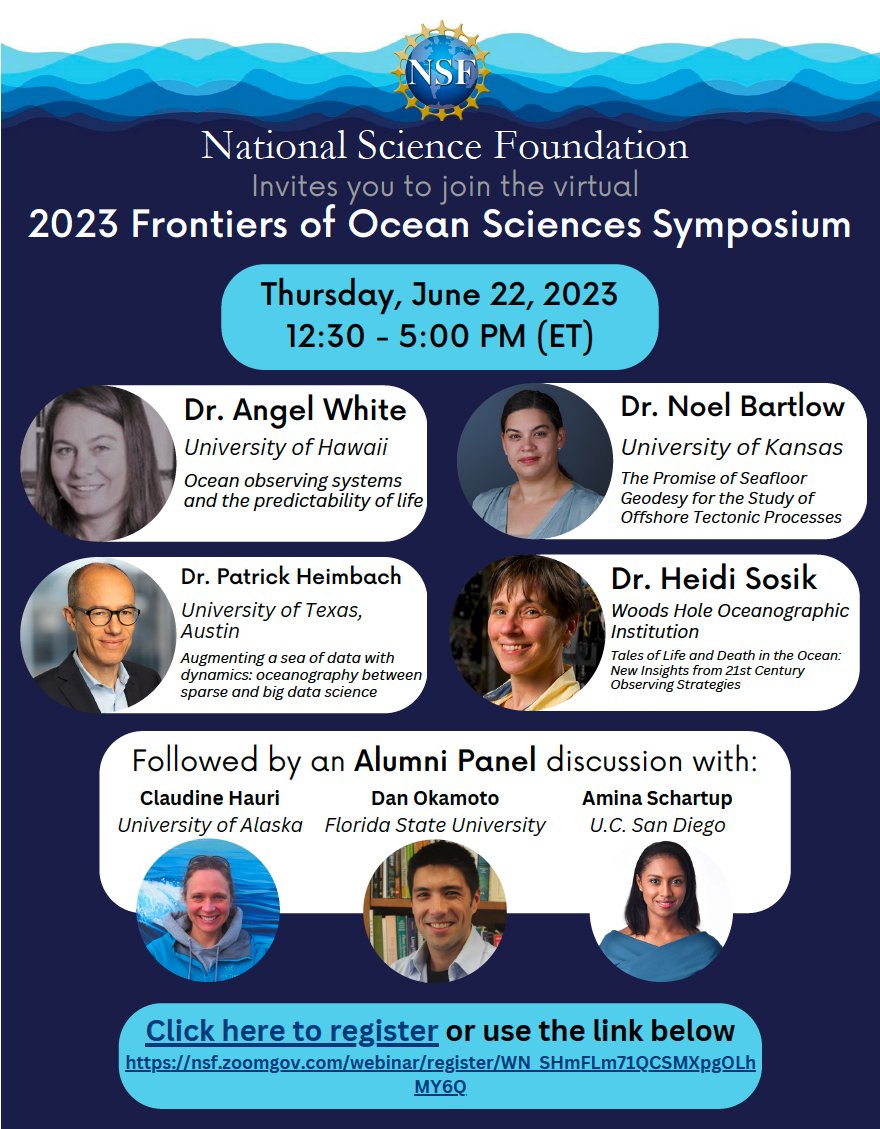
NSF invites you to join its "Frontiers in Ocean Sciences Symposium" on June 22 to hear presentations by four top #NSFfunded ocean scientists, followed by an alumni panel of prior symposium presenters.
Register today: https://t.co/LSZadg3mO6
#Oceansmonth
I didn't think about the fact that by the time I give this talk I won't be using the name that is on this flyer, d'oh.... will likely use Noel Bartlow Jackson professionally for a while, hopefully that's clear enough and will get everyone used to the change.
Giving a talk for an NSF symposium in about a month. Does this make me officially an ocean scientist now?? Zoom registration link is https://t.co/ZduK3fA4BH
@davejorgenson Awesome but one tiny correction: you said "minute" pronounced like the noun meaning 60 seconds. I think you mean "minute" the adjective, meaning very small, which has a different pronunciation. The changes to the length of the day due to this effect are measured in milliseconds.
Are you an earth scientist who wants to experience seagoing field work? Are you interested in the rapidly growing field of seafloor geodesy? Apply to join us on a weeklong deployment in Cascadia! https://t.co/uthPEWCDWP Deadline Feb. 1
I did Skype a Scientist live today and got lots of great questions from kids from all over the place! You can watch a recorded version here https://t.co/2XKYLBxjR1
2021 was another dark red stripe (but not the darkest red). The warmest 7 years on record are the last 7 years.
Global temperatures from 1850-2021 #ShowYourStripes
@drrocks1982 Oh I missed this but figured out who you are talking about. I saw the same person harassing some presenters in chat at an AGU session earlier this week, criticizing them for perfectly normal scientific speech, it was weird.
@DrVasshe Good attitude! I want to do good science and be a good teacher and mentor. But not at the expense of my happiness, sanity, or the work/life balance I am comfortable with. If that's enough to get tenure, great. If not, it wasn't right for me and I'll figure something out.
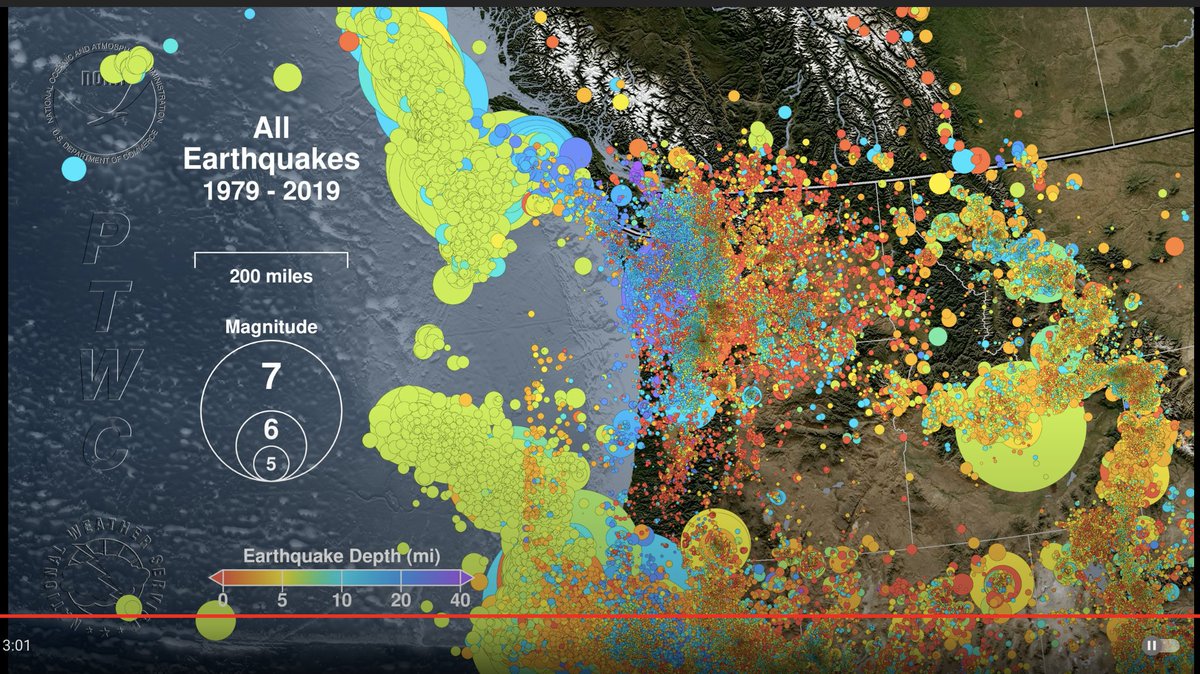
Timely to repost this great @NWS_PTWC-produced animation of 40 years of recorded earthquakes in the Cascadia region -- watch the very busy Blanco Fracture Zone just left of center as the years go by. https://t.co/YQWP2FRpA6
Check out this cool new paper by @SeismoShaddox, Susan Schwartz, and myself on triggered and spontaneous transient deformation and accompanying earthquake swarms in the Anza region of the San Jacinto fault. Such a complex and interesting region! https://t.co/0Vx4NYf1ZV
Check out this EOS article on subduction zone coupling and slow slip events I wrote along with Laura Wallace, Julie Elliott, Susan Schwartz, and the editors over at EOS for the GeoPRISMS issue! https://t.co/o8caFF0RWf
There are some cool upcoming seafloor geodesy events for everyone interested! First a live Q&A based on white paper contributions (March 25), then a seafloor geodesy workshop (April 6, 7 & 9). Come join us!
https://t.co/b0LTRYtuGj
https://t.co/nYuF774oRL
This paper was an amazing team effort, I'm proud to have been included. Thanks to @faultscarp and @marine_maureen for leading the effort! I hope it is widely read!