I'm excited to be taking on the leadership of this new center, incorporating and succeeding @MITGlobalChange and the Center for Global Change Science at MIT! Looking forward to future collaborations -- and #sustainability#climate action.
The MIT School of Science is launching the Center for Sustainability Science & Strategy, which aims to improve understanding of #sustainability challenges & thereby provide actionable knowledge & insight to inform strategies for improving human well-being.
https://t.co/pb5EFu01ve
🚨New study out in PNAS investigating the trends of atmospheric mercury in the Northern Hemisphere 🚨🌡️📉: https://t.co/fsAA1mw09O
We find that mercury concentrations in the Northern Hemisphere have declined by 10% from 2005 to 2020! Read on to find why this surprised us...
We’ve just updated our Page. The MIT Center for Sustainability Science and Strategy incorporates and succeeds both the MIT Center for Global Change Science and the MIT Joint Program on the Science and Policy of Global Change while adding new capabilities. https://t.co/pb5EFu0zkM
The MIT School of Science is launching the Center for Sustainability Science & Strategy, which aims to improve understanding of #sustainability challenges & thereby provide actionable knowledge & insight to inform strategies for improving human well-being.
https://t.co/pb5EFu01ve
My dept, @mit_cmsw, is hiring 2 jr and 1 sr faculty this year. It's a cohort hire; we're looking for people who work at intersection of media & STEM w/a focus on transforming society; potential areas of focus: climate, disinformation, democracy. Details: https://t.co/j18FXFGVnY
Big thanks to @NoelleSelin @amandagiang @william_c_clark for leading the special issue in @PNASNews on
“Modeling Dynamic Systems for Sustainable Development”
A strong set of papers emerging from a series of workshops.
https://t.co/QcZDGdCPbc
Two of note (among others) 🧵👇 1/4
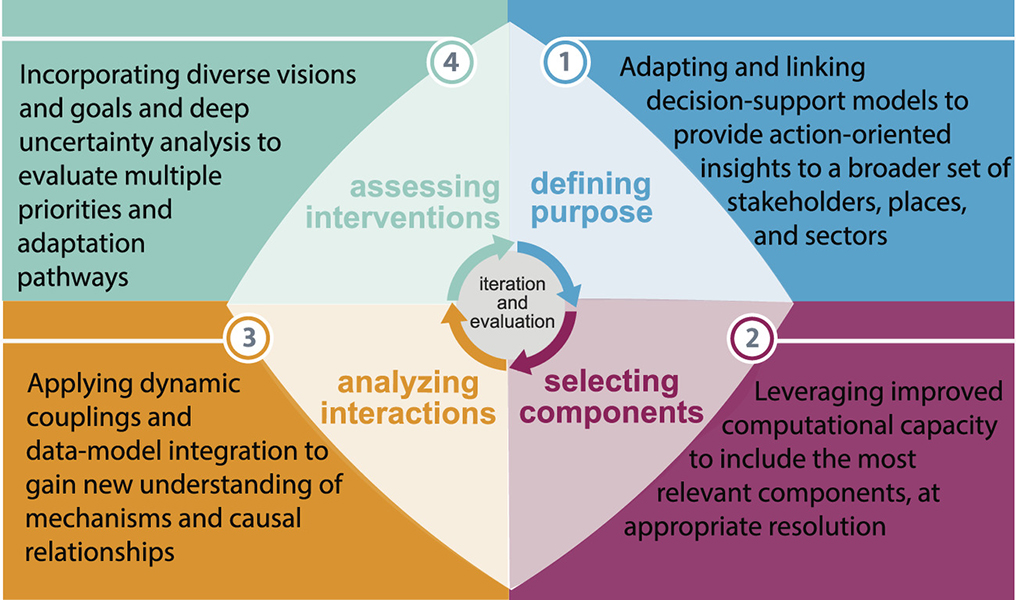
Advances showcased in the new Modeling Dynamic Systems for #SustainableDevelopment Special Feature issue of PNAS could significantly improve researchers' ability to understand #sustainability challenges and inform decision-making. Multiple MIT co-authors. https://t.co/93t6ahna4A
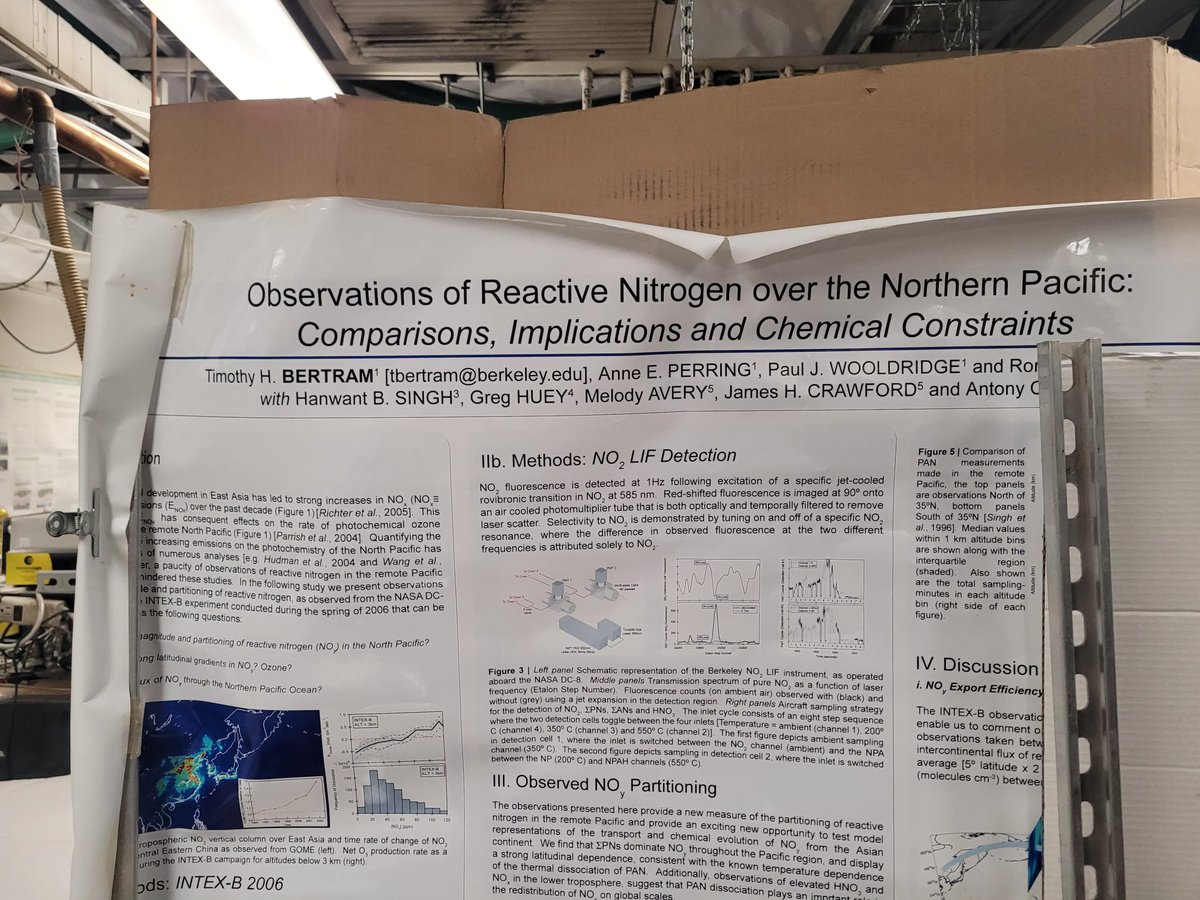
Can old data teach us new things (or remind us of things we've forgotten)? Inspired during a visit back to Berkeley by @TimothyHBertram,@CappaSnappa proposed a session with editorial support from@ChemDelphine and me. Hope to see you and your vintage data at #AGU24!
A new modeling approach developed by MIT Joint Program faculty affiliate @NoelleSelin and two MIT colleagues could help decision-makers identify--and design interventions for--future long-term #agriculture#sustainability challenges. https://t.co/s5uPGi2KYe
Interested in AI / data science and atmospheric chemistry (or any chemistry). Lectureship position going at Chemistry Dept at University of York. https://t.co/yeBOxhG7ND @AtmChemAeroJobs
How do institutions affect sustainability outcomes? How to modify computational models to capture real-world human behaviors and rules? In new research in @PNASNews, we demonstrate tractable ways and shared research agenda for social scientists & modelers.
https://t.co/IyB2Xp9Qor
🚨New paper alert🚨We researched the impact of deforestation on global mercury (Hg) pollution, finding that deforestation is contributing ~10% of anthropogenic mercury emissions. Read more to learn about our study (1/9)
https://t.co/rSWmXGK0hs
OA version: https://t.co/S9J6tAz2XF
Climate change worsens air quality. Americans could adapt by staying inside, but by 2100 they would need an extra 142 days a year indoors to achieve the same reduction in exposure to pollution that could be attained by mitigating climate change. In PNAS: https://t.co/morc3mxxPn
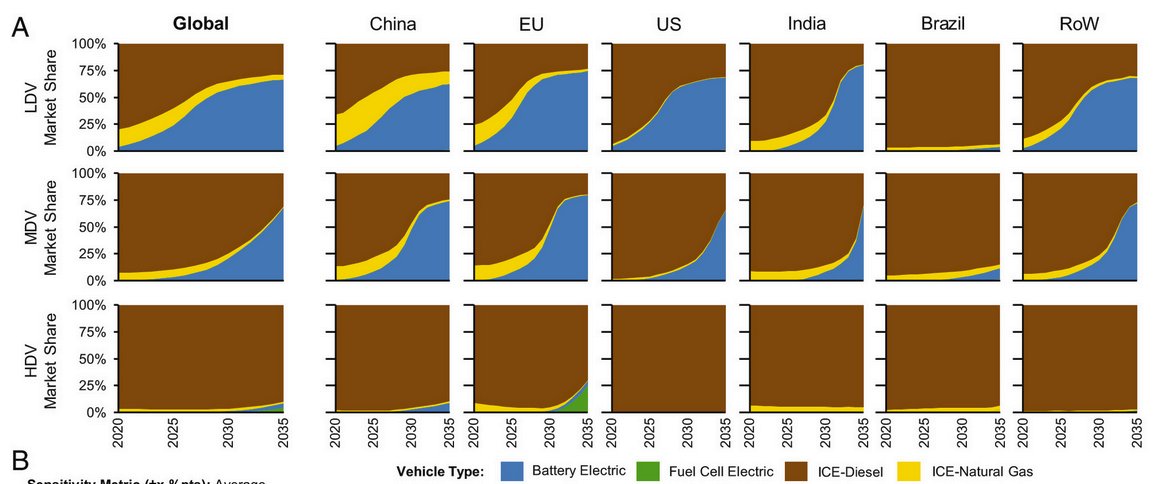
How (fast) will the trucking sector decarbonize? And how can national/regional policies accelerate the transition of a sector that's based on a globally traded good (trucks)? New paper in @PNASNews w/ @bessie_noll and ! https://t.co/QQOZRkUAFo
Can today's computer models of human/Earth systems dynamics empower decision-makers to pursue #SustainableDevelopment goals? A new Perspective in PNAS co-authored by MIT Joint Program faculty affiliate @NoelleSelin explores this question in detail. https://t.co/hbnpkeCNhp
Excited to share our new paper in @PNASNews! Key message: INTEGRATING process-based models (e.g., climate/air quality models) and data empirical analysis generate causal understandings of complex nature-society systems that are beyond individual methods https://t.co/r8WolNS65f