Who keeps a society running when most people never stop to think about all the work happening behind the scenes?
Men continue to fill many roles that are essential to everyday life. They build homes, repair roads, operate heavy machinery, maintain power systems, work in construction, agriculture, transportation, manufacturing, utilities, and countless other fields that people depend on every single day. When something breaks, needs to be built, moved, repaired, protected, or maintained, there are often men doing the work.
That doesn't mean women aren't essential or that every man belongs in the same role. It simply means men bring particular strengths, interests, and abilities that have tremendous value to families and communities.
Men also take on important responsibilities as fathers, husbands, mentors, first responders, soldiers, police officers, tradesmen, business owners, coaches, and community leaders. Some of the most important contributions never receive much attention because they happen quietly. A father working long hours to provide for his family, a mechanic keeping vehicles on the road, or a man teaching a young boy how to become responsible can have an enormous impact without ever making the news.
A healthy society needs people willing to accept responsibility, do difficult work, protect others, build things, and keep going when the job isn't easy. Men have historically played a major role in all of those areas, and their contributions shouldn't be dismissed or taken for granted.
How different would society look if we stopped taking the contributions of good men for granted and started appreciating just how much depends on them?
For centuries, learning to write meant copying and imitating great writers.
Students studied:
— Virgil’s poetry
— Homer’s epics
— Cicero’s speeches
— Demosthenes’ orations
They learned style by spending years around excellent style.
Today, we tell students to “find their voice.”
What if you need to hear some great voices before you can find your own?
In an era when schools are pushing Chromebooks on kids to save money on photocopy paper and overpriced Staples notebooks… it was never about what is best for learning and kids’ brains.
#OntEd
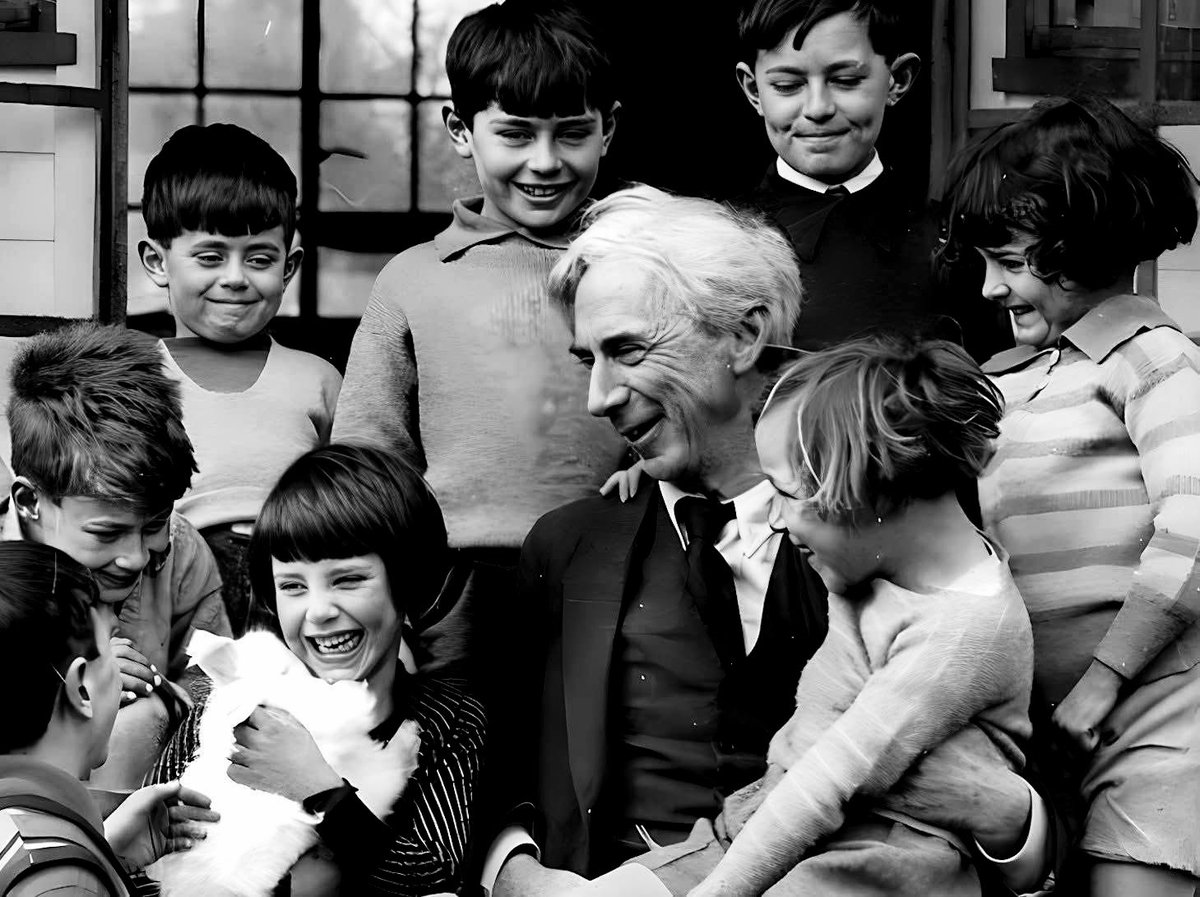
“When you want to teach children to think, you begin by treating them seriously when they are little, giving them responsibilities, talking to them candidly, providing privacy and solitude for them, and making them readers and thinkers of significant thoughts from the beginning. That’s if you want to teach them to think.”
— Bertrand Russell
This is worth every minute of your time.
One of the greatest living storytellers @malcolmguite explains the lost Christian origins of King Arthur.
These are the stories children should be reading in school 🔥
Roger Scruton:
The Flight from Beauty is the title of the penultimate chapter in Roger Scruton’s 2009 book Beauty (and also the title of a 2009 documentary exploring these themes). In this section, Scruton argues that beauty is vanishing from the modern world because society has lost the habit of sacrifice and reverence, leading to a desecration of the sacred.
Scruton identifies two distinct trends in 20th-century art that contribute to this flight:
Modernism: Artists like T.S. Eliot and Schoenberg who felt art was detaching from true spiritual aims and devolving into mechanical repetition.
Iconoclasm: Artists like Rothko and Pollock, whom Scruton accuses of a deliberate desire to spoil beauty through shock tactics and the rejection of aesthetic standards.
He contends that this flight is driven by a culture of narcissism and materialism, where individuals prioritize addictive pleasures over the rational and contemplative engagement with beauty that requires looking beyond oneself. Scruton views beauty not as subjective taste, but as a real, universal value anchored in human reason and the sacred, arguing that its absence leaves the world spiritually impoverished.
Reclaiming Beauty
https://t.co/uEWAUWfKyF
''La plupart des gens ne réalisent pas
à quel point le monde est beau et combien de splendeur se révèle dans les plus petites choses, dans toute fleur, pierre, écorce d'arbre ou feuille de bouleau.''
Rainer Maria Rilke
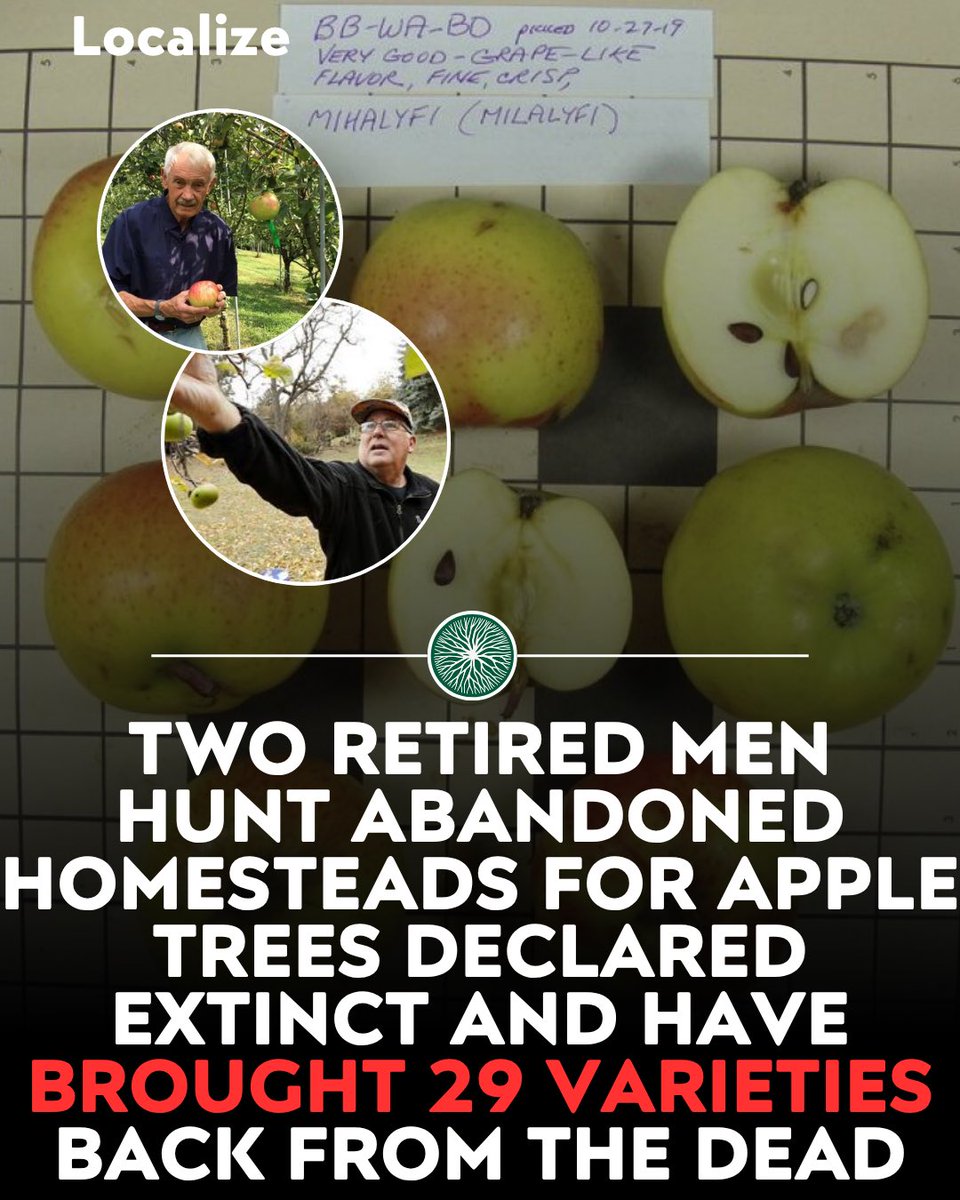
Two retired men hunt abandoned homesteads for apple trees science declared extinct and they have brought 29 varieties back from the dead
The Lost Apple Project tracks old land records to orchards planted by homesteaders and forgotten for a century.
The trees kept making apples the whole time with nobody left to pick them.
Every rediscovered variety gets grafted and returned to nurseries so it can never go extinct again.
Find heritage orchards near you on Localize
The biggest reason to avoid painting, writing or making music with AI is because those things are a pleasure, the act of doing them is soul-forming, creating things is deeply rewarding & satisfying and you were made to create. The joy is in the work. The joy is in the work.
I was given my name by the Iroquois Nation many hundreds of years ago. By 1660 my name was printed on maps by the Europeans as they accepted the Native name which means Beautiful waters.
In 1867 the Canadian government decided to use my name for their providence.
Sweden is officially trading screens and tablets for physical books and handwriting to reverse a decline in reading skills.
Once at the forefront of hyper-digitalized learning, Sweden is engineering a dramatic pivot back to the basics in its classrooms. Concerned that an overreliance on digital tablets and screens has eroded reading comprehension and foundational writing skills, Swedish education officials are investing heavily in traditional printed textbooks.
The national strategy aims to phase out digital devices for children under the age of six entirely, following a drop in international reading assessment scores.
Experts point out that while technology was championed to level the playing field, its unrestricted use has instead led to shorter attention spans and reduced retention among younger learners.
Scientific evidence strongly supports this retro transition. Research indicates that the physical act of handwriting activates complex neural networks governing motor skills, vision, memory, and language—cognitive benefits that are largely lost on a keyboard.
Furthermore, reading from a printed page provides critical spatial cues that aid comprehension, unlike digital screens that often subject students to cognitive fatigue and constant distractions. While computers and tablets remain valuable tools for research and collaboration, educators worldwide are watching Sweden's massive reinvestment in physical books as a potential blueprint for a more balanced, science-backed approach to modern schooling.
source: The Guardian. Switching off: Sweden says back-to-basics schooling works on paper.