“The Necessity of Chivalry”
by CS Lewis
Lewis’ concise essay is where it all began for me. In fewer than 1400 words, he provides the clearest and most compelling explanation of chivalry I’ve yet encountered. What makes the ideal unique, he argues, is the “double demand” chivalry places on human nature. The chivalrous man is a paradox: a man of ferocity and gentleness. He is not a compromise or golden mean between the two, but both extremes in the same man—someone you’d want on your side in a fight and also a perfectly courteous guest at dinner. And this ideal is not just a “lifestyle” choice. Chivalry is a necessity, as the title proclaims—both in the 11th century and in the 21st. If we fail to cultivate and reconcile both ferocity and gentleness, "then all talk of lasting happiness or dignity in human society is pure moonshine” and we are doomed to contests between "wolves who do not understand, and sheep who cannot defend, the things which make life desirable.”
“The Necessity of Chivalry” is available in a collection of essays called Present Concerns and on audio on Youtube.
Wooden sculpture of a deer, 4th Century BC; found from Filippovsky Kurgan in the Ural region of Russia.
Gold, silver, bronze, wood. The figure is 51cm high, 41cm long, and has horns 30cm wide.
The Hermitage Museum
#archaeohistories
The sound that once sent a shiver down the Roman legionary's spine! The bellow of a reconstructed carnyx - a war trumpet used by Iron Age Celts, Gauls, and Germans to incite troops to battle and instil terror in the enemy.
The 3-year-old and I are reading The Hobbit for the second time at her insistence. She just pointed out to me that Bilbo lives under a hill and Smaug lives under a mountain. I think this is actually really profound and I’m embarrassed I never noticed the parallel.
If you want to have a healthy relationship with your phone, you need to start thinking of it as a familiar spirit that you have conjured up and put in your pocket. It can be a mighty servant if you use sufficient caution and ritual to maintain your control over it…
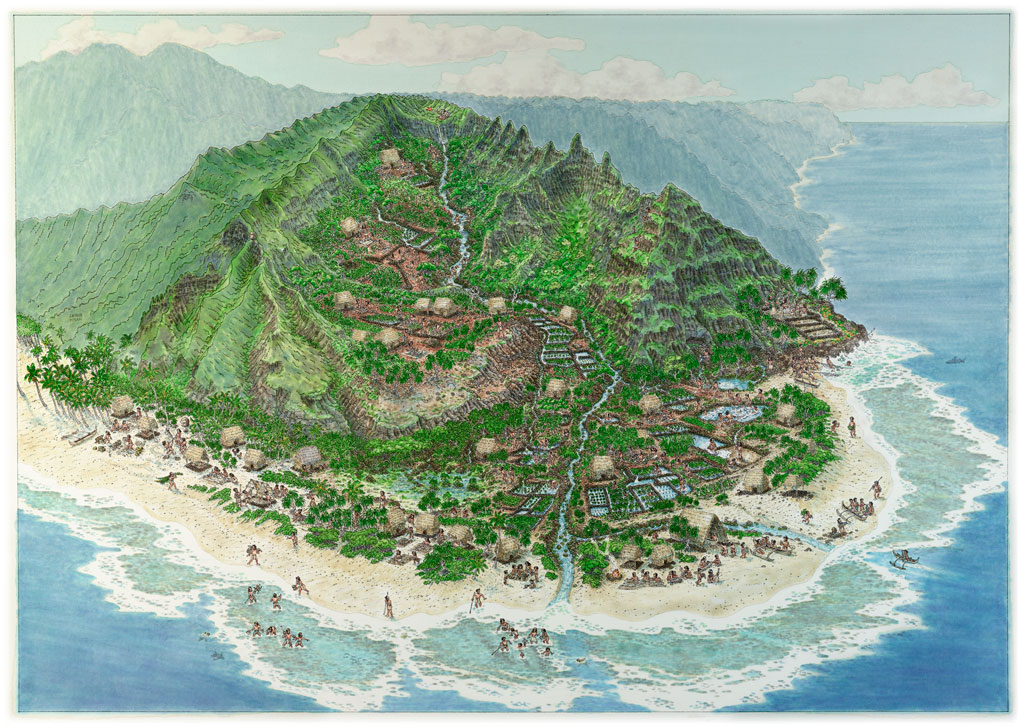
Today, Hawaii imports 90% of its food.
Before Captain Cook landed, the populous Native Hawaiians were entirely self-sufficient and produced more food using less land than modern Hawaiian agriculture.
Here is a quick tour.
Yet I think the pitch process itself operates in such a way that a reverent adaptation pitch will often get lost, and an irreverent pitch that's likely to alienate fans of the source material will often rise to the top by the sake of its novelty and cleverness.