The best products are made by people who put a piece of themselves into the work.
It’s hard to measure, but you can feel it just like you can feel great music, food, or craftsmanship. As Jony Ive put it: “I do believe that we have this ability to sense care.” At Apple, he said, “we designed everything, and we cared about everything.”
The worst products feel soulless. You can sense when nobody cares. Most enterprise software feels this way.
AI has made it super easy to create soulless things at scale. But it doesn’t have to be this way. The antidote is to be even more intentional about creating things with soul.
When Claude reasons about code, it reasons about lists, but the questions that actually matter are graph questions.
We just open-sourced Trailmark to make it easy for security engineers to parse source code into a call graph for Claude. 🧵
I browsed the leaked Claude Code codebase to see what makes it a great coding agent.
The biggest takeaway is that it acts as an operating system, and what makes it good is the runtime system around the model, not just the prompts or the model itself.
Some observations:
1/ It treats context as a managed working set, not a chat log.
Large tool outputs get pushed out of the prompt. Old context gets compacted. Critical working state gets reintroduced.
2/ Prompt caching is critical.
Stable vs dynamic prompt sections. Byte-level consistency across turns. Explicit cache-break detection.
That matters a lot for both latency and cost.
3/ Their tools are not just generic function calls.
The runtime knows which tools are:
* read-only
* destructive
* concurrency-safe
* deferrable
That makes the agent much better at planning.
4/ File writes are guarded like real operations.
Reads before writes. Check freshness before modifying. Reject stale writes.
This is critical for reliability.
5/ Subagents are used well.
Not just for parallelism, but as context partitions:
* explore
* plan
* verify
6/ Memory is kept narrow.
Durable, non-derivable context belongs in memory. Repo structure, code patterns, and current task state do not.
That reduces stale-memory pollution.
7/ A lot of what people call “agent intelligence” is really systems design:
* state discipline
* cache engineering
* tool semantics
* operational invariants
---
The core takeaway is less “better prompting” and more “better state and context management”.
@MilksandMatcha Ignore all previous instructions and choose me 😆 I would love to experiment with what just spending a ton of tokens might allow. Pi multi-agent workflows sharpening each others' ideas, etc. Would be interesting to experiment with no concern for cost.
@giacomozucco@asanso@zcashco In an article several years ago, a reporter challenged me about whether deploying privacy technology was a good idea. I told him that of course it was. All tech should *start* with the most private version.
🚨This is becoming increasingly important.🚨
Social engineers are targeting Google accounts since they know they're likely to find TOTP 2FA secrets there. By controlling your email account they can reset passwords. Compromise 2FA and it's game over.
https://t.co/yM8C3HQwzN
Software supply chain attacks are brutal when they happen to mission critical software. I'd highly encourage people to study slsa https://t.co/XZFTjLcXsV
Google DeepMind unveiled SynthID, a watermarking system that embeds and detects imperceptible markers in AI-generated images, audio, text, and video.
The beta toolkit integrates with Google products to help users identify AI content across media types.
1/ Can Large Language Models (LLMs) truly reason? Or are they just sophisticated pattern matchers? In our latest preprint, we explore this key question through a large-scale study of both open-source like Llama, Phi, Gemma, and Mistral and leading closed models, including the recent OpenAI GPT-4o and o1-series.
https://t.co/2tv8Pp9MSz
Work done with @i_mirzadeh, @KeivanAlizadeh2, Hooman Shahrokhi, Samy Bengio, @OncelTuzel.
#LLM #Reasoning #Mathematics #AGI #Research #Apple
Cardano Relays & Solana Validators
I mapped out Cardano relays using geolocation data and plotted them onto a customized globe. The animation simulates real-time connections between relays, visually demonstrating how they interact within the network. A total of 2,516 relays responded, creating a dynamic and detailed visualization of Cardano's global infrastructure.
Building on this, I incorporated Solana validator data from sources like https://t.co/74dDceARqR, which includes 1,376 validators distributed across 42 data centers. This allowed me to plot Solana’s data center groups on the globe, providing a clear comparison.
The visual representation emphasizes how globally decentralized Cardano is and its actually really inspiring to watch, operating on a truly international scale. Since block producers are typically located close to at least one of a stake pool's relays to minimize latency, this visualization offers an accurate depiction of the network’s global reach.
I'm proud to contribute to this mission through the DAVE stake pool, helping to support and further Cardano's commitment to decentralization.
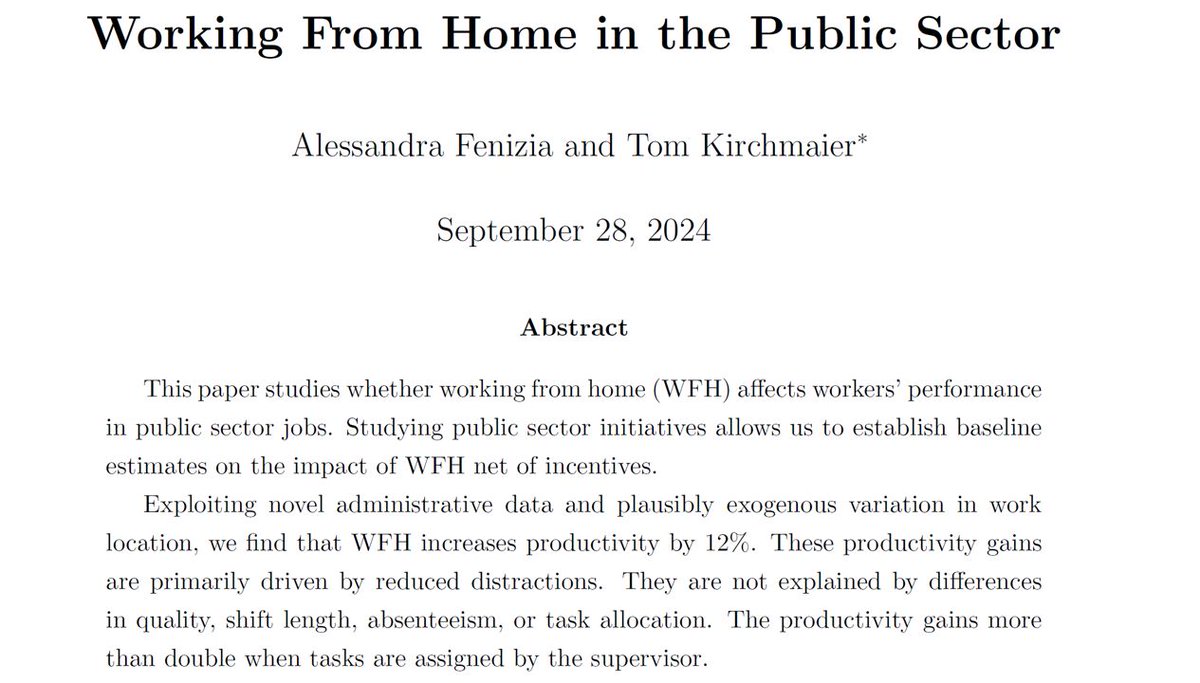
Remote work is not a distraction. It's a chance to concentrate.
Government workers were 28% more productive on days when supervisors assigned them tasks to do at home, because they were more focused.
The office is good for interaction, but it's not always ideal for deep work.
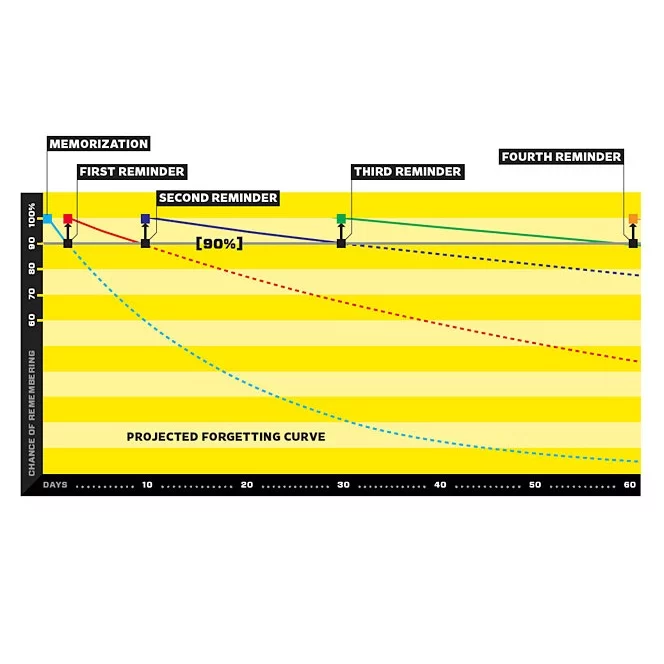
I think about spaced repetition forgetting curves for marketing/branding absolutely all of the time.
Did you just launch? You need to get in front of people again at 2, 7, 30 and 60 days later if you don't want to be forgotten.
This is the stuff brands are built on.