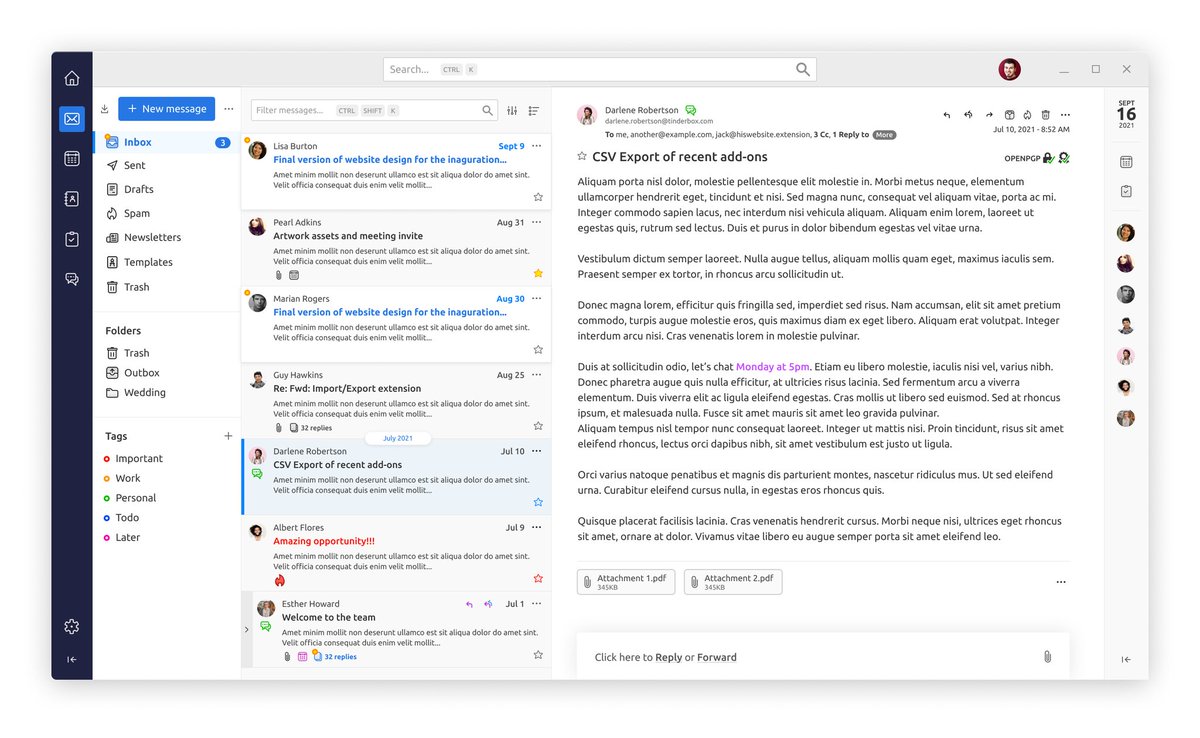
@mozthunderbird@miracsa@omgubuntu@mozthunderbird When will some of these UI/UX elements make it into desktop Thunderbird? Been waiting years now, so maybe it's time to jump in: https://t.co/FKGmVK5LVk
Say it isn't so @oregonlive, defrauded for 18 whole dollars? Glad @Google news feeds know where to clip off a title without altering the narrative 😜 Btw, original article here: https://t.co/I8A5XcC3Un
GREAT NEWS! | Portland Public Schools has announced that all of its students will be able to eat school-provided breakfast and lunch free of charge for the 2024-2025 school year.
https://t.co/En7phAMcFJ
@SandmanClocks@paltoinnovation Are you guys still shipping products? I placed a Sandman Clock order on May 15, 2024 and haven't received any shipment info or updates since.🧐
https://t.co/QlUx2JbOHi
imagine if your timeline was totally yours, merged across social networks and email and notes apps, and tried to support you throughout the course of your day.
@alexobenauer made a unified timeline for himself which I've envied for months now. it's the seed of a more personal computer.
while each company wants to make its own "app," people don't organize actions and ideas around apps in their head. my grandma doesn't understand the difference when I send her an email or a text—it's just a message. she's smarter than all of us. our brains don't organize anything into apps or folders, but rather: meaning & time.
@plexusearth (the public benefit company I run) centers meaning; Alexander's experiment here (Ollos) centers time.
making natural software can make life simpler. I hope folks follow alexander's lead.
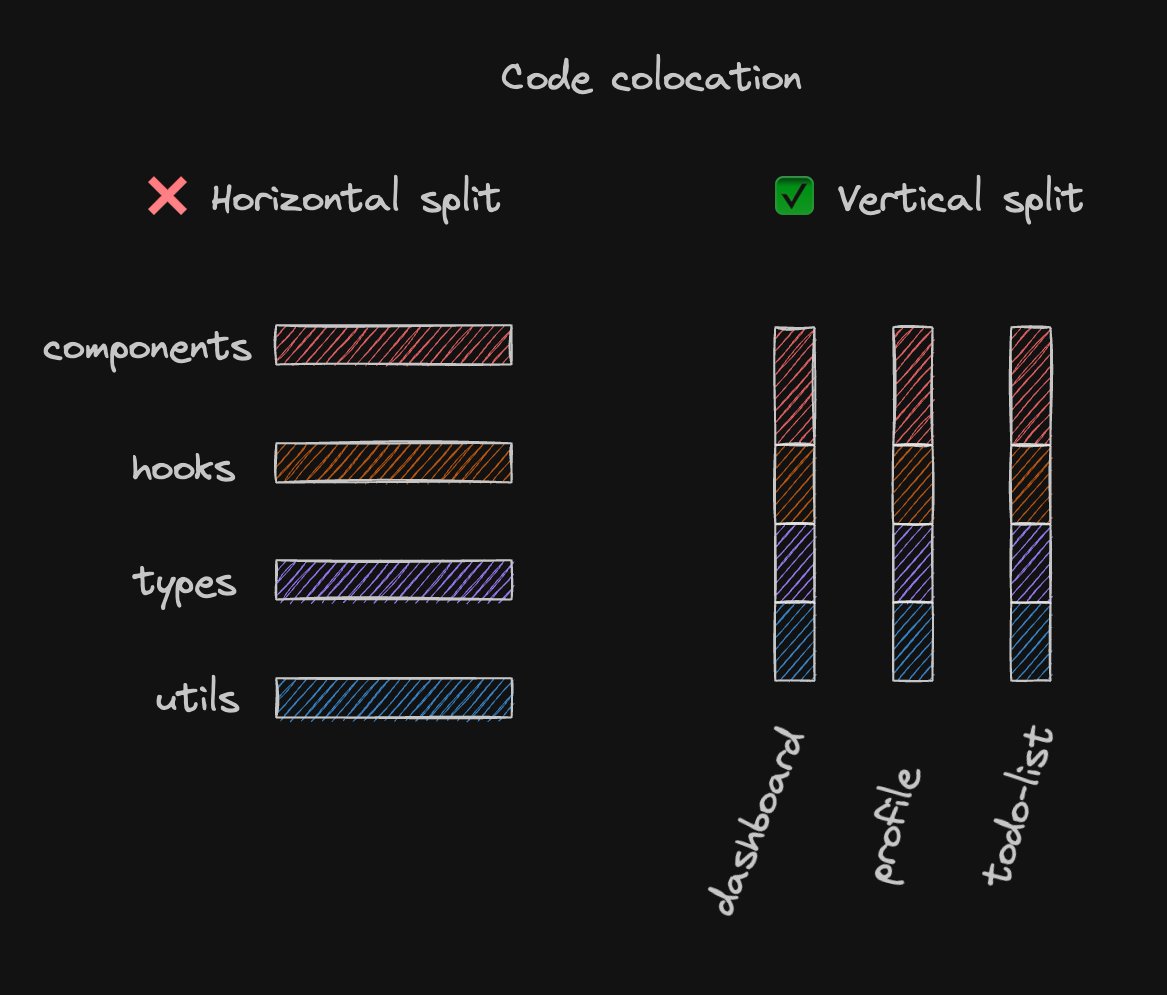
components / hooks / types / utils (and constants) is the split I'm seeing in many codebases, yet it's the one I dislike the most. It groups by type, not by domain. "useTheme" will live next to "useTodo", but not next to ThemeProvider ... why?
At Cursor, we’re fascinated by the problem of deeply understanding codebases.
One useful primitive we’ve been focused on is code graph construction and traversal.
Here's how/why we're tackling this... (1/12)
@QuadMet Computer scientist here! Probably caused by converting timestamp data (i.e. yyyy-MM-dd hh:mm:ss) into a date. The extra time info just garbles the resulting year.
CSS Tip! 🤯
You can create a CSS-only version of this balance slider using a scroll animation on the underlying input[type=range] 🚀
::-webkit-slider-thumb {
view-timeline: --thumb inline;
}
Scroll animation driven by the slider thumb animates a number between the "min" and "max" of the range 😅
@property --value {
inherits: true;
initial-value: 0;
syntax: '<integer>';
}
@keyframes sync { to { --value: 100; }}
Tie that up to the contain animation-range ⚡️
.control {
animation: sync both linear reverse;
animation-timeline: --thumb;
animation-range: contain;
}
Hoist the view timeline so all the parts of the control can use it!
.control { timeline-scope: --thumb; }
Use that value in a counter which is used for the labels. Create a low and a high for each side 😇
.control__label {
counter-reset:
low var(--value)
high calc(100 - var(--value));
}
.control__label::before {
content: "COFFEE " counter(low) "%";
}
.control__label::after {
content: counter(high) "% MILK";
}
That's the magic of updating the label values ✨
For the big track, it's a fake track. You can make use of the same --value property and do some calc() to work out the width of each part.
<div class="control__track">
<div class="control__indicator"></div>
</div>
.control__track::before {
width: calc(var(--value) * 1% - 0.5rem);
background: var(--coffee);
border-radius: 4px;
transition: width 0.1s;
}
The width leaves a little gap for the indicator piece 🤙
The color calculation for --coffee isn't too wild but again you can use the same --value
.control__track {
--coffee: hsl(24 74% calc(
24% + (30% * ((100 - var(--value, 0)) / 100)) / 1
) / 0.4);
}
Now for the last piece. Making the track change height. You could set up another custom property and animate its value using the --thumb timeline too 🔥
@property --shift {
initial-value: 0;
inherits: true;
syntax: '<integer>';
}
@keyframes shift {
0%, 31%, 61%, 100% { --shift: 0; }
32%, 60% { --shift: 1; }
}
Then use that --shift to update the translation of the label and height of the track 🤓
.label {
transform: translateY(calc(var(--shift) * 50%));
transition: transform var(--speed) var(--timing);
}
Cool part here is that you can use the control to work out the @keyframes percentages 😅
Oh. And the timing for that little bounce? Use the linear() function 😎
:root {
--timing: linear(
0, 0.5007 7.21%, 0.7803 12.29%,
0.8883 14.93%, 0.9724 17.63%,
1.0343 20.44%, 1.0754 23.44%,
1.0898 25.22%, 1.0984 27.11%,
1.1014 29.15%, 1.0989 31.4%,
1.0854 35.23%, 1.0196 48.86%,
1.0043 54.06%, 0.9956 59.6%,
0.9925 68.11%, 1
);
}
Should probably do a video on this one. Lots of little custom property tricks for sure! 💯 It's not too far off the range slider with the tooltip that came up previously
As always, any questions, let me know! Also, this one only works in Chrome currently ✅🥲
This one's a bit rocket science ha 🚀
@CodePen link below! 👇
Unit's top down navigation helps me finding the code behind something by following visual clues alone. I can always go directly to the component I want to focus on.
What if collaborative whiteboards could do physics? Here's a Rust/WASM physics sim inside of a multiplayer @tldraw canvas. All in realtime, happening in the background.
Let your diagrams fall to the floor, make dominoes on your state charts, put rejected ideas into a pile...
Just a reminder that the deadline for the IDE workshop, co-located with @ICSEconf 2024, is in two weeks (December, 7th). Anything related to IDEs, 4+1 pages short papers, 1 or 2+1 pages position papers. Let's build the coolest community together! All info: https://t.co/lMCn0hV07z
@myQConnect@daviesgeek Awful take! It's like talking to a door, but worse (the door won't open unless you have the key AND wear their stupid friendship bracelet). I regret going with @LiftMaster openers on my new garage doors this summer.