Is KYC Hyperliquid's Path to the US?
On testnet, a new function was recently added to HIP-3 that allows deployers to set an allowlist for their markets. By adding a star payload, a DEX can restrict trading to approved addresses. In theory, this creates a path for permissioned access to Hyperliquid, which could become particularly important in regulated markets such as the US.
US regulation has been one of Hyperliquid's largest constraints. Under the current framework, retail commodity derivatives generally need to trade on a CFTC-registered designated contract market and clear through a registered derivatives clearing organization, with customer access typically handled by a regulated broker. For this reason, Hyperliquid cannot simply open its existing perpetual markets to US users. Rather than continuing to operate in a regulatory grey area, Hyperliquid has been active in Washington, pushing to modernize these rules and establish a compliant pathway for onchain derivatives, with the longer-term goal of allowing regulated exchanges and brokers to use its market infrastructure.
Still, even if this pathway were approved, questions would remain around how KYC, a necessary part of any US-compliant approach, would be implemented.
Looking at testnet, we believe the answer sits at the HIP-3 deployer level. A compliant deployer could list permissioned markets, conduct KYC, and maintain the allowlist, while regulated brokers route verified users into those markets. These restrictions would apply only to that DEX, allowing Hyperliquid's native markets and other HIP-3 deployments to remain permissionless.
A key concern is that permissioned access would require replicating existing markets, creating liquidity fragmentation that is antithetical to Hyperliquid's liquidity-layer thesis. However, because both markets would exist within the same composable environment, market makers could easily transfer liquidity and hedge between the two.
In fact, the need to redeploy these markets creates a major opportunity for whichever HIP-3 deployer builds the permissioned venue across crypto and RWAs. It is unlikely that TradeXYZ assumes this role, leaving space for a traditional financial institution to capture deployer fees on all KYC flow routed through these markets.
Though nothing is confirmed and the function is testnet-only, we see this as highly constructive for Hyperliquid, particularly given the ongoing regulatory discussions. If Hyperliquid is to house all of finance, some form of regulated access is inevitable. This model could introduce that access without displacing existing permissionless markets, while creating a strong economic incentive for a major regulated institution to take that role.
H/T @rajivpoc for the discovery.
hyperliquid is a killer product
meanwhile, there are pressures that may constrain the project’s viability within US borders
including:
- hyperliquid’s product layer (via CFTC’s kalshi approval, coinbase/deribit no action, and policy statement)
- hyperliquid’s network and token layer (via clarity act)
- hyperliquid’s collateral layer (via USDC, managed by circle/coinbase, two US regulated entities)
haven’t seen a thorough discussion on these impacts, so below is a brief summary of the current paths forward, and the rationale behind each:
(1) hyperliquid can ignore US market, go offshore only
(2) hyperliquid can build a US regulated wrapper
(3) hyperliquid can decentralize under ‘clarity act’
(4) hyperliquid can centralize the project, turn $HYPE into a security
(5) hyperliquid can lobby for a change
these are the five, i'll start with the first
(1) hyperliquid can ignore US market, go offshore only
last week the CFTC approved kalshi’s BTCPERP as a futures contract on a DCM
the CFTC separately confirmed certain deribit perps may be treated as foreign futures through the coinbase FCM path
the implication is that regulated distributors for perps in the US may need a fully regulated venue, compliant customer funds path, approved product scope, surveillance, disclosures, and accountable corporate counterparties
without these in place
distributing hyperliquid liquidity, or offering hyperliquid perps, could look like routing US customers into an unapproved offshore venue
so the first option for hyperliquid is that they ignore the US market entirely
this approach would be similar to binance main exchange, which was ultimately forced to more aggressively block american customers after years of light effort
like binance, doing so would preserve hyperliquid’s product offshore, but cede US institutional access for the time being
(2) hyperliquid can build a US regulated wrapper
the second path is to find a way to build or partner with a US regulated wrapper to offer perps
under this path, offshore hyperliquid would remain a global crypto native venue, while a separate US affiliate or partner offers regulated perps through an FCM/DCM/DCO/FBOT style wrapper
you can think about this separate venue like Hyperliquid US™
in a perfect world, this is the ideal outcome for hyperliquid to target US users
however, this approach would likely require hyperliquid to ring fence (1) customer funds, (2) products, and (3) $HYPE value capture separate from the main network
the ongoing separation of Binance US™ from Binance’s main exchange is instructive here as a case study
- customer funds may be ring fenced because US regulated futures infrastructure cannot commingle US customer collateral with offshore protocol margin
- products may be ring fenced because the US venue will likely require approved, deep, liquid digital commodity perps, not the entire hyperliquid long tail universe of assets
- revenue and $HYPE value capture may be ring fenced because profits from a regulated corporate venue flowing into buybacks, burns, or assistance fund mechanics starts looking like token holders are economically participating in the profits of a corporate operating business, which could implicate US securities laws
net net, this model would likely require a significant rewrite of how the hyperliquid network works for US participation
(3) hyperliquid can decentralize under ‘clarity act’
the clarity act drafts offer a groundbreaking path for a lot of protocols to ‘progressively decentralize’ a network
i'll be writing more on this down the road
but for now
under clarity, progressive decentralization means reducing the role of the originator / related parties until the network and token are no longer under ‘coordinated control’
in exchange, a token may exist to capture *automatic* revenue flows originating out of the decentralized network, as long as the token value is primarily driven by the distributed ledger system rather than entrepreneurial or managerial efforts by a control group
in a vacuum, a token powering a decentralized network may support shifting the token’s classification from “security” to “commodity”
which is a big deal for many protocols and networks in the US
however, there are tradeoffs for projects optimizing for the ‘decentralization’ route
for hyperliquid, decentralization under clarity would likely mean the project would need to aggressively broaden validators, decentralize the listing process, decentralize oracle/risk controls, reduce controlled ownership, reduce emergency discretion decisions, make upgrades slower and more governance driven, among offloading other day to day product decisions
this would be a meaningful change, as a large part of the hyperliquid thesis has been underwriting the core team’s ability to make fast product decisions, in a manner they see best
ceding managerial control over the protocol to satisfy decentralization changes the trajectory of the project, and shouldn’t be taken lightly
this also coincides with a separate issue
the clarity act’s decentralization framework is not a DCM/DCO workaround. even if the hyperliquid network could eventually satisfy clarity’s decentralized governance framework, this would still not automatically permit hyperliquid to offer perps directly to US users
notably, both clarity and the ag committee text for clarity preserve the existing commodity exchange act (CEA) regime for futures, swaps, options, and leverage transactions
this is important for understanding clarity's intent, as the ag committee writes the CFTC/CEA side of market-structure legislation and this text signals that clarity act legislation is not a workaround for the existing CEA derivatives regime
simply put
this likely means any decentralization for hyperliquid will *not* erase the need to follow regulated derivatives market infrastructure without a regulated wrapper, which would require a significant rewrite of how hyperliquid works for US participation
(4) hyperliquid can centralize the company, turn $HYPE into a security
this is probably the weakest option game theoretically, but worth mentioning
hyperliquid could become a corporate exchange, register or restructure $HYPE into a security, build a regulated wrapper, and shift value capture away from token buybacks/burns and toward equity, licensing, or regulated-entity revenue
this is the cleanest for compliance because the entity, venue, governance, customer funds, disclosures, and revenue flows become legible to US regulators *today*
but it is the most damaging to the network value prop, which relies on the idea that protocol activity, incentives, and economics are all aligned around $HYPE as a digital commodity, not a tokenized security
(5) hyperliquid can lobby for a change
there is a fifth option, which is to lobby for a change
here, related organizations could work hard to lobby the agencies to eventually create a bespoke framework for crypto-native perp venues like hyperliquid to directly target US audiences and capital
the work being done here by @HyperliquidPC is instructive
there is some evidence this approach could work in part
the CFTC is clearly moving in a more innovative direction, and the kalshi / coinbase-deribit path may be the first conservative step before more liberal steps to include more unique design architectures
important to consider, however
even if the CFTC further opens up on perps to tailor approvals for decentralized networks
this wouldn’t solve a $HYPE securities classification under the clarity act, which is a separate issue that may require network changes before US participation
without these changes
and under a current reading of clarity
i do find it impractical to think there will be a special token exemption for one project, while other projects are required to satisfy clarity act’s decentralization / network token framework
ok
in closing
these are the five US options as i currently see it, i'd be curious if folks in the legal / policy community are seeing others
there is also one final wrinkle, which is USDC now serving as hyperliquid’s ‘aligned quote asset’, with coinbase/circle tied into the broader treasury and routing strategy
a final point on this
if hyperliquid’s core settlement asset is USDC, then the system unquestionably inherits some degree of US regulatory control at the asset layer
but it also opens up a unique opportunity for significant policy shifts to support extending USD dominance, as flagged by @blknoiz06
its an interesting dynamic worth keeping an eye on for policy reasons
i hope some of this discussion is useful for further dialog
as of today
whether you are bullish or bearish on hyperliquid’s US efforts from here probably depends on two things:
(1) what probability you assign to each of these paths; and
(2) hyperliquid’s ability to compete once they end up on one of these paths
disclosure: my fund @collab_currency currently has exposure to $HYPE and projects building in the hyperliquid ecosystem
Today a crazy quantum story just got wilder.
On March 31, the Google Quantum AI team published a landmark result on Shor's algorithm for elliptic curve cryptography. Technically, the paper was a bombshell: a dramatic 10x improvement over the state-of-the-art. As a stunt and wakeup call to the blockchain space, those optimisations were illustrated on secp256k1, the elliptic curve underlying Bitcoin and Ethereum signatures.
But perhaps the most striking part of the paper was sociological, not technical. Instead of following standard academic process, the optimisations were kept secret, hidden behind a zero-knowledge (ZK) proof. Google's accompanying blog post mentions they "engaged with the U.S. government". The ZK proof demonstrates the existence of algorithmic improvements without leaking details. Academic censorship with ZK, a historic first!
As a co-author of the Google paper I witnessed some of the context surrounding this censorship. To be honest, multiple aspects of that context don't sit well with me. As much as I believe the general public ought to know more, I am limited in my ability to whistleblow. Though let me be clear about one thing: the Google team's professionalism has been absolutely exemplary, and they deserve nothing but praise.
Censorship has a way of backfiring. The Streisand effect, where an attempt to bury something only draws more attention to it, is exactly what's unfolding today. First, Google's key optimisation has been rediscovered by the French. And in a thrilling turn of events, a collaborative Shor-at-home challenge just launched. The initiative, available at ecdsa[.]fail, breached a new Shor world record in a matter of hours.
Let's start with the rediscovery. Just two months after Google's paper, French quantum expert André Schrottenloher cracks the main secret optimisation. His paper, titled "Optimized Point Addition Circuits for Elliptic Curve Discrete Logarithms", landed on the arXiv today. Big congrats to André, who beat several other nerdsnipped experts to it. In a blog post also published today, Craig Gidney, the world expert on Shor optimisations, revealed that he'd been sitting on this very optimisation for a whole year under censorship pressure.
Interestingly, André missed a handful of minor optimisations, both from Google's original publication and from improvements found since. It's plausible there's still plenty of juice left to squeeze out of Shor, and this is exactly what the ecdsa[.]fail challenge is about. The verifier program developed for the ZK proof does double duty, automatically filtering for valid submissions. Dozens of compounding small and micro improvements are rolling in. As of the time of writing there's an 8.4% improvement to Google's circuit, as measured by the product of logical qubit count and Toffoli gate count. Nice!
The nerdsnipping ran deeper than anyone expected. Over the last few weeks it became clear it extended well beyond André and other quantum experts. Behind the scenes, a small army of amateurs quietly got to work. Inspired by Karpathy-style autoresearch, they turned AI on Shor. Ironically, the verifier program for the ZK proof makes an ideal reward function for AIs. The barrier to entry for this modern style of research is refreshingly low, with several non-experts, even a teenager, finding nice optimisations. Get in touch if you'd like to join a Telegram group with fellow autoresearchers :)
Part 2: neutral atoms and qday
The story doesn't end with Google. On the same day Google went public, a stealthy startup called Oratomic published its own Shor paper in a coordinated release. It made a splash, ultimately becoming the most upvoted paper on scirate[.]com, a website ranking arXiv papers.
Oratomic's claim was wild. By building on Google's logical optimisations and applying custom physical optimisations for neutral atoms, they claimed just 10K physical qubits were sufficient to run Shor's algorithm on secp256k1. That number is mind-bogglingly low.
Knowing essentially nothing about neutral atoms when Oratomic's paper landed, I was intrigued and decided to learn more about the tech. I fell straight down the rabbit hole and spent a couple hundred hours on the topic. I got a little obsessed and watched every YouTube video I could find and spoke to a bunch of experts.
My conclusion? The tech is real, very real. Even Google recently decided to start a neutral atom lab, a notable pivot from their sole focus on superconducting qubits. If you care about qday, i.e. the day a quantum computer will break the first piece of cryptography in production, neutral atoms demand your attention. I shared some of my learnings on Shor and neutral atoms in a 30min talk at the ZKProof cryptography conference. You can find it on YouTube by searching "zkproof neutral atom".
Here's an interesting observation about this duo of breakthrough papers: neither Google nor Oratomic say a word about what their results mean for qday. No timelines. Zero. Nada. That is especially baffling given that the whole point of whitehat quantum cryptanalysis is to inform qday estimations and help the general public make good decisions.
So let me attempt to partially fill the silence, similarly to what Scott Aaronson did in his April 29 post. Given everything I know, including scary non-public information, I now put the odds of qday by 2032 at 50%. 10% by 2030.
Anecdotally, the US government has its own date: 2035. Originating at the NSA and later adopted by NIST, it's when branches of the US government will be disallowed from using quantum-vulnerable cryptography. In plain language: with hindsight, that date is a joke and should be discounted entirely. I don't see how NIST avoids being forced to pull it forward by years.
Part 3: post-quantum cryptography
There are good reasons to sound the alarm today, but please do not panic. Rushing carelessly towards immature post-quantum cryptography is a recipe for disaster. IMO a good target date for migration is 2029, roughly 3.5 years out. 2029 happens to be the date selected by Google, Cloudflare, and the Ethereum Foundation.
These days most of my time goes to safely migrating Ethereum towards post-quantum cryptography as part of the broader lean Ethereum effort. There's a lot to do. We need to rip out and replace BLS signatures at the consensus layer, KZG commitments at the data layer, and ECDSA signatures at the execution layer.
The plan to get there is compelling, and is based on hash-based cryptography. Within the Ethereum Foundation we've developed a Swiss army knife called leanVM (github[.]com/leanEthereum/leanVM) powered by the magic of hash-based SNARKs. Thanks to truly exceptional work by Emile, Thomas, and others, its performance is derisked. Regarding security, leanVM is a jewel, a minimal zkVM crafted for end-to-end formal verification and maximum security.
Want to help? There are two $1M initiatives. First, the Proximity Prize (proximityprize[.]org). Solve a long-standing mathematical conjecture in coding theory, improve hash-based SNARKs, and go home a millionaire. Second, the Poseidon Initiative (poseidon-initiative[.]info), offers $1M for breaking Poseidon, the SNARK-friendly hash function.
I see a scenario in which quantum and/or privacy force an initial selloff strong enough for a Saylor capitulation in $BTC, causing holders to lose trust in the SOV narrative and migrate to one of the large cap forks $BCH $ZEC over time
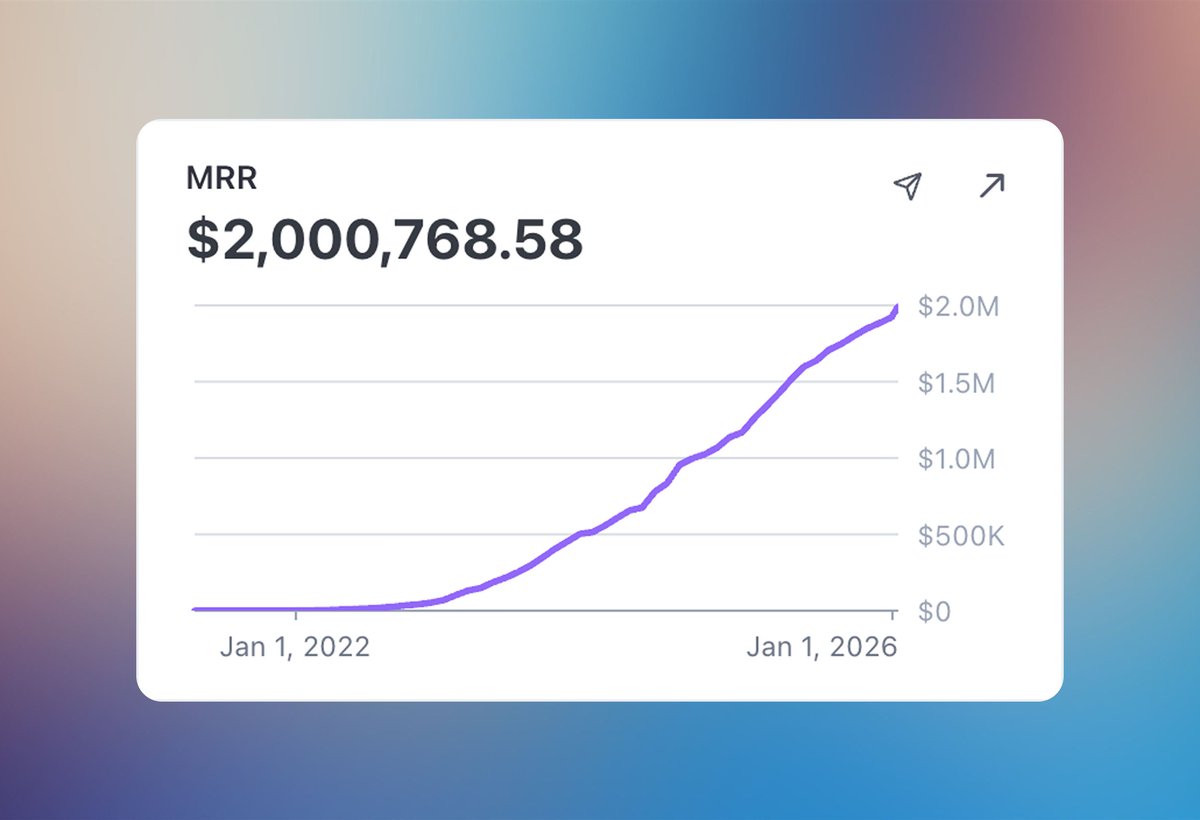
beehiiv just crossed $2M MRR
but most founders are still stuck trying to generate their first $100K
to celebrate the milestone I’m going to try something new…
I’m sharing the exact playbook we used in the early days (10 simple tactics)
hope this helps someone:
If you’re planning on getting a Ninja Creami for Christmas so you can make DELICIOUS High Protein Ice Cream from the comfort of your home….
You’re going to want to bookmark this post:
My TOP 7 Ninja Creami Recipes
(Exact preparation instructions listed at the bottom of this post!!!)
𝗕𝗜𝗥𝗧𝗛𝗗𝗔𝗬 𝗖𝗔𝗞𝗘 𝗪𝗛𝗜𝗥𝗟:
- 360ml Fat Free Fairlife
- 2 servings Sugar Free Cheesecake Jello Pudding Mix
-3 squeezes of SweetLeaf Sweet Drops Vanilla Sweetener
- 1 serving True Nutrition French Vanilla Egg White Protein Powder
- 12g sprinkles
- 2g Xanthan Gum
350 Calories / 45g Protein
𝗖𝗜𝗡𝗡𝗔𝗠𝗢𝗡 𝗧𝗢𝗔𝗦𝗧 𝗖𝗥𝗨𝗡𝗖𝗛 𝗦𝗪𝗜𝗥𝗟:
- 300ml Unsweetened Vanilla Almond Milk
- 120ml Whole Milk from Fairlife
- 68g Trueflavor Cinnamon Toast Swirl Egg White Protein Powder from True Nutrition
- 41g Cinnamon Toast Crunch Cereal
- 2g Xanthan Gum
500 calories / 58g protein
𝗢𝗔𝗧𝗠𝗘𝗔𝗟 𝗖𝗛𝗢𝗖𝗢𝗟𝗔𝗧𝗘 𝗖𝗛𝗜𝗣 𝗖𝗢𝗢𝗞𝗜𝗘:
- 300ml Unsweetened Vanilla Almond Milk
- 120ml Whole Milk from Fairlife
- 76g Oatmeal Cookie Protein Powder from JYM
- 2 Chunky Chocolate Chip Cookies
- 2g Xanthan Gum
550 calories / 57g protein
𝗢𝗥𝗘𝗢 𝗕𝗟𝗜𝗭𝗭𝗔𝗥𝗗 𝗥𝗘𝗣𝗟𝗜𝗖𝗔:
- 240ml Fairlife Skim Milk
- 240ml Almond Milk Unsweetened Vanilla
- 51g True Nutrition Cookies N Cream Egg White Protein
- 30g Oreos Cookies N Creme Instant Pudding Mix
- 4 Oreo Thins
- 2g Xanthan Gum
540 calories / 50g protein
𝗖𝗛𝗢𝗖𝗢𝗟𝗔𝗧𝗘 𝗣𝗘𝗔𝗡𝗨𝗧 𝗕𝗨𝗧𝗧𝗘𝗥 𝗖𝗨𝗣:
- 480ml Unsweetened Vanilla Almond Milk
- 51g Chocolate Peanut Butter Cup Egg White Protein
- 32g 100% Peanuts Natural Peanut Butter
- 10g Zero Sugar Chocolate Pudding Mix
- 2g Xanthan Gum
450 calories / 46g protein
𝗧𝗥𝗜𝗣𝗟𝗘 𝗖𝗛𝗢𝗖𝗢𝗟𝗔𝗧𝗘 𝗟𝗔𝗩𝗔:
- 480ml Fairlife Chocolate Milk
- 51g Chocolate Fudge Brownie Egg White Protein from True Nutrition
- 10g Chocolate Sugar Free Jello Mix
- 2g Xanthan Gum
490 calories / 62g protein
𝗣𝗘𝗔𝗡𝗨𝗧 𝗕𝗨𝗧𝗧𝗘𝗥 𝗕𝗔𝗡𝗔𝗡𝗔 𝗦𝗪𝗜𝗥𝗟:
- 480ml Unsweetened Vanilla Almond Milk
- 51g Chocolate Peanut Butter Cup Egg White Protein
- 13g PB2
- 150g Banana Dannon Light & Fit Greek Yogurt
- 2g Xanthan Gum
380 calories / 56g protein
𝗣𝗥𝗘𝗣𝗔𝗥𝗔𝗧𝗜𝗢𝗡 𝗜𝗡𝗦𝗧𝗥𝗨𝗖𝗧𝗜𝗢𝗡𝗦 👇🏻👇🏻👇🏻
- Put all Creami ingredients (minus the Xanthan gum) in the cup
- Froth it
- Add Xanthan gum
- Froth again
- Freeze for 24+ hours with NO LID
- Thaw out for 15-20 minutes
- Put lid on then run the side & bottom under hot water for 30-40 seconds
- Load in mixing cup with that lid & blade
- Click full and hit spin
- Add 30 more ml of milk after initial spin
- Click full & respin
- Add mix ins
- Click full again and hit mix in (do this even if you did NOT add mix ins)
- Enjoy
One final note:
When in doubt…RESPIN!!!!!!
Probably just gonna keep posting this every week until everyone on the internet knows about it…
(If you don’t already have one, put the Ninja Creami Deluxe on your Christmas list)
Oreo Blizzard High Protein Ice Cream Recipe
- 240ml Fairlife Skim Milk
- 240ml Almond Milk Unsweetened Vanilla
- 51g True Nutrition Cookies N Cream Egg White Protein
- 30g Oreos Cookies N Creme Instant Pudding Mix
- 4 Oreo Thins
- 2g Xanthan Gum
540 calories / 50g protein
BREAKING: The $610 Billion AI Ponzi Scheme Just Collapsed
Last night at 4pm EST, something unprecedented happened. Nvidia stock rallied 5% on earnings, then crashed into negative territory within 18 hours. Wall Street algorithms detected what humans couldn’t: the numbers don’t add up.
Here’s what they found.
Nvidia reported $33.4 billion in unpaid bills, up 89% in one year. Customers who bought chips haven’t paid for them yet. The average wait time for payment stretched from 46 days to 53 days. That extra week represents $10.4 billion that may never arrive.
Meanwhile, Nvidia stockpiled $19.8 billion in unsold chips, up 32% in three months. But management claims demand is insane and supply is constrained. Both cannot be true. Either customers aren’t buying or they’re buying without cash.
The cash flow tells the real story. Nvidia generated $14.5 billion in actual cash but reported $19.3 billion in profit. The gap is $4.8 billion. Healthy chip companies like TSMC and AMD convert over 95% of profits to cash. Nvidia converts 75%. That’s distress level.
Here’s where it gets criminal.
Nvidia gave $2 billion to xAI. xAI borrowed $12.5 billion to buy Nvidia chips. Microsoft gave OpenAI $13 billion. OpenAI committed $50 billion to buy Microsoft cloud. Microsoft ordered $100 billion in Nvidia chips for that cloud. Oracle gave OpenAI $300 billion in cloud credits. OpenAI ordered Nvidia chips for Oracle data centers.
The same dollars circle through different companies and get counted as revenue multiple times. Nvidia books sales, but nobody actually pays. The bills age. The inventory piles up. The cash never comes.
AI company CEOs admitted it themselves last week. Airbnb’s CEO called it vibe revenue. OpenAI burns $9.3 billion per year but makes $3.7 billion. That’s a $5.6 billion annual loss. The $157 billion valuation requires $3.1 trillion in future profits that MIT research shows 95% of AI projects will never generate.
Peter Thiel sold $100 million in Nvidia on November 9. SoftBank dumped $5.8 billion on November 11. Michael Burry bought put options betting Nvidia crashes to $140 by March 2026.
Bitcoin, which tracks AI speculation, dropped from $126,000 in October to $89,567 today. That’s a 29% crash. AI startups hold $26.8 billion in Bitcoin as collateral for loans. When Nvidia falls another 40%, those loans default, forcing $23 billion in Bitcoin sales, crashing crypto to $52,000.
The timeline is now certain. February 2026, Nvidia reports fourth quarter and reveals how many bills aged past 60 days. March 2026, credit agencies downgrade. April 2026, the first restatement. The fraud that took 18 months to build unwinds in 90 days.
Fair value for Nvidia: $71 per share. Current price: $186. The math is simple.
This is the fastest moving financial fraud in history because algorithms detected it in real time. Human investors are 90 days behind.
Read the full data driven deep dive article here - https://t.co/sDEf5Mdrtc