Looks like my other (medic / professional) account @now_its_nora has been targeted for hijack! I must have been interesting to some algorithm / hacking bot 🫣
Hoping that freezing and resetting will work and I’ll be back there soon…
Suffragette march, London, 1911, photo by Scottish photographer Christina Broom (1862-1939), UK's first female press photographer, who documented the women's suffrage movement.
**ICYMI**
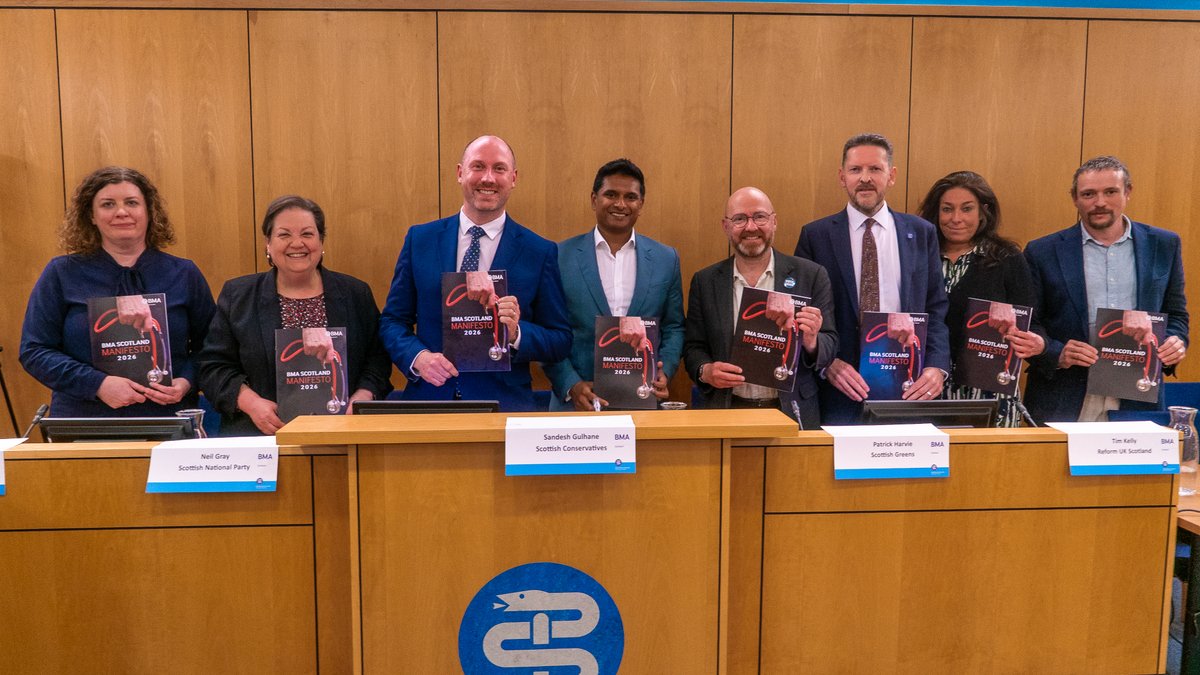
🗣️BMA Scotland 2026 Scottish Parliament election hustings is now available for watching
👀👇
https://t.co/IvxhyWzPvm
Grateful to all the candidates who came along to take part.
Looks like my other (medic / professional) account @now_its_nora has been targeted for hijack! I must have been interesting to some algorithm / hacking bot 🫣
Hoping that freezing and resetting will work and I’ll be back there soon…
A fake Scottish pub owner just tried to astroturf an election. It lasted about 48 hours.
“Derek Anderson” showed up on X this week, brand new account, red polo shirt, claiming to be a regular pub owner who wanted to speak up for Scottish Labour ahead of the May 2026 Holyrood election.
Looked like a real guy. Felt like real support. Wasn’t.
People immediately clocked it: the “c” in “Scottish” was warped on his shirt, the party logo was floating slightly off his sleeve, and his face had that uncanny valley smoothness, the kind of face that’s never been rained on, never pulled a pint at last call.
The account was brand new. It was quickly followed and boosted by senior Scottish Labour figures, including the party’s General Secretary.
Then a newspaper called Labour on Sunday morning asking about it.
By Sunday afternoon, Derek Anderson no longer existed.
Labour categorically denies involvement. That’s probably true as maybe it was too sloppy for a coordinated operation. It could just as easily be a rogue supporter, a plant, or a foreign actor doing a low-effort test run. Iranian-linked bot networks have already been caught targeting Scottish independence discourse this cycle. Outside interference in elections using AI isn’t a hypothetical anymore.
What makes this worth paying attention to isn’t the account itself. It’s how fast it got caught, and what the immediate deletion confirmed.
The tells were obvious this time. They won’t always be.
The warped letter, the floating logo, the too-smooth face, these are artifacts from a generator that didn’t quite nail the composite. Detectable. But the next version doesn’t make those mistakes. The next “Derek” has an aged account, years of mundane posts, a profile picture with nothing to misalign. No shirt logo. No party branding. Just a face and an opinion, showing up at exactly the right moment.
That’s the version nobody’s screenshot-threading on Sunday morning.
Scotland’s May 7 Holyrood election is already being watched closely for AI disinformation. Fake content travels six times faster than corrections. And a meaningful percentage of voters are already consulting AI chatbots for voting advice, with some of those systems documented pushing misinformation.
We’re not heading toward an era of AI in elections.
We’re already inside it.
Derek Anderson was just the one who forgot to fix the logo.
Universities updated curricula. New biographies were written. Entire fields began re-examining accepted histories.
Margaret received the Sarton Medal—the highest honor in the history of science. She won a MacArthur "genius" grant. Cornell created an entire department partly to keep her on faculty.
More importantly, she reshaped how we understand scientific progress.
The Matilda Effect didn't end in the past. It continues today. Women scientists still receive fewer citations, fewer awards, fewer promotions.
But now the pattern has a name. Now the bias can be measured. And once a pattern is visible, it becomes harder to ignore.
On August 3, 2025, Margaret Rossiter died at age 81. She had spent over 50 years bringing erased women back into the light.
Because of her, their names are known. Because of her, the pattern can't hide. Because of her, the story of science is finally beginning to reflect the truth.
If one historian can restore the voices of generations who were written out, what else might change when we decide to tell the full story instead of the convenient one?
She kept finding women in laboratory photographs from the 1800s. Then she read the published papers—and every single woman had vanished. Someone had erased them from history.
Yale University, 1969.
Margaret Rossiter was a graduate student studying the history of science. She was one of very few women in her program.
Every Friday afternoon, students and faculty gathered for beers and informal conversation. One week, Margaret asked a simple question: "Were there ever any women scientists?"
The faculty answered firmly: No.
Someone mentioned Marie Curie. The group dismissed it—her husband Pierre really deserved the credit.
Margaret didn't argue. But she also didn't believe them.
So she started looking.
She found a reference book called "American Men of Science"—essentially a Who's Who of scientific achievement. Despite the title, she was shocked to discover it contained entries about women. Botanists trained at Wellesley. Geologists from Vermont.
There were names. There were credentials. There were careers.
The professors had been wrong.
But Margaret's discovery was just the beginning. Because as she dug deeper into archives across the country, she found something far more disturbing.
Photograph after photograph showed women standing at laboratory benches, working with equipment, listed on research teams.
But when she read the published papers, the award citations, the official histories—those same women had disappeared. Their names were missing. Their contributions erased.
It wasn't random. It was systematic.
Women who designed experiments watched male colleagues publish results without giving them credit. Women whose discoveries were assigned to supervisors. Women listed in acknowledgments instead of as authors. Women passed over for awards that went to male collaborators who contributed far less.
Margaret realized she was witnessing a pattern that stretched across centuries.
Women had always been present in science. The record had simply pushed them aside.
She needed a name for what she was documenting.
In the early 1990s, she found it in the work of Matilda Joslyn Gage—a 19th-century suffragist who had written about this exact phenomenon in 1870.
In 1993, Margaret published a paper formally naming it: The Matilda Effect.
The term captured something that had been hidden in plain sight for generations. Once you knew the term, you saw it everywhere.
Her dissertation became a lifelong mission.
For more than 30 years, Margaret researched and wrote her landmark three-volume series: Women Scientists in America. She examined letters, institutional policies, individual careers. She gathered undeniable evidence that women in science had been consistently under-credited and structurally excluded.
Her work faced resistance. Many dismissed women's history as political rather than academic. Others insisted she was exaggerating.
Margaret didn't argue emotionally. She presented data. Documented cases. Patterns repeated across decades and institutions.
Eventually, the evidence became undeniable.
Her research helped restore recognition to scientists who had been erased:
Rosalind Franklin, whose X-ray work revealed DNA's structure—credit went to Watson and Crick.
Lise Meitner, who explained nuclear fission—omitted from the Nobel Prize.
Nettie Stevens, who discovered sex chromosomes—received little credit.
Cecilia Payne-Gaposchkin, who discovered stars are made of hydrogen—initially dismissed.
And countless others whose names had nearly vanished.
Margaret changed the narrative. Science was no longer just the story of solitary male geniuses. It became a story of collaboration that included women who had been written out.
The Matilda Effect became standard terminology. Scholars used it to examine how credit is assigned, how authors are listed, who receives awards, who gets left out.
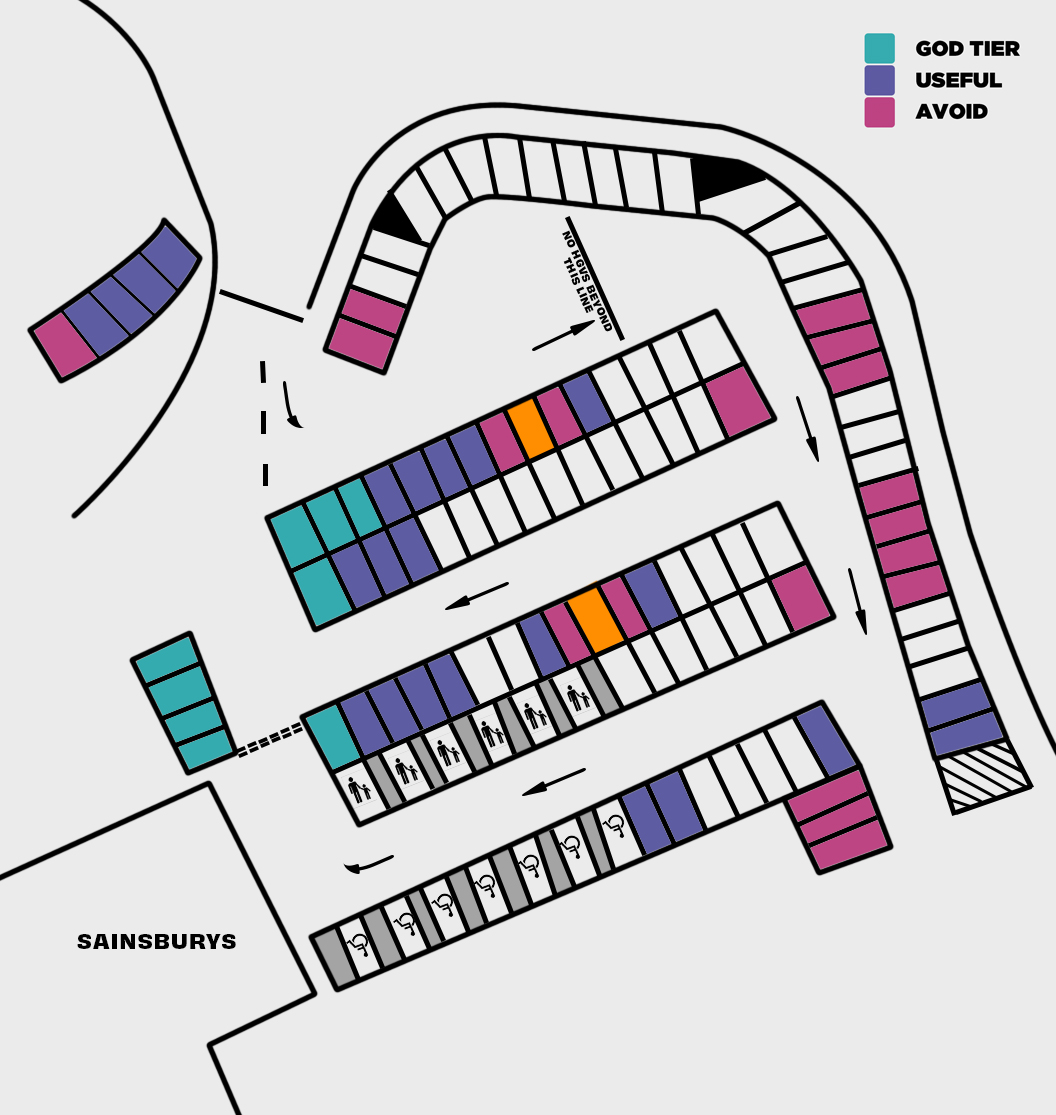
Like with the last challenge I have also compiled a handy guide showing the best and worst spaces to park in should you find yourself compelled to visit the historic market town of Devizes and frequent the Sainsbury’s carpark. Treat yourself.
WORTH THE WATCH:
his name is Azeem Banatwalla and this is one of the most creative and hilarious comedy bits you will ever hear. someone's definitely going to try and replicate it. 😭
Dr Garth Reid from @P_H_S_Official shares 3 things everyone should know about smoking:
1️⃣ 1 in 5 deaths are caused by smoking
2️⃣ The benefits of quitting happen quickly
3️⃣ Free support is ready for you at https://t.co/GzQ6J42wHK
It’s always a good time to quit.
#QuitYourWay
This advice, nay instruction, has never been more important than today. You are not bearing witness by watching the news. You are unreadying yourself, exhausting yourself. Get outside. Turn it all off. Recharge https://t.co/6m51GVw80h
This year we will launch a BMJ commission on the future of the doctor.
We seek your support and your ideas for an inquiry built on the premise that if society seeks the best for patients it must also seek the best for its future doctors.
@KamranAbbasi
https://t.co/0agbs661jx
Via @helenlewis : NHS referral after private sector screening scan for Asymptomatic condition. Wait times for symptomatic folk are already >12m. Market based health care-> harms the well, harms the sick. Only winners are the private clinics https://t.co/NGpN8SzHvX
Debt forgiveness is a key priority for the BMA, which may see it becoming an issue on which the two sides can find common ground. BMA that they would consider any proposal from the government on debt write-off
https://t.co/QETyxxzeqg
With all the #snow in #Shetland I thought I would share my video on Shetland ponies and weather.
It will only let me post the 1st half but will put link to full video in comments
The US is removing the meningitis vaccine from the routine schedule
Why?
Because there are not so many cases of meningitis in the US
Why?
Because of vaccines