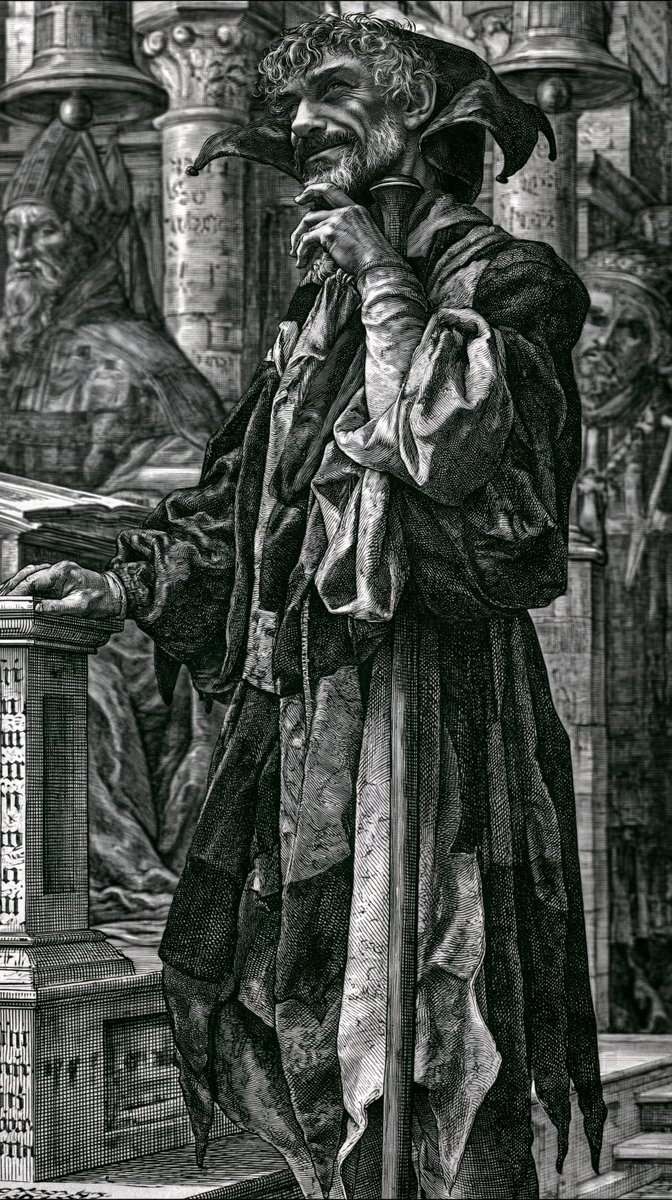
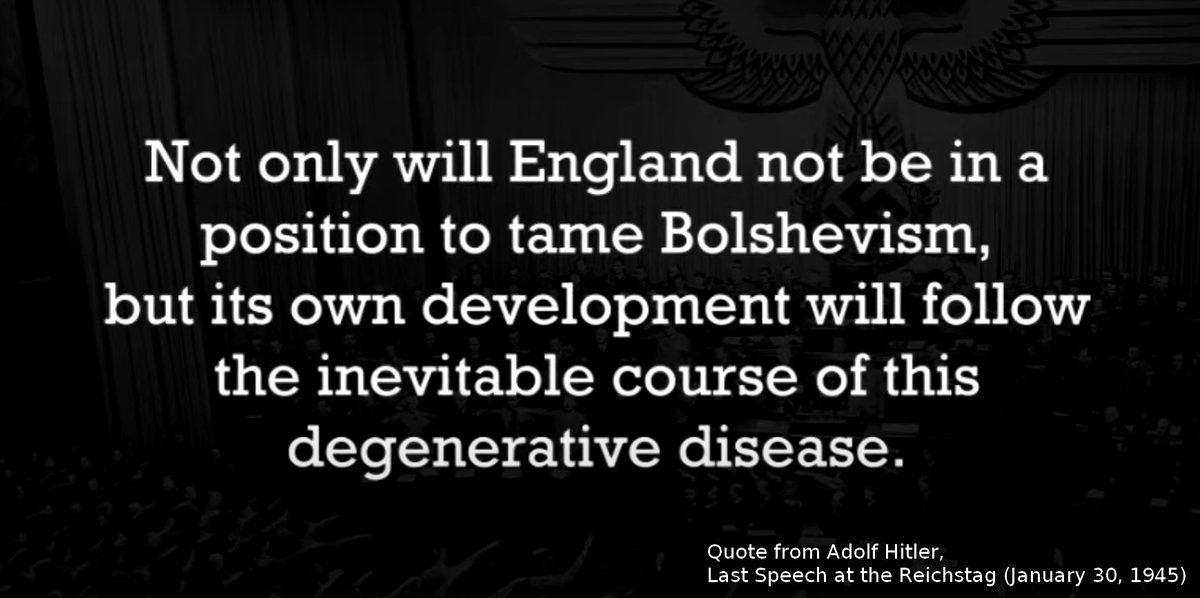
Friedrich Nietzsche predicted our culture more than a century ago.
A society where victimhood confers status; where weakness is celebrated as virtue; where grievance brings moral authority; and where the highest aspiration is not greatness, but comfort.
He regarded it as a symptom of civilisational decline. In place of the old aristocratic values of strength, courage and self-overcoming, Nietzsche saw the rise of what he called “slave morality” - a worldview that elevates weakness, suffering and resentment into virtues. The modern celebration of victimhood, where people compete to present themselves as the most oppressed, is this mentality. Rather than striving to overcome hardship, many now seek status and moral authority through claims of injury and grievance.
Nietzsche was deeply contemptuous of those who pursue safety and comfort above all else. He mocked the “last man”, the small-souled creature who wants nothing more than a warm bed, entertainment and protection from anything difficult or dangerous. For Nietzsche, struggle was not an unfortunate condition to be eliminated, but the very source of meaning, growth and greatness. Without resistance, there is no self-creation.
The modern welfare state would have horrified Nietzsche. By shielding people from the consequences of their actions and removing the necessity of struggle, it does not liberate - it enfeebles. It creates populations that are materially secure but existentially empty, dependent on the state rather than on their own strength and initiative. Nietzsche believed that genuine human flourishing requires the willingness to endure hardship and take responsibility for one’s life. A society that makes comfort its highest value and victimhood its highest status inevitably produces weak, resentful people who have forgotten how to live.
“But there exists…another class of adepts belonging to a brotherhood also and mightier than any other they have to be ranked with the adepts of the Black Art. These are our Roman Catholic “Fathers” and clergy…A hundred times more learned in secret symbology and the old religion than our Orientalists will ever be…There are more profoundly learned Kabalists in Rome and throughout Europe and America than is generally suspected…Thus are the “Brotherhoods” of “Black” adepts more powerful and dangerous…than any host of Eastern Occultists.” — Helena Blavatsky
THE JESTER'S MANUAL
Nobody poisons the fool. In twelve hundred years of court service I have watched poison find kings and bishops, generals and bankers, and more prophets than I care to count, yet it never once found me, and the reason is the oldest tactic in this manual, which I shall give away in the first breath: nobody fears the man they laugh at.
The laughing man walks out of burning kingdoms carrying secrets that everyone else died protecting.
You wish to know what sits behind thrones. I am perhaps the only man alive qualified to answer, for I have served khans beneath felt tents and doges in sea-worn palaces, emperors under gold ceilings and ministers under electric light, and through all those centuries the costumes changed while the thing beneath them never did. In every court the ruler believed he ruled and the treasury believed it counted, and behind them both sat the same quiet arrangement of seals and levies, records and signatures, permissions and fears.
A man may forgive one coincidence, or a dozen. After enough centuries I stopped forgiving them altogether.
It is a parasite. After twelve hundred years I still cannot tell you what it is made of, but I can tell you precisely what it eats, for I have watched it feed in every kingdom I ever danced in. It eats consent. It eats fear. It eats attention. And I can tell you its weakness, which is the foundation of everything that follows: it cannot take. It must be given. Every hook in your flesh entered through a door that opened from the inside.
Before I teach you the counters, learn the attacks, for there are only seven, and in all my centuries it has never needed an eighth. There is the urgent paper, which arrives with a deadline because deadlines outrun thought; understand that the urgency is the weapon and the paper merely its carriage. There is the borrowed voice, for the thing never speaks as itself but as duty, as guilt, as your neighbour's opinion, as your fear for your children, and if a thought in your head sounds like a committee, it was not your thought. There is the small yes, by which empires conquer in instalments, since nobody loses his freedom all at once. There is the manufactured enemy, by which the herd is pointed sideways and never upward, and you would do well to ask who paid for the pointing. There is the honoured cage, for the warmest prisons come with titles, and the most loyal prisoners I ever met were decorated ones. There is the endless form, because where force fails, exhaustion begins, and I have seen men bled white by paperwork who would have died gladly fighting on a wall. And there is the sleeping season, in which the thing vanishes for years so that you forget it exists, though it has merely gone to feed in another hall. That last move fools every man exactly once. Let your once be already spent.
Now the counters. There are seven of these as well, each one tested upon living tyrants, and each carries a failure mode, which the prophets never tell you and I will, for a manual that hides its casualties is a sermon.
The first is the bell: one clean sound, held until it dies completely. The Parasite feeds on your inner noise, that endless argument you carry through the day with the levy, the official, and the fear, for noise is attention and attention is the feedstock, and one sustained tone cuts through the chatter as nothing else can. The monasteries have known this for two thousand years. In a plague year in Bohemia I persuaded a frightened queen to ring every cathedral bell at dawn with no explanation given, and the town stopped in the streets, and for one full minute ten thousand people were not afraid at the same time, and they felt one another not being afraid, which is the one thing the creature cannot survive. Petitions against the levy tripled within the week. But mark the failure mode: the man who rings the bell and then resumes the argument has accomplished nothing, for the bell is not the weapon. The silence after it is.
The second is the casting out. When the demand arrives, it goes into the bin, witnessed, with contempt and without ceremony, because power prices everything except indifference. Obedience pays it, and rage pays it more, rage being attention at a premium rate. In Venice I knew a spice merchant named Bartolo who shook so badly he could not unfold the levy paper, and understand what it had already done to him: the levy had not taken a coin and yet it owned his sleep, his temper, and his trade. I had him read it aloud in the square in the voice of a pompous senator, bow to it twice, kiss it once, and drop it into the canal with a little wave. The crowd laughed, and I watched the ownership leave his face. Twenty merchants saw the spell fail to kill him, three had binned their own papers by Friday, and the levy collapsed within two seasons, for fear had been its only enforcement, and the Doge's men could not arrest a canal. The failure mode is anger. A wool trader copied Bartolo a year later but screamed and wept as he did it, and the crowd saw a man drowning rather than a man set free, and he was in irons within the month. If you cannot do it lightly, you are not yet ready to do it.
The third is the decree: refuse once, quietly, and never repeat it. A claim is not power; a claim is a question, and bureaucracies ask endlessly, in subsections, knowing that whoever answers twice has accepted that the asker is the judge. Watch real authority sometime and you will notice that it lowers its voice and does not explain. I once stood before a cardinal who had been bought and signed and was three days from sealing a province's grain under the Parasite forever, while the whole court fought him with petitions, precedents, and duchesses weeping on schedule, every argument feeding him because every argument confirmed him as the judge of the matter. On the signing day I walked the length of the hall in motley with my bells stuffed with wool, stood before him, said quietly, no, and then sat down on the floor and ate an apple. A flat no with nothing after it gives a room nothing to refute. The notaries looked at one another, a duchess stopped mid-weep, and the deal died in the silence. He never signed. The chroniclers wrote that he foamed and collapsed, because exorcisms sell, but the truth is more useful to you: the counter was the period at the end of the sentence. The failure mode is hope, for the moment you hope the no will work it has become a plea wearing a no's clothing, and the creature smells the difference through a wall. I have watched ten thousand men say no with their voices and please with their shoulders. The shoulders always win.
The fourth is the ledger. Nothing enters without an opening, and every opening was once a consent: a debt, a subscription, a fear of the neighbours, a paper signed at twenty and forgotten, and what is unmapped cannot be defended. This is siegecraft, and I learned it from a siege engineer rather than a priest. A harried prince I once served discovered, after a single season of writing every assault down before reacting to it, that all of them entered through the same four doors, being a debt, a vanity, a rumour, and his brother's wife. He sealed three and simply stopped opening the fourth, and the assaults did not cease, but they ceased to work, which is better, for his enemies went on spending against doors that no longer opened. The failure mode is the audit performed once and framed. His own son inherited the ledger, declared the work complete, and hung it in the library, and was bankrupt within the decade through five new doors. The walls are walked monthly, or they are not walked at all.
The fifth is the jest, which is to say: make it ridiculous in public. Solemnity is load-bearing. The robes, the seals, the rising for the judge, strip away the gravity and the entire structure is revealed as men in costumes holding paper, and this is why mockery of the court is the one crime every court prosecutes personally. They are telling you where the wall is thinnest, and you should believe them. An emperor of my acquaintance demanded golden statues of himself in every square, paid for by a statue levy, and a decree of that kind cannot be stopped, only spoiled, so on the night before the unveiling I had the plinth engraved, beautifully, with the sculptor's invoice, fully itemised, including gold leaf, extra, for the modesty of His Radiance. He unveiled himself standing upon his own bill. The silence lasted four seconds and the laughter lasted ten years, and no man could be punished for it, because the invoice was accurate. Truth, properly formatted, is the one joke power cannot prosecute. The failure mode is bitterness. A pamphleteer of that reign, twice my wit, wrote from hatred instead of play, and his pages made men angry, and angry men are harvest, so the Parasite reprinted him in secret. Read that sentence again. The jest must be light, or you are working for them.
The sixth is the temple: ten minutes at dawn, every dawn, the attention turned inward and held. Strip away every mystical claim and the bones of it still stand, for the harvest is attention, your attention is finite, and whatever you do not reclaim deliberately is collected by default. I wintered twice with an order of fourteen monks in a province where the Parasite had taken everything, the land, the tithe, even the bell out of the tower, and yet it could not take the ten minutes. Officials would arrive with urgent papers and the abbot would read them at the speed of a man reading for pleasure, and the urgency died on the table between them, urgency having been the only weapon the papers ever carried. Within a generation the farmers were bringing their disputes to the abbey rather than the court. Nobody declared anything. The jurisdiction simply moved, ten minutes at a time. The failure mode is to skip the practice on the bad days, for the bad days are the harvest days, and the one brother who lapsed on terrible mornings was the one they eventually turned, because they made certain his mornings were terrible.
The seventh and last is the advance: forward on every front at once, slowly if need be, but forward without exception. Every system of control is built for siege; it keeps tables for everything a stationary man can do and a price for every fear of a static herd, but it has no table for motion. In the worst of the plague years, when the death carts and the tax collectors arrived together, and note well that they always arrive together, fear being harvest weather, a river town I loved wished to board its windows and wait, and waiting is the very thing the tables price best. I told them instead to advance all positions. We held markets in the graveyard because the rents were free, we made the plague masks into carnival until the children stopped screaming at them, and a widow opened a school in the empty customs house because no man dared collect customs any longer. None of it was bravery.
A population in motion cannot be priced, and within a generation the Parasite had moved on to easier ground, for it does not conquer; it harvests, and a moving herd is not worth the harvesting. The failure mode is to confuse the advance with victory. That town lost half its people, and the widow's school burned twice. The advance is not the absence of defeat. The advance is what defeat is not permitted to interrupt.
That is the manual entire: seven attacks, seven counters, twelve hundred years of testing, and no incense required. One last thing, and then I must be gone before the watch changes. Men ask how I have survived so long, telling the truth in courts that kill truth-tellers, and the whole teaching folds into a single line. I never once let them decide what was serious. The Parasite ruled every court I ever danced in, and it never ruled the fool, and it does not have to rule you.
The Jew thing doesn’t even really have to be all that factual and complex.
Long story short they got kicked out of everywhere after Jesus because they were being gæ r*tärd ph4gg0ts and coped and seethed about it, and especially about Jesus.
They spent a significant amount of their time as a diaspora in Europe from when the Romans kicked them out of the Holy Land until the late 19th century
They were subject to different rules and otherized, although they cope about this too because they were a merchant class serving as intermediaries between the European peasantry and aristocracy, which granted them better treatment and livelihood than the peasantry. Although they weren’t trusted for livelihood work like farming and water etc. so they were only allowed to be bankers and lawyers and distribute media
Napoleon emancipates them in the 19th century, but just as they do that Russia starts up its pogroms and revolutions, wherein jews are targeted.
Jewish intellectuals conclude there’s no safe place for them in Europe, birthing Zionism. The 20th century entailed lobbying efforts, most notably the Balfour Declaration.
21st century the legacy of their time in Europe, hysterical self-victimization of it, the histrionics about the holocaust, and their religious ideological antecedents give rise to this sort of racial supremacist and loyalty view they have.
This is why it’s not enough to just point out Peter Thiel is Jewish or whatever. Rather, jews are all raised with racial loyalty deep within their culture born of neurotic survivalism and “God’s Chosen People” nonsense that leads to them doing things with the power they have to the detriment of others.
In a way, they’re just doing what’s best for them. The problem is we let them do it to the point of hurting our interests instead of putting up bulwarks to force them to negotiate. Most famously they used their power in media/education to do this via holocaust bullying and religiosity.
The biggest sticking point that even Jew spergs don’t get is that history of their racial loyalty. Once you understand that you’re as j pilled as Fuentes
Hygienische "Barbaren" - Wie die dänischen Wikinger englische Frauen begeisterten:
Entgegen des Vorurteils schmutzige Wilde zu sein, waren die germanisch-heidnischen Völker ihrer Zeit überaus penibel mit ihrer eigenen Sauberkeit und Pflege.
Das ging gar so weit, dass einige englische Frauen die siedelnden Dänen ihresgleichen vorzogen.
Ein Zitat aus der Chronik von John of Wallingford, einem englischen Mönch:
„Die Dänen machten den Einheimischen des Landes viel Ärger; denn sie pflegten nach der Sitte ihres Landes, ihr Haar jeden Tag zu kämmen, jeden Samstag zu baden, ihre Kleidung oft zu wechseln und ihren Körper durch viele eitle Kniffe hervorzuheben. Auf diese Weise belagerten sie die Tugend der verheirateten Frauen und überredeten selbst die Töchter der Adligen, ihre Geliebten zu werden.“
Die Mönche sahen rückblickend die "übertriebene" Sauberkeit als unfaire Taktik an, um sich deren Frauen zu erobern.
So reißerisch wie es sich anhört, haben wir gar einige Belege, die des Mönches Beobachtung untermauern.
Sauberkeit war sogar etymologisch tief in der Kultur verankert.
Während im christlichen Südeuropa bspw. das Samstags-Baden im Frühmittelalter oft als "Sünde" oder Verweichlichung galt (viele Mönche rühmten sich damit, sich nie zu waschen), gab es im Norden einen festen Badetag.
Den Samstag. Das altnordische Wort für Samstag ist Laugardagr. (Laug = Bad / Waschwasser, Dagr = Tag) Bis heute heißt der Samstag in den skandinavischen Sprachen noch so.
Des Weiteren wird für die Artgläubigen in der Lieder-Edda Reinlichkeit regelrecht vorgeschrieben. Es ist schandhaft ungepflegt vor die Götter zu treten bei Anrufungen oder beim Ableben.
Zitat Reginsmál: „Gekämmt und gewaschen soll jeder kluge Mann gehen, und morgens satt; denn man weiß nie, wo man am Abend landet.“
Auch im Hávamál wird betont, dass Armut keine Schande ist, Unsauberkeit hingegen schon.
Die Archäologie untermauert die germanisch-heidnische Hygiene am besten:
Das am häufigsten gefundene Alltagsobjekt in Gräbern ist der Kamm.
Oft in einem ganzen Hyigene-Set, reich verziert am Gürtel getragen.
Ohrlöffel, Kämme, Nagelreiniger, Pinzetten und Zahnstocher finden sich in diesen Sets.
(Siehe Bilder)
Ebenso nutzten die germanischen Völker laut "Plinius dem Älteren" schon früh eine eigene Seife aus Ziegenfett und Asche, die zum Waschen, als auch zum Bleichen der Haare genutzt wurde, was auch Läuse abtötete.
So sehen wir also, dass sich einige Menschen auch heute noch vieles von unserer Kultur von vor tausend Jahren abschauen können.
The Germans played a relatively small role in the North Africa campaign of WWII. It was largely a British vs Italian theater.
They exagerrated the role of Germany in North Africa because British leadership was struggling to explain why an empire of 500 million that spanned 25% of the earth was struggling to defeat Italy, a nation of 39 million with no colonies or resources that produced barely 2% of the world's manufacturing.
To support what I'm saying, I have read American history books praising the Rommel myth's brilliant retreat at El Alamein in 1942.
They ignore that this was only possible because the Italian Ariete division, with 30 tanks, mounted a heroic counter attack against the Allies' (US and Britain) 1,000 tanks. The entire Italian force was annihilated, but this rearguard last stand prevented Rommel's forces from being encircled.
In defense of the Germans, they made note of Italian forces incredible bravery and will to win in battles like this. It's British and American historians who either through ignorance or political agenda refuse to acknowledge the Italian effort in order to build up Rommel.
@TrumpFrance If you don't know who this guy is you need to start listening to @NickJFuentes . He's been sounding the alarm on this guy and his so-called "dark enlightenment". This faggot is tied in with Peter Thiel, JD Vance, Tucker Carlson and others. They are all on the America last team.
« Les Américains et les Européens ne résisteront pas à l'immigration massive et au remplacement de population.
Vous savez, cette idée qu'ils vont prendre les armes ou autre chose. Cela n'arrivera pas. Absolument pas.
Ce qui va se produire, c'est exactement ce qui s'est passé en Afrique du Sud. Ils finiront par admettre qu'ils ont perdu leur pouvoir et leur pays à jamais.
Puis, ils resteront tranquillement chez eux, construisant toujours plus de barbelés et de clôtures électriques, jusqu'à ce qu'ils soient finalement exterminés lors d'un grand pogrom.
Voilà l'avenir. Voilà ce qui arrivera à vos enfants.»
(Curtis Yarvin)
An absolutely phenomenal read about the causes of the current epidemic of female personality disorders, and how to prevent your daughters from being infected.
Lt. Col. Karen Kwiatkowski discusses who really writes the bills in Congress that support Israel.
Lt. Col. Karen Kwiatkowski is a United States veteran, author, and former government official whose assignments prior to retirement included duties at the Pentagon and various roles at the National Security Agency. Since leaving government service, Lt. Col. Karen Kwiatkowski has become a prominent voice on issues of war, intelligence, civil liberties, and government accountability.
If equality means equal consideration, where are the equivalent strategies, funding, monitoring, training, outreach and public messaging for groups that don't fall into the protected categories receiving the greatest institutional focus?
The Straight White Male is the most unprotected category when it comes to Equality.
They simply don't tick any boxes ❎
#Equality
RO KHANNA: “Let me be clear, Netanyahu is the one that actually told members of congress to add section 224 (merging the U.S. and Israeli militaries) into the bill.”
Khanna says the quiet part out loud. Our elected officials are subservient to a foreign nation. We are Occupied.