Northwestern's McCormick School of Engineering — integrating left-brain analytical thinking and right-brain creativity to create whole-brain engineers.
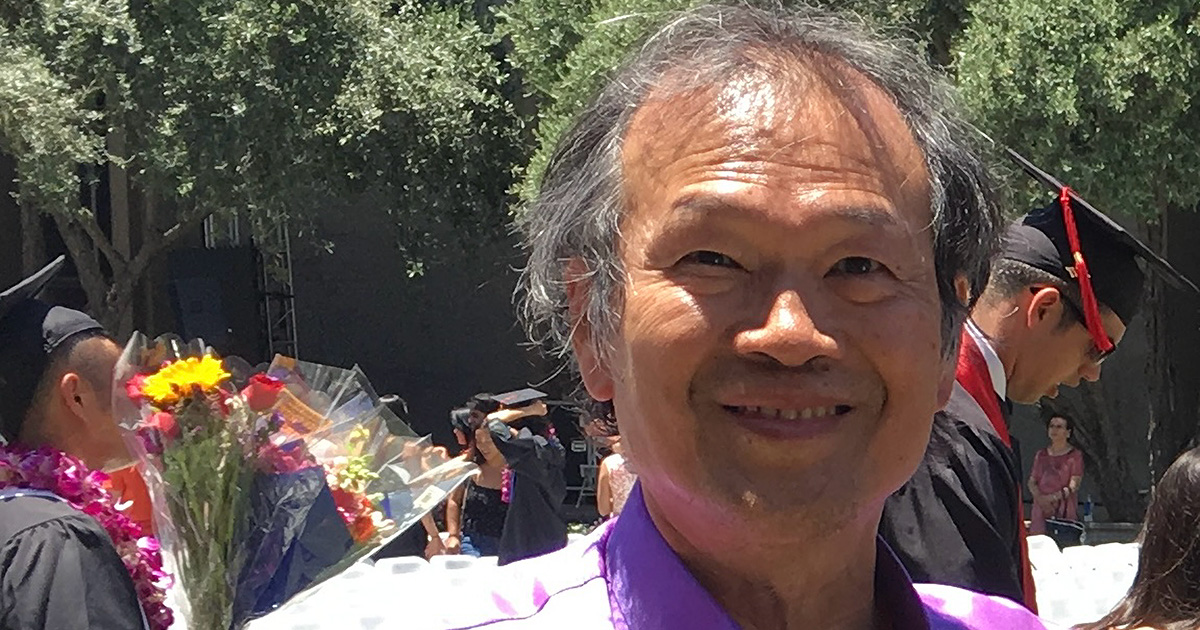
Northwestern Engineering is saddened by the passing of Professor Emeritus Ming-Yang Kao, who will be remembered for his contributions to the field of theoretical computer science and the development and broadening of computer science at Northwestern.
https://t.co/bYyT4hovx1
Professor Aravindan Vijayaraghavan and collaborators developed an AI tool that learns from past telescope observations and adjusts plans as weather, moonlight, and atmospheric conditions change.
https://t.co/Q1SkmEh7om
Research led by Professor Krishna Shrinivas suggests biomolecular condensates may help cells distinguish between chemical cues and generate different responses, offering new insights into biology and synthetic systems.
https://t.co/I5hWyHEgSv
Professor @ChrisWolverton1 developed an AI-driven method that predicts the atomic structures hidden at grain boundaries.
The approach matched experimental observations and could help researchers better understand why materials perform the way they do.
https://t.co/d1I1TiW2Lj
Northwestern joins @ENERGY's Genesis Mission 🔋
The national initiative aims to transform how complex scientific problems are investigated and solved.
@NorthwesternEng | @WeinbergCollege | @TrienensInst https://t.co/9Q18WedcWh
The @NSF has awarded Northwestern $20M to establish the nation’s first open automated lab for designing, building & testing proteins. 🥼
This facility will serve as the protein-engineering hub within a network of #AI-enabled, remotely accessible labs.
📰 https://t.co/gAJ9XZmHR7
Michael Rubenstein has been selected as a 2026 NASA Innovative Advanced Concepts (NIAC) fellow. His project explores how swarms of 10,000 miniature satellites could unlock new insights into Saturn’s rings, atmosphere, and magnetosphere.
@northwesterncs
https://t.co/7oNxhSPY31
How do metals decide what structure to form during 3D printing?
Tao Sun's latest research found that atomic arrangements in liquid metal can influence how the material solidifies—offering a new path toward more reliable, high-performance printed parts.
https://t.co/7vUzhFFOLd
Lasers. Cryogenics. Atomic-scale fabrication.
Step inside the Quantum Oxide Layers Lab and see the tools Professor @jennifer_fowlie uses to create and test complex oxide materials at the nanoscale.
https://t.co/bQXHGYcuQI
By exploiting the quirks of human vision, Northwestern Engineering researchers have designed a drone that nearly disappears right before the eyes.
https://t.co/7mEFJknKIZ
This new spinning drone hides in plain sight 🫣
@NorthwesternEng researchers designed a drone that uses "motion blur" to change how people—and many animals—see it.
A Northwestern Engineering study found that pregnant people are more likely to meaningfully engage with future AI-powered stress management tools if they understand and trust the system's logic and maintain personal autonomy.
Read more on the research: https://t.co/a4zkhd2DEl
Data can inform decisions—but only if we understand its limits.
@SimgeKucukyavuz shares five ways to use data more effectively, from visualizing early to testing "what-if" scenarios and communicating uncertainty.
@NU_IEMS
https://t.co/VCaRQ7lM0C
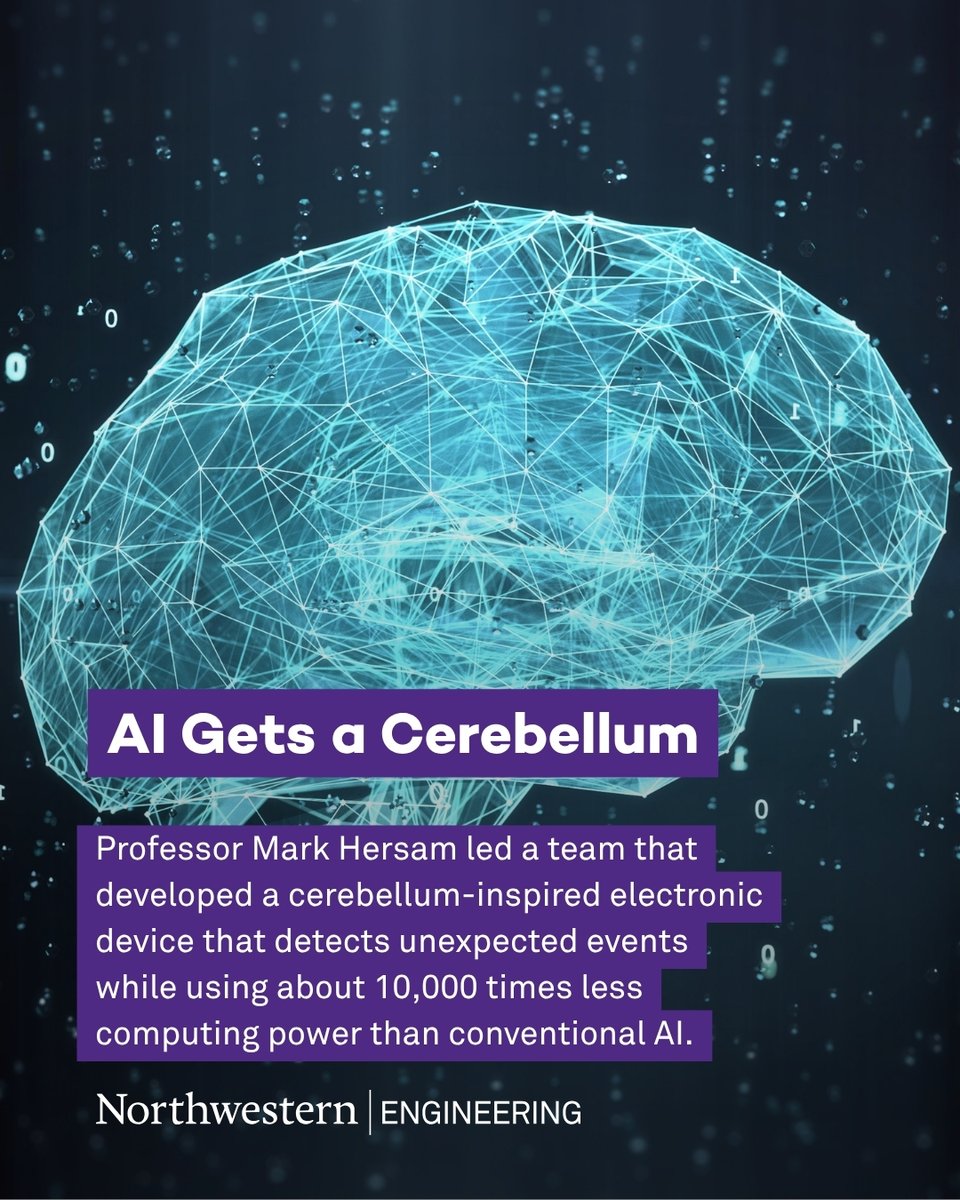
Mark Hersam, Vinod K. Sangwan, and collaborators developed a brain-inspired device that rapidly spots unusual events while dramatically reducing the computing workload needed for detection. A step toward more efficient, always-on AI.
https://t.co/c0dGce7kd0
How do metals get their strength and durability?
Fadi Abdeljawad's latest research offers a new way to predict how complex metallic alloys behave at the nanoscale, helping engineers move beyond trial-and-error materials design.
https://t.co/NtA5HLYBel
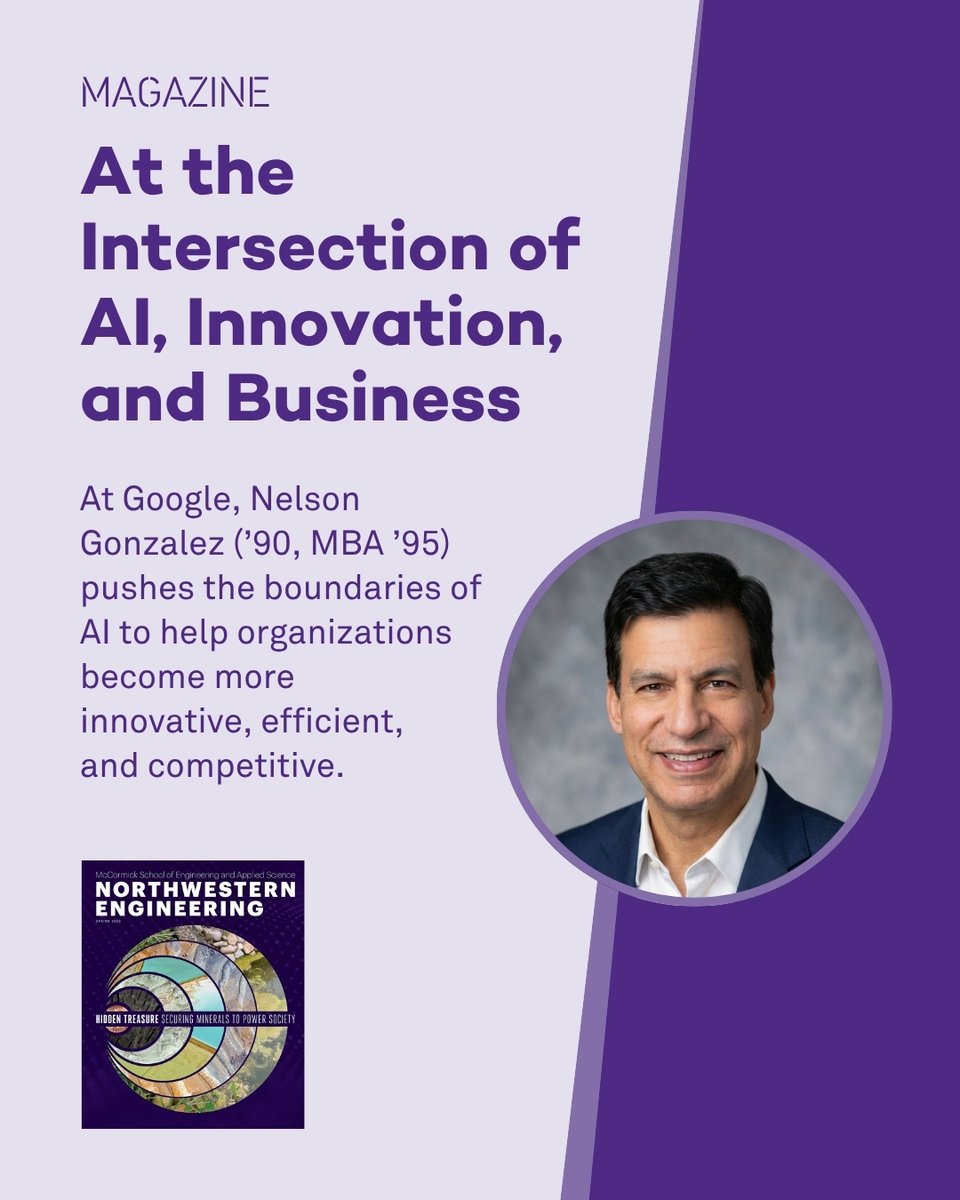
From Northwestern Engineering to the forefront of AI at Google.
Nelson Gonzalez (’90, MBA ’95) leads enterprise generative AI and agent initiatives, helping organizations innovate, compete, and adapt in a rapidly changing landscape.
https://t.co/PdsDQcaTJJ
Professor Zdeněk Bažant has received the Prof. Herbert A. Mang Award from the Central European Association of Computational Mechanics. The honor is awarded for sustained efforts to advance the theoretical or practical aspects of computational mechanics.
https://t.co/MIyGBEvGlp
Sigma Mostafa (PhD ’00) helps transform breakthrough drug concepts into treatments that can safely reach patients. The @KBIBiopharma chief scientific officer discusses her career, mentorship, and solving complex challenges in biotech.
@nu_chbe
https://t.co/ZAKMZxPNBH
A glance now can help drive a wheelchair.
Northwestern’s Project DRIVE—led by Professor Brenna Argall—developed software that helps turn eye movements into wheelchair commands. It’s part of a new Apple Vision Pro accessibility feature.
@northwesterncs
https://t.co/VWqOcnc8Ho
Alan Lund (PhD ’02) went from studying metals under a microscope to leading magnetics work at @mpmaterials—helping produce the components behind EVs, robotics, and energy systems while building a US supply chain.
https://t.co/Fc0X0nNAld
Kathleen Stair has mentored hundreds of Northwestern MSE students, helping shape their academic and professional journeys.
In recognition of her lasting impact, @ASEE_DC honored Stair for her outstanding contributions to engineering education.
https://t.co/tTDqvnngvd