We need better operational intelligence about US manufacturing (mfg). The current mfg information environment is opaque, preventing network formation. To solve this problem, I'm introducing the Manufacturing Intelligence Platform, a centralized location for data about US mfg.
Bro I respect you but you are a blogger. If you were a fraction of the person musk was you would have started or helped start (1) productive company that changed the landscape of what was materially possible
What SpaceX did today is the normal consequence of applying capital and engineering to any industry. You get better at it.
Musk isn't a genius, he's just a guy who can get capital from Wall Street. Maybe that's unique right now, but it's not the skill his fanboys think it is.
Winning data center platform:
1/ no subsidies, no tax breaks
2/ make your own electricity, waterlessly
3/ equipment should be essentially inaudible at the fenceline
This is not true. Arizona has a rich and underappreciated microelectronics ecosystem that has been growing since around 1950 with the arrival of Motorola. This includes both upstream and downstream suppliers and customers, not to mention the technician pipeline established by ASU
It also gets the Apple story wrong. The right version of that history is that Apple—and Foxconn—tapped into existing manufacturing capabilities in China. Before Apple, China already had a massive network of component producers and an incredibly skilled labor force. Apple repurposed and added some of these capabilities to iPhone production on top of that baseline. Apple should get the credit for jump starting handset production in China, but the spillover story is in the other direction as well. Apple went to China because of China’s existing general manufacturing capabilities in the first place and it was able to retool and upgrade these existing capabilities for its own production. That is not Arizona story at all.
@eric_is_weird There are a lot of weird conditionalities here that I don't fully understand. You're right that you can bid on / win contracts as a focused non profit research org (e.g this wasn't an issue at SRI international) but universities for some reason have more restrictions.
Nearly everyone in the West focuses on China's Five Year Plans as the reasons for its manufacturing success, concluding that more central economic planning is needed.
This is the exactly WRONG lesson. The country's success comes because its cities all compete with each other intensely, as something akin to vertically integrated corporations that are completely obsessed with local economic growth.
Its incredible manufacturing industry is based on local clusters that local govts nurture and invest in, and collect a lot of the returns from through property fees and taxes. These govts are *much* closer to local needs than Western local govts are, and can focus on speed of building and iteration above all, which are critical for manufacturing.
*This* is why local government matters in Britain and America, where it is almost completely broken and dysfunctional. Where local spillovers matter, as in manufacturing, you need some kind of entity that can internalise the positive externalities of economic activity. China is proof that with the right incentives and tax powers, local governments can become machines for economic growth, intervening and clearing the way for development.
Thriving component businesses will enable technological giants but also enable entrepreneurship and experimenters. Ecosystems flourish with a healthy stream of inputs and nutrients that can be combined into thousands of different flowers
There is a full-throated argument for component businesses like ours to enable the technological giants building technologies that the world's going to forget how to live without once it arrives at scale. Manufacturing millions of actuators is non-negotiably American for us.
@parthingle_x@andrewmccalip You're also going to get a lot better at making your machines over time, and if we bring down the costs of sensors and control panels etc, who is to say you're not gonna climb the reliability and precision ladder quick enough
@ThaaatColin It's always been a bit surprising to me that manufacturing doesn't follow the same apprenticeship to small business entrepreneurship pipeline that other trades (electricians, plumbers, etc) do. Too much focus on large factory job programs and vertical integration!!
Imagine hanging out with 5-15 of your closest friends and running a mostly automated machine shop, making critical parts for your community and country. An American dream
We need to get the shops with 10-19 employees in a position where they can produce 3x-5x their current output without requiring a corresponding increase in headcount.
Many of these shops supply OEMs & make key parts/ components that go into bigger things/ equipment.
Over the next 5-10 years, the bigger companies/ OEM’s will increase their domestic production output. That means they’ll need more of the parts/ components to assemble the finished goods.
I expect ~80% of the shops with <10 employees will disappear over the next decade. Few are willing or able to make the drastic transformation that will be required to compete & succeed in a world with widespread production automation.
The work from the 80% closing & the increased demand needs somewhere to go. Highly automated shops with 10-19 employees that employ technologies & systems built around the decades of human knowledge, will be able to ship 3x-5x what they do now. And they will do so without the administrative bloat, bureaucracy & analysis paralysis that companies with 100-150 people experience.
We need to give the shops in the 10-19 employee range, this coalition of willing, driven, & obsessed manufacturers, more support.
(Note, I’m specifically not talking about defense suppliers)
We are now entering into an era where any product can be created exactly to a consumer's preferences & needs.
I vibe-fabricated a dog door with a wifi-controlled lock, perfectly to the specifications & design of my house.
I know nothing about metal fabrication or electrical engineering.
It's now getting manufactured and delivered in 2 weeks -- for almost the same cost if I bought a mass-produced item off-the-shelf.
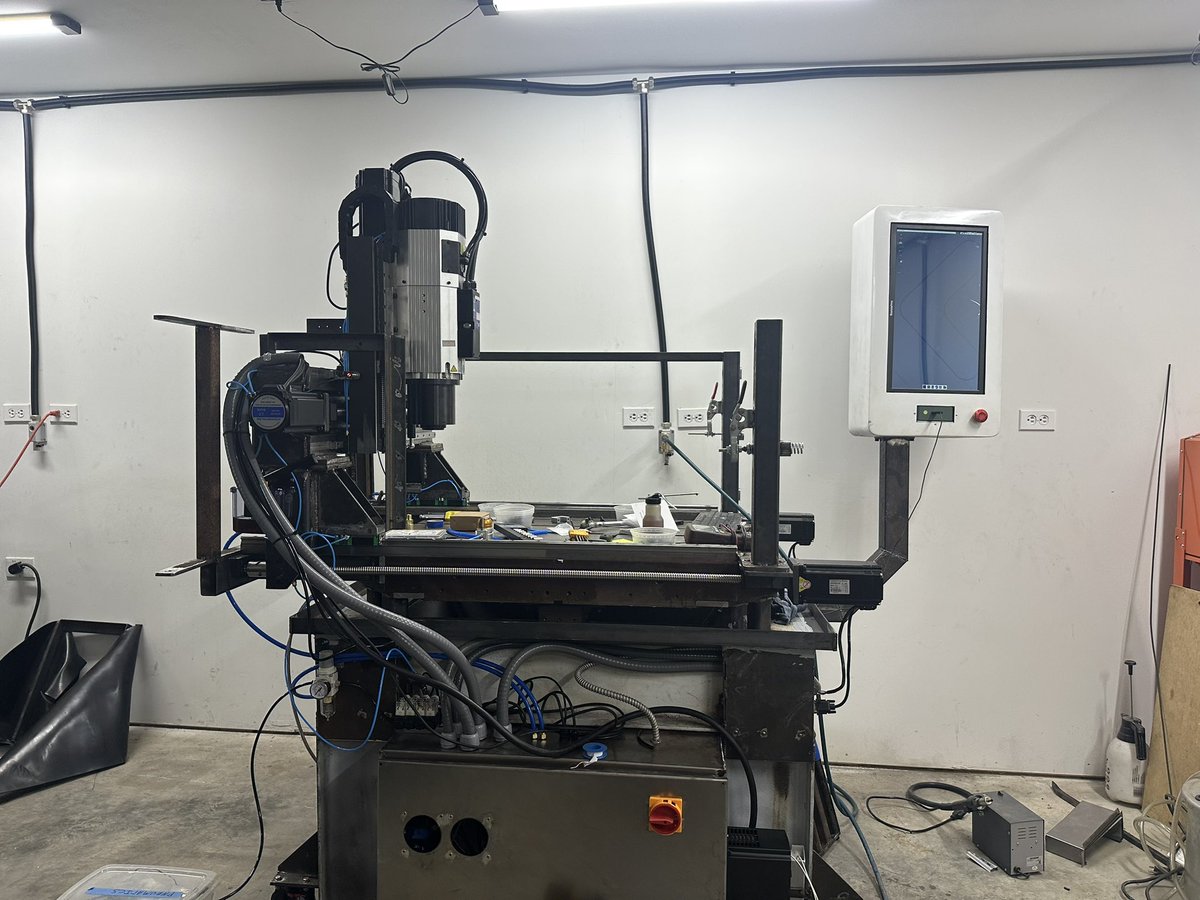
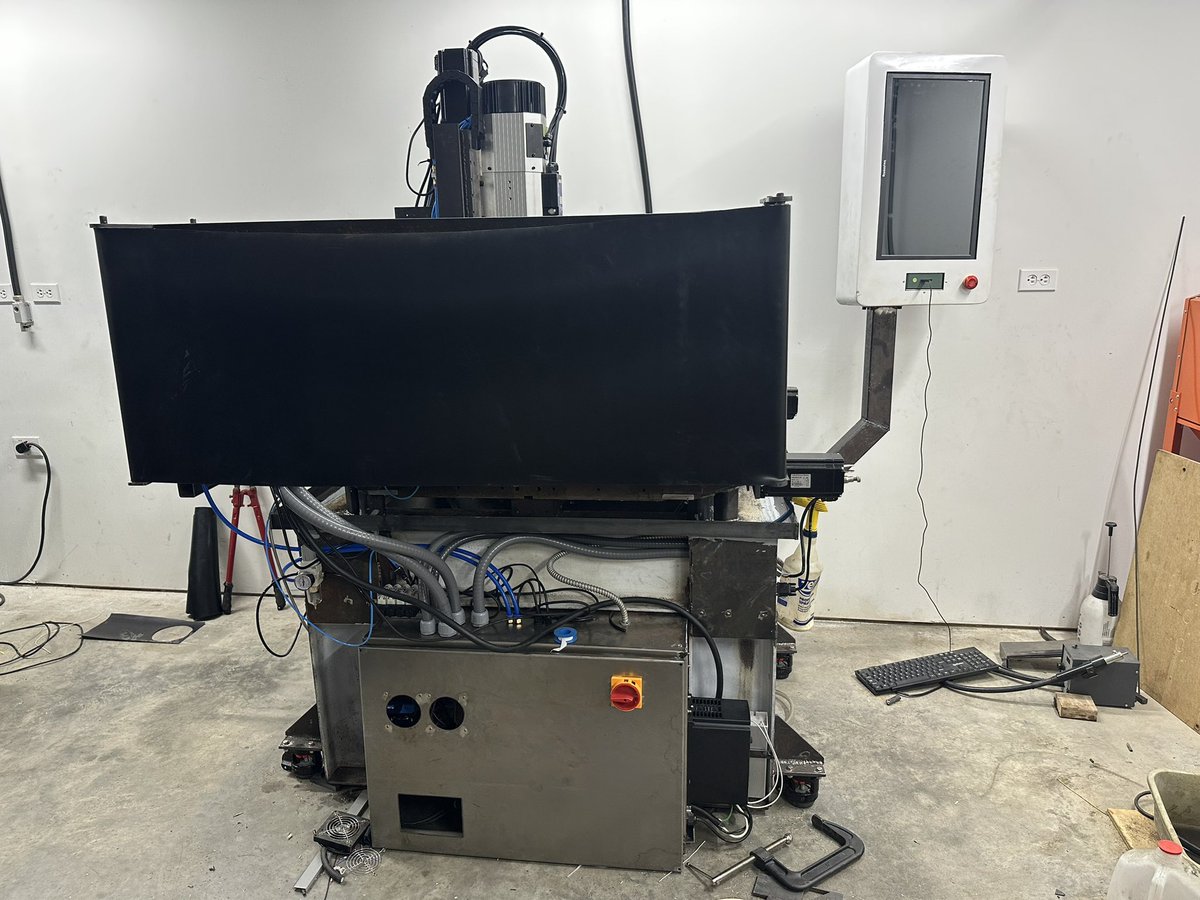
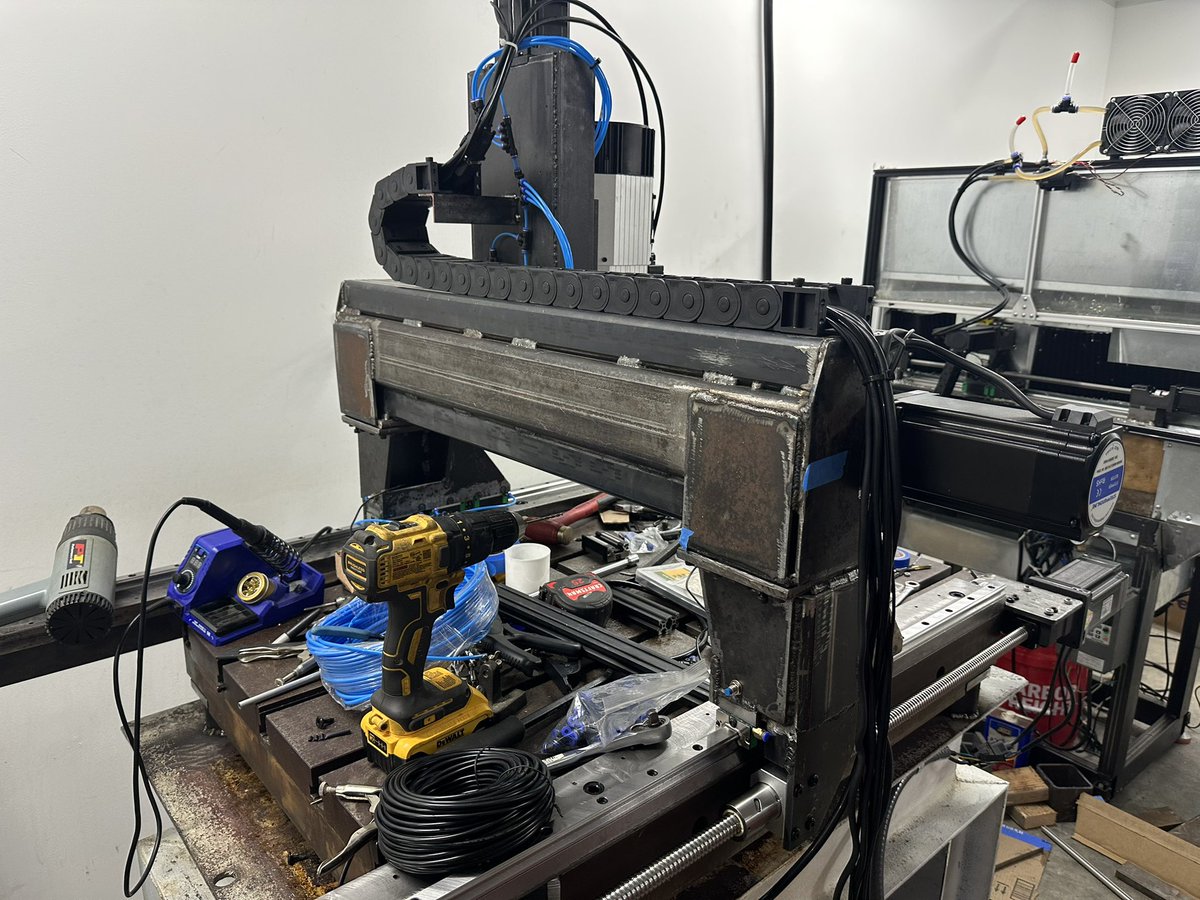
The machine you see here was built, commissioned, and stress-tested over the summer, with its main XZ gantry machined using an older spindle gantry over the same bed.
This machine played a role in its own creation.
Re-industrialization requires new capital models to work. Super excited to see this announcement and to have played even a small part in getting it off the ground.
https://t.co/cD1Hin4RGZ