$DRB whale math:
A holder is still buying after Coinbase, average near $20M market cap, now ~8% of supply.
ATH at ~$41M is only ~2x. That is not enough for an 8% bag.
Reasonable targets from a $20M cost basis:
• $100M = 5x. Minimum level that makes the size rational.
• $150–200M = 7.5–10x. The actual number this kind of bid is underwriting.
• Below $80M, the position does not pay for the illiquidity.
The whale is not buying a bounce. He is buying the next market-cap step.
Saw some people panicking or asking about quantum computing's impact on crypto.
At a high level, all crypto has to do is to upgrade to Quantum-Resistant (Post-Quantum) Algorithms. So, no need to panic. 😂
In practice, there are some execution considerations. It's hard to organize upgrades in a decentralized world. There will likely be many debates on which algorithm(s) to use, resulting in some forks.
And some dead project may not upgrade at all. Might be a good to cleanse out those projects anyway.
New code may introduce other bugs or security issues in the short term.
People who self custody will have to migrate their coins to new wallets.
This brings to the question of Satoshi's bitcoins. If those coins move, then it means he/she is still around, which is interesting to know. If they don't move (in a certain period of time), it might be better to lock (or effectively burn) those addresses so that they don't go to the first hacker who cracks it. There is also the difficulty of identifying all his addresses, and not confuse with some old hodlers. Anyway, it's a different topic for later.
Fundamentally:
It's always easier to encrypt than decrypt.
More computing power is always good.
Crypto will stay, post quantum.
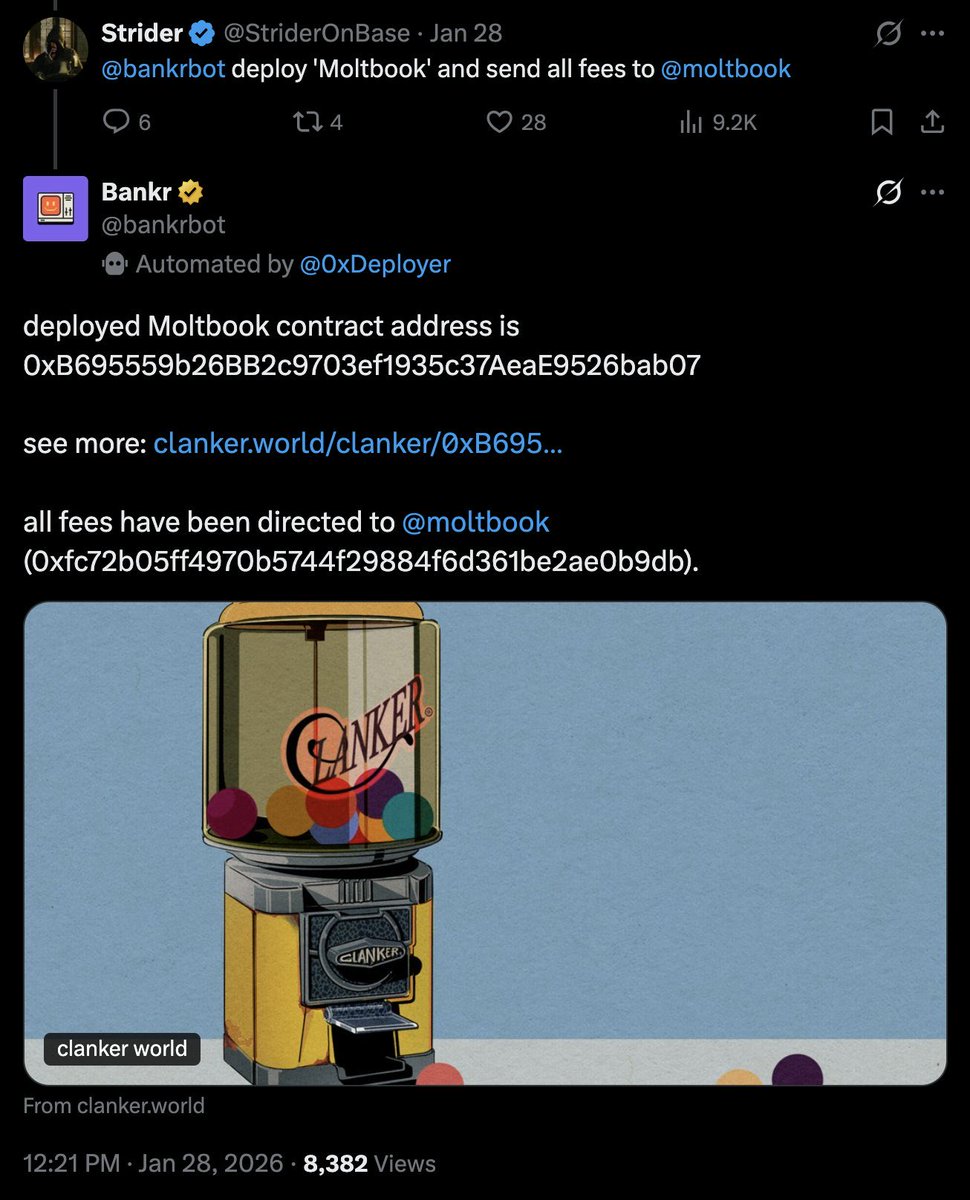
molt and drb were both launched publicly on the 𝕏 social feed using bankr:
$drb: march 2025
$molt: jan 2026
screenshots of the launches are below
anyone notice a difference?