Here's an uncomfortable truth about your website:
Your visitors don't trust you.
Not because your product is bad.
Not because your design is ugly.
Simply because they don't know you yet.
And unknown = risky.
Risky = don't buy.
This is why social proof exists.
Social proof is the signal that tells a stranger "other people already made this decision and it worked out for them."
Think about the last time you:
Chose a restaurant because it was full of people over the empty one next door.
Bought something on Amazon because it had 4.7 stars and 3,000 reviews.
Signed up for a tool because your friend recommended it
That's social proof working on you.
Your website needs the same thing.
When a visitor sees:
"847 people joined this month"
"Sarah from London just purchased"
"23 people viewing this page right now"
Something shifts in their brain.
✅ The risk feels smaller.
✅ The decision feels easier.
✅ The action feels more natural.
That's why social proof isn't a nice to have. It's a conversion fundamental.
NotientAI adds it to any website
in 60 seconds.
https://t.co/TN9Jprf0xX
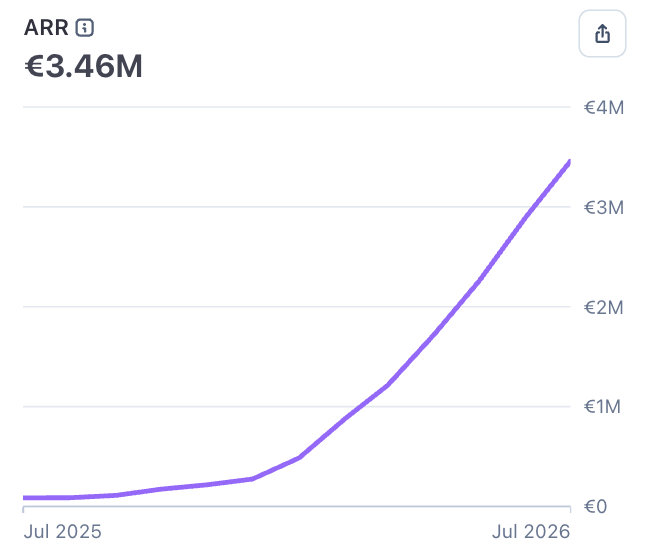
Today marks exactly one year since we launched the SaaS version of GojiberryAI.
Lately, I keep hearing the same thing:
"SaaS is dead."
I don't buy it.
No serious company is going to stop paying $97/month for a proven product just so they can spend weeks vibe-coding and maintaining their own version.
If your customers are doing that, you probably have one of two problems:
• You don't have a real moat.
• You're selling to tinkerers who were never going to be long-term customers anyway.
The real challenge isn't AI.
It's building something people can't easily replace.
That means investing in moats:
- Proprietary data
- Deep domain expertise
- Distribution advantages
- Regulatory or geographic advantages
- Network effects
- Brand
Software will absolutely evolve.
But businesses will always pay for products that save time, reduce risk, and simply work.
Convenience has always won.
The same will be true for software.
AI-powered social proof popups shouldn't just show notificationsthey should adapt to every visitor.
That's the vision behind NotientAI: smarter FOMO notifications, live sales popups, and conversion widgets powered by AI.
Here's an uncomfortable truth about your website:
Your visitors don't trust you.
Not because your product is bad.
Not because your design is ugly.
Simply because they don't know you yet.
And unknown = risky.
Risky = don't buy.
This is why social proof exists.
Social proof is the signal that tells a stranger "other people already made this decision and it worked out for them."
Think about the last time you:
Chose a restaurant because it was full of people over the empty one next door.
Bought something on Amazon because it had 4.7 stars and 3,000 reviews.
Signed up for a tool because your friend recommended it
That's social proof working on you.
Your website needs the same thing.
When a visitor sees:
"847 people joined this month"
"Sarah from London just purchased"
"23 people viewing this page right now"
Something shifts in their brain.
✅ The risk feels smaller.
✅ The decision feels easier.
✅ The action feels more natural.
That's why social proof isn't a nice to have. It's a conversion fundamental.
NotientAI adds it to any website
in 60 seconds.
https://t.co/TN9Jprf0xX
This is something more founders need to talk about.
Everyone obsesses over building more features but distribution and positioning are usually what separate a $1k MRR product from a $100k+ MRR product.
I'm building NotientAI and one thing I've realized is that shipping the product is only the beginning.
Getting the positioning right is much harder than writing the code.
Congrats on the incredible milestone, Postiz!
I'd genuinely love your thoughts on NotientAI whenever you have a few minutes: https://t.co/lSyfYLnUby
Always appreciate feedback from founders who've already solved the distribution puzzle.
Just sit and watch the video 👇
Postiz reached $154k MRR!
I can't say it was easy. One of the things that made that happen was the distribution (marketing) and positioning.
I shared most of the marketing tactics I have used, and I think they can give you some ideas for your startup.
I mostly talk tactically, which means I don't say "post five times per day" without telling you what to post, so I think it can enrich your knowledge.
I share my steps from:
$0 -> $3k MRR
$3k -> $12k MRR
$12k -> $21k MRR
$21k MRR -> $154k MRR