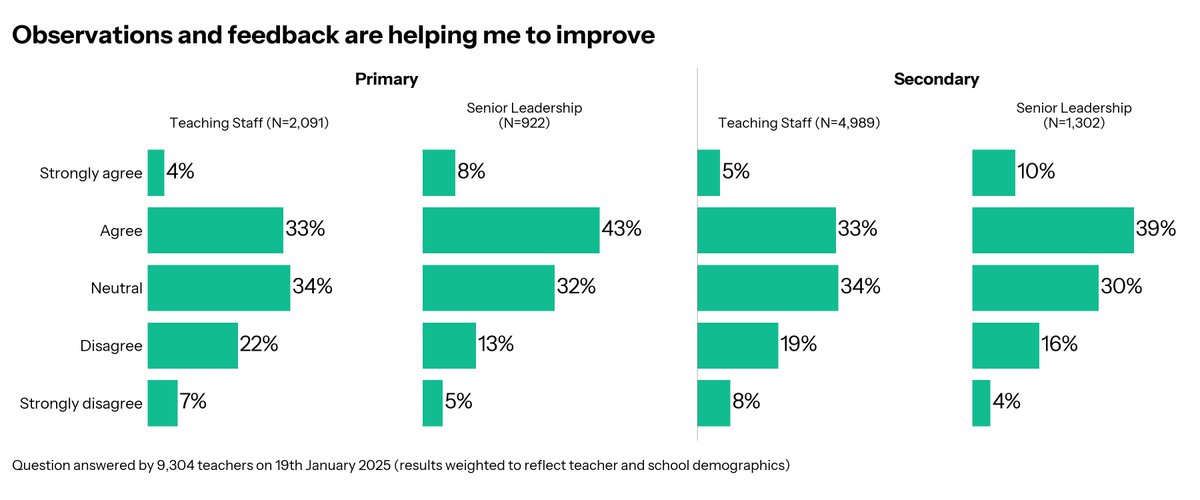
Most teachers in this country are regularly observed as part of their professional development.
Two thirds of teachers do not think this has made a difference to their actual practice.
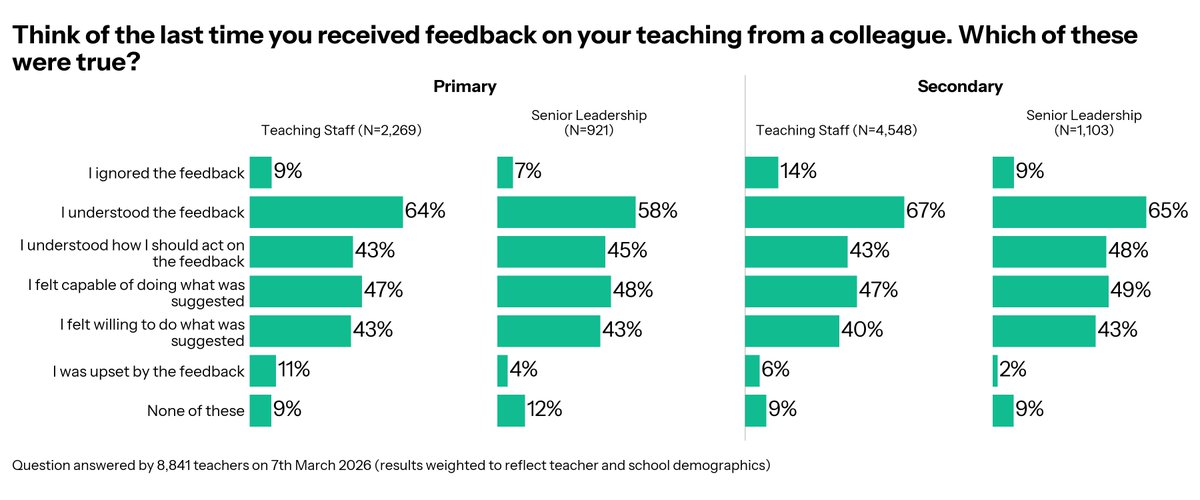
Teachers do not understand the feedback they receive. They do not agree with the feedback they receive. They do not feel willing or capable to implement the feedback they receive.
These things are facts, and they are both worrying and upsetting. And none of this is a secret. We all know it, we've all experienced it.
When we asked Carousel Teaching users what topics they wanted us to make courses on, the most common response was "how to observe lessons and give feedback."
@BenRiceTeach and I are now MAD EXCITED to announce our How To Observe a Lesson and Give Feedback course.
It's mega. We filmed a bunch of lessons, and we also filmed me observing those lessons. We deconstruct the science of observations, and the art of giving feedback. It's pretty damn innovative, and we're confident it will help teachers and leaders get better at these critical skills.
We will also be delivering a FREE webinar where we will look at some of the core strategies, do make sure to come along :)
For more on the course: https://t.co/x6Gw1sFiOk
For more on the webinar: https://t.co/O44RkJZvpq
To book a demo so we can show you the whole platform: https://t.co/Ysd9NEBElG
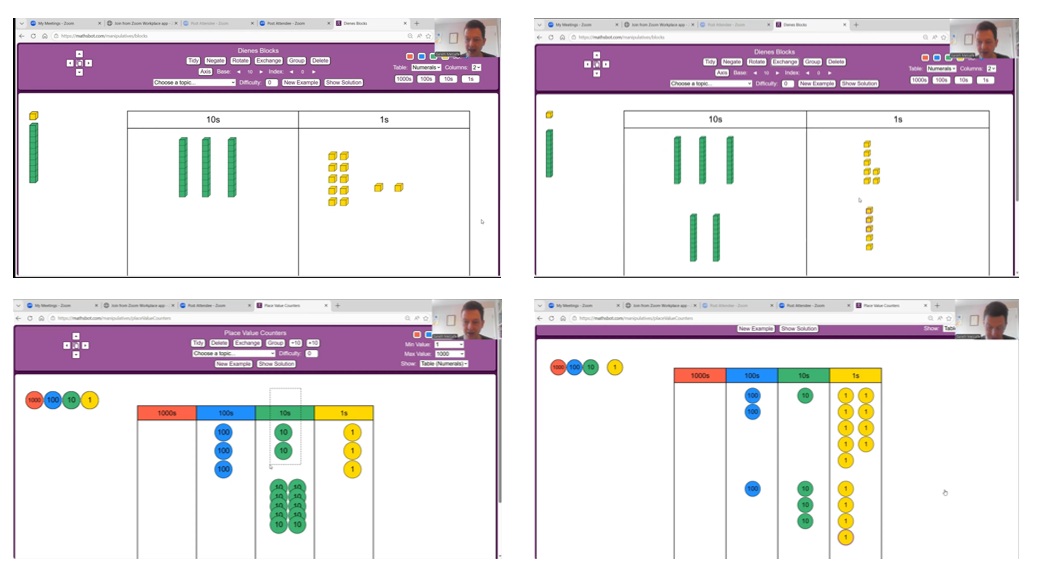
I've put together a 5-minute video on how I would use the Dienes Blocks and Place Value Counters interactive tools on Mathsbot to model calculation: https://t.co/H1nlim4Xub
The 'exchange' and 'group' features are fantastic.
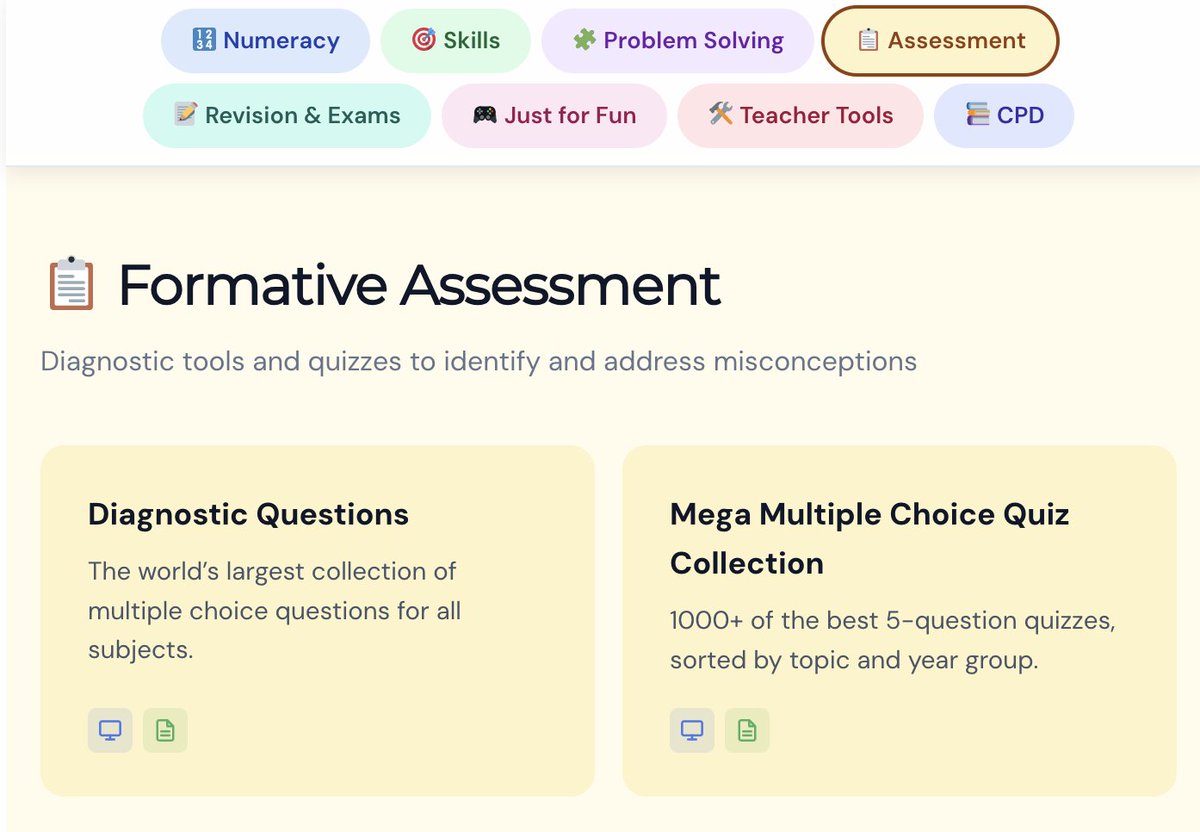
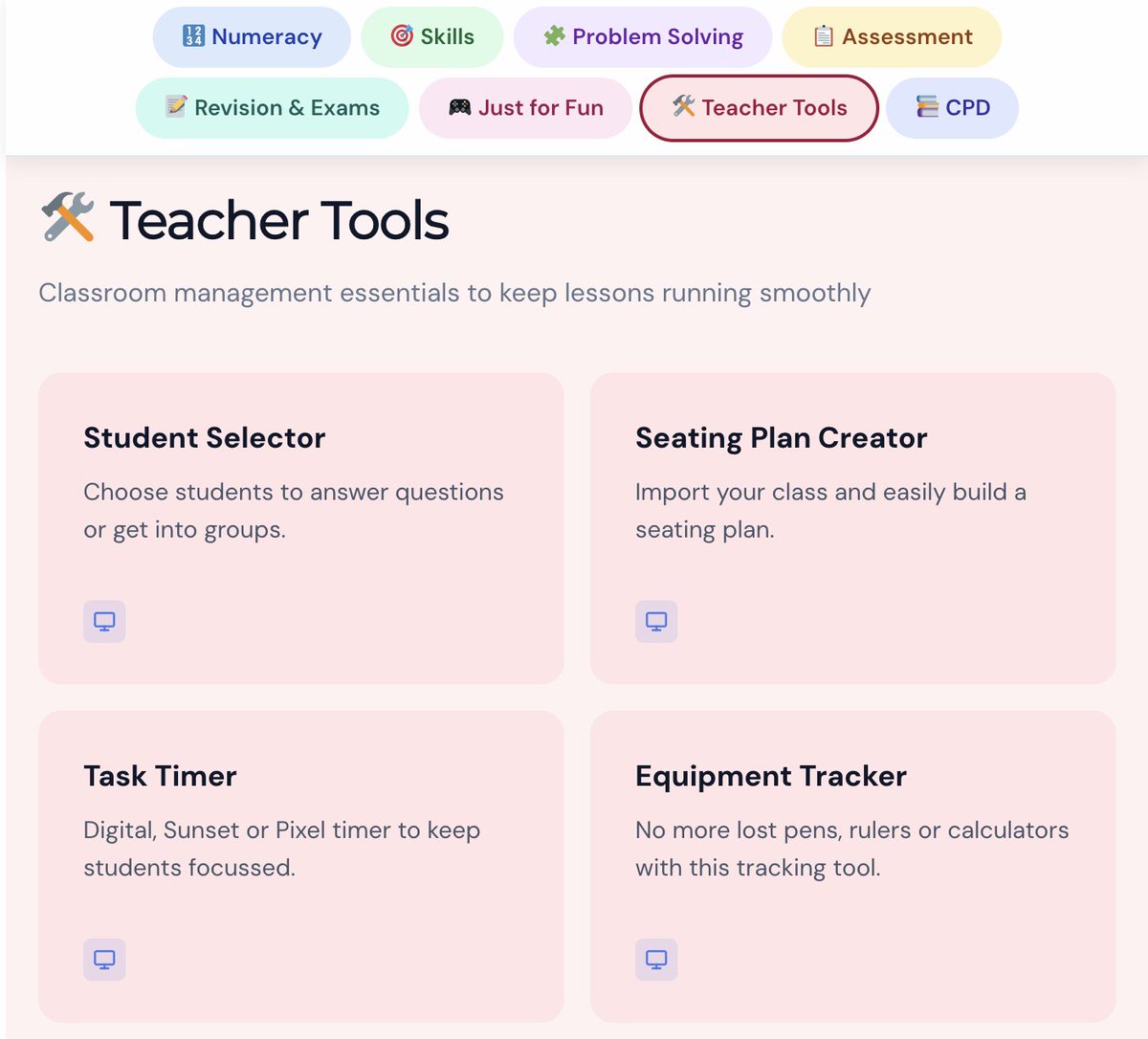
I have just pushed live a MASSIVE update of my Mr Barton Maths website - all 100% free. If you find it useful, please help spread the word by sharing this post 🙏
I love Gareth’s examples here. Also appreciate the focus on what is a pivotal concept which primary pupils either can cognitively tolerate or become overloaded with: bridging ten. The difference between easy and hard is really big! 😁
@adamboxer1@HeadteacherTips@mrbartonmaths If no live marking, do you flick through books after lesson? If not, how do you keep track of performance in ind practice?
I've been experimenting with retrieval Do Nows for ten years.
Miniwhiteboards, exercise books, booklets - tried them all.
New knowledge, old knowledge, prerequisite knowledge - tried them all.
Self assessment, peer assessment, teacher assessment...tried them all!
This stuff takes time. It takes iteration. All decisions are important. And through all that time of experimentation and reflection I got better and better, and my students' outcomes improved.
Despite it all, I didnt get to the perfect system. It took my colleague Tom's innovation to help me move to the next level, and I am yet to see or read a Do Now system that's better than his.
Read here for more 👇👇
Most school leaders are not chasing perfection.
They are chasing progress.
Quietly. Relentlessly. Under pressure.
That is why Better by Atul Gawande resonates so deeply with leadership in schools.
It is not about brilliance.
It is about systems, habits and the discipline of improvement.
In surgery, failure costs lives.
In education, it costs opportunity.
The lesson is the same in both fields:
Care is not enough. Systems matter.
That simple truth sits at the heart of Better: A Surgeon’s Notes on Performance by Atul Gawande. Although written through the lens of medicine, it may be one of the most quietly powerful leadership books a leader can read.
Because it strips performance back to its essentials.
Not vision statements. Not slogans.
But habits, systems, humility and the relentless pursuit of improvement.
In schools, as in surgery, we often celebrate individual excellence.
The outstanding teacher. The inspirational leader. The charismatic head.
Gawande dismantles this myth with precision.
He shows that even the most talented professionals fail without:
•Clear systems
•Consistent routines
•Feedback that is acted upon
•A culture that allows challenge and learning
The lesson is uncomfortable but necessary. Performance does not improve because people care more. It improves because systems make the right actions more likely and the wrong ones harder to repeat.
One of Gawande’s central arguments is that improvement rarely comes from dramatic breakthroughs. It comes from marginal gains applied consistently.
This is profoundly relevant to school leadership.
Better attendance rarely comes from one assembly.
Better behaviour rarely comes from one policy rewrite.
Better teaching rarely comes from one INSET day.
It comes from leaders who:
•Clarify expectations
•Remove ambiguity
•Build routines that survive pressure
•Accept that good intentions are not enough
In Gawande’s world, checklists save lives.
In ours, systems save learning time.
Perhaps the most striking section of Better is Gawande’s exploration of coaching. Even elite surgeons, at the top of their profession, actively seek feedback from others who can see what they cannot.
This is where leadership in schools is often tested.
Senior leaders are expected to have answers.
Yet the most effective leaders are those who remain open to scrutiny.
The parallel is clear. Schools improve fastest when leaders:
Invite challenge rather than defend practice
Use evidence to refine decisions
Model learning rather than certainty
Leadership is not diminished by coaching. It is strengthened by it.
What makes Better resonate so strongly with education is its realism.
Gawande does not argue that failure can be eliminated. He argues that it can be reduced. He does not promise excellence overnight. He commits to progress, relentlessly pursued.
This mirrors the reality of schools.
We work in complex systems, serving diverse communities, under constant pressure. Improvement is rarely neat. But it is possible.
The leaders who make the biggest difference are those who ask, repeatedly:
What worked today?
What did not?
What one thing can we do better tomorrow?
That mindset is not glamorous.
It is transformative.
Better is not a book about medicine.
It is a book about responsibility.
Responsibility to design systems that protect people.
Responsibility to reflect honestly on performance.
Responsibility to keep improving even when progress feels slow.
For school leaders, that message could not be more relevant.
Because the work is not about being flawless.
It is about being better.
Every day.
ICYMI: I have restarted blogging
I think the blogs I've written are at least as good as anything I wrote on the old blog, but have a fraction of the hits (unsurprisingly). If you're interested, please do subscribe and share 🙏🙏
https://t.co/AV342bJ5nl
The Greatest Do Now Ever™️
This is the story of how one teacher set out to create the greatest Do Now Ever, and he changed my teaching for the better.
Link in reply, please share if you can 🙏
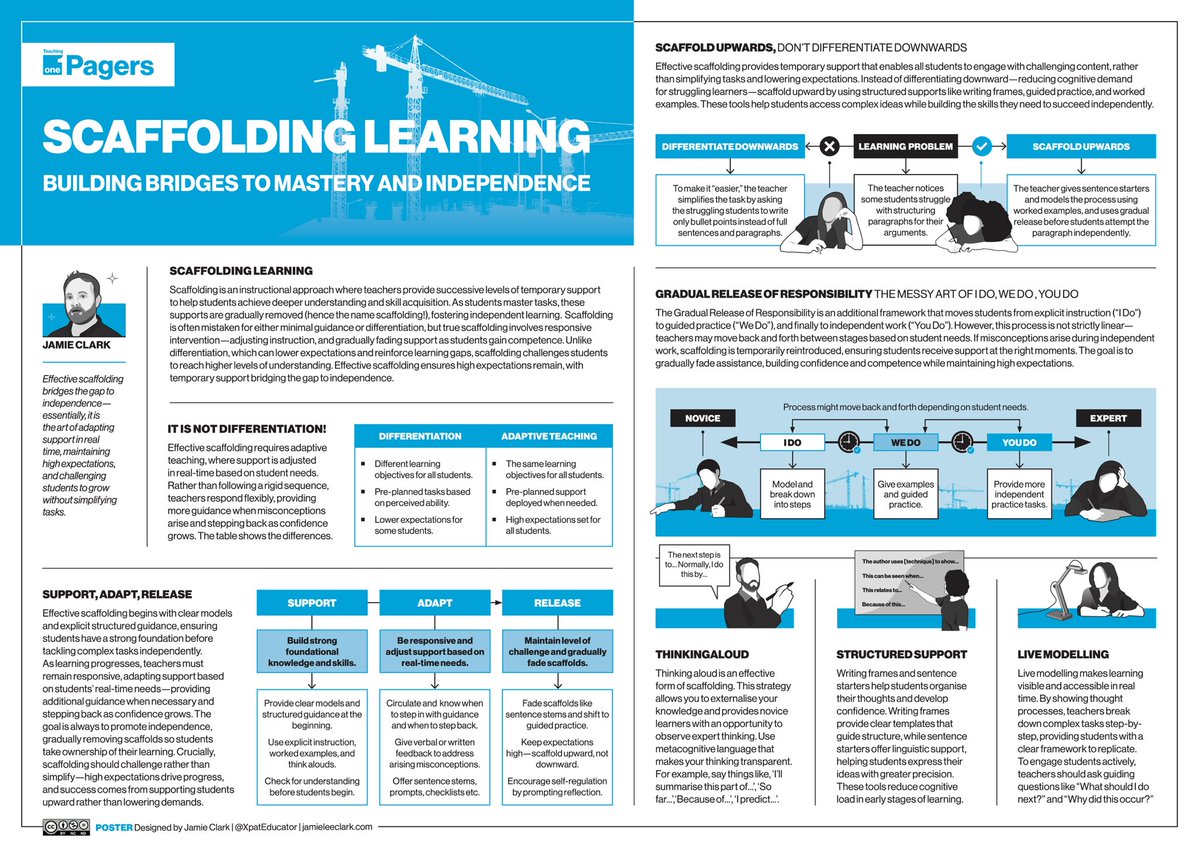
🏗️ SCAFFOLDING! This one-page guide unpacks the art of scaffolding—a precise, adaptive process that supports students upward, not lowering expectations downward.
🙌 Support my work by tapping REPOST and grab a FREE high-quality copy here:
https://t.co/QKGJjjeiKT