🚨 BREAKING: A developer on GitHub just built a tool that turns any GitHub repo into an interactive knowledge graph and open sourced it for free.
It's called GitNexus. Think of it as a visual X-ray of your codebase but with an AI agent you can actually talk to.
No server. No subscription. No enterprise sales call.
Here's what it does inside your browser:
→ Parses your entire GitHub repo or ZIP file in seconds
→ Builds a live interactive knowledge graph with D3.js
→ Maps every function, class, import, and call relationship
→ Runs a 4-pass AST pipeline: structure → parsing → imports → call graph
→ Stores everything in an embedded KuzuDB graph database
→ Lets you query your codebase in plain English with an AI agent
Here's the wildest part:
It uses Web Workers to parallelize parsing across threads so a massive monorepo doesn't freeze your tab.
The Graph RAG agent traverses real graph relationships using Cypher queries not embeddings, not vector search. Actual graph logic.
Ask it things like "What functions call this module?" or "Find all classes that inherit from X" and it traces the answer through the graph.
This is the kind of code intelligence tool enterprise teams pay thousands per month for.
It runs entirely in your browser.
Works with TypeScript, JavaScript, and Python.
100% Open Source. MIT License.
Repo: https://t.co/RzIoLR2vAe
La-Proteina: Atomistic Protein Generation via Partially Latent Flow Matching
A new generative model, La-Proteina, has emerged for de novo protein structure design, directly generating fully atomistic structures coupled with their amino acid sequences. This addresses a significant challenge in the field, particularly in handling dynamic side-chain lengths during generation.
La-Proteina introduces a novel partially latent protein representation. It explicitly models the coarse backbone structure using alpha-carbon coordinates, while capturing sequence and intricate atomistic details through fixed-dimensionality per-residue latent variables. This innovative approach effectively bypasses the complexities of explicit side-chain representations.
The model leverages flow matching in this partially latent space to accurately model the joint distribution of protein sequences and their full-atom structures, a key advancement for fine-grained control over functional sites and enabling critical protein design tasks.
Empirical evaluations demonstrate La-Proteina's state-of-the-art performance across various generation benchmarks, excelling in all-atom co-designability, diversity, and structural validity.
Notably, La-Proteina significantly advances atomistic motif scaffolding, tackling both all-atom and tip-atom conditions, and performing strongly in both indexed and the more challenging unindexed tasks. This unlocks new possibilities for structure-conditioned protein design.
The model showcases impressive scalability and robustness, capable of generating co-designable proteins with up to 800 residues. This is a regime where many existing baselines often struggle to produce valid samples or encounter memory limitations.
Built on efficient transformer architectures, La-Proteina achieves its high performance without relying on computationally expensive triangular update layers, further contributing to its strong scalability.
Biophysical analyses confirm the high structural quality of generated proteins, which closely resemble real proteins. La-Proteina accurately recovers major rotameric states and their frequencies, indicating physically realistic conformations.
📜Paper: https://t.co/voWVX2aLb5
#ComputationalBiology #ProteinDesign #AIinScience #MachineLearning #GenerativeModels #Bioinformatics
🔒 Local AI dev can be safe.
My AI Sandbox locks containers down, so you get GPU speed without sudo risks.
Tech stack below 👇 Repost to save 🔁
https://t.co/j8viCvgVaL
#MLOps#WSL2
@jessicapointing I loved your recent paper https://t.co/uzqKF9MThN
Are you aware of any overlaps with molecular/protein level applications? I instantly wonder if the simplest solution to those problems might be found?
I have started to create cheat sheets for model interpretation.
So far:
• Logistic regression: https://t.co/iNILd5EhER
• SHAP plots for tabular data: https://t.co/rkFuTcaajN
They are free (pay what you want)
Do you have any topic wishes for the next cheat sheets?
@christlet Do people use 100% metal paste on GPU's like they do with delidding CPU's. That's gotta be the best way to go. The thermal conductivity and overclocking you can get make sense 😎
@MixIndentations That's a really weird one. Has the filter wheel housing become lose maybe?
Do you see it in a blank/empty filter with transmitted light and just a bead sample?
Wondering if it's fluorescence or bright field or both
Thanks to @ChanZuckerberg@cziscience we are lightsheeting our way to understanding Ab clustering, signaling, and membrane dynamics during phagocytosis. We are #ImagingTheFuture by creating a @babylonjs web viewer. Interact with the data at https://t.co/JnU67biz27
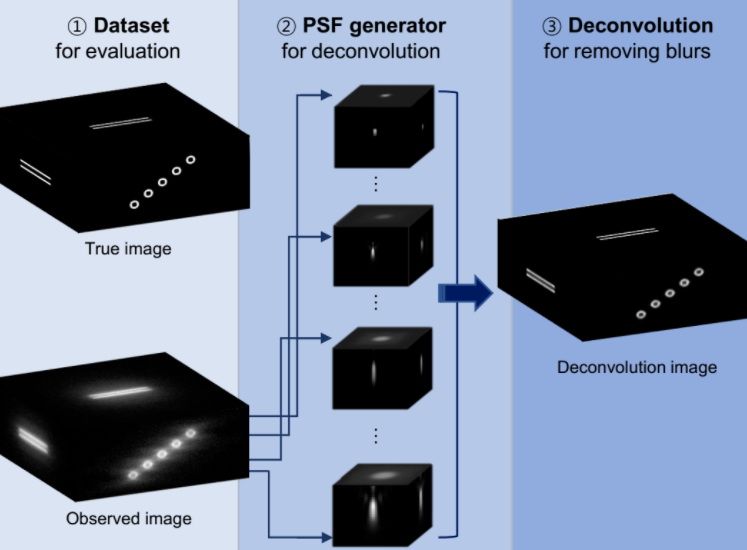
This looks like fun. https://t.co/Uz1wPvWZmy I'd be interested to know how many iterations are needed for nice data, and if running on the CPU will be painful or not :)
This is going to be wild! I can't wait for optical computing, especially given how well it will likely fuse with our optical world :) https://t.co/TaOBKRLQeQ
This is really cool! Hopefully knock the price of scopes down some.
Photonic integrated circuits for life sciences - https://t.co/cCRHNe683Z #ScholarAlerts